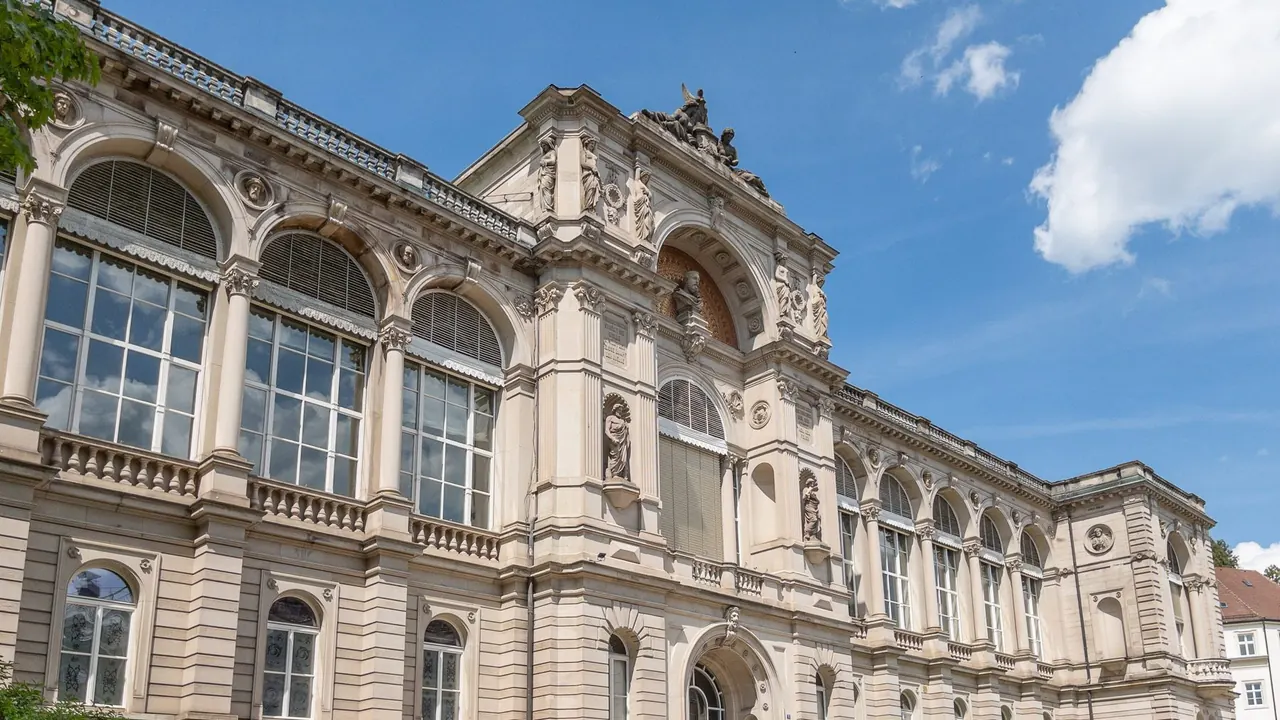
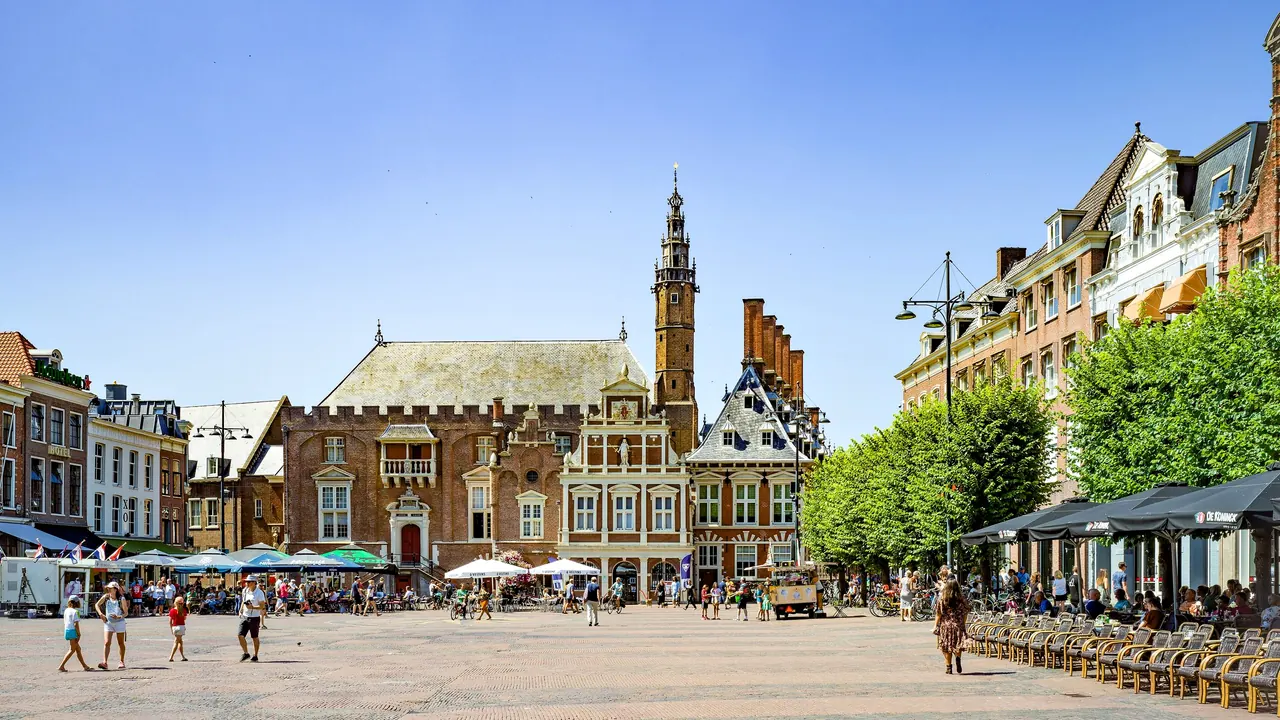
Photos: Baden-Baden by Kent Wang, CC BY-SA 2.0, cropped; Haarlem by Moroder, CC BY-SA 4.0, cropped.
Baden-Baden or Haarlem?
Our verdict in twelve categories, each scored against the same fixed benchmark cities, and the climate month by month, so you can choose for your trip.
Choose Baden-Baden for
- wellness
- live music and the arts
- nature and the outdoors
Baden-Baden is for travellers who want to slow down. Its thermal baths are the whole point of the town, and the rest of a stay follows from them: walks along the Lichtentaler Allee, evenings at the Festspielhaus or the Kurhaus casino, and the wooded hills of the northern Black Forest rising straight behind the villas. Choose it for a restful, rather formal break with good classical music and real walking country, and accept that evenings end early.
Choose Haarlem for
- beaches
- shopping
- nightlife
Haarlem suits travellers who want an easy, sociable base and plenty to see from it. Its Golden Age centre of canals, hofjes and St Bavo is flat and car-free, the station sits at the edge of the old town, and Amsterdam, Leiden and the beach at Zandvoort are each a short train ride away. Its boutique streets are better for browsing and its café terraces are livelier, and it works well for anyone who would rather go by bike or train than hire a car.
Scoreboard
Twelve categories on one fixed scale from 0 to 100. The shaded stretch is the gap between the two.
Your match
Pick a travel style or drag the sliders, and both match scores follow your weighting.
Too close to call, 2 points apart
Wins on wellness and live music and the arts with your weighting.
Wins on beaches and shopping with your weighting.
What matters to you?
Category by category
What the scores mean for a trip.
Beaches & swimming
Baden-Baden is far inland, and the best a hot day offers is an outdoor pool or a swim in a gravel lake on the Rhine plain.
Haarlem has a real coast a few minutes away by train or bike: the broad sand at Zandvoort and the dune-backed beach at Bloemendaal, with pavilions along the shore. The North Sea is cool and often windy, so a beach day here means walks and quick dips rather than long swims. It is still more than Baden-Baden can offer.
Food & drink
The two are evenly matched, but they eat very differently. Baden-Baden draws on Baden's rich regional cooking, with venison, Flammkuchen and Black Forest gateau, French touches from across the Rhine, and Riesling and Pinot Noir from the Rebland villages. For a special dinner, the celebrated restaurants are out in the Black Forest rather than in town.
Haarlem's strengths are simpler and more casual. Raw herring and kibbeling come from the Saturday market, and evenings are spent in brown cafés and craft-beer taprooms rather than wine taverns. Come to Baden-Baden for wine and game, and to Haarlem for beer and terrace life.
Culture & sights
Haarlem gives the fuller cultural stay. Its Golden Age centre holds the vast Grote Kerk of St Bavo, the Frans Hals Museum for the city's own portrait master and Teylers, the country's oldest museum. On foot you also pass the hidden hofjes and the moving Corrie ten Boom House.
Baden-Baden's appeal is narrower but distinctive. The town is a preserved Belle Époque spa resort, with the Kurhaus, the Trinkhalle, hillside villas and a strong modern-art pairing in the Museum Frieder Burda and the Kunsthalle. Both reward about two days, but Haarlem's sights cover more centuries and more ground.
Nightlife
Neither town is a place for clubs, but Haarlem's evenings have more life. Terraces fill around the Grote Markt and the Botermarkt, and Amsterdam's late scene is a quarter of an hour away by train.
Baden-Baden is quieter and more formal. The gilded Kurhaus casino with its dress code is the signature night out, followed by a hotel or wine bar, and the streets are calm by late evening.
Nature & outdoors
Baden-Baden has the more varied landscape. Fir forest begins at the edge of town, the Merkur funicular and the Battert cliffs open onto long trails, and the Black Forest High Road climbs past the Mummelsee to the Hornisgrinde moorland, with mountain biking and some winter skiing.
Haarlem's countryside is gentler and completely flat. The dunes, woods and lakes of Zuid-Kennemerland are home to highland cattle and wild ponies, and the spring bulb fields are made for cycling. It is pleasant for easy rides and beach walks, but it offers nothing to climb.
Day trips
Both towns make excellent bases, and Haarlem's is the more effortless. Amsterdam, Leiden, The Hague, Delft and Utrecht are all within easy reach by a dense rail network, and Keukenhof, Alkmaar and Zaanse Schans are short hops, so outings need little planning.
Baden-Baden's range crosses a border: Strasbourg and the Alsace wine route, Heidelberg, Freiburg, and the UNESCO sites at Speyer and Maulbronn. The rewards are just as rich, but the Alsace and Black Forest trips work far better with a car.
Good for families
The two are much the same for families, and in both the main children's attractions are a trip away. From Baden-Baden that means Europa-Park, one of Europe's biggest theme parks, about an hour south. The town itself is refined and adult, and the Friedrichsbad turns young children away.
Haarlem feels more relaxed with children day to day. The centre is flat and largely car-free, cargo bikes are everywhere, and Teylers' fossils and the playgrounds in the dunes keep children busy. Amsterdam's zoo and science museum fill the gaps.
Getting around
Haarlem is the easier town to be without a car. The station sits at the edge of a flat centre you can cross on foot in about twenty minutes, bike paths run all the way to the beach, and trains and buses cover the region.
Baden-Baden's core is walkable but hilly in places. Its station lies a bus ride out in Oos, and the wine villages, the High Road and Alsace are hard to reach without driving.
Shopping & style
Haarlem is the better place to browse. Independent fashion, design and book shops fill Gierstraat, Kleine Houtstraat and Schagchelstraat, chains line the Grote Houtstraat, and market days bring flowers and cheese to the main square.
Baden-Baden's offer is smaller and more upmarket. Jewellers, watchmakers and boutiques along Sophienstraße and Lange Straße cater to a wealthy spa clientele, and beyond cuckoo clocks and local wine there is little else.
Affordability
Neither is a budget destination. Baden-Baden's costs come from its grand hotels and from paying at the baths on every visit, so a spa-focused stay mounts up, although guesthouses and wine taverns are fairly priced for Germany.
In Haarlem the strain falls on accommodation: rooms are scarce and small for the money, especially in tulip season. Train fares for regular day trips add to that, while market food and bike hire help keep daily spending down.
Live music & performing arts
Baden-Baden is the stronger choice for classical music. The Festspielhaus, one of Germany's largest opera and concert houses, brings leading international orchestras and opera productions, and the town's philharmonic and its small nineteenth-century theatre add more, all within a tradition shaped by Brahms and Clara Schumann.
Haarlem has a broader but more local programme. There is chamber and classical music at the Philharmonie, theatre and cabaret, mostly in Dutch, and a pop venue for touring bands. Its jewel is organ music at St Bavo, but for opera or big orchestras people go to Amsterdam.
Wellness & relaxation
This is where the two towns differ most. Baden-Baden was built around hot springs the Romans used, and its bathhouses define a stay: the domed Friedrichsbad with its silent sequence of steam rooms and pools, and the larger Caracalla, with its indoor and outdoor pools and saunas.
Haarlem has no springs and no bathing heritage. Rest there means quiet canals after dark, an hour on a café terrace, a local sauna or a cycle through the dunes.
When should you go?
Pick your month. The climate figures are measured averages, not a forecast.
Baden-Baden in July
Haarlem in July
Daytime high, °C
Rainfall in the month, mm
Where the figures come from
Haarlem has no rain gauge within 25 km of the centre, so its rainfall comes from a gridded climate dataset read at the city rather than from a gauge further away.
Haarlem's sunshine is measured 49 km from the centre, at De Bilt.
Temperature and rainfall are climate normals, averaged over the years shown. Baden-Baden: 1991-2020 normals, Baden-Baden-Geroldsau (3.9 km from centre). Haarlem: 1991-2020 normals, Amsterdam Airport Schiphol (12.7 km from centre).
Summer is warmer in Baden-Baden, with afternoons reaching about 25°C in July and August and more sunshine than Haarlem gets. That makes June to September its best stretch for the Black Forest trails and the Rebland vineyards. Rain falls steadily all year, though, with no truly dry month. Haarlem stays milder, around 22°C at the height of summer. Its North Sea warms to about 19°C in August, so beach days are short and fresh, and its spring is noticeably drier, with April the driest month at around 40mm. That suits the bulb fields and cycling well.
From October the two climates behave differently. Haarlem's wettest season arrives in autumn, while Baden-Baden's autumn colour in the forests makes up for its grey, damp weather. Both towns are cold and dark from November to February, at about 6°C in midwinter. In Baden-Baden that is the time when the hot baths come into their own. In Haarlem it is the season for museums and brown cafés.
Which traveller are you?
On a relaxing and wellness trip, Baden-Baden is the clear choice. The silent, domed Friedrichsbad and the large Caracalla complex sit on Roman hot springs, and the whole town keeps the same slow pace. Haarlem has quiet canals and saunas, but no bathing tradition to match.
For a short city break, Haarlem is easier. You step off the train into a compact, flat old town of canals, almshouse courtyards and good small museums. Bars and boutiques fill the lanes around the Grote Markt, and Amsterdam is close enough for an extra evening.
On an outdoors trip, Baden-Baden has the edge. A funicular climbs to forest summits, there are climbing cliffs on the Battert and ridge trails reach moorland above 1,100m, with mountain biking in summer. Haarlem's dunes and bulb fields are lovely to cycle, but the country is entirely level.
Before you go
| Measure | Baden-Baden | Haarlem |
|---|---|---|
| Official language | German | Dutch |
| Currency | Euro (EUR) | Euro (EUR) |
| Sockets | CF230 V, 50 Hz | CF230 V, 50 Hz |
| Driving side | Right | Right |
| Time zone | UTC+1, UTC+2 in summer | UTC+1, UTC+2 in summer |
| Emergency number | 112 | 112 |
| Elevation | 181 m | 2 m |
| Main airport | Karlsruhe Baden-Baden Airport (FKB)12 km from centre43 non-stop destinations | Amsterdam Airport Schiphol (AMS)12 km from centre287 non-stop destinations |
| Public holidays this year | 12 days | 11 days |
By the numbers
| Measure | Baden-Baden | Haarlem |
|---|---|---|
| City population | 56,952 | 162,543 |
| People per km² | 406 | 5,064 |
| Museums within 10 km | 11 | 28 |
| UNESCO World Heritage sites within 50 km | 3 | 5 |
| Swim season, months above 21 °C | - | None |
Where else could you go?
Every comparison below shares a destination with this one, so you can follow Baden-Baden or Haarlem somewhere new.
- Amsterdamvs Haarlem
- The Haguevs Haarlem
- Strasbourgvs Baden-Baden
- Utrechtvs Haarlem
- Rotterdamvs Haarlem
- Stuttgartvs Baden-Baden