Baden-Baden or Innsbruck?
Two destinations compared in twelve categories, each scored against the same fixed benchmark cities. Weight what matters to you and the verdict follows.
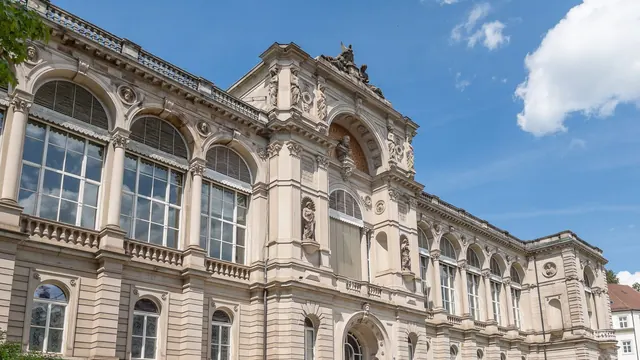
Photo: Kent Wang, CC BY-SA 2.0, cropped
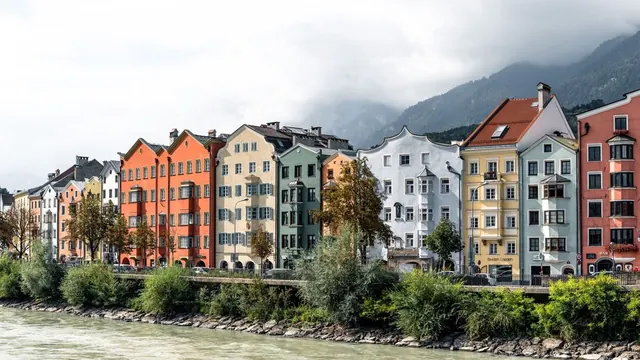
Photo: Wolfgang Weiser, Pexels License
Your match
Wins on wellness and live music and the arts with your weighting.
Wins on nature and the outdoors and nightlife with your weighting.
What matters to you?
Pick a travel style or drag the sliders. The match scores above update as you do.
The verdict
Baden-Baden is the choice for a slow, restorative stay. Its whole reason for being is the thermal water, from the silent rooms of the Friedrichsbad to the pools of Caracalla, and the rest of the town follows that pace: Belle Époque streets, a park walk along the Oos, a concert at the Festspielhaus and an early night. It also makes a well-placed base for Strasbourg, Alsace and Heidelberg, which suits travellers who like a calm town to come back to after a day out.
Innsbruck suits people who want to be active. The Nordkette ridge is a short ride from the old town, the Karwendel lies just behind it, and ski areas, hut hikes and glacier snow are all close by. The city is also easier to get around without a car, livelier after dark because of its university, and better for children, so families and anyone planning full days in the mountains will get more out of it.
Scoreboard
Our verdict on each category, scored 0 to 100 against fixed benchmark cities.
Category by category
What the scores mean for a trip to Baden-Baden or Innsbruck.
Beaches & swimming820
Neither town is anywhere near the sea, but Innsbruck gives swimmers a little more. The shallow Lanser See and Natterer See on the plateaus above the city warm up nicely in July and August, and the clear Achensee is beautiful to look at, though too cool for most people to swim in.
In Baden-Baden, outdoor swimming means gravel-pit lakes on the Rhine plain and public pools. Here the water you come for is the thermal kind, indoors.
Food & drink4540
The two are about level, but they suit different meals. Baden-Baden's strength is wine and a lighter touch: Riesling and Pinot Noir from the Rebland villages, Flammkuchen with a French accent from across the Rhine, and the northern Black Forest's famous restaurants a drive away.
Innsbruck's best eating is up the mountain: Gröstl, Kaspressknödel and Kaiserschmarrn at a hut after a long walk. Its wine is brought in rather than grown on the doorstep, and its student districts offer cheaper, more international food than Baden-Baden's hotel dining rooms and cake cafés.
Culture & sights5258
Innsbruck has a slight edge, thanks to the depth of its Habsburg heritage. The Hofkirche, with Maximilian's tomb ringed by bronze giants, the Hofburg, the Golden Roof and Ambras Castle's early cabinet of curiosities give two or three solid days of sightseeing.
Baden-Baden's appeal is more about atmosphere than individual sights. The town itself is the exhibit: a well-preserved spa resort with the Kurhaus, the Trinkhalle and hillside villas. The Frieder Burda and Kunsthalle pair adds better modern art than anything Innsbruck shows.
Nightlife1538
Innsbruck is the livelier of the two, though neither is a party town. Its university fills the bars and small clubs in the brick arches under the railway viaduct until late at weekends, and in winter the après-ski in the surrounding resorts adds more.
Baden-Baden's evenings are formal and short. A night at the gilded Kurhaus casino, a glass in a hotel or wine bar, and quiet streets by late evening. Anyone after clubs has to go to Karlsruhe or Strasbourg.
Nature & outdoors7096
Innsbruck is one of the few cities in Europe where high Alpine country starts at the edge of town. The Nordkette rises to about 2,300m above the old town, with the Karwendel behind it and the Stubai Glacier nearby, and you can ski, climb, raft or paraglide without much travel.
Baden-Baden has the gentler northern Black Forest: the Merkur funicular, the Battert cliffs, fir forest trails and the moorland of the Hornisgrinde. It is lovely, especially in autumn, but it is wooded upland rather than real mountains.
Day trips7872
Both are strong bases, and Baden-Baden has slightly the richer range within easy reach. Strasbourg and the Alsace wine villages, Heidelberg, Freiburg and the UNESCO cathedral at Speyer are all about an hour away, although a car helps for the Alsace and Black Forest outings.
Innsbruck's trips go further afield. Hall in Tirol and Rattenberg are close, but Munich, Salzburg and the Bavarian castles each take around two hours. Crossing the Brenner Pass to Bolzano and Merano adds an Italian day trip that Baden-Baden cannot match.
Good for families5062
Innsbruck is easier with children. The Alpenzoo's bears and ibex are on the funicular line, the mountain huts have playgrounds and adventure trails, the plateau lakes are warm enough for a family swim, and ski schools fill the winter.
Baden-Baden is safe and pleasant to walk around, but it is built for adults taking the waters, and the Friedrichsbad does not admit young children. Families tend to stay there and drive an hour to Europa-Park for their big days out.
Getting around6278
Innsbruck is easier to get around. Its flat, compact centre has the main station close by, trams reach Igls and the Stubai valley, and the funicular from the old town connects to the Nordkette cable cars, so you can reach the mountains without a car.
Baden-Baden's centre is also walkable, though some streets are steep. The railway station is a bus ride out in Oos, and the High Road, the wine villages and Alsace really need a car.
Shopping & style3838
Neither town is a shopping destination, but they sell different things. Baden-Baden's Sophienstraße and Lange Straße are aimed at a wealthy spa clientele, with watchmakers, jewellers, boutiques and delicatessens.
Innsbruck is more practical. It has high-street chains on Maria-Theresien-Strasse, loden jackets, dirndls and woodcarvings in the old-town arcades, and excellent outdoor and ski shops for kitting out a mountain trip.
Affordability3038
Neither is cheap, but Baden-Baden costs more. It was built for the wealthy and still serves them, grand hotels set its prices, and every visit to the thermal baths is paid for separately.
Innsbruck charges an Alpine premium in ski season and at Christmas, and lift tickets mount up. Spring and autumn are noticeably cheaper there, and the city card bundles transport, lifts and sights.
Live music & performing arts5845
Baden-Baden is surprisingly strong in classical music. The Festspielhaus, one of Germany's largest opera and concert houses, brings in leading international orchestras and soloists, and the legacy of Brahms and Clara Schumann still shapes the town.
Innsbruck has a sound regional programme at the Tiroler Landestheater and its symphony orchestra. Its stand-out is the summer Festival of Early Music in settings such as the Spanish Hall at Ambras, along with folk evenings and student bands that Baden-Baden lacks.
Wellness & relaxation9645
For wellness, the gap between them is wide. In Baden-Baden it is the whole point of a visit. Hot springs used by the Romans feed the domed Friedrichsbad, with its silent sequence of rooms and scrubs, and the modern Caracalla pools next door, and the rest of the town moves at the same unhurried pace.
Innsbruck has no springs of its own. Its version of wellness is a hotel sauna in Igls after a day on the trails, and the big thermal complexes in the Ötztal and Zillertal are about an hour away.
Which traveller are you?
On a relaxing and wellness trip, Baden-Baden is the clear pick. Days fall into a slow routine of a long soak, coffee, an afternoon nap and a concert, and nothing pulls you away. In Innsbruck, rest comes after a hard day outdoors.
For an outdoors trip, Innsbruck is the better choice. Baden-Baden suits easy walkers happy with forest paths and a wine tavern at the end. Innsbruck can have you on a summit by mid-morning, in boots or on skis, and back in town for dinner, with no car needed.
On a family trip with children, Innsbruck is easier. Children soon tire of Baden-Baden's hushed rooms and quiet streets, so the days end up built around taking them somewhere else. In Innsbruck their outings start a tram or funicular ride from the hotel, which keeps each day short and simple.
When should you go?
Pick the month you can travel and see both cities side by side. The climate figures are measured averages, not a forecast.
| July | Baden-Baden | Innsbruck |
|---|---|---|
| Daytime high | 25 °C | 26 °C |
| Night-time low | 14 °C | 14 °C |
| Rainfall in the month | 117 mm | 129 mm |
| Sunshine | 8 hours a day | 8 hours a day |
| Daylight | 16 hours a day | 16 hours a day |
Both towns warm up on much the same curve and peak at about 25°C in July and August. That makes June to September the comfortable months for walking and hiking, and late spring and early autumn are mild enough for long days outdoors in either place. They differ in when the rain comes. Baden-Baden gets steady rain all year, with no clearly dry season, and its winters are grey, with very little sunshine in December. Innsbruck has drier, brighter winters, around 50mm of rain in January against more than double that in Baden-Baden, and it is at its wettest in high summer, peaking at about 144mm in August, often as afternoon storms over the mountains.
This means Innsbruck's clear, cold winter is its other high season, for skiing and crisp days on the Nordkette. Baden-Baden's dull winter months matter less than you might expect, because a warm thermal bath is at its best on a cold, wet day. Its golden autumn in the vineyards and forest is a strong reason to go in October.
The whole year
Each row is shaded against that destination’s own year, so the deepest cell is its best month for that figure and the palest its weakest. Shades are not comparable between the two rows.
Temperature and rainfall are climate normals, averaged over the years shown. Baden-Baden: 1991-2020 normals, Baden-Baden-Geroldsau (3.9 km from centre). Innsbruck: 1991-2020 normals, Innsbruck-Flughafen (3.3 km from centre).
Getting there
| Flying from | Baden-Baden | Innsbruck |
|---|---|---|
| SingaporeSIN, XSP | 12 h 45 m no fares FRA · 143 km | 12 h 30 m no fares MUC · 124 km |
| Sao PauloGRU, VCP, CGH, RTE | 12 h 10 m no fares FRA · 143 km | 12 h 15 m no fares MUC · 124 km |
| New YorkJFK, EWR, LGA | 7 h 55 m €537-713 FRA · 143 km | 8 h 15 m no fares MUC · 124 km |
| PalmaPMI | 2 h 0 m no fares FKB · 12 km | 2 h 0 m no fares FMM · 118 km |
| BangkokBKK, DMK | 11 h 15 m €570-612 1 stop FRA · 143 km | 11 h 0 m no fares MUC · 124 km |
| LondonLHR, LGW, STN, LTN +2 | 1 h 30 m no fares FKB · 12 km | 1 h 50 m no fares INN · 4 km |
| SofiaSOF | 2 h 15 m no fares FKB · 12 km | 2 h 5 m €48-68 FMM · 118 km |
| TiranaTIA | 2 h 5 m no fares FKB · 12 km | 1 h 55 m no fares FMM · 118 km |
| BelgradeBEG | 1 h 55 m no fares FKB · 12 km | 1 h 40 m no fares FMM · 118 km |
| KutaisiKUT | 4 h 0 m no fares HHN · 150 km | 3 h 45 m €221-277 2 stops FMM · 118 km |
The busiest departure cities for these two, with a place kept for each other part of the world. Busiest means arriving passengers where an official count exists, and where none does, the number of non-stop services flown: official route statistics are published by the European reporting countries and by nobody else, so a table ranked on them alone would offer a reader in New York or Tokyo ten European cities. Flying times are estimated from the distance between airports, and every row is a city flown non-stop to both. Where the typical offer connects anyway, the stops are shown. Under each figure is the airport the flight lands at and how far that is from the centre, because the nearest airport is not always the one a route is flown to. Where both columns name the same airport it is one flight, and the difference between the two is the distance printed beside it. Typical return fares for 2026-09 to 2026-10, cached market data up to 7 days old. The figure is the middle half of the offers found, so a single price means they agreed and a range means they did not; for a typical route that middle half spans about a quarter of the median, and for the least settled routes rather more than the median itself.
Before you go
| Measure | Baden-Baden | Innsbruck |
|---|---|---|
| Official language | German | German, Austrian Sign Language |
| Currency | Euro (EUR) | Euro (EUR) |
| Sockets | CF230 V, 50 Hz | CF230 V, 50 Hz |
| Driving side | Right | Right |
| Time zone | UTC+1, UTC+2 in summer | UTC+1, UTC+2 in summer |
| Emergency number | 112 | 112 |
| Elevation | 181 m | 574 m |
| Main airport | Karlsruhe Baden-Baden Airport (FKB)12 km from centre43 non-stop destinations | Innsbruck Airport (INN)4 km from centre39 non-stop destinations |
| Public holidays this year | 12 days | 16 days |
By the numbers
| Measure | Baden-Baden | Innsbruck |
|---|---|---|
| City population | 56,952 | 132,499 |
| People per km² | 406 | 1,263 |
| Museums within 10 km | 11 | 27 |
| UNESCO World Heritage sites within 50 km | 2 | 1 |
Where else could you go?
Every comparison below shares a destination with this one, so you can follow Baden-Baden or Innsbruck somewhere new.