Baden-Baden or Maastricht?
Two destinations compared in twelve categories, each scored against the same fixed benchmark cities. Weight what matters to you and the verdict follows.
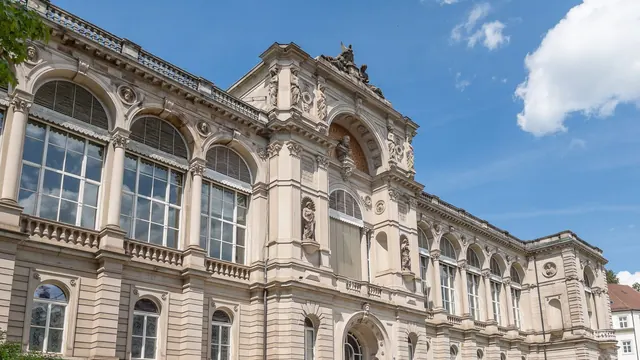
Photo: Kent Wang, CC BY-SA 2.0, cropped
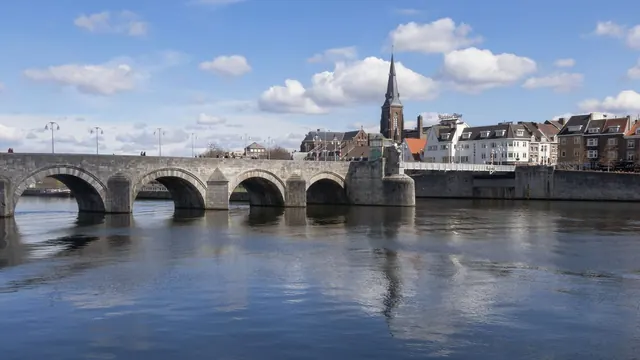
Photo: Michielverbeek, CC BY-SA 4.0, cropped
Your match
Too close to call, 2 points apart
Wins on wellness and live music and the arts with your weighting.
Wins on nightlife and shopping with your weighting.
What matters to you?
Pick a travel style or drag the sliders. The match scores above update as you do.
The verdict
Baden-Baden is for travellers who want to slow right down. Its thermal baths are the whole point of the place, the Black Forest starts at the edge of town, and evenings bring a concert at the Festspielhaus or a walk under the trees of the Lichtentaler Allee. It suits couples and older travellers who want rest, fresh air and good classical music more than a busy programme.
Pick Maastricht if you want a livelier, more sociable short break. The medieval centre is flat and easy to cover on foot, the café terraces and brown cafés stay busy with students, and the boutiques of the Stokstraat give a weekend some purpose. It is also a little easier on the wallet, and Aachen and Liège are close enough to add a second country to the trip without effort.
Scoreboard
Our verdict on each category, scored 0 to 100 against fixed benchmark cities.
Category by category
What the scores mean for a trip to Baden-Baden or Maastricht.
Beaches & swimming88
On swimming the two are level, and neither is a place to come for it. Both are far from any coast, and in summer locals head to old gravel-pit lakes, along the Rhine plain near Baden-Baden and along the Maas around Maastricht. The difference is that Baden-Baden has thermal water as well: the outdoor pools at Caracalla are where most visitors there will actually swim.
Food & drink4558
Maastricht is the better place to eat in town. Limburg cooking, Belgian beer and a fine-dining tier that is strong for a city this size all sit within a short walk, on terraces around the Vrijthof and the Markt or across the river in Wyck.
Baden-Baden's centre is mostly hotel dining and cake-and-coffee cafés, although Baden cooking is excellent and leans towards France. Its real asset is wine. The Riesling and Pinot Noir taverns of the Rebland villages just outside town make a better evening than anything Maastricht's own hillsides offer, and the famous restaurants of the northern Black Forest are within a drive.
Culture & sights5260
Maastricht offers more to see, and from a deeper past. Two Romanesque basilicas, the Helpoort and the old walls along the Jeker, a 13th-century bridge and guided walks through the Sint-Pietersberg tunnels add up to around a thousand years of history. The Bonnefanten covers both old masters and contemporary art.
Baden-Baden's appeal is narrower and more unified. The whole town is a preserved Belle Époque resort, with the Kurhaus, the Trinkhalle and the hillside villas, and the Museum Frieder Burda for modern art. In both places two days is enough to see the main sights.
Nightlife1542
Baden-Baden's evenings are an occasion rather than a session. The big outing is the Kurhaus casino, where you dress for the gilded rooms, then perhaps a nightcap in a hotel bar or a glass of local Riesling in an old-town wine bar. The company is mostly middle-aged and up, and the town has largely gone to bed by the hour Maastricht's cafés are at their fullest. Dancing means a trip to a bigger city.
Maastricht has far more going on after dark, and its students are the reason. In term time the brown cafés and squares around the Markt, the Platielstraat and the lanes off the Vrijthof stay busy late at weekends, with Belgian beer on every table and a young, mixed crowd. There are only a few clubs, so a big night still often means crossing the border. In the days before Lent, though, carnival turns the whole city into a street party that runs day and night.
Nature & outdoors7058
Baden-Baden has the bigger landscape on its doorstep. The Merkur funicular and the Battert cliffs open onto fir forest, and the Black Forest High Road climbs past the Mummelsee to moorland at over 1,100m, with waterfalls, mountain biking and some winter skiing.
Maastricht's countryside is gentler. There are the marl cliffs of the Sint-Pietersberg, orchards and sunken lanes in the Heuvelland, and heath in the Hoge Kempen across the border. It is lovely on a bike, but it is farmland and low hills rather than forest upland.
Day trips7877
Both are superb bases for day trips, and what differs is the choice on offer. From Baden-Baden it is Strasbourg and the wine villages of Alsace, Heidelberg, Freiburg and UNESCO sites such as Speyer and Maulbronn, and many of these are much easier with a car.
Maastricht's trips are shorter and easier by train. Aachen and Liège are each about half an hour away, Tongeren and Valkenburg are closer still, and Cologne, Brussels and Leuven work as longer days out across three countries.
Good for families5055
Neither town is designed for children, and families in both spend their best days just outside. Maastricht is the easier base: it is flat and good with a buggy, the Sint-Pietersberg tunnels make a real adventure, and the caves, cable car and fairy-tale park at Valkenburg are about twenty minutes away.
Baden-Baden is quieter and built for adults, and young children are not allowed into the Friedrichsbad. Its trump card is Europa-Park, about an hour south, along with the Merkur funicular and forest trails for active children.
Getting around6274
Maastricht is the easier town to get around. Its centre is flat and largely pedestrianised, everything is within about a fifteen-minute walk, riverside paths make cycling simple, and the station is a short stroll over the bridge in Wyck.
Baden-Baden's centre is also small, but some streets climb steeply and the station is a few kilometres out in Oos, so arriving means taking a bus. Its best outings, to the High Road, the wine villages and Alsace, really need a car.
Shopping & style3860
Maastricht is a shopping destination, and visitors from three countries come for it. It has designer boutiques in the old houses of the Stokstraat, chains on the Grote Staat, vintage and interiors shops in Wyck and a weekly market on the Markt.
Baden-Baden is more refined but much smaller in scale. Sophienstraße and Lange Straße have jewellers, watchmakers and delicatessens for a wealthy spa crowd, but there is no market and no department store, and keen shoppers drive to Strasbourg.
Affordability3038
Neither is cheap, but Maastricht is the gentler of the two. You pay the normal Dutch prices, the walkable centre means transport costs almost nothing, and staying from Sunday to Thursday helps a great deal.
Baden-Baden was built for the rich, and grand hotels set its prices. Every visit to the baths costs extra, so a stay built around them adds up fast. Guesthouses and wine taverns keep things manageable for anyone who chooses carefully.
Live music & performing arts5840
Baden-Baden is the clear choice for music lovers. The Festspielhaus, one of Germany's largest opera and concert houses, brings leading international orchestras and soloists. Add the town's own philharmonic in the Kurhaus, a small nineteenth-century theatre and the legacy of Brahms and Clara Schumann.
Maastricht's scene is busier but more local. The Vrijthof theatre hosts the regional orchestra and opera, students from the conservatory give recitals, there are small jazz cafés, and big open-air concerts fill the square in summer.
Wellness & relaxation9652
Here Baden-Baden is in a class of its own. Roman hot springs rise beneath the old town, the Friedrichsbad leads you through a silent sequence of hot rooms and pools, and Caracalla adds large saunas and outdoor thermal pools. The whole town keeps to the same unhurried pace around them.
Maastricht has no baths of its own. Its spa options are trips out: thermal pools above Valkenburg, Aachen's Roman-era springs, and the Belgian town of Spa within an hour. What it offers in town is long lunches and slow walks along the Maas.
Which traveller are you?
On a relaxing and wellness trip, Baden-Baden is the obvious pick. You can fill whole days between the Friedrichsbad and Caracalla without leaving town, and nothing in the evening pulls you away from an early night. In Maastricht, every thermal pool means a trip out.
For a food and nightlife trip, Baden-Baden offers wine taverns and a smart casino, but evenings wind down early. Maastricht suits this trip far better. Long dinners lead into brown cafés full of students and Belgian beer, and carnival turns the whole city into one party.
On a shopping trip, Baden-Baden has a couple of polished streets of jewellers and watchmakers, enough for an hour's browsing between baths. Maastricht is somewhere people come specifically to shop. Its fashion, design and food shops can fill two unhurried days of wandering, with a terrace stop between each street.
When should you go?
Pick the month you can travel and see both cities side by side. The climate figures are measured averages, not a forecast.
| July | Baden-Baden | Maastricht |
|---|---|---|
| Daytime high | 25 °C | 24 °C |
| Night-time low | 14 °C | 14 °C |
| Rainfall in the month | 117 mm | 73 mm |
| Sunshine | 8 hours a day | 7 hours a day |
| Daylight | 16 hours a day | 16 hours a day |
Neither town has a beach season, so think of summer as walking and terrace weather. Both are at their best from May to September, when afternoons are warm without being hot, and both are cold and grey from November to February at around 6°C. Baden-Baden runs a touch warmer and noticeably sunnier in high summer, which suits forest walks and the outdoor pools at Caracalla.
The real difference is rain. Baden-Baden is wet in every month, often with more than 100mm, against the edge of the Black Forest. Maastricht is much drier, with April the driest month at about 41mm, so spring and early autumn there are a safer bet for long days on foot. In Baden-Baden the thermal baths make a damp winter day far easier to enjoy.
The whole year
Each row is shaded against that destination’s own year, so the deepest cell is its best month for that figure and the palest its weakest. Shades are not comparable between the two rows.
Temperature and rainfall are climate normals, averaged over the years shown. Baden-Baden: 1991-2020 normals, Baden-Baden-Geroldsau (3.9 km from centre). Maastricht: 1991-2020 normals, Maastricht Airport Zuid Limburg (10 km from centre).
Getting there
| Flying from | Baden-Baden | Maastricht |
|---|---|---|
| SingaporeSIN, XSP | 12 h 45 m no fares FRA · 143 km | 13 h 5 m no fares BRU · 85 km |
| Sao PauloGRU, VCP, CGH, RTE | 12 h 10 m no fares FRA · 143 km | 12 h 0 m no fares BRU · 85 km |
| LondonLHR, LGW, STN, LTN +2 | 1 h 30 m no fares FKB · 12 km | 1 h 10 m no fares EIN · 70 km |
| New YorkJFK, EWR, LGA | 7 h 55 m €537-713 FRA · 143 km | 7 h 35 m no fares BRU · 85 km |
| PalmaPMI | 2 h 0 m no fares FKB · 12 km | 2 h 10 m no fares LGG · 29 km |
| ValenciaVLC | 2 h 5 m no fares FKB · 12 km | 2 h 20 m €155 EIN · 70 km |
| FaroFAO | 2 h 50 m no fares FKB · 12 km | 2 h 55 m €223 EIN · 70 km |
| SofiaSOF | 2 h 15 m no fares FKB · 12 km | 2 h 40 m €98-110 EIN · 70 km |
| BudapestBUD | 1 h 35 m no fares STR · 72 km | 1 h 55 m €106-231 EIN · 70 km |
| MarrakechRAK | 3 h 15 m no fares BSL · 140 km | 3 h 35 m no fares EIN · 70 km |
The busiest departure cities for these two, with a place kept for each other part of the world. Busiest means arriving passengers where an official count exists, and where none does, the number of non-stop services flown: official route statistics are published by the European reporting countries and by nobody else, so a table ranked on them alone would offer a reader in New York or Tokyo ten European cities. Flying times are estimated from the distance between airports, and every row is a city flown non-stop to both. Where the typical offer connects anyway, the stops are shown. Under each figure is the airport the flight lands at and how far that is from the centre, because the nearest airport is not always the one a route is flown to. Where both columns name the same airport it is one flight, and the difference between the two is the distance printed beside it. Typical return fares for 2026-09 to 2026-10, cached market data up to 7 days old. The figure is the middle half of the offers found, so a single price means they agreed and a range means they did not; for a typical route that middle half spans about a quarter of the median, and for the least settled routes rather more than the median itself.
Before you go
| Measure | Baden-Baden | Maastricht |
|---|---|---|
| Official language | German | Dutch |
| Currency | Euro (EUR) | Euro (EUR) |
| Sockets | CF230 V, 50 Hz | CF230 V, 50 Hz |
| Driving side | Right | Right |
| Time zone | UTC+1, UTC+2 in summer | UTC+1, UTC+2 in summer |
| Emergency number | 112 | 112 or 911 |
| Elevation | 181 m | 49 m |
| Main airport | Karlsruhe Baden-Baden Airport (FKB)12 km from centre43 non-stop destinations | Maastricht Aachen Airport (MST)9 km from centre5 non-stop destinations |
| Public holidays this year | 12 days | 11 days |
By the numbers
| Measure | Baden-Baden | Maastricht |
|---|---|---|
| City population | 56,952 | 120,227 |
| People per km² | 406 | 2,000 |
| Museums within 10 km | 11 | 21 |
| UNESCO World Heritage sites within 50 km | 2 | 5 |
Where else could you go?
Every comparison below shares a destination with this one, so you can follow Baden-Baden or Maastricht somewhere new.