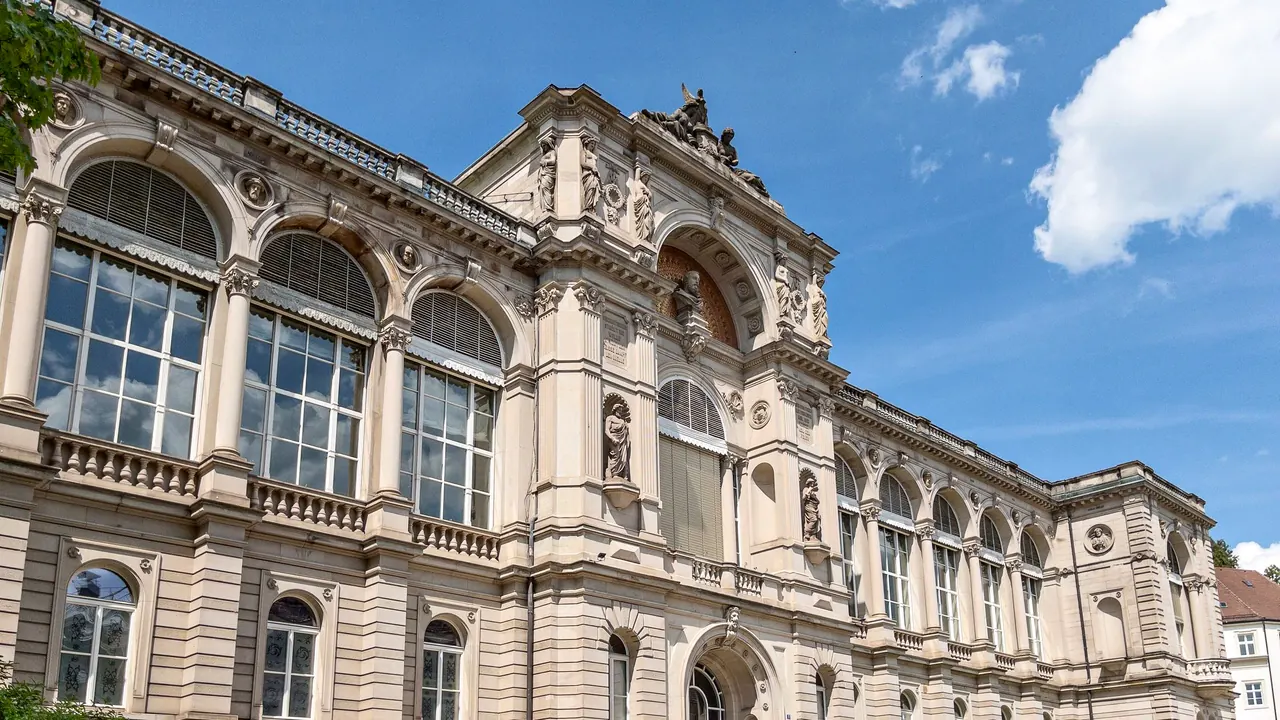
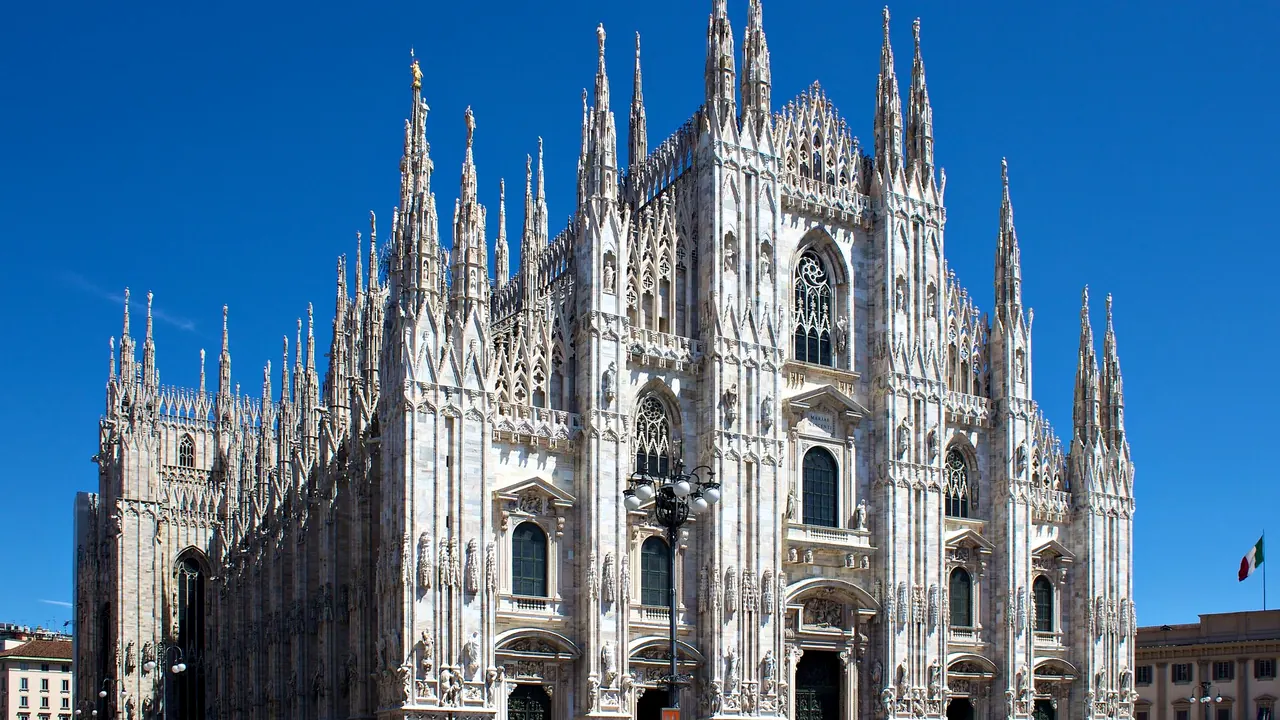
Photos: Baden-Baden by Kent Wang, CC BY-SA 2.0, cropped; Milan by Jiuguang Wang, CC BY-SA 3.0, cropped.
Baden-Baden or Milan?
Our verdict in twelve categories, each scored against the same fixed benchmark cities, and the climate month by month, so you can choose for your trip.
Choose Baden-Baden for
- wellness
- nature and the outdoors
Baden-Baden is the choice for travellers who want to slow down. Its thermal baths, the domed Friedrichsbad and the modern Caracalla, set the pace of a stay built around bathing, walks along the Lichtentaler Allee and early nights. The Black Forest starts at the edge of town and Strasbourg is within easy reach. It suits couples and older travellers better than anyone wanting late evenings or a long list of sights.
Choose Milan for
- shopping
- nightlife
- food and drink
Pick Milan if you want a city that keeps you busy. Fashion shopping in the Quadrilatero, the Duomo and the Last Supper, opera at La Scala and aperitivo along the Navigli give you far more to fill both days and evenings. Its rail links also put Lake Como, Bergamo and Verona within an hour or so. It is no place to unwind, though, and neither town is cheap.
Scoreboard
Twelve categories on one fixed scale from 0 to 100. The shaded stretch is the gap between the two.
Your match
Pick a travel style or drag the sliders, and both match scores follow your weighting.
Wins on wellness and nature and the outdoors with your weighting.
Wins on shopping and nightlife with your weighting.
What matters to you?
Category by category
What the scores mean for a trip.
Beaches & swimming
Neither city is a beach destination. Baden-Baden has only the flooded gravel pits of the Rhine plain and outdoor pools, which are fine for a hot afternoon and nothing more.
Milan does a little better. The Idroscalo has lidos on the edge of town, and an hour away by train there is pebbly swimming on Lake Como and Lake Maggiore, where the water warms to about 23°C in August. In Milan a summer swim is an easy day out. In Baden-Baden it is something you fit around a hot afternoon.
Food & drink
Baden-Baden eats well for a small town, with Flammkuchen, venison and Black Forest gateau. Its real asset is the Riesling and Pinot Noir from the Rebland villages just outside, drunk in their own wine taverns. In the centre itself, the choice narrows to hotel dining and cake-and-coffee cafés.
Milan has far more range: saffron risotto and ossobuco, cooking from every Italian region, a serious tier of fine dining and the aperitivo ritual in Brera, Isola and along the canals. A week of evenings in Milan need never repeat a kitchen, which a few nights in Baden-Baden cannot promise.
Culture & sights
In Baden-Baden, the main sight is the town itself: the Kurhaus, the colonnaded Trinkhalle, the Lichtentaler Allee and the hillside villas of an intact Belle Époque spa. The Museum Frieder Burda and Brahms's summer house add to it, and the whole visit fills a day or two.
Milan has less of an unbroken historic townscape, but its individual works carry far more weight. The Duomo's rooftop terraces, Leonardo's Last Supper, the paintings in the Brera and Michelangelo's Rondanini Pietà at the Castello are of world rank, even if they come in clusters within a mostly modern city.
Nightlife
Baden-Baden goes to bed early. The casino in the Kurhaus, dress code and all, is the main event of the evening, followed by hotel and wine bars with an older crowd.
Milan has a real night scene. Aperitivo spills onto the towpath bars of the Navigli, Porta Venezia has the gay scene, dressy clubs cluster near Corso Como and warehouse nights run on the city's edges. It quietens in August, but even then it offers far more than a smart evening at the gaming tables.
Nature & outdoors
Both cities reach good country quickly, but in different ways. From Baden-Baden you can walk straight into it: the Merkur funicular, the Battert cliffs and the fir-forest trails begin at the edge of town, and the Black Forest High Road climbs to the Mummelsee and the moorland of the Hornisgrinde.
Milan itself sits on the flat Po plain, with only parks and canal towpaths. To get into nature you take a train to Lake Como or Lake Maggiore and the Prealps above them, for sailing, steeper hiking and via ferrata. The choice is between wooded upland on your doorstep and lakes with sharper mountains an hour away.
Day trips
Baden-Baden is well placed. Strasbourg, Heidelberg and Freiburg are each about an hour away, the Alsace wine villages lie beyond, and Maulbronn and Speyer are within reach. A car makes the Alsace and Black Forest outings far easier.
Milan goes further on high-speed rail alone. Verona, Turin and Bergamo are around an hour away, Bologna not much more, and the Borromean Islands, the Certosa di Pavia, Mantua and Cremona fill out the list. More first-rate places are within reach without ever needing to drive.
Good for families
Neither is built around children, and the two come out about even. Baden-Baden is safe and quiet, with the funicular and forest trails for younger legs, but the Friedrichsbad does not admit young children and the big outing is Europa-Park, about an hour south.
Milan has more to do in town, especially the science and technology museum with its submarine, and Leolandia and Gardaland are within reach. Against that, the summer heat and the mostly adult sights weigh on a family stay.
Getting around
Baden-Baden's centre is small enough to walk, though some streets climb steeply and the station is a bus ride out in Oos. Beyond the town, the wine villages and the High Road really need a car.
Milan is easier. With a flat centre, five simple metro lines and a dense tram network that includes the old orange cars, you will not need a car, and trains run direct to the lakes. Its weak points are stuffy platforms in summer and the long transfer from Malpensa.
Shopping & style
Baden-Baden's Sophienstraße and Lange Straße carry jewellers, watchmakers and boutiques aimed at spa guests. They are pleasant for an unhurried browse, but there are no department stores or real markets.
Milan is one of the world's fashion capitals. The great houses have their flagships on Via Montenapoleone, La Rinascente stands beside the Duomo, Corso Buenos Aires covers everyday shopping, Porta Ticinese has vintage shops and there are design showrooms across the city. Shopping here is a reason to travel in its own right.
Affordability
Both cities are expensive, and roughly equally so. In Baden-Baden the cost comes from the grand hotels and from paying for every visit to the baths, while guesthouses, bakeries and wine taverns stay reasonable.
In Milan the pressure comes from hotel rooms, especially during trade fairs and fashion weeks, and from drinks in smart bars. Aperitivo snacks in place of supper, lunchtime office menus and a room near an outer metro stop all help.
Live music & performing arts
For classical music, Baden-Baden does far better than its size suggests. The Festspielhaus brings international orchestras and opera, the town's philharmonic plays in the Kurhaus, and the town still carries the memory of Brahms and Clara Schumann. Beyond classical music there is little.
Milan has La Scala, one of the most famous opera houses anywhere, with a season that opens each December. Around it are the Piccolo Teatro, a fine symphony orchestra, musicals, jazz rooms and stadium concerts at San Siro, so the range is much wider in every genre, although summer is quiet for opera.
Wellness & relaxation
Here Baden-Baden is in a different league. Hot springs used by the Romans feed the Friedrichsbad, with its silent, unclothed sequence of hot rooms and scrubs, and the modern Caracalla next door, and the whole town keeps to the slow pace of a cure.
Milan has a thermal spa complex, some hotel spas and the summer pools of the Bagni Misteriosi, but it is a working city. Real rest there usually means an hour on the train to the lakes.
When should you go?
Pick your month. The climate figures are measured averages, not a forecast.
Baden-Baden in July
Milan in July
Daytime high, °C
Rainfall in the month, mm
Where the figures come from
Milan's sunshine is measured 41 km from the centre, at Novara / Cameri.
Temperature and rainfall are climate normals, averaged over the years shown. Baden-Baden: 1991-2020 normals, Baden-Baden-Geroldsau (3.9 km from centre). Milan: 1991-2020 (rainfall 1971-2000) normals, Milano / Linate (8 km from centre).
Baden-Baden is at its mildest and brightest from May to September. Highs of around 25°C in July and August make forest walks and evenings in the wine villages pleasant rather than tiring. Rain falls steadily all year at roughly 100mm a month, so you can get a wet day in any season, although the baths make that matter less. Winter is grey and cold, with very little sunshine in December.
Milan runs hotter and changes more with the seasons. July and August reach about 30°C on the humid plain, which is heavy going for sightseeing on foot but the only time the lakes are comfortable for swimming. Spring and September are the best months for the streets. October and May are the wettest, with up to 119mm in October. Winters are similarly cold in both places, but Milan's are drier and a little sunnier.
Which traveller are you?
On a relaxing and wellness trip, Baden-Baden is the clear pick. Bathing is the whole point of the town, from the Friedrichsbad's silent sequence of rooms to Caracalla's pools and saunas, and everything else moves slowly around it. In Milan, real rest means leaving for the lakes.
For a shopping trip, Milan wins by a wide margin. The Quadrilatero holds the flagships of the great Italian fashion houses, and beyond it are design showrooms, Brera boutiques and the Navigli antique markets. Baden-Baden's jewellers on Sophienstraße make pleasant browsing, but little more.
On a food and nightlife trip, Milan is far ahead. Risotto, cotoletta and cooking from every Italian region are all here, and aperitivo leads on to canal-side bars and clubs around Corso Como. Baden-Baden offers wine taverns and the casino, then quiet streets.
Before you go
| Measure | Baden-Baden | Milan |
|---|---|---|
| Official language | German | Italian |
| Currency | Euro (EUR) | Euro (EUR) |
| Sockets | CF230 V, 50 Hz | CFL230 V, 50 Hz |
| Driving side | Right | Right |
| Time zone | UTC+1, UTC+2 in summer | UTC+1, UTC+2 in summer |
| Emergency number | 112 | 112 |
| Elevation | 181 m | 138 m |
| Main airport | Karlsruhe Baden-Baden Airport (FKB)12 km from centre44 non-stop destinations | Milan Malpensa International Airport (MXP)40 km from centre208 non-stop destinations |
| Public holidays this year | 12 days | 13 days |
By the numbers
| Measure | Baden-Baden | Milan |
|---|---|---|
| Population | 56,952 | 1,354,196 |
| People per km² | 406 | 7,453 |
| Museums within 10 km | 11 | 88 |
| UNESCO World Heritage sites within 50 km | 3 | 4 |
Where else could you go?
Every comparison below shares a destination with this one, so you can follow Baden-Baden or Milan somewhere new.
- Comovs Milan
- Strasbourgvs Baden-Baden
- Bergamovs Milan
- Luganovs Milan
- Stuttgartvs Baden-Baden
- Heidelbergvs Baden-Baden