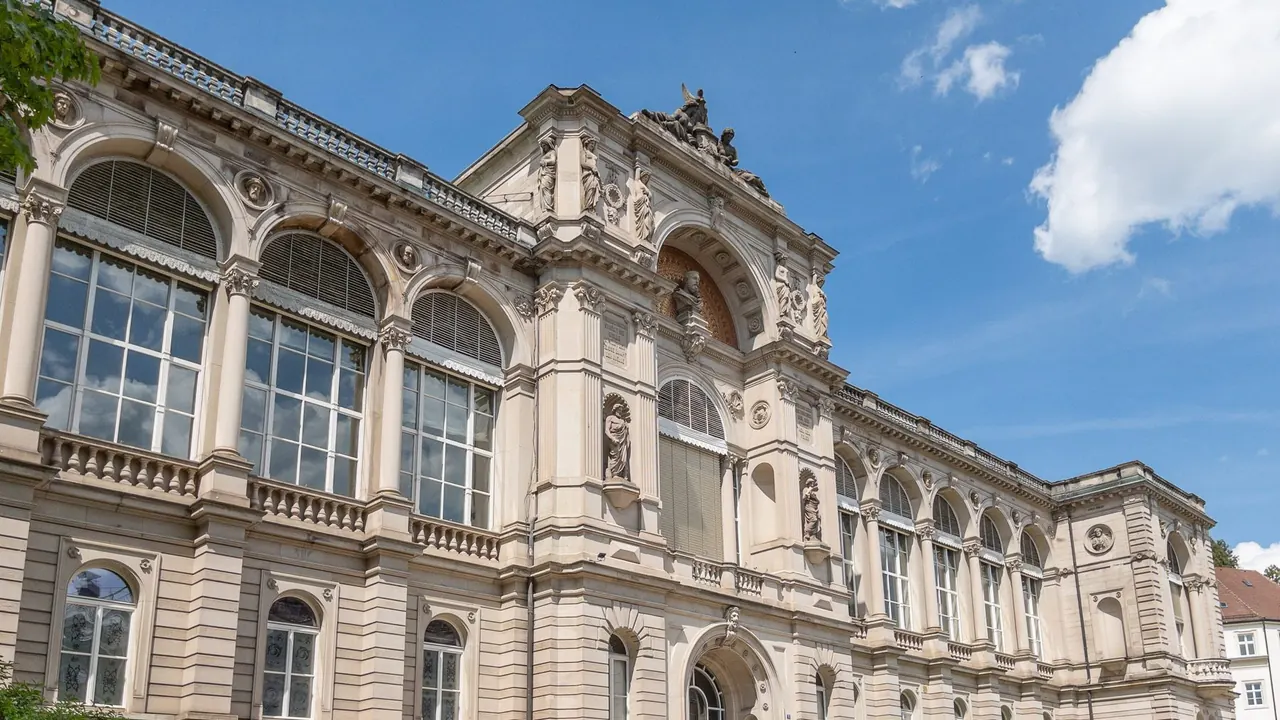
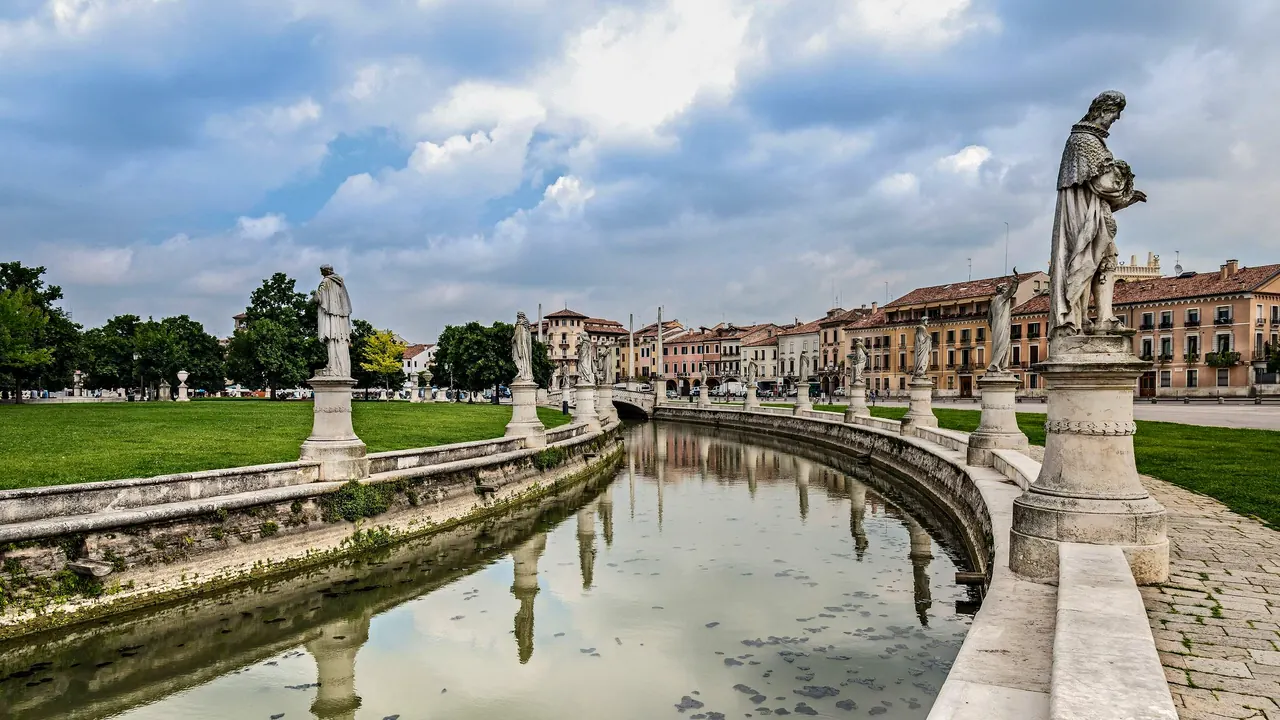
Photos: Baden-Baden by Kent Wang, CC BY-SA 2.0, cropped; Padua by Didier Descouens, CC BY-SA 4.0, cropped.
Baden-Baden or Padua?
Our verdict in twelve categories, each scored against the same fixed benchmark cities, and the climate month by month, so you can choose for your trip.
Choose Baden-Baden for
- wellness
- live music and the arts
- nature and the outdoors
Baden-Baden is for the traveller who wants to slow right down. The thermal baths are the whole point of the town, and they come with Belle Époque streets, forest walks that begin at the edge of town and evenings of serious classical music at the Festspielhaus. It suits a restful, rather grown-up stay, and walkers who want the Black Forest close by. You need to accept that it is expensive and goes quiet early.
Choose Padua for
- nightlife
- prices
- beaches
Padua gives you more for less. Giotto's frescoes and the Basilica of Saint Anthony make the sightseeing richer, the market squares and the evening spritz give the food and social life more character, and the station puts Venice, Verona and Bologna within easy reach without a car. It is the better pick for a sociable, culture-led trip on a moderate budget, with the spa towns of Abano close by for a soak.
Scoreboard
Twelve categories on one fixed scale from 0 to 100. The shaded stretch is the gap between the two.
Your match
Pick a travel style or drag the sliders, and both match scores follow your weighting.
Wins on wellness and live music and the arts with your weighting.
Wins on nightlife and prices with your weighting.
What matters to you?
Category by category
What the scores mean for a trip.
Beaches & swimming
Neither city is a beach destination, but Padua at least has the sea within reach. The Adriatic at Sottomarina or the Lido of Venice is about an hour away, warm, shallow and calm enough for small children, though the shore is long rows of umbrellas rather than scenery. From Baden-Baden the coast is out of reach, and summer swimming means outdoor pools or the gravel lakes on the Rhine plain.
Food & drink
Padua is the better place to eat. Its food centres on the twin markets beneath the Palazzo della Ragione and on Venetian home cooking such as bigoli with duck sauce and baccalà. The early-evening spritz with small bites is a daily ritual, and the Euganean Hills supply the local wine.
Baden-Baden's strength is wine, mainly Riesling and Pinot Noir from the Rebland villages, plus Black Forest staples and cake. The town centre leans towards hotel dining and cafés, so for its best meals you drive into the forest.
Culture & sights
Padua has the more important art. Giotto's Scrovegni Chapel alone justifies a visit, and around it are the UNESCO-listed fresco cycles, Donatello's work at the Basilica of Saint Anthony, the world's oldest permanent anatomical theatre and a botanical garden founded in 1545.
Baden-Baden is better seen as a single ensemble: a spa resort of the aristocratic age, with the Kurhaus, the Trinkhalle and the Lichtentaler Allee, plus good modern art at the Museum Frieder Burda. Both centres can be covered in a couple of days, but Padua's sights carry far more weight.
Nightlife
Padua's evenings are livelier by some distance. During term, students and locals fill Piazza delle Erbe and Piazza dei Signori from aperitivo hour until late, and small wine bars run through the old ghetto. Clubs are few in both places.
Baden-Baden's one signature night out is the gilded casino in the Kurhaus, which has a dress code. Otherwise it is hotel bars, an older crowd and quiet streets well before midnight.
Nature & outdoors
Baden-Baden has the edge because the forest starts at the town's edge. The Merkur funicular, the Battert cliffs and the Panoramaweg are all close to the centre, and the Black Forest High Road leads up to the Mummelsee and the moorland of the Hornisgrinde, with modest skiing in winter.
Padua sits on a flat plain, so getting outdoors takes a short trip. The Euganean Hills, about 15km away, offer vineyard trails and good road cycling, and the Brenta towpaths make easy bike rides. For real mountain walking, the pre-Alps are about an hour and a half by car.
Day trips
Baden-Baden is a good base, but its outings take more time and planning. Strasbourg's cathedral and Petite France are about an hour away, Heidelberg and Freiburg are each roughly an hour by train, and the UNESCO sites at Speyer and Maulbronn are about an hour by car. Many of the best trips, along the Alsace wine route to Colmar or into the Black Forest towns, really need a car.
Padua is the stronger base by a wide margin. Venice is under half an hour by train, close enough to visit on several days and still sleep somewhere quieter. Vicenza's Palladian buildings are a quarter of an hour away, Verona and Bologna about an hour, and the Brenta villas and the walled towns around the Euganean Hills are closer still. Almost all of it can be done without a car.
Good for families
Baden-Baden is slightly the better choice for children, mostly for what lies around it. The funicular, the forest trails and the park along the Oos are easy outings, and Europa-Park, one of Europe's largest theme parks, is about an hour away. The town is still made for adults, though, and the Friedrichsbad does not admit young children.
Padua's flat, traffic-free centre and child-friendly trattorias make everyday life easy, and Prato della Valle has room to run. Its main sights, however, are frescoes and churches, so families end up heading for Gardaland or the Adriatic.
Getting around
Padua is the easier city to get around. Its centre is flat and arcaded, mostly closed to traffic, and everything from the Scrovegni Chapel to the Basilica is within a 20-minute walk. A tram runs from the station, and the main rail lines go in every direction.
Baden-Baden's centre is just as compact, but some streets are steep and the station sits a few kilometres out in Oos. Trains serve the bigger cities well, but the wine villages, the High Road and Alsace really need a car.
Shopping & style
The two are close, but they differ in kind. Baden-Baden's Sophienstraße and Lange Straße are polished and upmarket, with jewellers, watchmakers and boutiques aimed at spa guests, but there is little beyond them.
Padua offers more variety: Italian fashion and shoe shops under the arcades, university bookshops, food markets every morning for cheese and wine to take home, and a large antiques market in Prato della Valle one Sunday a month.
Affordability
Padua is noticeably cheaper. Its hotels are moderately priced for the region, which is why many people base themselves there for Venice. Market food and standing drinks cost little, and you can walk almost everywhere.
Baden-Baden still caters to the wealthy, with grand hotels setting price levels and a charge for every visit to the baths. Guesthouses and wine taverns help, but a stay built around the spas adds up quickly.
Live music & performing arts
Baden-Baden is the stronger choice here, which is unusual for such a small town. The Festspielhaus, one of Germany's largest opera and concert houses, brings leading international orchestras and opera productions, and the town's own philharmonic and its small nineteenth-century theatre add to the programme. Brahms and Clara Schumann both worked here.
Padua offers a smaller local programme: theatre and some opera at Teatro Verdi, and chamber concerts in the Sala dei Giganti and the Basilica. For major opera, you take the train to La Fenice in Venice or the summer Arena in Verona.
Wellness & relaxation
Baden-Baden exists for its waters, and it shows. The domed Friedrichsbad takes you through a fixed, silent sequence of hot rooms and pools, Caracalla next door adds large indoor and outdoor pools and saunas, and the whole town keeps to the same unhurried pace.
Padua has a serious spa option as well, but outside the city. Abano and Montegrotto Terme, about 12km away, form one of Europe's largest thermal districts, famous for their mud treatments. A soak there is easy after a morning of sightseeing, but it is a side trip rather than the heart of the stay.
When should you go?
Pick your month. The climate figures are measured averages, not a forecast.
Baden-Baden in July
Padua in July
Daytime high, °C
Rainfall in the month, mm
Where the figures come from
Padua's temperatures are measured 35 km from the centre, at Treviso / Istrana.
Padua has no rain gauge within 25 km of the centre, so its rainfall comes from a gridded climate dataset read at the city rather than from a gauge further away.
Padua's sunshine is measured 36 km from the centre, at Treviso / S. Angelo.
Temperature and rainfall are climate normals, averaged over the years shown. Baden-Baden: 1991-2020 normals, Baden-Baden-Geroldsau (3.9 km from centre). Padua: 1991-2020 normals, Treviso / Istrana (35.4 km from centre).
Baden-Baden is mild and green rather than hot. Summer highs reach about 25°C, sunshine peaks in July and rain falls steadily all year, with no real dry season. That makes May to September the best time for forest walking and the wine villages, with October bringing autumn colour. Winter is grey and cold, but the hot baths are just as good then, so the town works as a spa break in any month.
Padua runs hotter and sunnier. July and August reach about 31°C with heavy humidity, too warm for long walks round the sights, though the Adriatic is then at its warmest, around 26°C, for a beach day. April, May, September and October are the comfortable months for exploring. Winters are drier than Baden-Baden's but bring low fog across the plain, and November is the wettest month at about 97mm.
Which traveller are you?
On a relaxing and wellness trip, Baden-Baden is the clear choice. The Friedrichsbad and Caracalla are right in the centre, and the whole town keeps a slow pace. In Padua the thermal pools are at Abano, a short ride out of the city.
For a food and nightlife trip, Padua wins easily. Mornings start at the market stalls in Piazza delle Erbe, evenings at a standing spritz in squares full of students. Baden-Baden offers wine taverns and a smart casino, and the streets go quiet early.
On a tight budget, Padua is much kinder. Its hotels are moderately priced, market food and trattorias cost little, and trains make car-free day trips easy. Baden-Baden was built for the wealthy, and every visit to the baths adds to the bill.
Before you go
| Measure | Baden-Baden | Padua |
|---|---|---|
| Official language | German | Italian |
| Currency | Euro (EUR) | Euro (EUR) |
| Sockets | CF230 V, 50 Hz | CFL230 V, 50 Hz |
| Driving side | Right | Right |
| Time zone | UTC+1, UTC+2 in summer | UTC+1, UTC+2 in summer |
| Emergency number | 112 | 112 |
| Elevation | 181 m | 12 m |
| Main airport | Karlsruhe Baden-Baden Airport (FKB)12 km from centre43 non-stop destinations | Venice Marco Polo Airport (VCE)39 km from centre103 non-stop destinations |
| Public holidays this year | 12 days | 13 days |
By the numbers
| Measure | Baden-Baden | Padua |
|---|---|---|
| City population | 56,952 | 206,496 |
| People per km² | 406 | 2,220 |
| Museums within 10 km | 11 | 29 |
| UNESCO World Heritage sites within 50 km | 3 | 5 |
| Swim season, months above 21 °C | - | 4 months |
Where else could you go?
Every comparison below shares a destination with this one, so you can follow Baden-Baden or Padua somewhere new.
- Venicevs Padua
- Strasbourgvs Baden-Baden
- Veronavs Padua
- Stuttgartvs Baden-Baden
- Heidelbergvs Baden-Baden
- Freiburgvs Baden-Baden