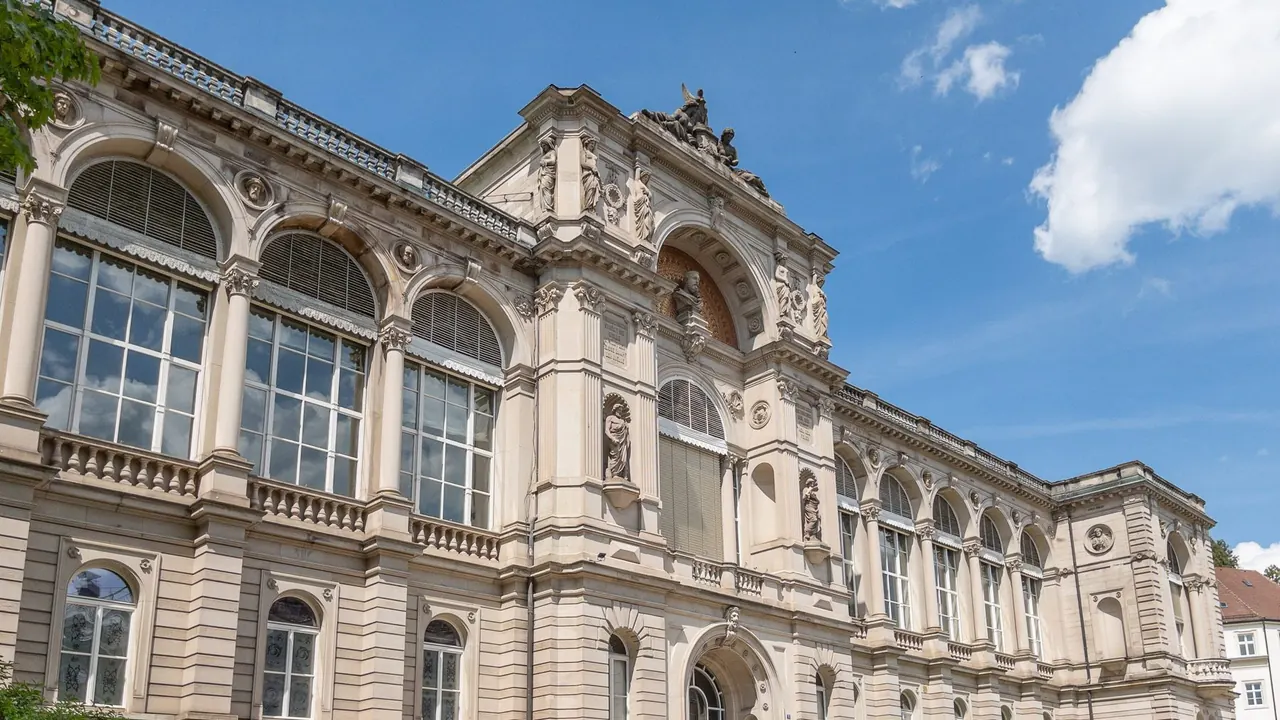
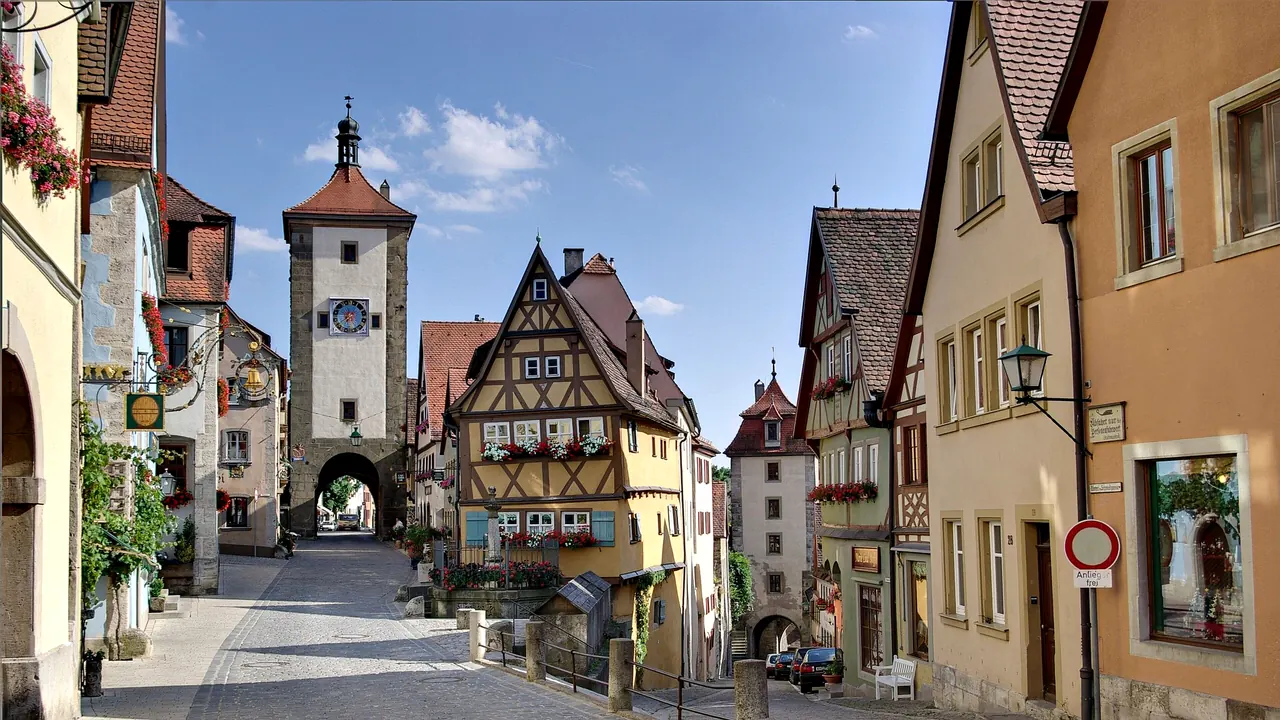
Photos: Baden-Baden by Kent Wang, CC BY-SA 2.0, cropped; Rothenburg ob der Tauber by Berthold Werner, Public domain.
Baden-Baden or Rothenburg ob der Tauber?
Our verdict in twelve categories, each scored against the same fixed benchmark cities, and the climate month by month, so you can choose for your trip.
Choose Baden-Baden for
- wellness
- live music and the arts
- nature and the outdoors
Baden-Baden is the choice for a slow, comfortable stay built around the thermal baths, with good regional food and wine, serious classical music and the Black Forest starting at the edge of town. It also makes the better base for a week, with Strasbourg, Alsace, Heidelberg and Freiburg all within easy reach, provided the budget can stand a town made for wealthy visitors.
Choose Rothenburg ob der Tauber for
- prices
- culture and sights
Rothenburg ob der Tauber suits travellers who want to step inside a walled medieval town and spend a day or two walking its ramparts, lanes and towers. Prices are gentler, evenings are very quiet, and it fits best as one stop on a drive along the Romantic Road rather than as a place to settle for long.
Scoreboard
Twelve categories on one fixed scale from 0 to 100. The shaded stretch is the gap between the two.
Your match
Pick a travel style or drag the sliders, and both match scores follow your weighting.
Wins on wellness and live music and the arts with your weighting.
Wins on prices and culture and sights with your weighting.
What matters to you?
Category by category
What the scores mean for a trip.
Beaches & swimming
Neither town has anything for a beach vacation, and both are a long way inland. What differs is the summer swim: Baden-Baden has outdoor pools and flooded gravel pits on the Rhine plain, while from Rothenburg you go to the town pool or drive about an hour to grassy shores on Franconian lakes such as the Altmühlsee. In Baden-Baden, water really means the hot thermal baths.
Food & drink
Baden-Baden eats noticeably better. It sits in one of Germany's strongest food regions, and French influence from across the Rhine shows in Flammkuchen on menus beside venison, Black Forest ham and cherry gateau. The Rebland villages on the slopes outside town make Riesling and Pinot Noir and pour them in their own taverns. The town itself has a limited range, but some of Germany's most celebrated restaurants are a short drive into the northern Black Forest.
Rothenburg keeps to hearty Franconian food such as Schäufele, bratwurst and dumplings, with Silvaner from the round Bocksbeutel bottle. Many kitchens around the Marktplatz cook for coach groups, so the better meals are in family-run guesthouses away from the square.
Culture & sights
Rothenburg has the stronger pull here because the whole town is a near-intact medieval walled town. You can walk the covered ramparts above the rooftops, see the Plönlein between its gate towers, and stand before Riemenschneider's carved Holy Blood Altar in St Jakob's.
Baden-Baden's townscape belongs to a different age: Belle Époque spa architecture around the Kurhaus, the Trinkhalle and the villas above Lichtentaler Allee, with Roman bath ruins below. It is also stronger for art, with the Museum Frieder Burda and the Kunsthalle side by side. Both towns repay a day or two, not a week.
Nightlife
Neither is a place for a night out, but Baden-Baden has slightly more going on after dinner. The gilded casino in the Kurhaus is a dressed-up evening in its own right, and there are hotel bars and wine bars, though the crowd is older.
Rothenburg goes almost silent once the day visitors leave. The night watchman's lantern tour is the main evening event, then come wine taverns and an early night. For clubs, people from Baden-Baden go to Strasbourg or Karlsruhe, and people from Rothenburg go to Würzburg or Nuremberg.
Nature & outdoors
Baden-Baden is far stronger outdoors, because the northern Black Forest starts at the edge of town. You can circle the town on the Panoramaweg through woods and vineyards, or walk between the Rebland wine villages. A drive up into the hills brings the dark Mummelsee, waterfalls and mountain-bike routes, and there is some skiing in a good winter.
Rothenburg's countryside is more for an afternoon than for several days out. Paths drop from the walls into the Tauber valley, past mills and the little Topplerschlösschen, and the riverside cycle path runs at an easy pace through vineyards and villages. This is farmland and orchards, at their best in spring blossom and autumn colour, with no higher or wilder ground within reach.
Day trips
Both towns make good bases, and Baden-Baden has the richer choice. Strasbourg is about an hour away, with the Alsace wine villages and Colmar beyond, and Heidelberg and Freiburg are each about an hour by direct train. Speyer cathedral and Maulbronn monastery add two UNESCO sites.
Rothenburg's outings follow the Romantic Road, to the walled towns of Dinkelsbühl and Nördlingen, which can feel too much like the town you just left. Würzburg's Residenz and Nuremberg are about an hour away. With the branch line and its changes, you will want a car for almost all of them.
Good for families
Baden-Baden does a little better for children, mostly thanks to what lies nearby. Europa-Park, one of Europe's biggest theme parks, is about an hour south, Karlsruhe zoo is closer, and the funicular and forest trails are good for children. The catch is that the Friedrichsbad turns away young children and the town itself is very grown-up.
In Rothenburg, children get a storybook to walk through: ramparts, the Rathaus tower and the night watchman. Older children often love the Crime Museum. One or two days covers it, though, and the cobbles are hard work with a pushchair.
Getting around
Both centres are small and easy on foot, so for getting around there is little to choose between them. The difference lies in arriving and leaving. Baden-Baden's station is a few kilometres out, with frequent buses into town, but it sits on a main line with easy trains to Karlsruhe and Freiburg.
Rothenburg's station is a short walk from the gates, but it is at the end of a branch line, so most journeys mean changing at Steinach, and regional buses are sparse. Expect steep streets in Baden-Baden and cobbles inside Rothenburg's walls. In both towns a car makes the countryside far easier.
Shopping & style
Baden-Baden is the better place to shop, especially at the upper end. Jewellers, watchmakers, fashion boutiques and delicatessens line Sophienstraße and Lange Straße, though there are no department stores, and serious shoppers go on to Strasbourg.
Rothenburg sells mostly souvenirs, with Christmas at the centre. Shops sell glass baubles, nutcrackers and Erzgebirge carvings all year, and the Christmas market on the Marktplatz is one of Germany's most atmospheric. Beyond that, fashion and everyday shopping are hard to find.
Affordability
Rothenburg is easier on the wallet. It has normal small-town German prices with an added cost for the setting, and staying in a village or just outside the walls saves a good deal.
Baden-Baden was built for wealthy guests and still takes its cue from its grand hotels. Every visit to the baths is paid separately, so a stay built around the spas adds up quickly, although bakeries and wine taverns are reasonable.
Live music & performing arts
Baden-Baden has much more for an evening at a performance. Its Festspielhaus is one of Germany's biggest opera and concert halls, so you can plan a stay around a leading orchestra or a full opera production. The small, ornate old theatre and the town's own orchestra fill other nights, and Brahms and Clara Schumann both worked here. If you want jazz or rock, though, you will find little.
In Rothenburg you would be lucky to find anything on a particular night. The costumed Meistertrunk play comes once a year, summer brings open-air theatre, and St Jakob's holds organ and choral concerts. There is no season of performances to plan around.
Wellness & relaxation
Baden-Baden exists because of its hot springs, and nowhere else in Germany beats it for wellness. In the domed Friedrichsbad you follow a silent sequence of hot rooms, scrubs and pools, while Caracalla adds modern indoor and outdoor pools and a large sauna area. The rest of the day can go on Lichtentaler Allee and cake.
Rothenburg has no bathing tradition of its own, only a few small hotel spas. Its calm comes from the empty lanes early in the morning and late in the evening. For thermal water you drive about an hour to Bad Windsheim's salt-water float pool or to Bad Mergentheim.
When should you go?
Pick your month. The climate figures are measured averages, not a forecast.
Baden-Baden in July
Rothenburg ob der Tauber in July
Daytime high, °C
Rainfall in the month, mm
Where the figures come from
Rothenburg ob der Tauber's sunshine is measured 27 km from the centre, at Feuchtwangen-heilbronn.
Temperature and rainfall are climate normals, averaged over the years shown. Baden-Baden: 1991-2020 normals, Baden-Baden-Geroldsau (3.9 km from centre). Rothenburg ob der Tauber: 1991-2020 normals, Rothenburg ob der Tauber (0.9 km from centre).
Summer is almost the same in both towns. Each reaches about 25°C in July and August and gets most sunshine in July, which is warm enough for long evenings outdoors but rarely too hot for walking. Spring and early autumn are mild and good for sightseeing in either. They differ in winter. Baden-Baden stays a little milder, with January highs around 6°C, and the hot baths make the grey months worth a visit. Rothenburg is colder, at about 3°C, so its cobbles and wall walk can be raw and icy.
Baden-Baden, on the western edge of the Black Forest, is the wetter of the two. It gets around 100mm or more in nearly every month, so bring something for showers whatever the season. Rothenburg has roughly half that rain over the year, but its wettest months are in summer, with July bringing about 66mm, so even there a dry spell is never guaranteed. April is its driest month.
Which traveller are you?
On a relaxing and wellness trip, Baden-Baden is the clear pick. The Friedrichsbad and Caracalla baths sit on Roman hot springs, the grand hotels have their own spas, and the whole town keeps an unhurried pace. Rothenburg means driving an hour to bathe.
For an outdoors trip, Baden-Baden again wins easily. Trails start at the town's edge, the Merkur funicular and Battert cliffs open up fir forest, and the Black Forest High Road climbs to moorland above 1,100m. Rothenburg's Tauber valley offers gentle walks and cycling only.
On a trip on a tight budget, Rothenburg ob der Tauber goes further. Rooms just outside the walls are good value, inns serve reasonably priced beer and wine, and the walls and lanes cost nothing. Baden-Baden was built for the rich and charges for every bath.
Before you go
| Measure | Baden-Baden | Rothenburg ob der Tauber |
|---|---|---|
| Official language | German | German |
| Currency | Euro (EUR) | Euro (EUR) |
| Sockets | CF230 V, 50 Hz | CF230 V, 50 Hz |
| Driving side | Right | Right |
| Time zone | UTC+1, UTC+2 in summer | UTC+1, UTC+2 in summer |
| Emergency number | 112 | 112 |
| Elevation | 181 m | 430 m |
| Main airport | Karlsruhe Baden-Baden Airport (FKB)12 km from centre44 non-stop destinations | Nuremberg Airport (NUE)66 km from centre56 non-stop destinations |
| Public holidays this year | 12 days | 12 days |
By the numbers
| Measure | Baden-Baden | Rothenburg ob der Tauber |
|---|---|---|
| City population | 56,952 | 11,331 |
| People per km² | 406 | 272 |
| Museums within 10 km | 11 | 6 |
| UNESCO World Heritage sites within 50 km | 3 | 2 |
Where else could you go?
Every comparison below shares a destination with this one, so you can follow Baden-Baden or Rothenburg ob der Tauber somewhere new.
- Strasbourgvs Baden-Baden
- Nurembergvs Rothenburg ob der Tauber
- Stuttgartvs Baden-Baden
- Bambergvs Rothenburg ob der Tauber
- Heidelbergvs Baden-Baden
- Freiburgvs Baden-Baden