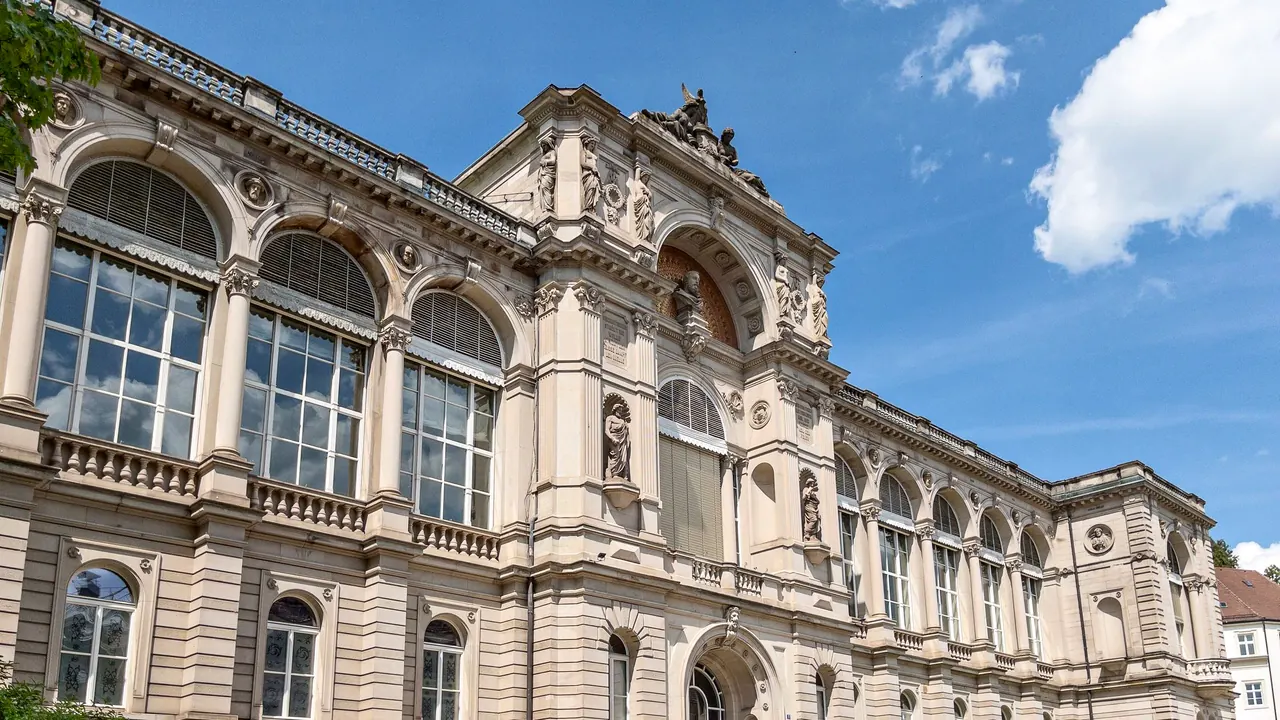
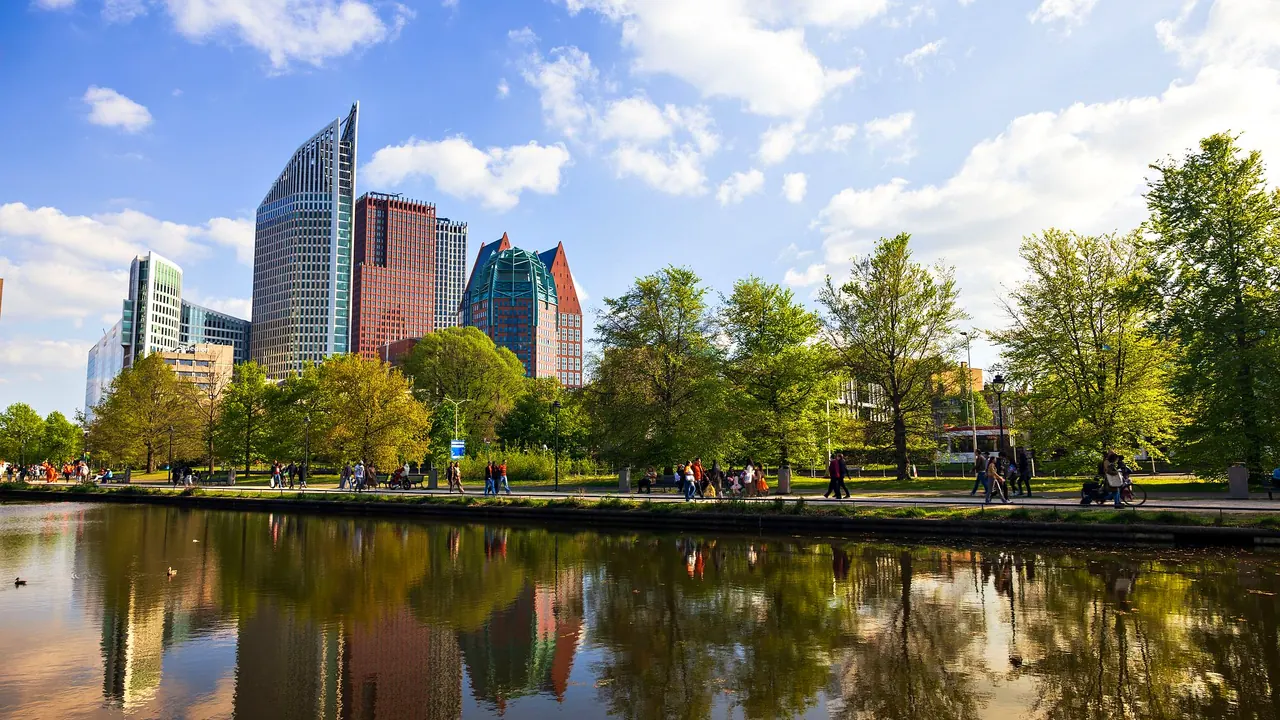
Photos: Baden-Baden by Kent Wang, CC BY-SA 2.0, cropped; The Hague by Bráulio jardim, Pexels License.
Baden-Baden or The Hague?
Our verdict in twelve categories, each scored against the same fixed benchmark cities, and the climate month by month, so you can choose for your trip.
Choose Baden-Baden for
- wellness
- nature and the outdoors
Baden-Baden is the place to slow down. The Friedrichsbad and Caracalla baths set the rhythm of the day, the Belle Époque town makes a gentle stroll, and the northern Black Forest begins at the edge of town. It suits couples and older travellers who like a concert at the Festspielhaus, an evening in a Rebland wine tavern and an early night, and who don't mind driving to reach Alsace or the forest ridge.
Choose The Hague for
- beaches
- nightlife
- families
For a fuller and easier trip, pick The Hague. Vermeer and Rembrandt hang at the Mauritshuis, a sandy beach is a tram ride from parliament, and Delft, Leiden, Rotterdam and Amsterdam are all a short train journey away. Families are far better served here, with Madurodam and Scheveningen, and the evenings are modest but livelier than the casino and hotel bars of the German spa town.
Scoreboard
Twelve categories on one fixed scale from 0 to 100. The shaded stretch is the gap between the two.
Your match
Pick a travel style or drag the sliders, and both match scores follow your weighting.
Wins on wellness and nature and the outdoors with your weighting.
Wins on beaches and nightlife with your weighting.
What matters to you?
Category by category
What the scores mean for a trip.
Beaches & swimming
Baden-Baden has no coast at all. In summer the only outdoor swimming is in the Rhine plain's flooded gravel pits and in open-air pools.
The Hague has a real beach inside the city: Scheveningen's long sandy strand with its pier and summer pavilions, and the quieter dunes at Kijkduin. The cold North Sea keeps swims short, but for sunbathing and sea air only one of these two cities is worth considering.
Food & drink
Neither is a great eating city, but they are very different. Baden-Baden serves Baden cooking with a French accent, such as Flammkuchen, venison and Black Forest gateau, and its real strength is the Riesling and Pinot Noir from the Rebland slopes just outside town.
The Hague's best food comes from the old Dutch East Indies, with rijsttafel, rendang and sate cooked as well as almost anywhere outside Indonesia. Add raw herring from street carts and fish by Scheveningen harbour. Choose wine and regional cooking in one city and Indonesian food in the other.
Culture & sights
The Hague has more to see. The Mauritshuis alone, with Vermeer's Girl with a Pearl Earring and Rembrandt's Anatomy Lesson, is worth the trip, and the Binnenhof, the Peace Palace, the Kunstmuseum's Mondrians and Panorama Mesdag fill two or three days.
In Baden-Baden the town itself is the main sight: the Kurhaus, the Trinkhalle and the Lichtentaler Allee of an intact nineteenth-century spa resort. The Museum Frieder Burda and the Kunsthalle add good modern art, but a day or two covers it.
Nightlife
Both cities go to bed early, but The Hague gives you more to do before then. There are after-work terraces on the Plein, weekend crowds around the Grote Markt and, in summer, beach pavilions at Scheveningen where drinks turn into dancing.
Baden-Baden's evening means the gilded casino in the Kurhaus, hotel bars and wine bars, with an older crowd and quiet streets by late evening. For clubs, one city sends you to Rotterdam or Amsterdam and the other to Karlsruhe or Strasbourg.
Nature & outdoors
Baden-Baden is the stronger choice for the outdoors. Fir forest starts at the edge of town, and the Panoramaweg, the Battert cliffs and the High Road up to the Mummelsee and the Hornisgrinde moors give you hills, waterfalls and long views to the Vosges.
The Hague's countryside is the coast: the Meijendel dunes, the Haagse Bos and cycle paths towards the bulb fields, with surfing and kitesurfing when the wind is up. It is varied for flat land, but there is no climbing anywhere.
Day trips
Both are excellent bases, and The Hague is the easier one. Delft and Leiden are a quarter of an hour away, Rotterdam and Gouda not much further, and Amsterdam, Haarlem, Utrecht and the windmills of Kinderdijk are all within an hour, almost all of it by train.
From Baden-Baden the outings are just as rewarding: Strasbourg and the Alsace wine route, Heidelberg, Freiburg, and the UNESCO sites at Speyer and Maulbronn. They are further apart, though, and several are far simpler with a car.
Good for families
Baden-Baden works as a calm, safe base rather than a destination in itself for children. A walk along the Lichtentaler Allee or a ride up the Merkur funicular fills a morning. Most days, though, are spent out of town, at Europa-Park about an hour south or at Karlsruhe's zoo, which is closer.
Children can stay busy in The Hague without leaving the city, and older ones are catered for too, with the Louwman car museum and its collection of historic cars. Flat streets and parks with playgrounds in every district make the days easy. The weak point is the weather: the North Sea is too cold for long swims, and a wet day sends everyone indoors.
Getting around
The Hague is easier to get around. Frequent trams run to the beach and the Peace Palace, there are cycle lanes almost everywhere, and two main stations put Delft and Rotterdam within suburban reach, so a car only gets in the way.
Baden-Baden's centre is small enough to walk, though some streets climb steeply. The station is out in the Oos district, a bus ride away, and the wine villages, the High Road and Alsace really call for a car.
Shopping & style
Shopping in Baden-Baden is narrow but polished. Sophienstraße and Lange Straße are lined with jewellers, watchmakers, boutiques and delicatessens for a well-off spa crowd. There are no markets or department stores, and the souvenirs come down to cuckoo clocks and local wine.
For range, look to The Hague. You can browse antiques and galleries on the Denneweg and Noordeinde, walk through the glass-roofed Passage and shop the chains and a large department store around Grote Marktstraat. Then finish at the Haagse Markt, one of Europe's biggest open-air markets, which is piled with fabrics, spices and produce.
Affordability
Both are expensive, and neither suits a tight budget well. In Baden-Baden the cost comes from grand hotels and paying for every visit to the baths, although guesthouses, bakeries and wine taverns are fair by German standards.
The Hague charges full Northern European prices but has more ways to save. Central hotels are easier at weekends, Indonesian and Surinamese eateries serve filling plates, and a bicycle or the tram covers the city cheaply.
Live music & performing arts
The two are evenly matched, with different strengths. Baden-Baden is about classical music: the Festspielhaus, one of Germany's largest opera and concert houses, brings international orchestras and opera, and the music of Brahms and Clara Schumann is part of the town's past.
The Hague's highlight is dance, with Nederlands Dans Theater performing in its home city, plus the Residentie Orkest and good pop venues. It has no resident opera company, so opera lovers should head to the spa town.
Wellness & relaxation
Wellness is where the gap between the two is widest. Baden-Baden exists for its hot springs: the Friedrichsbad's silent sequence of steam rooms, scrubs and pools under a nineteenth-century dome, Caracalla's modern pools next door, and a whole town that moves at a resting pace.
The Hague's version is the Dutch day sauna, with large complexes on the outskirts offering steam rooms, cold plunges and gardens. Nudity is the rule there, as it is in the Friedrichsbad. Its calm, orderly streets help you unwind, but there is no bathing tradition still in use to match the German spa.
When should you go?
Pick your month. The climate figures are measured averages, not a forecast.
Baden-Baden in July
The Hague in July
Daytime high, °C
Rainfall in the month, mm
Where the figures come from
The Hague has no rain gauge within 25 km of the centre, so its rainfall comes from a gridded climate dataset read at the destination rather than from a gauge further away.
The Hague's sunshine is measured 60 km from the centre, at De Bilt.
Temperature and rainfall are climate normals, averaged over the years shown. Baden-Baden: 1991-2020 normals, Baden-Baden-Geroldsau (3.9 km from centre). The Hague: 1991-2020 normals, Valkenburg (13.6 km from centre).
Baden-Baden has the warmer and sunnier summer. Highs reach about 25°C in July and August, so June to September is the time for forest trails, the Merkur summit and terraces in the wine villages. Rain is spread evenly through the year at around 100mm a month, so a wet day can come in any season. Winters are cold and dark, but the thermal baths are just as good in December as in July, and the ridge sometimes has snow for modest skiing.
The Hague stays cooler, peaking near 21°C, and the North Sea only reaches about 19°C in August. Beach days there mean sunbathing and a quick dip, from late June to early September. Spring is the driest stretch and the best time for walking the streets and the dunes. Autumn turns wet and windy, with October the rainiest month at around 104mm, and the winters of the two cities are much the same grey cold.
Which traveller are you?
For a relaxing and wellness trip, Baden-Baden is the clear choice. Its Roman hot springs feed the silent, domed Friedrichsbad and the Caracalla pools, and the whole town keeps a spa pace. The Hague has good day-long sauna complexes but no historic baths still in use.
On a family trip with children, The Hague works far better. Madurodam, the beach and sea aquarium at Scheveningen, Museon and Duinrell are all close, and the trams take pushchairs. Baden-Baden feels made for adults, and the Friedrichsbad does not admit young children.
For an outdoors trip, Baden-Baden has the edge. The Merkur funicular, the Battert cliffs and the Black Forest High Road give real hill walking, climbing and mountain biking, with some snow in winter. The Hague's dunes and coastal cycle paths are pleasant, but the land is entirely flat and windy.
Before you go
| Measure | Baden-Baden | The Hague |
|---|---|---|
| Official language | German | Dutch |
| Currency | Euro (EUR) | Euro (EUR) |
| Sockets | CF230 V, 50 Hz | CF230 V, 50 Hz |
| Driving side | Right | Right |
| Time zone | UTC+1, UTC+2 in summer | UTC+1, UTC+2 in summer |
| Emergency number | 112 | 112 |
| Elevation | 181 m | 1 m |
| Main airport | Karlsruhe Baden-Baden Airport (FKB)12 km from centre44 non-stop destinations | Rotterdam The Hague Airport (RTM)16 km from centre53 non-stop destinations |
| Public holidays this year | 12 days | 11 days |
By the numbers
| Measure | Baden-Baden | The Hague |
|---|---|---|
| Population | 56,952 | 548,320 |
| People per km² | 406 | 5,589 |
| Museums within 10 km | 11 | 54 |
| UNESCO World Heritage sites within 50 km | 3 | 4 |
| Swim season, months above 21 °C | - | None |
Where else could you go?
Every comparison below shares a destination with this one, so you can follow Baden-Baden or The Hague somewhere new.
- Rotterdamvs The Hague
- Haarlemvs The Hague
- Strasbourgvs Baden-Baden
- Amsterdamvs The Hague
- Utrechtvs The Hague
- Stuttgartvs Baden-Baden