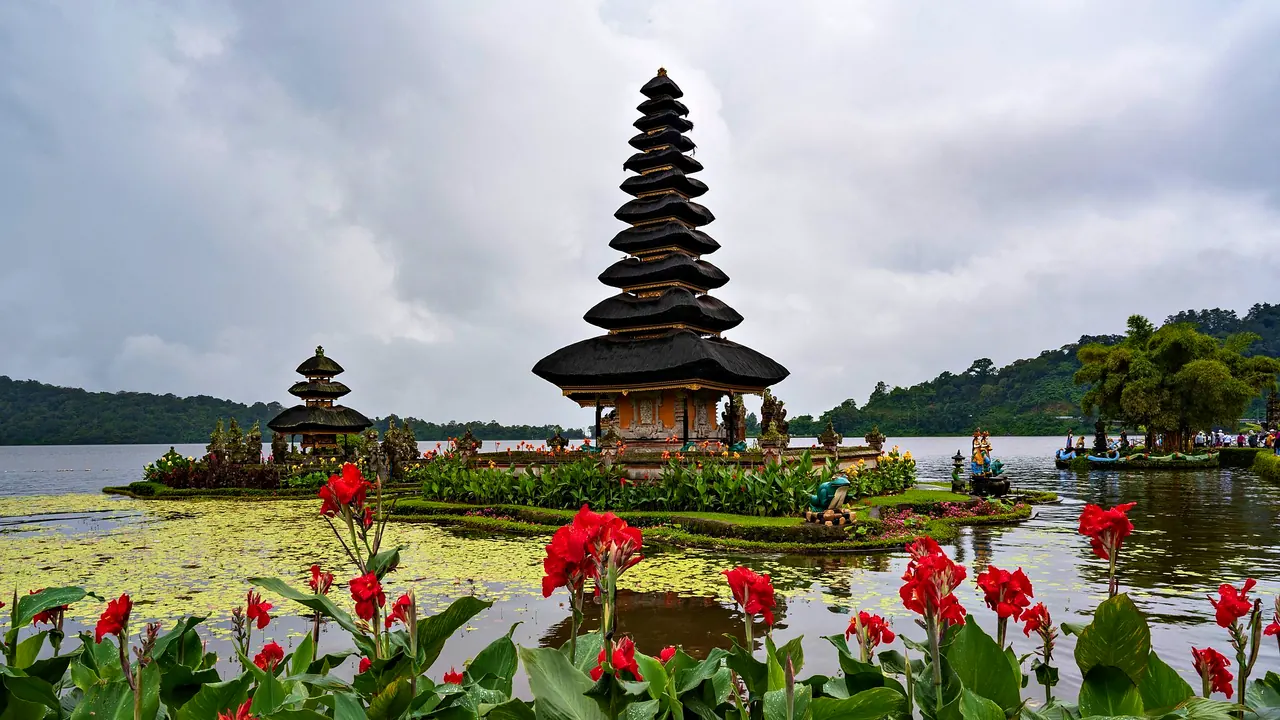
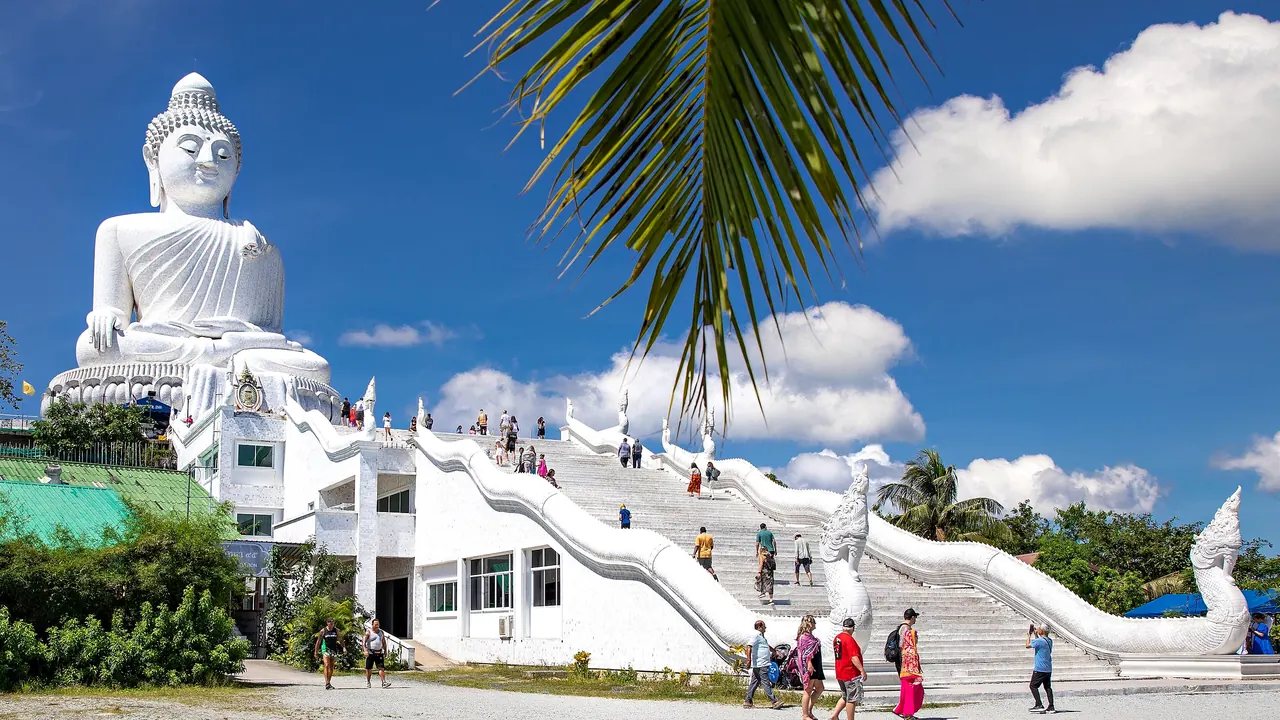
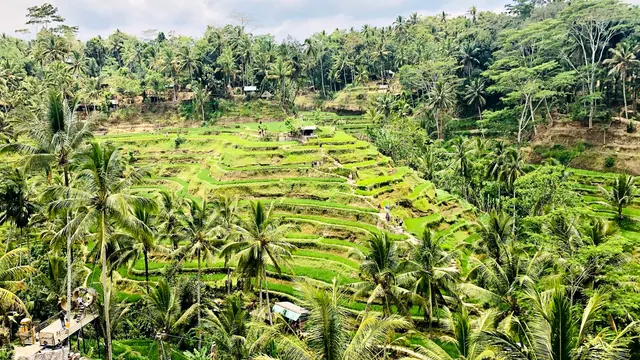
Photos: Bali by Evelin Magnus, Pexels License; Phuket by Mussi Katz, CC0.
Bali or Phuket?
Our verdict in twelve categories, each scored against the same fixed benchmark cities, and the climate month by month, so you can choose for your trip.
Choose Bali for
- culture and sights
- live music and the arts
- shopping
Bali suits travellers who want an island with depth beyond the beach. Its temples, daily offerings and Ubud's nightly dance, together with volcano climbs, rice-terrace walks and the strongest yoga and retreat culture in this pairing, make it the richer place for a longer, slower stay. It is also the cheaper of the two. In return you accept slow roads and beaches where the surf often matters more than the swimming.
Choose Phuket for
- getting around
- beaches
Phuket is the better choice when the sand and sea are the point. In the dry months its west coast gives you a run of easy swimming bays, boat trips to the Phi Phi and Similan islands and kayaking in Phang Nga Bay. Distances on the island are shorter, too. Culture amounts to a half day in Phuket Town's old quarter, so pick Phuket for a beach trip rather than an island to explore.
Scoreboard
Twelve categories on one fixed scale from 0 to 100. The shaded stretch is the gap between the two.
Your match
Pick a travel style or drag the sliders, and both match scores follow your weighting.
Wins on culture and sights and live music and the arts with your weighting.
Wins on getting around and beaches with your weighting.
What matters to you?
Category by category
What the scores mean for a trip.
Beaches & swimming
Phuket has the better beaches for swimming. In the dry season its west coast is a run of sandy bays where you can walk in almost anywhere, from the broad sands of Kata and Karon to the little coves of Kata Noi and Nai Harn. Further north, the long beaches at Mai Khao and Bang Tao are quieter. The drawback is the monsoon, which makes the whole coast dangerous for half the year.
Bali's beaches vary more and are harder to use. The west-facing sands from Kuta to Canggu are for surfing and sunsets rather than swimming, and the calm water lies behind the reefs at Sanur and Nusa Dua. The Bukit coves are beautiful, but you often reach them down long flights of steps.
Food & drink
Bali's food goes further. Because the island is Hindu, pork is central to its cooking: babi guling, bebek betutu and lawar, eaten in warungs and morning markets across the island. On top of that, Canggu, Seminyak and Ubud have a large café and tasting-menu scene.
Phuket's distinctive cooking is Hokkien and Peranakan: yellow noodles, braised pork belly and crab curry eaten at breakfast. It is concentrated in Phuket Town, though, and the beach strips mostly serve long tourist menus. The seafood at Rawai is the exception.
Culture & sights
The gap here is wide. On Bali, religion is part of everyday life. There are offerings on the pavements, processions at any time, great temples on sea rocks, crater lakes and volcano slopes, and the UNESCO-listed rice terraces of Jatiluwih. Ubud gathers palaces, painting museums and rock shrines within easy reach, although seeing the major temples means long drives.
Phuket's heritage comes down to its tin-mining past. The Sino-Portuguese shophouses of the old town fill a pleasant half day, and Wat Chalong and the Big Buddha make a short outing. After that, there is little left to see.
Nightlife
Both islands have a lot going on after dark, but the style differs. Phuket's nights centre on one street. Bangla Road in Patong is neon bars, go-go bars and big clubs until the small hours, loud and somewhat seedy at the edges. The shophouse bars of Phuket Town are a quieter, more local alternative.
Bali's going-out scene is spread across the southwest and built around beach clubs that run from the afternoon pool through the sunset DJ sets. Canggu draws the younger crowd, Seminyak is the place for cocktails and Kuta is the cheap party strip. On Nyepi, the island's yearly day of silence, everything closes.
Nature & outdoors
Bali has the more dramatic landscape. It is a volcanic island, so you can climb Mount Batur before dawn, walk the crater lakes and waterfalls of Munduk, and wander rice valleys at Sidemen and Ubud. It also has world-famous reef breaks on the Bukit and manta rays off Nusa Penida.
Phuket's best nature is offshore. You can kayak among the limestone towers and hidden lagoons of Phang Nga Bay, or dive the Similan islands in season. On land there is only a small patch of rainforest at Khao Phra Thaeo, and the heat keeps walks short.
Day trips
Day trips play a similar, modest role on both islands, but they go in different directions. From Bali, most outings are by road to the old Bali Aga villages of Tenganan and Penglipuran or to the east around Sidemen and Amed, plus a short boat ride to Nusa Lembongan. Traffic makes each of these a full day.
Phuket's outings are mostly by boat: the Phi Phi islands, the stilt village of Koh Panyee and the rural Koh Yao islands. Krabi and Ao Nang are a few hours away over the northern bridge.
Good for families
Both islands work well for families who choose the right base, and both have water parks, warm staff and resorts with kids' clubs. The difference is in what keeps the water calm. At Sanur and Nusa Dua on Bali, the reefs shelter the shallow lagoons. At Phuket's Kata, Karon and northern beaches, it is the dry season, and from May to October the surf is dangerous.
Bali asks more of parents. Stomach upsets are common, rabies is a risk, the Ubud monkeys bite and the long drives tire children out. Phuket's main thing to avoid is Patong after dark.
Getting around
Neither island is easy to get around, but Phuket is the less difficult. It takes about an hour to drive from one end to the other, songthaew buses run from Phuket Town to the main beaches, and each beach town is walkable within itself. Taxis are expensive, though.
Bali has no public transport a visitor can really use. Traffic in the south clogs the routes between the airport, Seminyak, Canggu and Uluwatu, and the north and east are long mountain drives away. Most people hire a driver for the day and keep to one or two bases.
Shopping & style
Bali has more worth taking home. The craft villages on the road to Ubud specialise in silver at Celuk, woodcarving at Mas and stone carving at Batubulan. East Bali weaves ikat and endek, and the designer boutiques in Seminyak and Canggu sell linen, ceramics and furniture.
Phuket's shopping is mostly practical: malls, beachwear stalls and tailors who make suits and dresses within a few days. The more rewarding finds are batik and Peranakan-style goods at the old town's Sunday walking street, and local pearls.
Affordability
Bali gives more for your money. Villas with private pools, warung meals, massages and a driver by the day are all cheap, and prices drop further around Ubud and on the east and north coasts. Both islands also have a second, near-Western price level at their beach clubs and cliff-top resorts.
Phuket is one of the dearer places in Thailand. Taxis and tuk-tuks run on fixed fares and cost a lot, and prices rise in the December to March high season. Staying in Phuket Town or at Kata and Karon keeps costs down.
Live music & performing arts
Bali has a living performance tradition and Phuket does not. In Ubud, gamelan orchestras accompany the Legong, the Barong and shadow puppetry almost every night in palace courtyards. On the Uluwatu cliffs, the Kecak is chanted at sunset, and village temple festivals put on dances for the gods.
Phuket's evenings out are pure entertainment for visitors: cabaret revues in Patong, a large theme-park show, Muay Thai fights and cover bands in the bars.
Wellness & relaxation
Bali is the stronger place to slow down, and its calm reaches well beyond the resort grounds. The clifftops of the Bukit, the rice valley of Sidemen and the quiet coasts of Amed and Lovina each give a different kind of rest, and Ubud's spas sit among river gorges, with the boreh spice scrub alongside Balinese massage. You can also bathe in the stone pools under the carved dragon spouts at Banjar or by the shore of Lake Batur. Just avoid resting in the southwest around Kuta and Canggu, which is noisy and congested.
Phuket has no hot springs or bathing to set against these, so a stay there centres on massage and on set programmes such as detox stays and Muay Thai camps. That makes it more physical than Bali's yoga and meditation. Quiet is easy to find on the northern beaches or around Nai Harn, but it is the calm of a resort by the sea rather than a landscape you move through.
When should you go?
Pick your month. The climate figures are measured averages, not a forecast.
Bali in July
Phuket in July
Daytime high, °C
Rainfall in the month, mm
Where the figures come from
Phuket's temperatures are measured 27 km from the centre, at Phuket Airport.
Temperature and rainfall are climate normals, averaged over the years shown. Bali: 1991-2020 normals, Denpasar / Ngurah-Rai (3.5 km from centre). Phuket: 1991-2020 (sunshine 1961-1990, rainfall 1981-2010) normals, Phuket Airport (26.9 km from centre).
These two islands have opposite seasons. Bali is at its best from about May to September, when rain almost stops (just 12mm in August), the skies are at their sunniest and the volcano climbs are at their best. Its wet season runs from December to March and peaks in January at 396mm, which is when debris can wash onto the west-coast beaches. Daytime heat on Bali barely changes through the year. The sea stays warm in every month and is only slightly cooler in the dry season.
Phuket's dry season runs from December to March. February brings only 16mm of rain, the sea is calm and the sunshine is reliable. The catch comes at the end: March reaches 34°C, which makes walking around Phuket Town hard going in the middle of the day. From May to October the monsoon brings heavy rain, up to 373mm in September, and dangerous surf to the west-coast beaches. In practice, northern winter belongs to Phuket and northern summer to Bali.
Which traveller are you?
On a culture and arts trip, Bali is the clear pick. You can see sea temples at Tanah Lot and Uluwatu, Pura Besakih on Mount Agung, Ubud's museums and nightly Legong or Kecak performances. Phuket offers a pleasant old quarter and Wat Chalong, and not much more.
For a beach and sun trip, choose Phuket, timed between November and April. The west-coast bays from Kata to Nai Harn are calm and easy to swim, and the island beaches are a boat ride away. Bali's main beaches favour surfers, and its calm lagoons are fewer.
On a relaxing and wellness trip, Bali has the edge. Ubud's valleys are full of yoga and meditation retreats, there are holy springs and hot springs, and massage is cheap everywhere. Phuket's spas and Chalong fitness camps are good, but they lack Bali's spiritual setting.
Before you go
| Measure | Bali | Phuket |
|---|---|---|
| Official language | Indonesian | Thai |
| Currency | Rupiah (IDR) | Baht (THB) |
| Sockets | CF50 Hz | ABCF220 V, 50 Hz |
| Driving side | Left | Left |
| Time zone | UTC+8 | UTC+7 |
| Emergency number | 112 | Police 191, ambulance 1669, fire 199 |
| Main airport | Denpasar I Gusti Ngurah Rai International Airport (DPS)64 non-stop destinations | Phuket International Airport (HKT)85 non-stop destinations |
By the numbers
| Measure | Bali | Phuket |
|---|---|---|
| Population | 4,404,300 | 77,610 |
| People per km² | 782 | 6,468 |
| Swim season, months above 21 °C | 12 months | 12 months |
Where else could you go?
Every comparison below shares a destination with this one, so you can follow Bali or Phuket somewhere new.
- Koh Phi Phivs Phuket
- Krabivs Phuket
- Koh Lantavs Phuket
- Lombokvs Bali
- Gili Islandsvs Bali
- Koh Lipevs Phuket