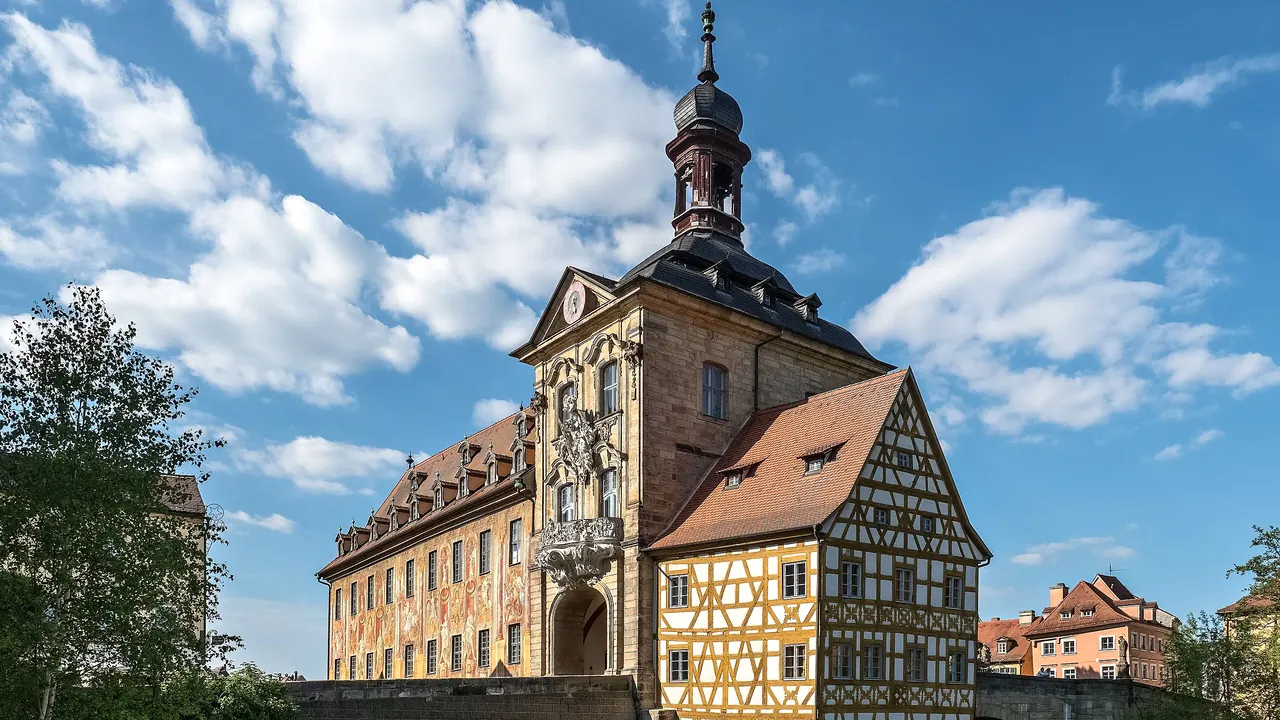
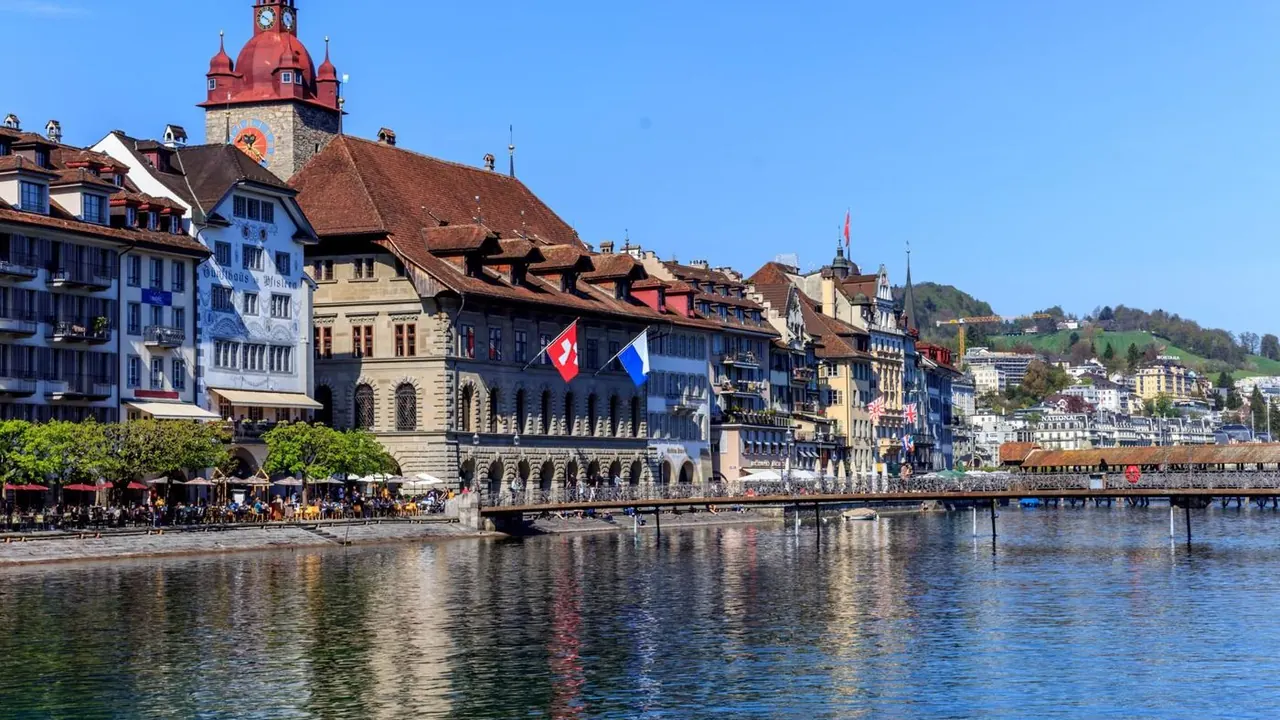
Photos: Bamberg by Ermell, CC BY-SA 4.0, cropped; Lucerne by ILOVESwitzerland, Pexels License.
Bamberg or Lucerne?
Our verdict in twelve categories, each scored against the same fixed benchmark cities, and the climate month by month, so you can choose for your trip.
Choose Bamberg for
- prices
- food and drink
- culture and sights
Bamberg suits a traveller who wants an intact old town to wander and a table in a brewery tavern at the end of the day. Its strengths are the UNESCO-listed townscape across seven hills, smoked beer poured from the barrel, and prices that stay at ordinary German levels. It also makes a sound base for the rest of Franconia. Pick it for a slow, good-value stay built around walking, eating and drinking.
Choose Lucerne for
- nature and the outdoors
- beaches
- families
Lucerne is the choice when the scenery is the point of the trip. Pilatus, Rigi and the lake steamers are all within easy reach, and the Swiss transport system ties boat, rail and cable car together so neatly that families and hikers can fill a week without a car. Expect a much bigger bill, a smaller old town and plainer food, and in return some of the finest mountain and lake country in Europe.
Scoreboard
Twelve categories on one fixed scale from 0 to 100. The shaded stretch is the gap between the two.
Your match
Pick a travel style or drag the sliders, and both match scores follow your weighting.
Wins on prices and food and drink with your weighting.
Wins on nature and the outdoors and beaches with your weighting.
What matters to you?
Category by category
What the scores mean for a trip.
Beaches & swimming
Neither city has a coast, but Lucerne has a real swimming culture on its clean, mountain-backed lake. People swim from the Lido, the old wooden lake baths and the lawns at Ufschötti, and boats reach small bathing spots in the lakeside villages.
Bamberg offers a river bathing spot in the Hain park, gravel-pit lakes and public pools. That is fine for cooling off, but there is no scenery to linger over. In both places swimming is a summer extra rather than a reason to go.
Food & drink
Bamberg gives you more to eat and drink for its own sake. Dense ranks of small breweries, smoky Rauchbier from wooden barrels and hillside Bierkeller under chestnut trees make drinking a real reason to visit, and Schäufele and dumplings suit it well.
Lucerne's cooking is competent Swiss comfort food: Chügelipastete, fondue and lake perch, served in guild houses and on terraces along the Reuss. Prices are higher, and many places near the Chapel Bridge cater to coach parties. Neither city has much range beyond its regional cooking.
Culture & sights
Bamberg has the richer historic townscape. A whole UNESCO-listed old town survived the war, with the four-towered cathedral and the Bamberg Horseman, the island Old Town Hall and the fishermen's houses of Little Venice, and it rewards a couple of days on foot.
Lucerne has fewer sights, but they are famous: the Chapel Bridge and Water Tower, the climbable towers of the Musegg Wall and the Lion Monument. It also has the stronger collections, with Picasso and Klee at the Rosengart. Bamberg's museums are small, so it is the streets you come for.
Nightlife
Both are quiet towns after dark, and the difference lies in the setting. In Bamberg the evening is spent in brewery taverns, in the student bars of the Sand quarter or up in the summer beer cellars. Lucerne's evenings are more about a wine bar on the river or a cocktail in the Neustadt, and the lakefront is empty by midnight. Lucerne's one great exception is Fasnacht, when the town stays out in costume until dawn. Bamberg's answer to a big night is the train to Nuremberg.
Nature & outdoors
This is Lucerne's biggest advantage. Pilatus rises above the city by the steepest cogwheel railway in the world, Rigi has wide ridge walks, and Titlis keeps its glacier snow all year. Boats, trains and trails link up into a single day out, and winter adds skiing.
Bamberg's countryside is gentle by comparison. The crags and caves of Franconian Switzerland, the Steigerwald beech woods and the cycle paths along the Main make for easy walking and cycling, often from one village brewery to the next, but there are no mountains.
Day trips
Both are excellent bases, and Lucerne has a slight edge in variety. Zurich, Bern and Basel are each under an hour away, and the lake itself is an outing, with steamers to the Rütli meadow and the William Tell country around Altdorf.
From Bamberg, the trips are to the old towns of Franconia: Nuremberg's castle, Würzburg's Residence, Coburg and Bayreuth, plus the baroque basilica of Vierzehnheiligen nearby. It is a coherent historic circuit, though it offers less variety of landscape than Lucerne's lake and mountain day trips.
Good for families
Lucerne has more to keep children busy. The Swiss Museum of Transport can fill a day, the Glacier Garden has its mirror maze, and the steamers, cogwheel trains and summer toboggan run on Pilatus turn the journeys themselves into the fun. These outings do get expensive and depend on clear weather.
Bamberg is calm and safe, with playgrounds and rowing boats in the Hain park, beer gardens where children play among the tables and a leisure pool for wet days. Beyond that it is churches and steep cobbles that are hard going with a pushchair.
Getting around
Arriving by train shows the difference straight away. Bamberg's station is a fair walk from the old town, while in Lucerne the station, the boat piers and the start of the Old Town stand side by side on the lakefront. Once you are in Bamberg's centre, the island town, the cathedral hill and Little Venice are minutes apart on foot, though the climbs to the cathedral and Michaelsberg are short, steep and cobbled. Buses and bicycles cover the flat lower town and the outer districts.
Lucerne goes further because its excursions use the same ticket system as its buses. Steamers leave from in front of the station, and integrated Swiss tickets carry you on by cogwheel railway and cable car into the mountains. You will need to read the connections, but the whole stay works without a car.
Shopping & style
Lucerne has the stronger shopping, though only within one specialism: Swiss watches and jewellery along Schwanenplatz, plus chocolate, army knives and cuckoo clocks. Beyond that its fashion and design shops are thin.
Bamberg has chain stores on Lange Strasse, antique dealers near the cathedral and some independent bookshops. Its best things to take home are bottled Rauchbier and produce from the town's market gardens. It is shopping to fill an hour, not a reason to visit.
Affordability
There is a wide gap here. Bamberg keeps to modest Franconian pricing, with cheap local beer, hearty tavern plates that cost less than in a big German city, and rooms that only get tight and dearer at weekends and in the Christmas market season.
Lucerne is very expensive. Central hotels, ordinary restaurant meals and the mountain railways that are the point of a visit all add up quickly. Swiss travel passes and lakeside supermarket picnics soften the cost, but they do not change it.
Live music & performing arts
Bamberg has a world-class orchestra but no opera, while Lucerne has a world-class festival. The Bamberg Symphony plays its home season in the concert hall on the Regnitz, and around it are drama at the ETA Hoffmann Theatre and organ and choral concerts in the cathedral. Opera means the trip to the Bayreuth Festival, an hour away.
Lucerne offers more, and a wider range. The Lucerne Festival brings the leading orchestras and soloists to Jean Nouvel's lakefront hall, which is famous for its acoustics, and the city theatre stages opera and dance as well as drama. Outside the festival weeks the programme is good rather than deep, with some jazz and a blues festival.
Wellness & relaxation
Neither city has a bathing tradition of its own, so in both the calm itself is the treat. Bamberg's version is long afternoons in shaded beer gardens and evenings once the day visitors leave, with the warm brine pools of Bad Staffelstein half an hour away by train. Lucerne offers lakeside promenades, slow steamer trips and the Botta-designed mineral bath high on the Rigi with a mountain view. Its Old Town is crowded at midday, though.
When should you go?
Pick your month. The climate figures are measured averages, not a forecast.
Bamberg in July
Lucerne in July
Daytime high, °C
Rainfall in the month, mm
Where the figures come from
Lucerne has no rain gauge within 25 km of the centre, so its rainfall comes from a gridded climate dataset read at the city rather than from a gauge further away.
Lucerne's sunshine is measured 42 km from the centre, at Zurich Town / Ville..
Temperature and rainfall are climate normals, averaged over the years shown. Bamberg: 1991-2020 normals, Bamberg (2.8 km from centre). Lucerne: 2005-2025 (sunshine 1991-2020, rainfall 1991-2020) normals, Emmen (4.2 km from centre).
The two cities follow almost the same temperature curve. Both are cold from December to February, mild in spring and warm from June to August, when Bamberg peaks a little higher at 26°C. Winter days are short and grey in both. Sunshine comes in evenly from late spring to August, so May to September is the best stretch for walking the streets in either place.
Rain is where they part. Bamberg is fairly dry all year, and even its wettest month, July, sees under 80mm. Lucerne is far wetter, with summer rainfall reaching about 141mm in July and August, which often means showers and cloud that can hide the peaks. July and August are the months warm enough for a swim in Lucerne's lake or Bamberg's river. For mountain views in Lucerne, September is a sensible compromise: still around 19°C and noticeably drier than high summer.
Which traveller are you?
On a trip with a tight budget, Bamberg is the clear choice. Its tavern meals, cheap local beer, moderately priced rooms and walkable centre keep costs down. In Lucerne even a simple dinner is costly, and the mountain railways take a large share of any budget.
For an outdoors trip, Lucerne is far ahead. Cogwheel railways climb Pilatus and Rigi, glacier snow lies on Titlis, and lake steamers link up with hiking trails. Bamberg's limestone valleys and beech forests are pleasant for walking and cycling but far gentler.
On a family trip with children, Lucerne works better. The Swiss Museum of Transport can fill a whole day, and paddle steamers, cogwheel trains and the summer toboggan run keep children busy. Bamberg is safe and relaxed but offers little made for young visitors beyond the Hain park.
Before you go
| Measure | Bamberg | Lucerne |
|---|---|---|
| Official language | German | French, German, Italian, Romansh |
| Currency | Euro (EUR) | Swiss Franc (CHF) |
| Sockets | CF230 V, 50 Hz | CJ230 V, 50 Hz |
| Driving side | Right | Right |
| Time zone | UTC+1, UTC+2 in summer | UTC+1, UTC+2 in summer |
| Emergency number | 112 | 112 |
| Elevation | 262 m | 436 m |
| Main airport | Nuremberg Airport (NUE)46 km from centre56 non-stop destinations | Zürich Airport (ZRH)49 km from centre226 non-stop destinations |
| Public holidays this year | 12 days | 12 days |
By the numbers
| Measure | Bamberg | Lucerne |
|---|---|---|
| City population | 77,218 | 86,234 |
| People per km² | 1,414 | 2,963 |
| Museums within 10 km | 11 | 14 |
| UNESCO World Heritage sites within 50 km | 1 | 1 |
Where else could you go?
Every comparison below shares a destination with this one, so you can follow Bamberg or Lucerne somewhere new.
- Zurichvs Lucerne
- Nurembergvs Bamberg
- Interlakenvs Lucerne
- Bernvs Lucerne
- Rothenburg ob der Taubervs Bamberg
- Baselvs Lucerne