Photos: Bamberg by Ermell, CC BY-SA 4.0, cropped; Zermatt by Roy Egloff, CC BY-SA 4.0, cropped.
Bamberg or Zermatt?
Our verdict in twelve categories, each scored against the same fixed benchmark cities, and the climate month by month, so you can choose for your trip.
Choose Bamberg for
- prices
- culture and sights
- day trips
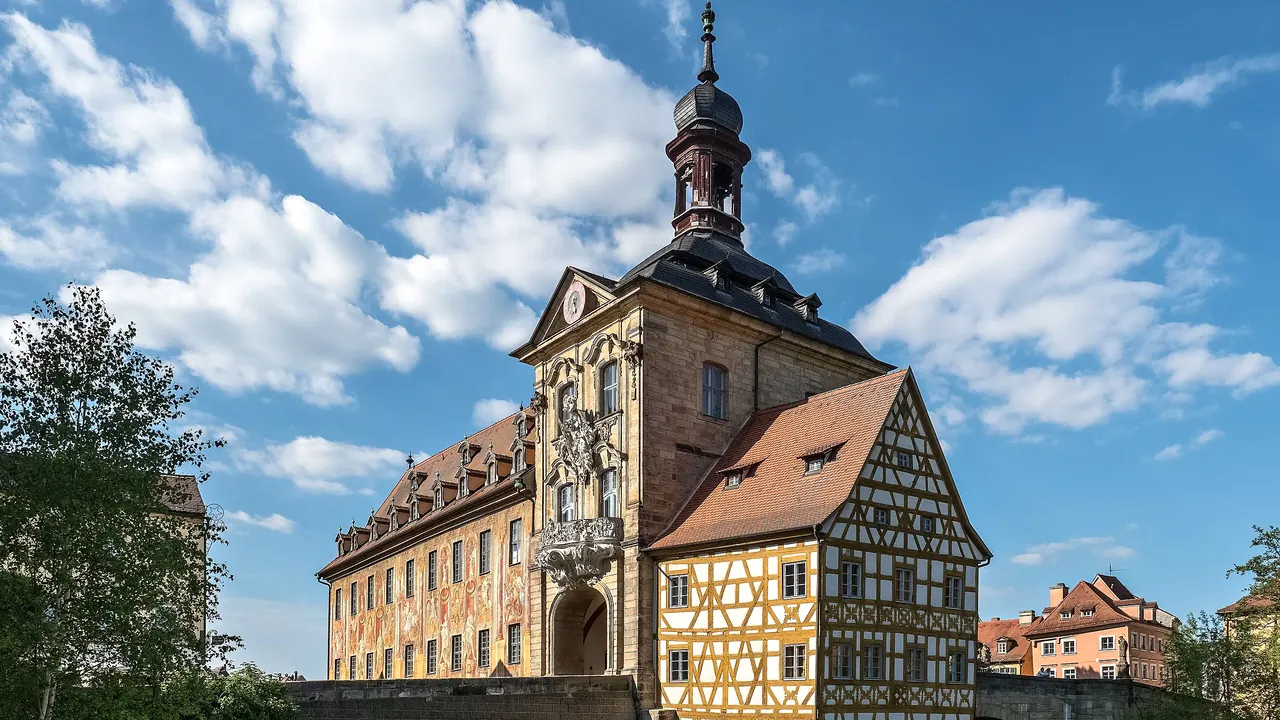
Bamberg suits travellers who want an intact historic town to wander, a beer culture to settle into and a rail base for seeing more of Franconia, all at ordinary German prices. The cathedral hill, the island town hall and the brewery taverns fill a few unhurried days, and Nuremberg, Würzburg and Bayreuth are close enough for easy outings by train. It is the better pick for culture, food and value.
Choose Zermatt for
- nature and the outdoors
- families
- getting around
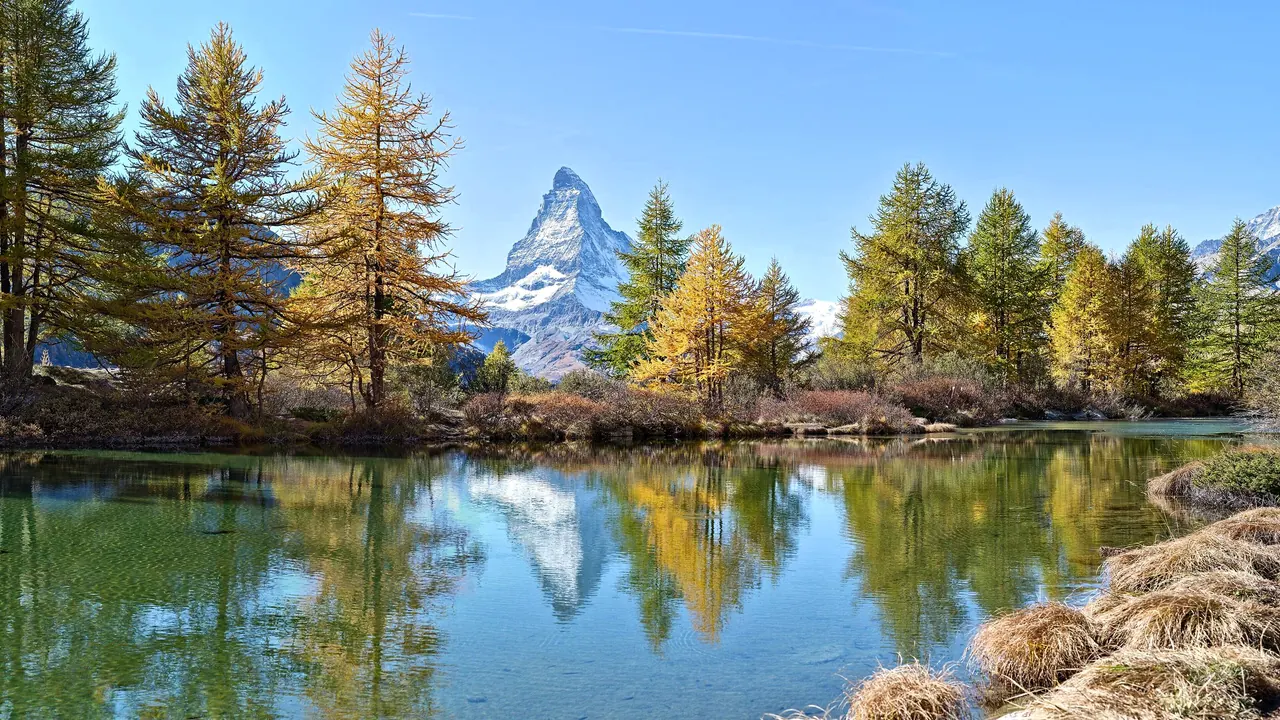
If the mountains are the reason for going, Zermatt is the obvious answer. The Matterhorn stands right above the car-free village, and lifts and cog railways climb to glacier terrain for skiing in winter and high trails in summer. The trade-off is a thin cultural offer, few outings beyond the valley and a bill among the steepest in the Alps, so it rewards people who will spend every day outdoors.
Scoreboard
Twelve categories on one fixed scale from 0 to 100. The shaded stretch is the gap between the two.
Your match
Pick a travel style or drag the sliders, and both match scores follow your weighting.
Wins on prices and culture and sights with your weighting.
Wins on nature and the outdoors and families with your weighting.
What matters to you?
Category by category
What the scores mean for a trip.
Beaches & swimming
Neither is a place for a beach, but Bamberg at least offers a proper summer swim. The river bathing spot in the Hain park and the gravel-pit lakes on the edge of town are good on a warm afternoon. Zermatt's tarns are glacial meltwater, beautiful under the Matterhorn but too cold to swim in, so bathing there means a hotel pool.
Food & drink
Bamberg has the stronger and more distinctive table, built around its dense cluster of small breweries. Smoky Rauchbier poured from wooden barrels, Schäufele with dumplings and long summer evenings at the hillside Bierkeller make eating out a central part of a visit, though the choice beyond Franconian cooking is thin.
Zermatt's best meals are up the mountain, in the chalet restaurants of Findeln, Furi and Zum See, with raclette, air-dried beef and Valais wines such as Petite Arvine on a sunny terrace. The village adds a few ambitious fine-dining kitchens that Bamberg lacks, but the choice is narrow, cheap eating is rare and many places close between seasons.
Culture & sights
This is where Bamberg pulls far ahead. Its old town survived the war almost untouched, and walking from the four-towered cathedral and the Neue Residenz down to the frescoed town hall on the Regnitz and the fishermen's houses of Little Venice is a day's sightseeing in itself.
Zermatt's heritage is small and centred on mountaineering: the underground Matterhorn Museum telling the story of the 1865 first ascent, the climbers' cemetery and the old larch-wood granaries of the Hinterdorf. It is worth a morning, but nobody chooses Zermatt for its monuments.
Nightlife
Both are quiet after dark, but in different ways. Bamberg's evenings are spent in brewery taverns, the student bars of the Sand quarter during term and the beer cellars in summer, and most of the town is asleep well before the small hours. Zermatt comes alive mainly in winter, when loud après-ski on the slopes gives way to a few bars and small clubs on the main street, while its summer evenings end after dinner.
Nature & outdoors
Zermatt is one of the great Alpine bases. The Matterhorn rises directly over the village, lifts reach the Gornergrat and the Matterhorn Glacier Paradise at over 3,800m, skiing links into Italy, and summer opens hundreds of kilometres of trails with marmots, ibex and guided climbs on four-thousanders.
Bamberg's outdoors is pleasant and gentle by comparison. The limestone valleys and rock towers of Franconian Switzerland lie less than an hour east, the Steigerwald forests to the west, and cycle paths follow the Main through orchard villages, but there are rolling hills rather than peaks.
Day trips
Bamberg is much the better base for exploring. Nuremberg's castle and old town, Würzburg's Residence, Coburg's fortress and Bayreuth's opera houses all lie within about an hour by train, with the baroque basilica of Vierzehnheiligen nearer still.
From Zermatt every outing begins with the long train ride down the valley. Sion, with its castle hills and vineyards, is the most rewarding, and Brig and Saas-Fee are possible, but most visitors spend their spare days on the mountain instead.
Good for families
Zermatt works somewhat better with children, mainly because its streets are free of cars and the activities suit families who ski or hike. Ski schools and nursery slopes at Sunnegga, marmot spotting and rides on cog railways keep children busy, though rainy days are hard to fill and the highest viewpoints can be too cold and thin-aired for small ones.
Bamberg is safe and easy at a slow pace, with playgrounds and boat hire in the Hain park, a leisure pool with slides and family-friendly beer gardens. Beyond that its sights are churches and cobbled lanes that make heavy work of a pushchair.
Getting around
Both are towns you walk, with Zermatt slightly easier once you arrive: the village is car-free, and the cog railway, the underground funicular and the gondolas start within walking distance of the centre. The catch is that leaving the valley takes over an hour by train.
Bamberg's island town, cathedral hill and Little Venice are minutes apart, buses and bicycles cover the rest, and the steep cobbled climbs are short. Its station sits on a main line, so the wider region is far more accessible than from Zermatt.
Shopping & style
Bamberg's pedestrian streets around Grüner Markt and Lange Strasse are for everyday browsing, with high-street chains, independent bookshops and antique dealers near the cathedral. The things worth taking home are local: vegetables and herbs from the town's market gardens and bottled Rauchbier from the brewery shops.
Zermatt's one main street aims at a richer, narrower market. It has Swiss watch and jewellery boutiques for wealthy skiers, shops full of cowbells and chocolate, and well-stocked ski and mountaineering outfitters, which are the real reason to go in if you need kit. Neither town has a fashion or design scene, so in each, shopping fills an hour rather than a day.
Affordability
The gap here is wide. Bamberg costs what an ordinary Western European town costs, with cheap local beer, modest tavern meals and almost nothing spent on transport, though old-town rooms tighten at weekends and around the Christmas market.
Zermatt is among the most expensive places in the Alps, and lift and railway tickets come on top of steep rooms and meals. Self-catering and staying down the valley in Täsch help, but it remains a splurge.
Live music & performing arts
Bamberg has a real musical life for its size. The Bamberg Symphony is an orchestra of international standing, the ETA Hoffmann Theatre stages drama through the season, organ concerts fill the cathedral, and the Bayreuth Festival is an hour away.
Zermatt has no theatre or concert hall, so its offer rests on two festivals: Zermatt Unplugged with acoustic sets in spring and a chamber music festival in the village church in late summer. Outside those weeks, live music means an après-ski band.
Wellness & relaxation
The two are close here, but they rest in different ways. Bamberg's calm comes from its pace, slow mornings by the river and long afternoons under the chestnut trees, with the warm brine pools of Bad Staffelstein half an hour away by train for proper bathing. Zermatt relies on its many polished hotel spas with mountain views, and on car-free, quiet streets, though the mood in peak weeks is active rather than slow.
When should you go?
Pick your month. The climate figures are measured averages, not a forecast.
Bamberg in July
Zermatt in July
Daytime high, °C
Rainfall in the month, mm
Where the figures come from
Zermatt has no weather station within reach, so its figures come from a gridded climate model rather than a measured record, and read a broad area rather than the city itself.
Temperature and rainfall are climate normals, averaged over the years shown. Bamberg: 1991-2020 normals, Bamberg (2.8 km from centre). Zermatt: 1991-2020 normals, TerraClimate 4 km grid at the town, no weather station within 90 km.
Bamberg is at its best from May to September, when the days are warm enough for long walks and evenings in the beer gardens, peaking at about 26°C in July with the most sunshine of the year. Summer is also its wettest stretch, with July the rainiest month. Winter is cold and dark, with highs around 4°C and very little sun in December and January, so the old town is best seen in a coat and in short daylight.
Zermatt follows a different calendar. Highs stay below freezing from December to February, which is ski weather rather than a drawback, while July and August reach only about 14°C in the village and are colder higher up, making them good months for hiking. November is the wettest month at around 130mm, and spring and late autumn fall between the two seasons. Neither town has beach weather in any month.
Which traveller are you?
On an outdoors trip, Zermatt is in another league. Lifts and cog railways lead straight to glacier pistes, the Five Lakes walk and the trails below the Matterhorn, while Bamberg's countryside offers gentle cycling and brewery-to-brewery walks in Franconian Switzerland.
For a culture and arts trip, Bamberg is far richer. Its whole old town is UNESCO-listed, from the Imperial Cathedral to the Old Town Hall on its island, and the Bamberg Symphony plays at home. Zermatt's mountaineering museum and cemetery fill only a morning.
On a tight budget, Bamberg is the realistic choice. Cheap local beer, hearty tavern meals and a walkable centre keep costs at ordinary German levels, whereas Zermatt's rooms, lift tickets and mountain terraces are among the dearest anywhere in the Alps.
Before you go
| Measure | Bamberg | Zermatt |
|---|---|---|
| Official language | German | French, German, Italian, Romansh |
| Currency | Euro (EUR) | Swiss Franc (CHF) |
| Sockets | CF230 V, 50 Hz | CJ230 V, 50 Hz |
| Driving side | Right | Right |
| Time zone | UTC+1, UTC+2 in summer | UTC+1, UTC+2 in summer |
| Emergency number | 112 | 112 |
| Elevation | 262 m | 1,624 m |
| Main airport | Nuremberg Airport (NUE)46 km from centre56 non-stop destinations | Geneva International Airport (GVA)128 km from centre150 non-stop destinations |
| Public holidays this year | 12 days | 9 days |
By the numbers
| Measure | Bamberg | Zermatt |
|---|---|---|
| City population | 77,218 | 6,023 |
| People per km² | 1,414 | 25 |
| Museums within 10 km | 11 | 2 |
| UNESCO World Heritage sites within 50 km | 1 | 2 |
Where else could you go?
Every comparison below shares a destination with this one, so you can follow Bamberg or Zermatt somewhere new.
- Nurembergvs Bamberg
- Chamonixvs Zermatt
- Interlakenvs Zermatt
- Rothenburg ob der Taubervs Bamberg
- Luganovs Zermatt
- Lausannevs Zermatt