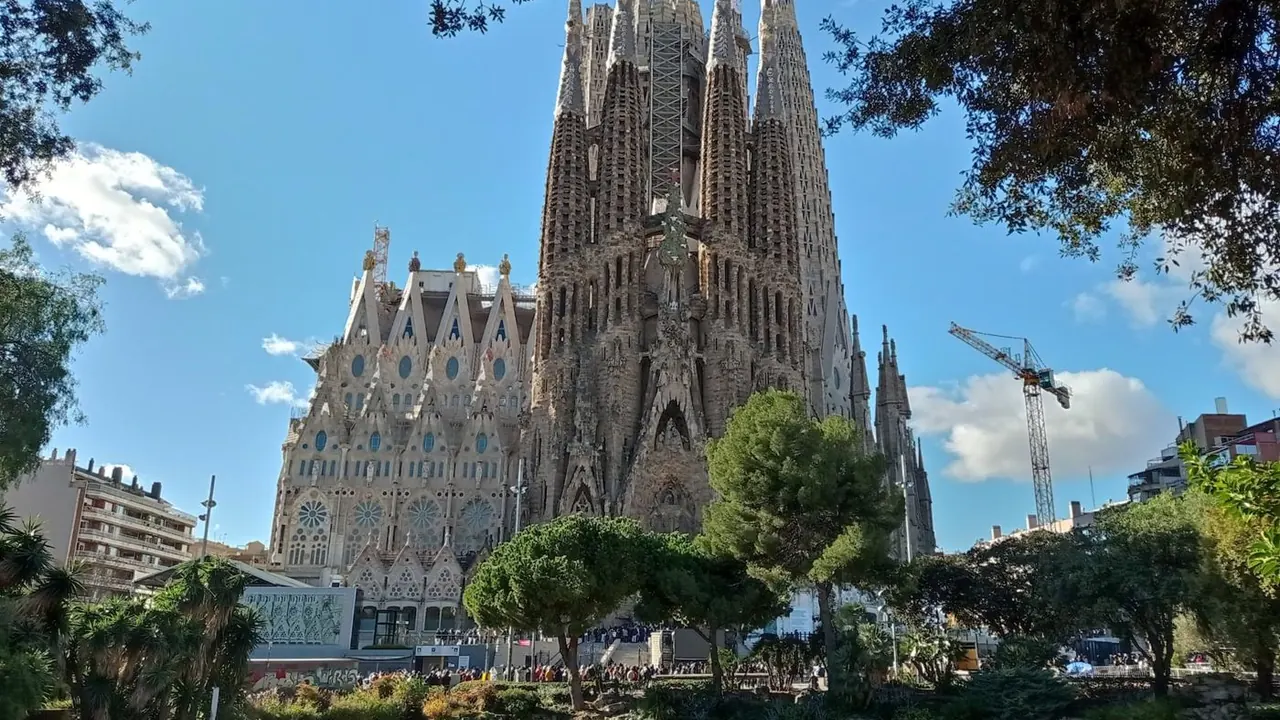
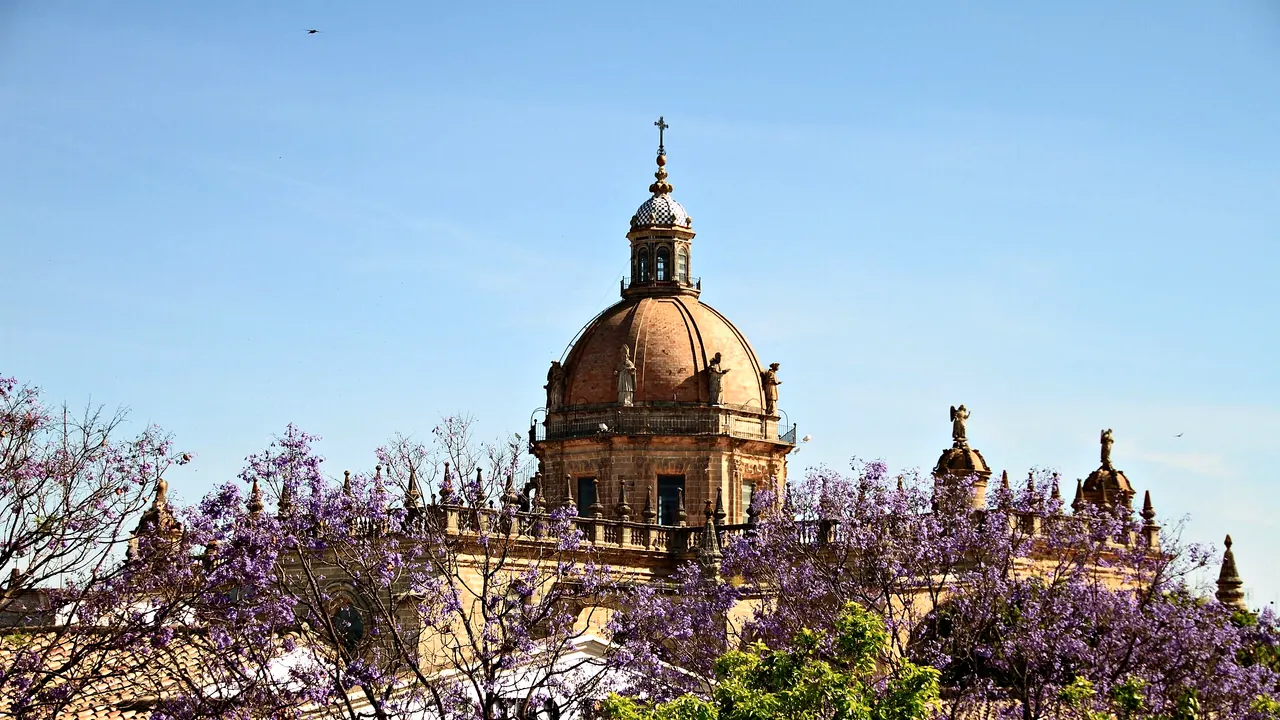
Photos: Barcelona by Canaan, CC BY-SA 4.0, cropped; Jerez de la Frontera by PEPE GADEIRAS, CC BY 4.0, cropped.
Barcelona or Jerez de la Frontera?
Our verdict in twelve categories, each scored against the same fixed benchmark cities, and the climate month by month, so you can choose for your trip.
Choose Barcelona for
- nightlife
- shopping
- culture and sights
Barcelona suits travellers who want a big city with everything in reach: Gaudí's buildings and a Gothic old town for the days, late dinners and clubs for the nights, a metro to the beach and serious shopping in between. It fills a week without effort and works well for families, first-timers and anyone who wants energy around them, provided they accept higher costs and crowds in summer.
Choose Jerez de la Frontera for
- prices
- wellness
Jerez is the better pick for a slower, cheaper trip built around one deep tradition. Sherry poured from the barrel in old taverns, flamenco heard close up in the peñas and the dressage horses of the equestrian school give it a character Barcelona cannot match. It also makes a fine base for Seville, Cádiz, the white towns and the Atlantic beaches, especially for travellers with a hired car.
Scoreboard
Twelve categories on one fixed scale from 0 to 100. The shaded stretch is the gap between the two.
Your match
Pick a travel style or drag the sliders, and both match scores follow your weighting.
Wins on nightlife and shopping with your weighting.
Wins on prices and wellness with your weighting.
What matters to you?
Category by category
What the scores mean for a trip.
Beaches & swimming
Barcelona has the clear edge because the sand starts at the city's edge. A walk from the Born or a metro ride gets you to Barceloneta, Bogatell or Mar Bella, where the Mediterranean is warm enough to swim from June to late September. The catch is that these man-made beaches are crowded in high summer, and the better sand lies down the coast at Sitges or Castelldefels.
Jerez has no beach of its own, so every swim is a day out by train or car to El Puerto, Cádiz or the wide sands at Sanlúcar and La Barrosa. Those Atlantic beaches are longer, wilder and finer than Barcelona's, but the water is cooler and the Levante wind can make it rough.
Food & drink
Barcelona offers far more range. Catalan cooking from calçots to suquet, seafood rice by the sea, vermouth at midday and neighbourhood markets like Santa Caterina and Sant Antoni sit alongside one of Europe's leading tasting-menu scenes, with Gràcia, Poble Sec and the Eixample all worth eating through.
Jerez goes deep rather than wide. Everything turns on sherry: fino and oloroso drawn from the barrel in the tabancos, kidneys and oxtail cooked in it, berza stew and fried fish from the nearby coast. It is a superb place to learn one tradition, but you will run out of new kinds of meal far sooner than in Barcelona.
Culture & sights
Barcelona is in a different league for sightseeing. The Modernista buildings of Gaudí and his contemporaries, from the Sagrada Família to the Palau de la Música, are unique to the city, and beneath them sit the Roman walls of the Gothic Quarter, Santa Maria del Mar and museums such as the Picasso and the MNAC. A week is easily filled.
Jerez is pleasant to wander rather than a place to tick off landmarks. The Almohad Alcázar, the cathedral and the Mudéjar parish churches are fine, and the sherry bodegas and the Royal Andalusian School of Equestrian Art are genuinely its own, but two or three days cover it.
Nightlife
Barcelona's nights are among the longest in Europe. Clubs fill around two and run until dawn, electronic music has real depth, and each district has its own crowd, from the Raval's alternative bars to the Eixample's gay scene and the pintxos bars of Blai street.
In Jerez a night out means tapas terraces around Plaza del Arenal and sherry in the copa bars until after midnight, sociable but small. Only during the Feria del Caballo in May does the town stay up until dawn for a week.
Nature & outdoors
Barcelona is the easier city for getting outdoors, because the wooded Collserola hills begin at its edge and the Carretera de les Aigües gives runners and cyclists city views without leaving town. Montserrat's pinnacles, the Garraf cliffs and the Costa Brava's coastal paths are all within a couple of hours.
Around Jerez the chalky vineyards are gentle, and the real landscapes need a drive: the gorges of the Sierra de Grazalema, the cork forests of Los Alcornocales and the Doñana wetlands across the river from Sanlúcar. Birdwatchers, riders and kitesurfers heading towards Tarifa will find more of their own here.
Day trips
Both make excellent bases, so the difference is in what lies around them and how you get there. From Barcelona, fast trains reach medieval Girona in under forty minutes and Roman Tarragona just as easily, with Dalí's museum in Figueres and the Penedès cava cellars also close.
Jerez puts Seville an hour away by train and ancient Cádiz half an hour, but its finest outings, Arcos on its cliff, Vejer and Ronda, are best done with a car.
Good for families
Barcelona has much more built for children: the aquarium, the CosmoCaixa science museum, the funicular to the old Tibidabo funfair and PortAventura about an hour south, with Park Güell's storybook shapes in between. The narrow old town and summer bag-watching are the drawbacks.
Jerez welcomes children just as warmly at late dinners, and the zoo and the dancing horses go down well, but there is little else aimed at them and July and August are punishingly hot. Its wide, gently shelving beaches are the main summer draw for families.
Getting around
Barcelona has a real public transport network. The metro, buses, trams and local trains share tickets and reach the beaches, the Sagrada Família and the funiculars up Montjuïc and Tibidabo, and bike lanes cover the flat stretches.
Jerez needs no network in town, since the Alcázar, the bodegas and the tapas streets are a short walk apart, and trains run to Seville and Cádiz. Beyond that, the white towns, the sierra and many beaches are hard work without a hired car.
Shopping & style
Barcelona is the clear choice for anyone who wants to shop. The Passeig de Gràcia has international fashion between Modernista façades, and the more interesting finds are in the independent designers of the Born, Gràcia's small boutiques, the Raval's vintage shops and the Els Encants flea market.
Jerez offers a provincial high street on Calle Larga and little else, except where it is specialist. Sherry and brandy from the bodegas, handmade saddlery and riding boots, and flamenco dresses and guitars are things worth carrying home.
Affordability
Jerez is the noticeably cheaper of the two. Tabanco tapas and sherry cost little, central hotels are moderately priced and most sights are free to walk past, though rooms become scarce and costly during the Feria, the flamenco festival and the motorcycle race weekends.
Barcelona is pricier than most of Spain. Summer hotels near the old town are the big expense, and the Gaudí entry fees and tourist tax add more, so set lunches and market counters are where you claw it back.
Live music & performing arts
Barcelona has the broader stage. The Liceu runs a full opera and ballet season, the Palau de la Música turns any concert into an occasion, and Sónar, Primavera Sound and the Grec festival on Montjuïc bring big international programmes alongside jazz cellars and indie rooms.
Jerez is narrower but more intense in its one art. Flamenco took shape in its Santiago and San Miguel quarters, and peña evenings and tabanco sessions are rawer and closer than a Barcelona tablao. The late-winter festival at the Teatro Villamarta is the time to go.
Wellness & relaxation
Neither city is a spa destination; each has an Arab-style bathhouse in the old town and a few hotel spas. The difference is the pace. Barcelona's centre is noisy and its nights late, so calm means escaping to Collserola or a seaside town, while Jerez's shaded patios and quiet afternoon hours let you slow down without leaving town.
When should you go?
Pick your month. The climate figures are measured averages, not a forecast.
Barcelona in July
Jerez de la Frontera in July
Daytime high, °C
Rainfall in the month, mm
Temperature and rainfall are climate normals, averaged over the years shown. Barcelona: 1991-2020 normals, Barcelona / Aeropuerto (14.4 km from centre). Jerez de la Frontera: 1991-2020 normals, Jerez De La Fronteraaeropuerto (9.9 km from centre).
Barcelona is at its best from May to early October. The sea is warm enough for swimming from June to late September, summer highs stay around a manageable 29°C, and winters are mild but grey compared with the south. Showers come mainly in September and October, which peak at about 83mm, so late spring is the most reliable time for both sightseeing and the first swims.
Jerez runs hotter and drier. July and August reach about 34°C, too hot for walking the streets by day, although that is also when the Atlantic is at its warmest for a beach day out. Summer is almost rainless, and Jerez gets more sunshine than Barcelona in every month. The rain arrives from October to December at around 85mm a month, while winter days near 17°C make January to May pleasant for wandering, so spring and early autumn suit Jerez best.
Which traveller are you?
For a food and nightlife trip, Barcelona is the stronger choice. Each day can bring a different neighbourhood and a different kind of meal, and the night carries on long after Jerez, with its single deep tradition, has gone quiet.
On a trip on a tight budget, Jerez lets the money go further. Eating, drinking and sightseeing there cost far less than in Barcelona, and the savings can turn a long weekend into a full week of outings around Andalusia.
For flamenco lovers, Jerez is the place to go. Barcelona puts on good shows, but in Jerez flamenco belongs to the town's own life, and serious students come to learn it as well as to listen.
Before you go
| Measure | Barcelona | Jerez de la Frontera |
|---|---|---|
| Official language | Spanish | Spanish |
| Currency | Euro (EUR) | Euro (EUR) |
| Sockets | CF230 V, 50 Hz | CF230 V, 50 Hz |
| Driving side | Right | Right |
| Time zone | UTC+1, UTC+2 in summer | UTC+1, UTC+2 in summer |
| Emergency number | 112 | 112 |
| Elevation | 9 m | 58 m |
| Main airport | Josep Tarradellas Barcelona-El Prat Airport (BCN)13 km from centre235 non-stop destinations | Jerez Airport (XRY)10 km from centre26 non-stop destinations |
| Public holidays this year | 14 days | 12 days |
By the numbers
| Measure | Barcelona | Jerez de la Frontera |
|---|---|---|
| City population | 1,731,649 | 213,634 |
| People per km² | 17,094 | 180 |
| Museums within 10 km | 95 | 14 |
| UNESCO World Heritage sites within 50 km | 3 | 1 |
| Swim season, months above 21 °C | 3 months | 3 months |
Where else could you go?
Every comparison below shares a destination with this one, so you can follow Barcelona or Jerez de la Frontera somewhere new.
- Cadizvs Jerez de la Frontera
- Sevillevs Jerez de la Frontera
- Gironavs Barcelona
- Rondavs Jerez de la Frontera
- Marbellavs Jerez de la Frontera
- Malagavs Jerez de la Frontera