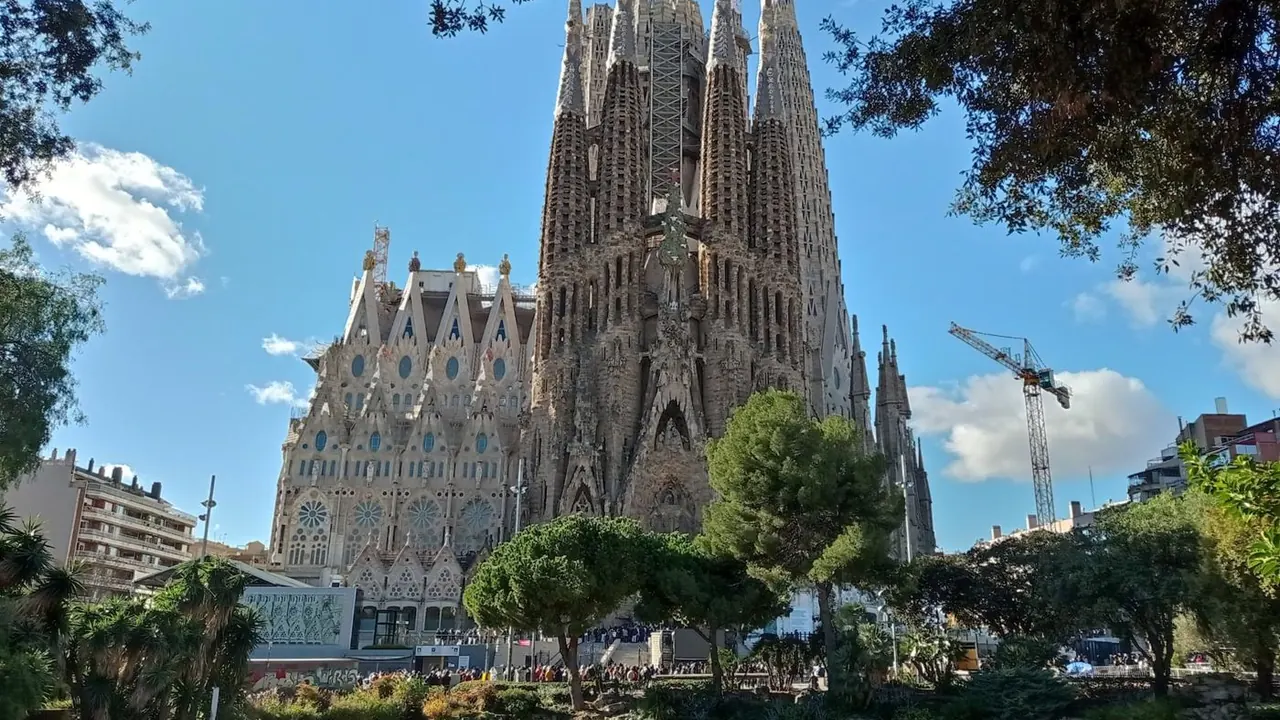
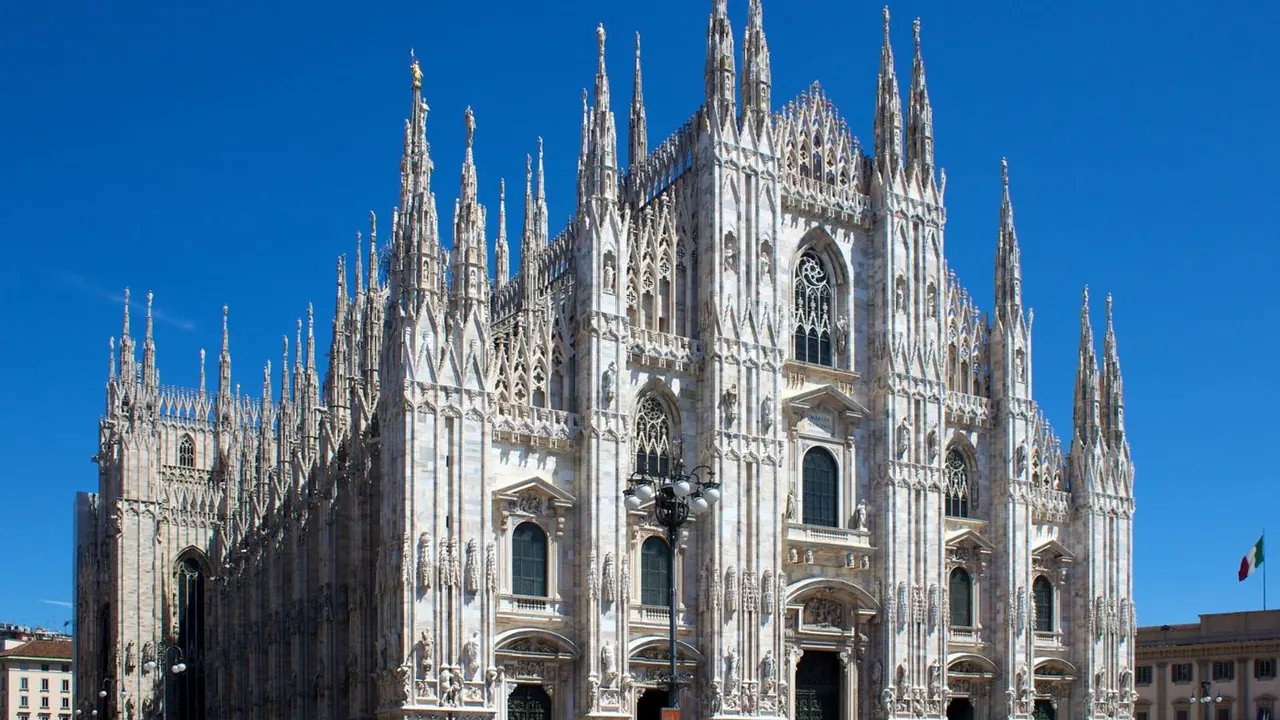
Photos: Barcelona by Canaan, CC BY-SA 4.0, cropped; Milan by Jiuguang Wang, CC BY-SA 3.0, cropped.
Barcelona or Milan?
Our verdict in twelve categories, each scored against the same fixed benchmark cities, and the climate month by month, so you can choose for your trip.
Choose Barcelona for
- beaches
- families
- nightlife
Barcelona is the better pick for a trip that mixes sightseeing with sun and late nights. Gaudí's buildings and the Gothic Quarter give it the richer set of sights, the sand starts at the edge of the old town, and the bars and clubs keep going until dawn. It is also easier with children and a little kinder on the budget, so it suits families, first-time visitors and anyone who wants the beach and the city in one stay.
Choose Milan for
- shopping
- live music and the arts
- day trips
Milan works best if you care more about style, opera and the country around it than about the beach. Its fashion streets are among the most important anywhere, La Scala is a pilgrimage for opera lovers, and fast trains put Lake Como, Bergamo, Verona and Turin within easy reach for a day. Choose it if you want an elegant base for shopping, an evening at the theatre and days out across northern Italy, and you don't mind the higher prices.
Scoreboard
Twelve categories on one fixed scale from 0 to 100. The shaded stretch is the gap between the two.
Your match
Pick a travel style or drag the sliders, and both match scores follow your weighting.
Wins on beaches and families with your weighting.
Wins on shopping and live music and the arts with your weighting.
What matters to you?
Category by category
What the scores mean for a trip.
Beaches & swimming
This is where the two cities differ most. Barcelona has several kilometres of sand running from Barceloneta to Mar Bella, so a swim fits into an ordinary summer afternoon of sightseeing. The beaches are man-made and crowded in high summer, but Sitges and the Maresme coast are a short train ride away.
Milan has no coast at all. Swimming there means the Idroscalo basin, the city's open-air pools or a train of about an hour to the pebbly lidos of Como and Maggiore. It works as an occasional outing, but it can't be part of every day.
Food & drink
Both cities eat very well, but in different styles. Barcelona's food is Catalan and Mediterranean, with olive oil, seafood rice, pa amb tomàquet and calçots. Its covered markets are central to daily life, from Santa Caterina to Sant Antoni, and the day often starts with a late-morning vermouth.
Milan cooks with butter, as in saffron risotto, ossobuco and cotoletta, and it is a good place to try cooking from every other Italian region too. Its daily ritual is early-evening aperitivo with generous snacks around the Navigli and Brera, while street food and markets matter less than in Barcelona.
Culture & sights
Barcelona has more to see. The Modernista buildings, from the Sagrada Família to Park Güell and the Palau de la Música, exist nowhere else, and below them lie a Gothic Quarter with Roman walls and the Picasso and Miró collections. Exploring all of it easily fills a week.
Milan's sights are few but of the highest rank: the Duomo's rooftop, the Last Supper, the Brera paintings and the Rondanini Pietà. Because much of the city is modern, these come in clusters rather than one long walk through old streets, and two or three days covers the essentials.
Nightlife
Barcelona's nights are longer and wilder. Bars fill after eleven, clubs peak around two, and each district has its own crowd, from the medieval cellar bars of the Born to Gràcia's squares and the electronic club nights that run through summer.
Milan goes out earlier and dresses up more. The evening grows out of aperitivo on the Navigli towpaths, and the clubs around Corso Como have strict doors. The scene is polished rather than late, and it goes quiet in August.
Nature & outdoors
Barcelona has more nature close at hand. The wooded Collserola hills start at the edge of Gràcia and Sarrià, the Carretera de les Aigües gives a flat run with views over the city, and water sports go out from the northern beaches. Montserrat and the cliffs of the Garraf are an easy day.
Milan itself is flat and often hazy, with parks and canal towpaths for cycling. Its strength lies further out, with the lakes and the Prealpine ridges above Lecco for serious hiking. In winter there are ski resorts, but they take a full day.
Day trips
Barcelona offers good outings across Catalonia: Girona by fast train, the Dalí museum at Figueres, Roman Tarragona, Montserrat and the cava cellars of the Penedès.
Milan has the deeper choice, because it sits where Italy's high-speed lines meet. Verona, Turin, Bergamo and Lake Como are all about an hour away, and Bologna, Mantua, Parma, the Borromean Islands and even Lugano in Switzerland are close enough for a day out. You could spend a week taking day trips and see a different city every day.
Good for families
Barcelona is far easier with children. The aquarium, the hands-on CosmoCaixa, the Tibidabo funfair reached by funicular and the beach can fill a week, and children are welcome everywhere, including in restaurants late at night. The crowded old town is hard work with a pushchair, though.
Milan copes well enough. The science and technology museum, with its submarine, is a good choice for a rainy day, and Parco Sempione has room to run. Beyond that, the main attractions are made for adults, and the theme parks mean a trip out of the city.
Getting around
Both cities are easy without a car, with flat, walkable centres and simple colour-coded metros. In Barcelona the climbs come at the edges, with funiculars and cable cars to reach Montjuïc and Tibidabo, and the long, flat seafront promenade suits a bike.
Milan's main sights are closer together, and its dense tram network, still running the old orange cars, makes the city pleasant to see from street level. The weak point is the long transfer from Malpensa airport.
Shopping & style
Milan is a destination in its own right for shopping. The Quadrilatero della Moda holds the flagships of fashion houses born in the city, La Rinascente and the Galleria have set the standard for Italian style for generations, and design showrooms and boutiques in Brera add a second specialism.
Barcelona is good but less important for fashion. The Passeig de Gràcia has the big names, while its best finds are independent shops in the Born and Gràcia and things to take home such as espadrilles, ceramics and cava.
Affordability
Neither city is cheap, but Barcelona is easier on the wallet. Hotels and Gaudí entry fees are the main costs there, while set lunches, market counters and neighbourhood tapas keep everyday spending reasonable.
Milan is Italy's most expensive city. Hotel rates jump during trade fairs and fashion weeks, and meals in Brera cost a lot. An aperitivo that doubles as supper and a room near a metro stop outside the centre help most.
Live music & performing arts
Both cities have a great opera house, but Milan's carries more weight. Barcelona's Liceu runs a full season, a concert under the stained glass of the Palau de la Música is memorable, and Sónar and Primavera Sound fill early summer with music.
La Scala is one of the world's opera landmarks, with a season that opens in December. The Piccolo Teatro, Italy's first public theatre, adds serious drama, and big summer concerts fill San Siro. For classical music, plan a Milan trip outside summer.
Wellness & relaxation
Neither city is a place to rest, and both send you elsewhere for real calm. Barcelona has a few Arab-style bath houses in the old town, and the quiet comes from long lunches in Gràcia's squares and evening walks in Collserola.
Milan has a large thermal spa complex with outdoor pools and the restored 1930s Bagni Misteriosi for a summer afternoon. Its best escape is the lakes, where lakeside villas and quiet walks are an hour away.
When should you go?
Pick your month. The climate figures are measured averages, not a forecast.
Barcelona in July
Milan in July
Daytime high, °C
Rainfall in the month, mm
Where the figures come from
Milan has no rain gauge within 25 km of the centre, so its rainfall comes from a gridded climate dataset read at the city rather than from a gauge further away.
Milan's sunshine is measured 41 km from the centre, at Novara / Cameri.
Temperature and rainfall are climate normals, averaged over the years shown. Barcelona: 1991-2020 normals, Barcelona / Aeropuerto (14.4 km from centre). Milan: 1991-2020 normals, Milano / Linate (8 km from centre).
Barcelona has the gentler and sunnier climate all year. The sea is warm enough for swimming from June to late September and reaches about 25°C in August, while July and August are hot enough to make sightseeing at midday hard work. May, June and early autumn are the best months for walking the city. September and October bring the heaviest rain, though it comes in short downpours more often than long grey spells. Winters are mild enough for sightseeing in a jacket.
Milan has much sharper seasons. Winter highs sit around 7°C with little sunshine, so December and January are best spent in museums and theatres. Late spring and early autumn are the pleasant months for walking, but they are also wet, with May close to 100mm, and the city is at its rainiest from September to November, with November the wettest month. Summer reaches about 30°C and is humid on the plain, which is when locals head for the lakes.
Which traveller are you?
On a beach and sun trip, Barcelona is the obvious pick, with sand a metro ride from the old town and a swim added to a day of sightseeing. Milan offers city pools, the Idroscalo or an hour's train to the lakes.
For a shopping trip, Milan is the clear choice. Italian fashion and design are on show where they began, from the great flagships to design showrooms, and they can fill several days. Barcelona suits browsing small shops between sights.
On a family trip with children, Barcelona is the easier city. Children are welcome everywhere, even at restaurant tables late in the evening, and every neighbourhood square has a playground. Milan manages a few days but suits adults more.
Before you go
| Measure | Barcelona | Milan |
|---|---|---|
| Official language | Spanish | Italian |
| Currency | Euro (EUR) | Euro (EUR) |
| Sockets | CF230 V, 50 Hz | CFL230 V, 50 Hz |
| Driving side | Right | Right |
| Time zone | UTC+1, UTC+2 in summer | UTC+1, UTC+2 in summer |
| Emergency number | 112 | 112 |
| Elevation | 9 m | 138 m |
| Main airport | Josep Tarradellas Barcelona-El Prat Airport (BCN)13 km from centre235 non-stop destinations | Milan Malpensa International Airport (MXP)40 km from centre208 non-stop destinations |
| Public holidays this year | 14 days | 13 days |
By the numbers
| Measure | Barcelona | Milan |
|---|---|---|
| City population | 1,731,649 | 1,354,196 |
| People per km² | 17,094 | 7,453 |
| Museums within 10 km | 95 | 88 |
| UNESCO World Heritage sites within 50 km | 3 | 4 |
| Swim season, months above 21 °C | 3 months | - |
Where else could you go?
Every comparison below shares a destination with this one, so you can follow Barcelona or Milan somewhere new.