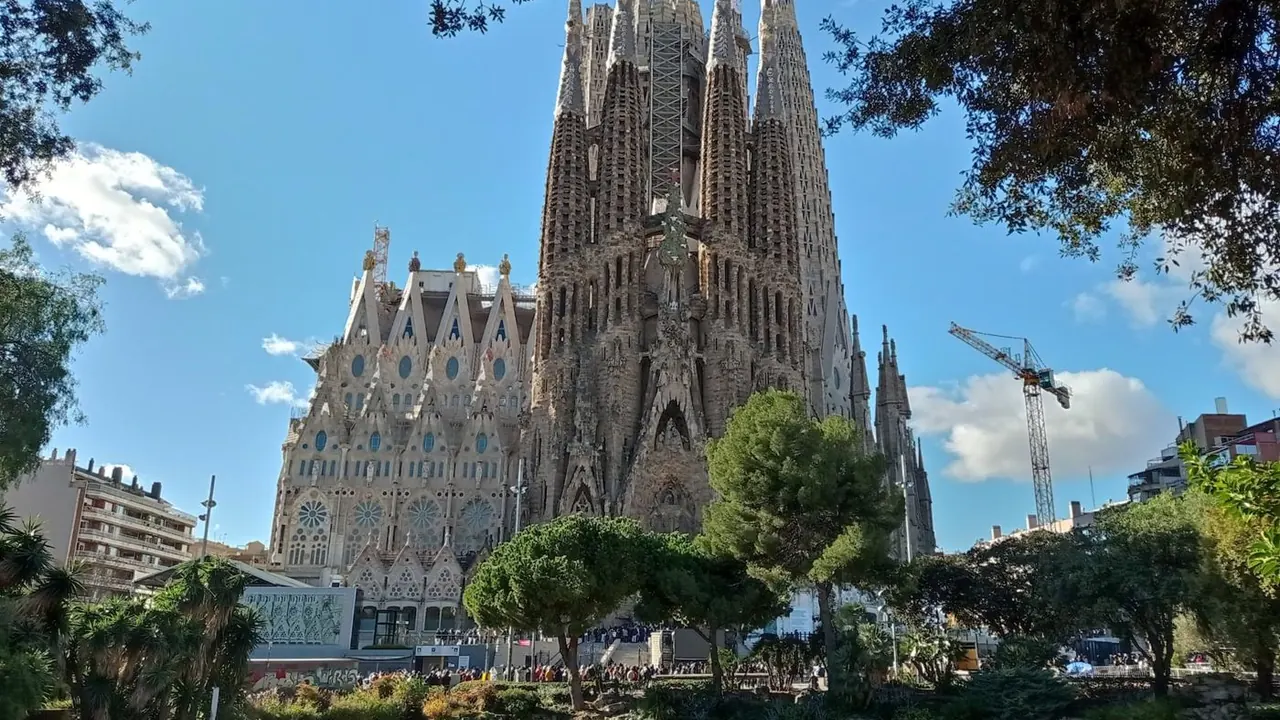
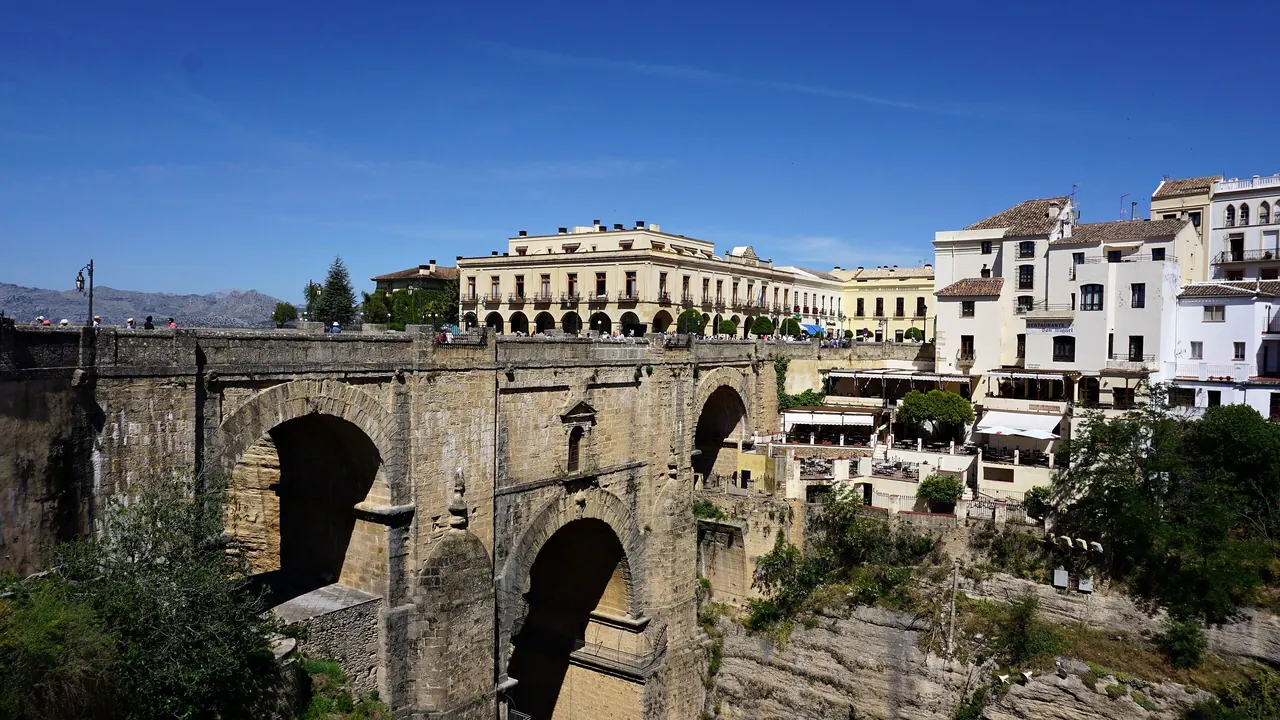
Photos: Barcelona by Canaan, CC BY-SA 4.0, cropped; Ronda by Julia Kostecka, CC BY 2.0, cropped.
Barcelona or Ronda?
Our verdict in twelve categories, each scored against the same fixed benchmark cities, and the climate month by month, so you can choose for your trip.
Choose Barcelona for
- nightlife
- beaches
- shopping
Barcelona is the choice for a full city trip. It gives you Gaudí's Modernista buildings and the Gothic Quarter, a beach you can reach by metro, markets and tapas bars in every district, and nights that run until dawn. It suits travellers who want plenty to do every day for a week, families who need aquariums and science museums to fill the afternoons, and anyone who would rather get around by metro than by car.
Choose Ronda for
- prices
- nature and the outdoors
Ronda works best as a slower stay in the mountains. The town sits on its gorge, with the Sierra de Grazalema and the Sierra de las Nieves on either side and white villages within the hour. Walkers, drivers and couples will get the most from it, especially if they like quiet evenings over tapas and a country house with a pool. It costs less than Barcelona, but you give up the beach, the nightlife and the shopping.
Scoreboard
Twelve categories on one fixed scale from 0 to 100. The shaded stretch is the gap between the two.
Your match
Pick a travel style or drag the sliders, and both match scores follow your weighting.
Wins on nightlife and beaches with your weighting.
Wins on prices and nature and the outdoors with your weighting.
What matters to you?
Category by category
What the scores mean for a trip.
Beaches & swimming
Barcelona has a chain of sandy city beaches, from Barceloneta to Mar Bella, a short metro ride from the centre, so you can swim after a morning of sightseeing. They are man-made and crowded in high summer. For more space, the coastal trains reach Sitges and the Maresme beaches in well under an hour.
Ronda is up in the mountains, and the nearest sea is the built-up Costa del Sol around Estepona, down a road of hairpin bends. A beach day there takes the whole day and needs a car. Most visitors settle for a hotel pool instead.
Food & drink
Barcelona has a whole cuisine to explore, from calçots and suquet to seafood rice. Covered markets like Santa Caterina and Sant Antoni sit in every district, and the range runs from cheap workers' set lunches to serious tasting menus. Gràcia, Poble Sec and the Eixample alone could fill a week of meals.
Ronda's food is the hearty mountain cooking of the Serranía: oxtail stew, lamb, game, cured hams and autumn chestnuts, with local wine from wineries just outside town. It is good, but the range is narrow and fine dining is scarce, so a few days covers it. In both places, eat away from the famous views. In Barcelona that means avoiding the Rambla, and in Ronda the gorge-side terraces.
Culture & sights
Barcelona has the deeper heritage. The Sagrada Família, La Pedrera and Park Güell sit alongside Roman walls, the Gothic Quarter and Santa Maria del Mar, and museums such as the Picasso and the MNAC add plenty more. It takes a week to see properly.
Ronda's main sight is its setting: the Puente Nuevo over the gorge, with the Moorish old town on one side and the Mercadillo on the other. Around that are a few strong monuments, including the Real Maestranza bullring, the Arab baths and the Mondragón palace. All of it fits comfortably into one or two days.
Nightlife
Barcelona has one of the latest nights in Europe. Dinner runs to eleven, the bars of the Raval, the Born and Gràcia fill after that, and the clubs and electronic nights keep going until dawn. In summer there are open-air parties too.
Ronda's evenings revolve around tapas and a late dinner in and around the Plaza del Socorro. A few bars stay open afterwards, but there are almost no clubs, and the town is quiet by the early hours except during the September fair.
Nature & outdoors
Ronda has the better countryside on its doorstep. You can walk from town down to the foot of the gorge. The Sierra de Grazalema, green, craggy and patrolled by vultures, and the Spanish fir forests of the Sierra de las Nieves are a short drive away, and the gorge walls draw climbers.
Barcelona has more variety than you might expect for a big city. Collserola's trails and the Carretera de les Aigües start at the edge of town, and you can go sailing or windsurfing off Mar Bella. For real mountain scenery, though, you have to travel out to Montserrat or the Costa Brava cliffs.
Day trips
Barcelona is slightly easier to explore from because of the fast trains. Girona is under forty minutes away, and Tarragona's Roman remains, Figueres, Sitges and Montserrat all work without a car. That gives you a choice of medieval towns, Dalí, the Roman past and the coast.
Ronda's outings are different. They are mostly villages: Setenil under its overhanging rock, Zahara below its castle, Grazalema, plus the cave paintings of the Cueva de la Pileta. A hire car is close to essential. Seville and Málaga are possible but make for long days.
Good for families
Barcelona is much the easier place with children. The aquarium, CosmoCaixa, the zoo and the funfair on Tibidabo can fill several days, the beaches are a metro ride away, and PortAventura is about an hour south.
Ronda is safe and welcoming, and older children enjoy the bridge, the rock-cut stairway and the cave visits. There is no zoo, aquarium or theme park, though, and the steep cobbled lanes and exposed viewpoints are hard with small children. A country house with a pool works better than a hotel in town.
Getting around
Barcelona combines a flat, walkable centre with a clear metro, buses, trams and local trains on the same tickets. A car is never needed. The only hard work is the climb up to Park Güell, Montjuïc and Tibidabo.
Ronda is small enough to cross on foot in minutes, though the lanes down into La Ciudad are steep. The trouble is getting out of town. Trains and buses are slow and infrequent, so the villages, natural parks and the Caminito del Rey really need a car.
Shopping & style
Shopping can be a reason to visit Barcelona, but in Ronda it barely fills an afternoon. In Barcelona, luxury and Spanish fashion houses line the Passeig de Gràcia, independent designers work in the Born, Gràcia has small craft shops, the Raval has vintage and record shops, and Els Encants is good for a flea-market browse.
Ronda has one pedestrian street of ordinary shops and souvenir stalls near the bridge. The things worth taking home are edible: local wine, cured meats, olive oil and convent sweets.
Affordability
Ronda is the cheaper stay. Mercadillo tapas bars, modest entry fees and fairly priced rural houses keep costs down, though prices rise for gorge-view rooms, at Easter and during the September fair. A hire car is the main extra cost.
In Barcelona, hotels are the biggest drain, especially in summer and near the old town. The tourist tax and the steep Gaudí entry fees add more. Set lunches, market counters and a transport pass help balance it out.
Live music & performing arts
Opera, concerts and festivals give Barcelona a year-round calendar that Ronda cannot match. There is opera and ballet at the Liceu, concerts under the glass ceiling of the Palau de la Música, jazz cellars and flamenco stages, and in early summer come Sónar, Primavera Sound and the Grec.
Ronda offers small flamenco shows and the occasional programme at its municipal theatre. Its one big event is the Corrida Goyesca in the old bullring during the September fair. On most evenings there is little to see.
Wellness & relaxation
Neither place is built for a spa break. Barcelona has a few Arab-style bath houses and hotel spas, and Ronda's Arab baths are a monument you visit rather than bathe in. The difference is the setting.
Barcelona's centre is noisy and up late, so calm means a long lunch or an evening walk on Montjuïc. Ronda grows quiet once the day-trippers leave, and a farmhouse in the hills, with olive groves and a pool, suits a few days of doing very little.
When should you go?
Pick your month. The climate figures are measured averages, not a forecast.
Barcelona in July
Ronda in July
Daytime high, °C
Rainfall in the month, mm
Where the figures come from
Ronda has no weather station within reach, so its figures come from a gridded climate model rather than a measured record, and read a broad area rather than the city itself.
Temperature and rainfall are climate normals, averaged over the years shown. Barcelona: 1991-2020 normals, Barcelona / Aeropuerto (14.4 km from centre). Ronda: 1991-2020 normals, TerraClimate 4 km grid at the town, no weather station within 90 km.
Barcelona is a beach city from June to September. The sea reaches about 25°C in August, and July is the sunniest month. High summer is hot and humid for sightseeing but rarely too hot. The rain comes in September and October, at around 83mm a month, usually as heavy showers between sunny spells. Winters are mild and fine for walking the streets, though too cool for swimming.
Ronda swings between extremes. July and August reach 32°C, and the afternoons are almost completely dry and too hot for hiking or climbing the steep lanes, so do your walking in the early morning. From November to March the town is much wetter than Barcelona, with grey spells, and winter nights in the mountains are cold. April, May and late September to October are the best months for walking the gorge and the sierras. Barcelona is the safer bet in the depths of winter and the more comfortable one in high summer.
Which traveller are you?
For a food and nightlife trip, Barcelona is the clear choice. You get Catalan cooking, market counters and a serious tasting-menu scene, then cocktail bars in Born cellars and clubs open until dawn. Ronda's evenings stop at tapas and a drink in the Plaza del Socorro.
For an outdoors trip, Ronda makes the better base. Book a country house just outside town, allow four or five days and plan the walking for spring or autumn mornings. In Barcelona the hills are an occasional day out, not the point of the trip.
On a tight budget, Ronda stretches the money further. Stay in town rather than above the gorge, eat where locals do and use the bus for a day in Málaga or Seville. In Barcelona, the money goes mostly on where you sleep.
Before you go
| Measure | Barcelona | Ronda |
|---|---|---|
| Official language | Spanish | Spanish |
| Currency | Euro (EUR) | Euro (EUR) |
| Sockets | CF230 V, 50 Hz | CF230 V, 50 Hz |
| Driving side | Right | Right |
| Time zone | UTC+1, UTC+2 in summer | UTC+1, UTC+2 in summer |
| Emergency number | 112 | 112 |
| Elevation | 9 m | 724 m |
| Main airport | Josep Tarradellas Barcelona-El Prat Airport (BCN)13 km from centre235 non-stop destinations | Málaga-Costa del Sol Airport (AGP)60 km from centre166 non-stop destinations |
| Public holidays this year | 14 days | 12 days |
By the numbers
| Measure | Barcelona | Ronda |
|---|---|---|
| City population | 1,731,649 | 33,671 |
| People per km² | 17,094 | 87 |
| Museums within 10 km | 95 | 5 |
| UNESCO World Heritage sites within 50 km | 3 | 0 |
| Swim season, months above 21 °C | 3 months | 1 month |
Where else could you go?
Every comparison below shares a destination with this one, so you can follow Barcelona or Ronda somewhere new.