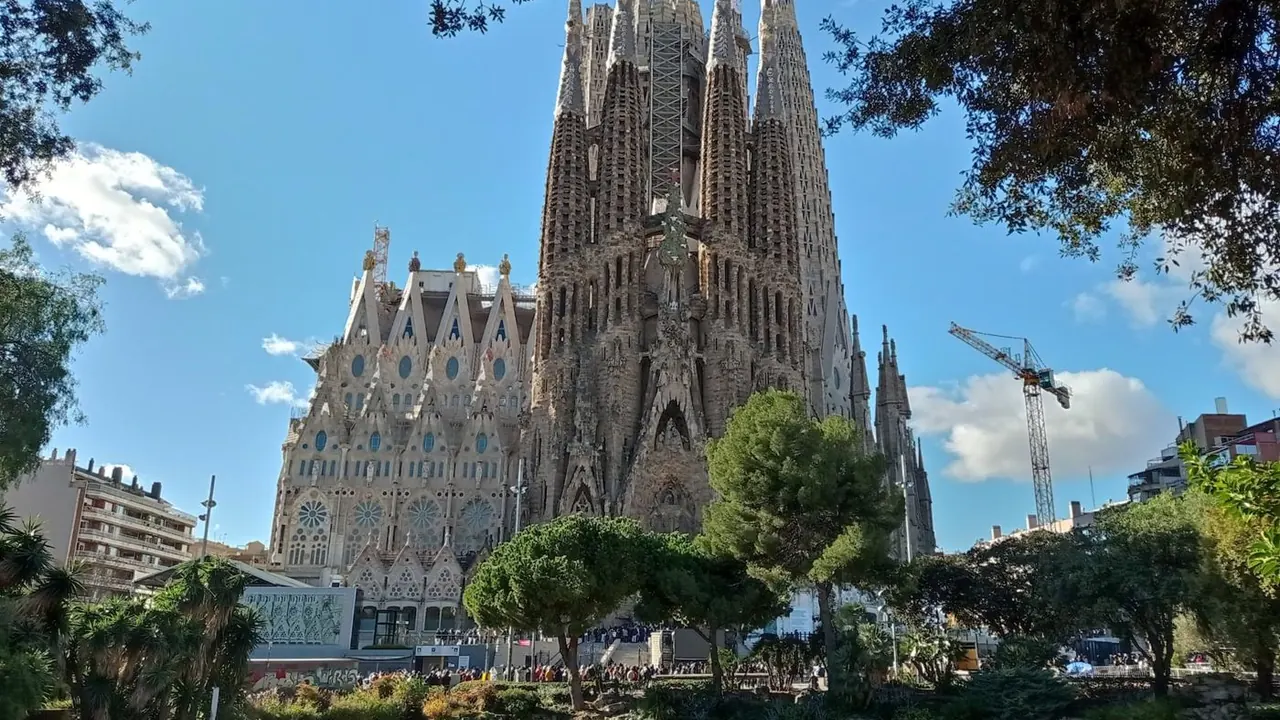
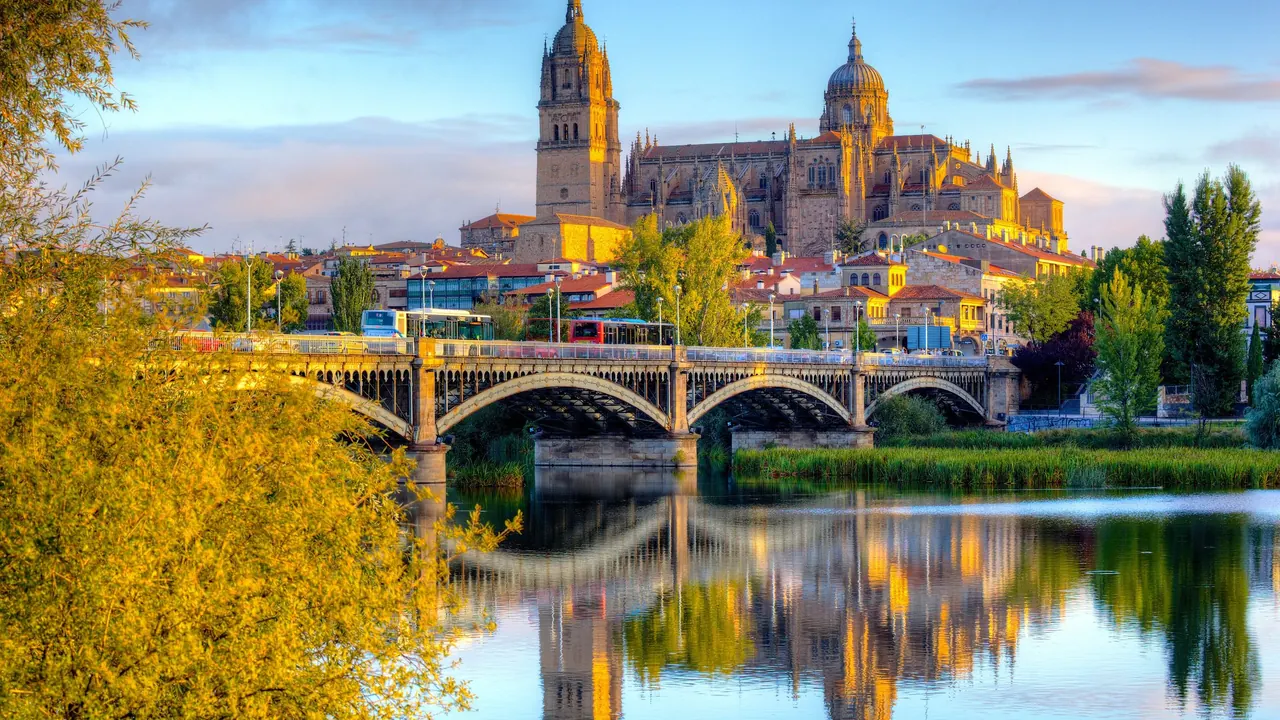
Photos: Barcelona by Canaan, CC BY-SA 4.0, cropped; Salamanca by Jiuguang Wang, CC BY-SA 3.0 ES, cropped.
Barcelona or Salamanca?
Our verdict in twelve categories, each scored against the same fixed benchmark cities, and the climate month by month, so you can choose for your trip.
Choose Barcelona for
- beaches
- shopping
- live music and the arts
Barcelona is the choice when you want everything in one trip: a city beach, Gaudí's buildings, serious eating and nights that run until dawn. It suits travellers who want range, from a morning in the Picasso Museum to an afternoon swim and a concert at the Palau de la Música, and families who need an aquarium or a funfair to balance the sightseeing. You pay for that range, in hotel rooms especially, and the old town is rarely quiet.
Choose Salamanca for
- prices
- wellness
Salamanca rewards a slower, cheaper and more concentrated visit. Its golden sandstone centre, with the Plaza Mayor, the University and the two cathedrals, can be covered on foot in two or three days, and the tapas bars and student nights cost far less than Barcelona's. It is the better pick for travellers who want a single beautiful historic town and the castles and walled towns of Old Castile around it, and who don't need a coast, big museums or much shopping.
Scoreboard
Twelve categories on one fixed scale from 0 to 100. The shaded stretch is the gap between the two.
Your match
Pick a travel style or drag the sliders, and both match scores follow your weighting.
Wins on beaches and shopping with your weighting.
Wins on prices and wellness with your weighting.
What matters to you?
Category by category
What the scores mean for a trip.
Beaches & swimming
Barcelona has a proper sandy seafront along its edge, from Barceloneta through Bogatell to Mar Bella, with swimming after work and volleyball through summer afternoons. The city beaches are man-made and crowded in high summer, but the coastal trains reach longer, cleaner strands at Sitges, Castelldefels and the Maresme in under an hour.
Salamanca has nothing comparable. It sits on the Castilian plain far from any coast, and a swim means a municipal pool or a river beach on the Tormes on a hot July day.
Food & drink
Barcelona eats much more widely. Catalan cooking, from suquet to calçots with romesco, sits alongside seafood rice by the sea, vermouth at midday, market counters at Santa Caterina and Sant Antoni, and a tasting-menu scene among Europe's most serious.
Salamanca is narrower but very good at what it does: Guijuelo ibérico ham, hornazo, suckling pig and morucha beef, eaten at bar counters around the Plaza Mayor and Calle Van Dyck. Seafood and international cooking are thin, so after a few evenings the choice starts to feel limited.
Culture & sights
Both are UNESCO-listed, but Barcelona offers more. Gaudí's Sagrada Família, Casa Batlló and Park Güell are unlike anything elsewhere, and under them lie a Gothic Quarter with Roman walls, Santa Maria del Mar and museums from the Picasso to the MNAC's Romanesque frescoes. A week passes without repeating yourself.
Salamanca's strength is a single, harmonious old town in golden sandstone: the baroque Plaza Mayor, the Plateresque University façade, the paired cathedrals and the Casa de las Conchas. It is beautiful, especially floodlit at night, but two or three days covers it and the museums are modest.
Nightlife
Barcelona's nights go further in every direction. There are cocktail bars in medieval cellars in the Born, scruffy Raval bars, outdoor drinking in Gràcia's squares, the Eixample's gay scene, beach clubs at the Port Olímpic and a deep electronic music culture that runs until dawn.
Salamanca is famous for its student nights, cheap, friendly and packed from Thursday to Saturday around Calle Bordadores and Gran Vía. The crowd is young and the clubs are small, though, and outside term time the city goes much quieter.
Nature & outdoors
Barcelona has the outdoors on its doorstep: the Collserola hills start at the city's edge, Montjuïc rises above the port and you can paddleboard or windsurf off Mar Bella. Further out, Montserrat, the Garraf cliffs and the Costa Brava's coastal paths add both mountain and sea.
Salamanca's immediate surroundings are flat wheatland with riverside paths. The rewarding country, the chestnut forests of the Sierra de Francia, the peaks of Béjar and the granite canyon of the Arribes del Duero, lies about an hour away and needs a car.
Day trips
Barcelona is the easier base, mainly because fast trains do the work. Girona is under forty minutes away, Figueres has the Dalí Theatre-Museum, and Roman Tarragona, Sitges and the cava cellars of the Penedès all make simple outings without a car.
Salamanca's surroundings are rich in history, with Ávila's walls, Zamora's Romanesque churches, fortified Ciudad Rodrigo and the half-timbered villages of La Alberca and Mogarraz. Many of these are best reached by car, which makes them harder work than Barcelona's rail trips.
Good for families
Barcelona has much more made for children: the aquarium at the old port, CosmoCaixa, the Ciutadella zoo, the Tibidabo funfair reached by funicular, city beaches and PortAventura an hour south. The crowded old town and the need to watch your bags are the main drawbacks.
Salamanca is calmer and safer to wander, and hunting for the frog and the astronaut on the stonework entertains children for a while. With no zoo, aquarium or theme park, though, it works best as a stop of a day or two on a longer family trip.
Getting around
Both are easy, in different ways. Barcelona has more ground to cover and a clean, colour-coded metro, trams and buses to cover it, though Park Güell, Montjuïc and Tibidabo involve a climb or a funicular.
Salamanca hardly needs transport at all: the pedestrian old town crosses in about twenty minutes on foot. The catch comes beyond the city, where the sierras and the Arribes are far easier by car.
Shopping & style
Barcelona is a real shopping city. Fashion houses line the Passeig de Gràcia among the Modernista façades, there are independent designers in the Born, craft shops in Gràcia, vintage in the Raval and the Els Encants flea market, with espadrilles, ceramics and cava to take home.
Salamanca offers the high-street chains on Calle Toro and Calle Zamora and plenty of university souvenirs. Its best buys are ibérico ham, cheese and charro silver filigree, not clothes.
Affordability
Salamanca is clearly the cheaper trip. Its large student population keeps tapas and drinks low-priced, often with a free tapa at the counter, rooms in the historic centre are moderate and you walk everywhere. Only festival weekends and Easter push prices up.
Barcelona costs more than most of Spain, mainly because of its hotels, a tourist tax and steep Gaudí entry fees. Set lunches, market counters and transport passes help keep the rest of the budget under control.
Live music & performing arts
Barcelona has a full cultural calendar. The Liceu stages opera and ballet, the Palau de la Música and L'Auditori host the concerts, there is serious theatre at the Lliure and the Mercat de les Flors, jazz cellars in the Gothic Quarter, and Sónar and Primavera Sound each summer.
Salamanca offers touring productions at the Teatro Liceo, university choral concerts and the caped tunas singing under the Plaza Mayor arcades. That is charming, but with no opera season or resident orchestra there is far less for a dedicated concertgoer.
Wellness & relaxation
Neither city has a bathing tradition, and both rely on hotel spas and small Arab-style bath houses. What differs is the calm. Barcelona's centre stays noisy and late, so rest means the Collserola paths, the Montjuïc gardens or escaping to a seaside town.
Salamanca slows down naturally, with a real siesta and quiet cloisters at San Esteban and Las Dueñas. The old spa at Ledesma and the Roman-era springs of Baños de Montemayor are within easy driving distance.
When should you go?
Pick your month. The climate figures are measured averages, not a forecast.
Barcelona in July
Salamanca in July
Daytime high, °C
Rainfall in the month, mm
Temperature and rainfall are climate normals, averaged over the years shown. Barcelona: 1991-2020 normals, Barcelona / Aeropuerto (14.4 km from centre). Salamanca: 1991-2020 normals, Salamanca / Matacan (13.9 km from centre).
Barcelona has the gentler year. The sea is warm enough to swim from June to late September, reaching about 24°C in August, and winter days stay mild at around 14°C, so walking the streets works in every month. The wettest spell is September and October, when autumn storms bring around 83mm a month. Spring and autumn are the best seasons for hiking and long days on foot, since high summer is humid and hot.
Salamanca, on the high plain, swings much harder. July and August are dry, sunny and hot, around 31°C, which makes afternoon sightseeing tiring, while winter days drop to about 9°C, with cold, clear air. There is no sea to plan around. May, June, September and early October are the sweet spots, warm and sunny without the summer heat, before the autumn rain arrives in October.
Which traveller are you?
For a short city break, Salamanca fits the time neatly. Two or three days covers the whole old town, by day and again floodlit after dark, with no rides to plan. A Barcelona weekend means choosing, and leaving half the list for another visit.
On a culture and arts trip, Barcelona keeps both days and evenings full. By day there are Sant Pau's Modernista pavilions, Miró on Montjuïc and the MACBA, and at night opera, symphony concerts or the open-air Grec festival. Salamanca's stages and museums run out quickly.
On a trip on a tight budget, Salamanca's best pleasures cost almost nothing: the floodlit Plaza Mayor, an evening walk over the Roman bridge and student bars where a night out stays cheap. Barcelona can be done frugally, but rooms there swallow much of the money.
Before you go
| Measure | Barcelona | Salamanca |
|---|---|---|
| Official language | Spanish | Spanish |
| Currency | Euro (EUR) | Euro (EUR) |
| Sockets | CF230 V, 50 Hz | CF230 V, 50 Hz |
| Driving side | Right | Right |
| Time zone | UTC+1, UTC+2 in summer | UTC+1, UTC+2 in summer |
| Emergency number | 112 | 112 |
| Elevation | 9 m | 798 m |
| Main airport | Josep Tarradellas Barcelona-El Prat Airport (BCN)13 km from centre235 non-stop destinations | Adolfo Suárez Madrid–Barajas Airport (MAD)184 km from centre239 non-stop destinations |
| Public holidays this year | 14 days | 12 days |
By the numbers
| Measure | Barcelona | Salamanca |
|---|---|---|
| City population | 1,731,649 | 146,110 |
| People per km² | 17,094 | 3,690 |
| Museums within 10 km | 95 | 13 |
| UNESCO World Heritage sites within 50 km | 3 | 1 |
| Swim season, months above 21 °C | 3 months | - |
Where else could you go?
Every comparison below shares a destination with this one, so you can follow Barcelona or Salamanca somewhere new.
- Madridvs Salamanca
- Toledovs Salamanca
- Portovs Salamanca
- Coimbravs Salamanca
- Toulousevs Barcelona
- Zaragozavs Barcelona