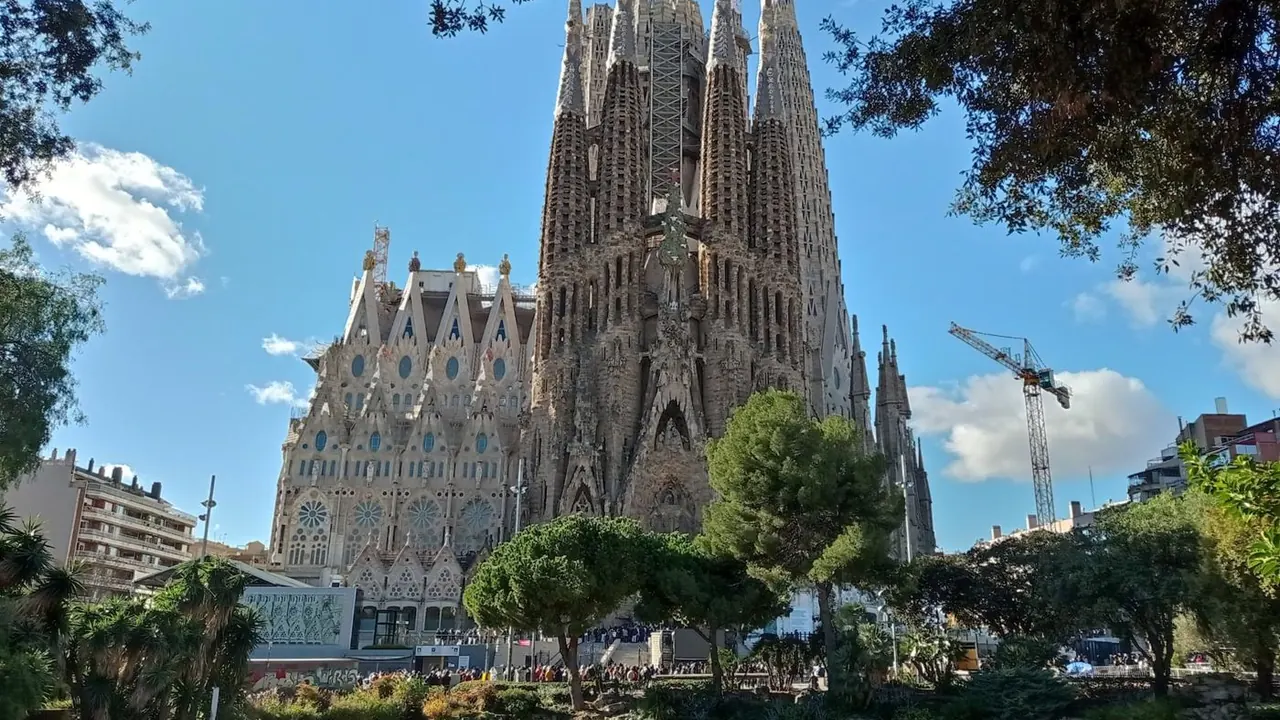
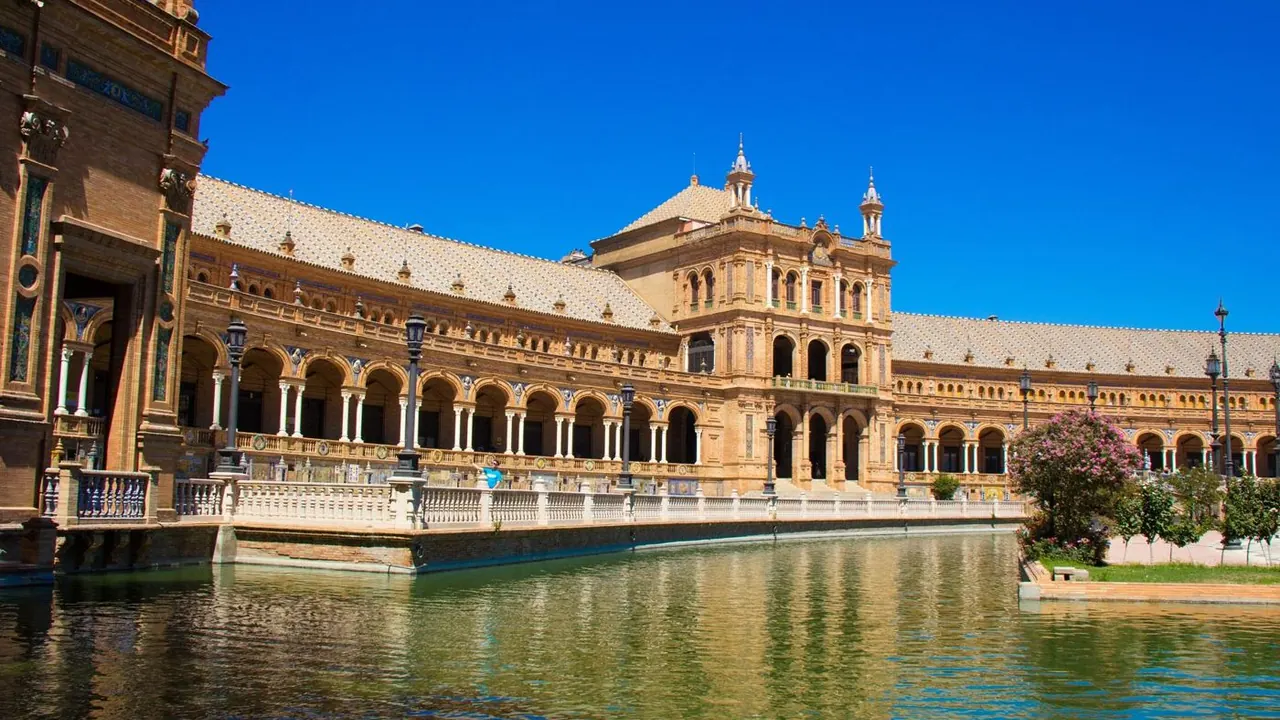
Photos: Barcelona by Canaan, CC BY-SA 4.0, cropped; Seville by Tibor Kovacs, CC BY 2.0, cropped.
Barcelona or Seville?
Our verdict in twelve categories, each scored against the same fixed benchmark cities, and the climate month by month, so you can choose for your trip.
Choose Barcelona for
- beaches
- families
- nightlife
Barcelona suits travellers who want a city and a beach in the same trip: Gaudí's buildings in the morning, a swim off Bogatell in the afternoon and a night that runs until dawn. It is also the easier choice with children and the better one for shopping and range of restaurants, as long as you can live with higher hotel bills and crowded summer sands.
Choose Seville for
- prices
- wellness
Seville is for a slower, more concentrated trip into Andalusia. The Alcázar, the cathedral and the lanes of Santa Cruz are a short walk apart, evenings are spent standing at tiled tapas bars, and you can see flamenco in the city most closely tied to it. Day to day it costs less, but there is no sea nearby, and in high summer the heat shapes every hour of the day.
Scoreboard
Twelve categories on one fixed scale from 0 to 100. The shaded stretch is the gap between the two.
Your match
Pick a travel style or drag the sliders, and both match scores follow your weighting.
Wins on beaches and families with your weighting.
Wins on prices and wellness with your weighting.
What matters to you?
Category by category
What the scores mean for a trip.
Beaches & swimming
Here the two cities could hardly be further apart. Barcelona has several kilometres of sand running from Barceloneta to Mar Bella, so a swim after sightseeing is easy, and the coastal trains to Castelldefels, Sitges and the Maresme get you to quieter, cleaner water. The city beaches are man-made and packed in high summer, but they are right there.
Seville sits inland on the Guadalquivir. The nearest sand is at Matalascañas or Mazagón on the Huelva coast, over an hour away by car or coach, so a beach day takes up most of the day. Anyone who wants the sea usually adds a few nights on the coast.
Food & drink
Barcelona has the wider table. Catalan cooking, with suquet, botifarra and calçots in season, sits alongside tapas, seafood rice by the sea and a serious tasting-menu scene, and neighbourhood markets like Santa Caterina and Sant Antoni anchor daily eating.
Seville has a narrower range, but it is tapas at its most committed: spinach with chickpeas, pringá and pork cheek, eaten standing at bars in Triana and El Arenal and washed down with manzanilla or fino. International cooking and high-end dining are scarce, so it suits people who want to eat one way very well.
Culture & sights
The two are close in strength but quite different in character. Barcelona's signature is Modernisme, with the Sagrada Família, La Pedrera and the Palau de la Música, plus a deeper museum line-up in the Picasso Museum, the MNAC's Romanesque frescoes and the Fundació Miró. It is easily enough for a week.
Seville's great sights tell the story of Islamic and Christian Spain together. The Mudéjar halls of the Alcázar, the vast cathedral with its Giralda minaret and the Archivo de Indias all stand within a few steps of each other. It is a denser, more compact centre, and three or four days cover it.
Nightlife
Barcelona's nights go further and later. Cocktail bars in Born cellars, scruffy Raval bars and Gràcia's outdoor squares lead on to clubs that fill around two, and the city has a deep electronic music scene and open-air parties all summer.
Seville's evenings are long and sociable but mostly outdoors, moving from tapas to terraces on the Alameda de Hércules, in Triana and around the Alfalfa. Apart from the all-night casetas of the April Fair, there is little serious clubbing.
Nature & outdoors
Barcelona has the outdoors on its doorstep. The trails of the Collserola hills start at the edge of Gràcia and Sarrià, the beaches at Mar Bella are used for sailing and windsurfing, and Montserrat's pinnacles and the Costa Brava's cliff paths are within easy reach.
Around Seville the land is flat farmland and orchards, so in town you are mostly rowing or cycling along the river and in María Luisa Park. What it does have is Doñana, a great wetland with flamingos and migrating birds, unlike anything near Barcelona. In both cities summer is too hot for real hiking.
Day trips
Both make excellent bases, and fast trains do much of the work in each. Barcelona's outings are varied: Girona's walled town, Dalí's museum in Figueres, Roman Tarragona, cava cellars in the Penedès and the seaside at Sitges.
Seville's take you deeper into Andalusia. Córdoba's Great Mosque is under an hour away, Jerez has its sherry bodegas, and Cádiz and the white villages beyond Arcos lie to the south. Granada really needs an overnight stay.
Good for families
Barcelona keeps children busy for longer. There is the aquarium at the old port, hands-on CosmoCaixa, the funicular up to the Tibidabo funfair, beaches a metro ride away and PortAventura an hour south. The crowded old town is the hard part with a pushchair.
Seville is just as welcoming, and its flat centre is easier to manage. Rowing boats at Plaza de España and the Alcázar maze are good for an afternoon, and La Cartuja has a theme park and water park. Summer temperatures above 40°C are the real obstacle, so spring and autumn work far better.
Getting around
Both centres are flat and good for walking, but Barcelona's full metro network, along with trams and local trains on the same tickets, reaches the Sagrada Família, the beaches and the upper districts without effort. Only Park Güell, Montjuïc and Tibidabo mean a climb or a funicular.
Seville barely needs transport. Nearly everything is within a half-hour walk, and the bike lanes and public bike scheme are a real help. Beyond that there is just one metro line and a short tram. The summer heat, more than distance, decides how far you will walk.
Shopping & style
Barcelona has more to offer. You get grand fashion along the Passeig de Gràcia, independent designers and concept stores in the Born, small boutiques in Gràcia and vintage and record shops in the Raval, plus Els Encants for browsing.
Seville's strength is local craft. There are hand-painted tiles and ceramics from Triana's old pottery workshops, and flamenco dresses, mantillas, fans and guitars around Sierpes, made for locals more than for visitors. Fashion and design shops are thin by comparison.
Affordability
Seville is the cheaper of the two. Tapas evenings and drinks cost little, you can walk almost everywhere, and some monuments have free entry at certain times. Hotel rates jump during Holy Week and the April Fair, and the summer heat brings good-value rooms.
In Barcelona the bill grows faster. Hotels near the old town and seafront are expensive, the tourist tax and Gaudí entry fees add up, and only the set lunch and neighbourhood tapas bars really hold costs down.
Live music & performing arts
The two are evenly matched but excel at different things. Barcelona is stronger on opera and concert halls and on big festivals: the Liceu's season, a concert under the Palau de la Música's stained glass, and Sónar and Primavera Sound in early summer.
Seville is the place for flamenco. You can see it every night in tablaos in Santa Cruz and Triana and in the more informal peñas, and the Bienal brings top performers in autumn of even-numbered years. The Maestranza adds opera in the city where Carmen is set.
Wellness & relaxation
Neither city is a place to come just to recharge, and both offer much the same small set of Arab-style bath houses and hotel spas. What differs is where the calm is found. In Barcelona it means leaving the noisy centre for the Collserola paths, the Montjuïc gardens or a nearby seaside town.
Seville's quiet is woven into the day itself: the slow afternoon heat, cool tiled courtyards and the Alcázar gardens. Its narrow streets are noisy at night, though, and crowded during Holy Week and the Fair.
When should you go?
Pick your month. The climate figures are measured averages, not a forecast.
Barcelona in July
Seville in July
Daytime high, °C
Rainfall in the month, mm
Temperature and rainfall are climate normals, averaged over the years shown. Barcelona: 1991-2020 normals, Barcelona / Aeropuerto (14.4 km from centre). Seville: 1991-2020 normals, Sevilla / San Pablo (8.1 km from centre).
Barcelona's season follows the sea. From June to late September the water is warm enough for a proper swim, reaching about 25°C in August, while daytime highs of around 29°C stay manageable for sightseeing. The wettest weeks come in September and October, at about 83mm a month, and winter is mild but greyer, with noticeably fewer hours of sun.
Seville runs on a different calendar. July and August are almost completely dry and very hot, with highs around 36°C, which makes walking the streets at midday hard work. Spring from March to May and the weeks from late September into October are the comfortable months for walking, with long sunny days. Most of the rain falls between October and December, and January still reaches about 16°C, a little warmer than Barcelona.
Which traveller are you?
On a beach and sun trip, Barcelona is the clear pick. Sandy city beaches are a metro ride from the old town, and Sitges and the Maresme are close by train. From Seville the sea is a long day out by car.
On a family trip with children, Barcelona has more to fill the days: the aquarium, CosmoCaixa, the Tibidabo funfair and beaches within easy reach. Seville's parks and Alcázar gardens are lovely, but its 40°C summers wear small children out.
On a trip with a tight budget, Seville makes the money go further. Tapas evenings and cheap drinks keep meals inexpensive, and the compact centre saves on transport. In Barcelona, hotel rates, the tourist tax and Gaudí entry fees add up quickly.
Before you go
| Measure | Barcelona | Seville |
|---|---|---|
| Official language | Spanish | Spanish |
| Currency | Euro (EUR) | Euro (EUR) |
| Sockets | CF230 V, 50 Hz | CF230 V, 50 Hz |
| Driving side | Right | Right |
| Time zone | UTC+1, UTC+2 in summer | UTC+1, UTC+2 in summer |
| Emergency number | 112 | 112 |
| Elevation | 9 m | 18 m |
| Main airport | Josep Tarradellas Barcelona-El Prat Airport (BCN)13 km from centre235 non-stop destinations | Seville Airport (SVQ)9 km from centre96 non-stop destinations |
| Public holidays this year | 14 days | 12 days |
By the numbers
| Measure | Barcelona | Seville |
|---|---|---|
| City population | 1,731,649 | 689,423 |
| People per km² | 17,094 | 4,896 |
| Museums within 10 km | 95 | 24 |
| UNESCO World Heritage sites within 50 km | 3 | 1 |
| Swim season, months above 21 °C | 3 months | - |
Where else could you go?
Every comparison below shares a destination with this one, so you can follow Barcelona or Seville somewhere new.