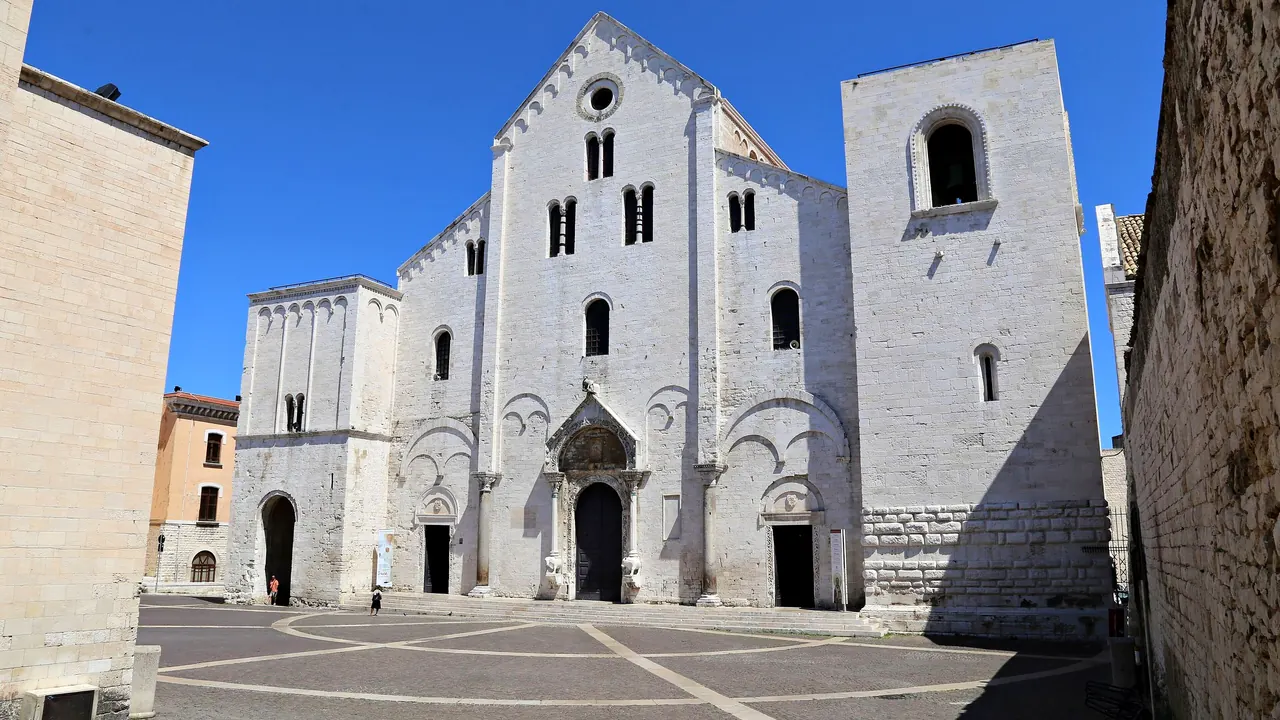
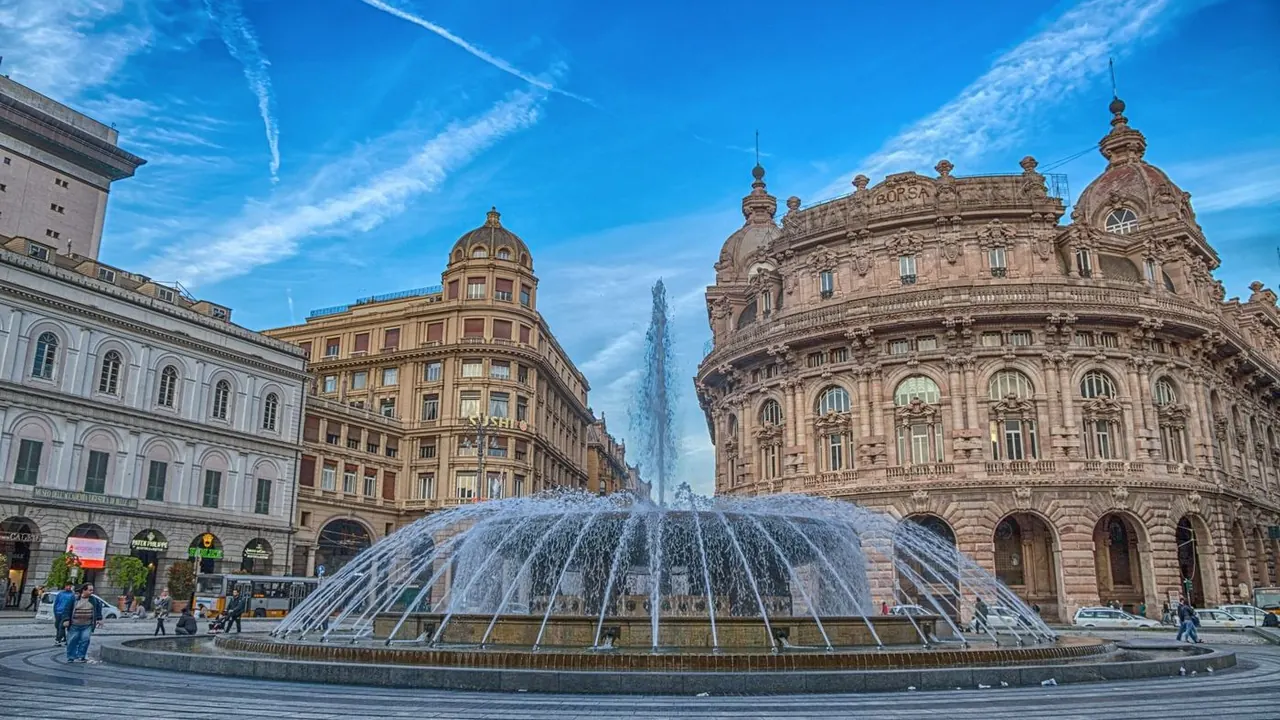
Photos: Bari by Sailko, CC BY-SA 4.0, cropped; Genoa by Faber1893, CC BY-SA 4.0, cropped.
Bari or Genoa?
Our verdict in twelve categories, each scored against the same fixed benchmark cities, and the climate month by month, so you can choose for your trip.
Choose Bari for
- nightlife
- day trips
- prices
Bari is the better pick for a traveller who wants a base more than a destination. The old town and the basilica take a day or two. After that the point is the trips out to Matera, the trulli and the white towns of the Valle d'Itria, with warm, late evenings in the piazzas to come back to. It suits people who like their food cheap, rooted and eaten outdoors, and who want livelier nights than Genoa offers.
Choose Genoa for
- nature and the outdoors
- culture and sights
- families
Choose Genoa if you want the city itself to hold your attention. Its medieval caruggi and the Rolli palaces give it far more to see, and the hills, the fortress trails and the Portofino promontory make it the stronger choice for walkers. Families do better here too, thanks to the aquarium and the Porto Antico, as long as they can cope with stairs and steep lanes.
Scoreboard
Twelve categories on one fixed scale from 0 to 100. The shaded stretch is the gap between the two.
Your match
Pick a travel style or drag the sliders, and both match scores follow your weighting.
Wins on nightlife and day trips with your weighting.
Wins on nature and the outdoors and culture and sights with your weighting.
What matters to you?
Category by category
What the scores mean for a trip.
Beaches & swimming
Neither city is a beach destination, and in both the best swimming is a train ride away. Bari's advantage is sand on the doorstep: Pane e Pomodoro is an ordinary but easy city beach, and the coves at Polignano and Monopoli are half an hour south.
In Genoa you swim off rocks and pebbles, from the little cove at Boccadasse to the bathing platforms of Corso Italia and Nervi, with prettier Riviera bays at Camogli and Sestri Levante. The setting is more picturesque, but rented loungers take up much of the space and summer weekends get crowded.
Food & drink
Both cities eat very well and very locally, so the choice is between two regional kitchens. Bari means Apulian home cooking and seafood eaten raw: orecchiette with turnip tops, focaccia barese, fried sgagliozze sold from kitchen windows, burrata, and red Primitivo to drink.
Genoa is the city of pesto, chickpeas and herbs. You get farinata and panissa from the old friggitorie, focaccia at breakfast and crisp Vermentino with the fish, and the Mercato Orientale is a proper market to browse. Neither has much fine dining or international food.
Culture & sights
Genoa has much more to see. Its caruggi make up one of Europe's largest medieval quarters, and above them the Rolli palaces on Via Garibaldi hold Van Dyck, Rubens and Paganini's violin. Add the striped cathedral, the Palazzo Ducale and the marble sculpture of Staglieno, and the city fills several days.
Bari is charming but has less depth. The Basilica di San Nicola is a fine piece of Apulian Romanesque and a place of pilgrimage, and the castle, the cathedral and the Murat quarter round it off. A day or two covers it all.
Nightlife
Bari is the livelier city after dark. On summer evenings young locals crowd the steps of Piazza Mercantile and Piazza Ferrarese, the bars in the Umbertino streets stay busy past midnight, and in high summer the beach clubs south of the city take over.
Genoa is more reserved, with an older population and quiet weeknights. An aperitivo around Piazza delle Erbe or a drink at the Porto Antico is pleasant, but this is not a city for a big night out.
Nature & outdoors
This is where Genoa pulls well ahead. Steep green hills rise straight behind the port, so a funicular ride to Righi puts you on a trail past the old fortresses. The cliff paths of Portofino and the terraces of the Cinque Terre are a short train ride away, and whale watching in the Pelagos Sanctuary, kayaking and hiking in the Apennines add variety.
Bari sits in flat olive country. The seafront promenade, the open Alta Murgia plateau and the Grotte di Castellana make good outings, but there are no mountains, and the wilder Gargano is too far for a day.
Day trips
Both cities make excellent bases, and the difference lies in what you travel out to. From Bari the trips lead to places found nowhere else: the cave dwellings of Matera, the trulli of Alberobello, Castel del Monte and Baroque Lecce. A car helps for the inland towns.
Genoa's trips run along one coastal railway, so Portofino, Camogli and the Cinque Terre need no driving, and Milan or Turin are close enough for a museum day. Genoa gives you more seaside villages. Bari gives you a wider mix of landscape and architecture.
Good for families
Genoa gives children more to do. Its aquarium, one of Europe's largest, fills half a day, and the Porto Antico around it adds a science centre, a walk-through submarine and funiculars that are fun in themselves. The catch is the steep, stepped old town, which is hard work with a pushchair.
Bari is flatter and easier to manage, with a sandy city beach and traffic-free lanes. Very little is built for children, though, so families rely on outings to the caves, the Fasano safari park or Alberobello.
Getting around
Both centres are walkable, but in very different ways. Bari is flat and compact, with the old town, Murat and the seafront side by side and a rail link to the airport. Its regional lines are slow, so many visitors hire a car.
Genoa climbs steeply from the water, and funiculars, a rack railway, public lifts and a short metro line take care of the climbing. The coastal railway means you can see the Riviera without a car, and driving in the centre is best avoided.
Shopping & style
Most of what you bring home from Bari ends up in the larder: dried orecchiette, taralli, olive oil and a bottle of Negroamaro, with Puglian ceramics the main thing you can't eat. Via Sparano in the Murat quarter covers the Italian chains and has a few upmarket boutiques.
Genoa has more of a craft side. Small workshops in the old town still make silver filigree and coral jewellery, and long-established shops sell candied fruit and jars of pesto. The arcades of Via XX Settembre and the Galleria Mazzini have the smarter Italian labels, though neither city has a luxury district.
Affordability
Both feel like fair value for Italy rather than budget trips. Bari is a little cheaper day to day, with street food, cheap local wine and free sights. Rooms get scarcer in July and August, and hiring a car for day trips adds up.
Genoa is reasonably priced for the north, with cheap focaccia and inexpensive funiculars. The smart Riviera resorts and paid loungers push costs up on beach days.
Live music & performing arts
Each city has a major opera house and not much of a scene beyond it. Bari's Teatro Petruzzelli is one of the largest in Italy, and in summer open-air concerts and a jazz festival fill the piazzas and the castle.
Genoa's Teatro Carlo Felice plays the same role. The city adds Paganini concerts and small live-music clubs that keep its singer-songwriter tradition going. In both, the theatre is in Italian.
Wellness & relaxation
Neither city is much of a spa destination. In both, the treatment rooms are mostly inside hotels. Bari's calm comes from its pace more than its facilities: the town goes still in the hot early afternoon, and the cooler hours belong to an unhurried walk by the water. For proper pampering, visitors head out to the masserie, old farm estates restored as country retreats among the olive groves.
In Genoa you go somewhere particular to relax, because the port, the traffic and the crowded caruggi make the centre tiring. Nervi, on the eastern edge of the city, is the quiet corner, with villa gardens and a clifftop walk far from the docks. For a day of thermal bathing, the historic spa town of Acqui Terme lies in the Piedmont hills a little over an hour away.
When should you go?
Pick your month. The climate figures are measured averages, not a forecast.
Bari in July
Genoa in July
Daytime high, °C
Rainfall in the month, mm
Where the figures come from
Bari has no rain gauge within 25 km of the centre, so its rainfall comes from a gridded climate dataset read at the city rather than from a gauge further away.
Bari's sunshine is measured 77 km from the centre, at Marina Di Ginosa.
Genoa has no rain gauge within 25 km of the centre, so its rainfall comes from a gridded climate dataset read at the city rather than from a gauge further away.
Genoa's sunshine is measured 80 km from the centre, at Capo Mele.
Temperature and rainfall are climate normals, averaged over the years shown. Bari: 1991-2020 (sunshine 1961-1990) normals, Bari / Palese Macchie (7 km from centre). Genoa: 1991-2020 normals, Genova / Sestri (6.7 km from centre).
Bari is the hotter and drier of the two. From June to August daytime highs reach 30°C and there is barely any rain. The sea is warm enough to swim from late June into September and peaks at 26°C. In July and August, though, midday walks in the old town are hard work. May and late September are the most comfortable months for sightseeing and day trips. After that the rain picks up through October and November. Winters are mild and fairly dry.
Genoa's summers are a few degrees gentler, peaking around 28°C, with long sunny days in July and a swimming season of about the same length. The big difference is autumn. From September the rain comes in earnest, October is the wettest month at 212mm, and wet weather carries on into winter. Spring is the best time for the coastal paths, and early summer suits a mix of walking and swimming.
Which traveller are you?
On a culture and arts trip, Genoa gives you several days of looking. Walk Via Balbi to the Palazzo Reale, spend a morning in the painted halls of Palazzo Rosso and Palazzo Bianco, and finish at the Lanterna. In Bari, the Pinacoteca and San Sabino fill an afternoon.
For an outdoors trip, Genoa lets you start hiking from the city. Take the headland path down to the abbey at San Fruttuoso, ride the mountain-bike trails of the Beigua Geopark or dive off the rocky coast. Around Bari the outdoors mostly means gentle cycling through the Valle d'Itria.
On a food and nightlife trip, Bari edges ahead. Eat a panzerotto in the late afternoon, have tiella with mussels and a glass of Negroamaro for dinner, then move on to the seafront bars that stay open past midnight. Genoa eats just as well but goes to bed earlier.
Before you go
| Measure | Bari | Genoa |
|---|---|---|
| Official language | Italian | Italian |
| Currency | Euro (EUR) | Euro (EUR) |
| Sockets | CFL230 V, 50 Hz | CFL230 V, 50 Hz |
| Driving side | Right | Right |
| Time zone | UTC+1, UTC+2 in summer | UTC+1, UTC+2 in summer |
| Emergency number | 112 | 112 |
| Elevation | 5 m | 20 m |
| Main airport | Bari Karol Wojtyła International Airport (BRI)9 km from centre104 non-stop destinations | Genoa Cristoforo Colombo Airport (GOA)7 km from centre25 non-stop destinations |
| Public holidays this year | 13 days | 13 days |
By the numbers
| Measure | Bari | Genoa |
|---|---|---|
| City population | 315,473 | 558,745 |
| People per km² | 2,687 | 2,325 |
| Museums within 10 km | 12 | 51 |
| UNESCO World Heritage sites within 50 km | 1 | 1 |
| Swim season, months above 21 °C | 4 months | 4 months |
Where else could you go?
Every comparison below shares a destination with this one, so you can follow Bari or Genoa somewhere new.