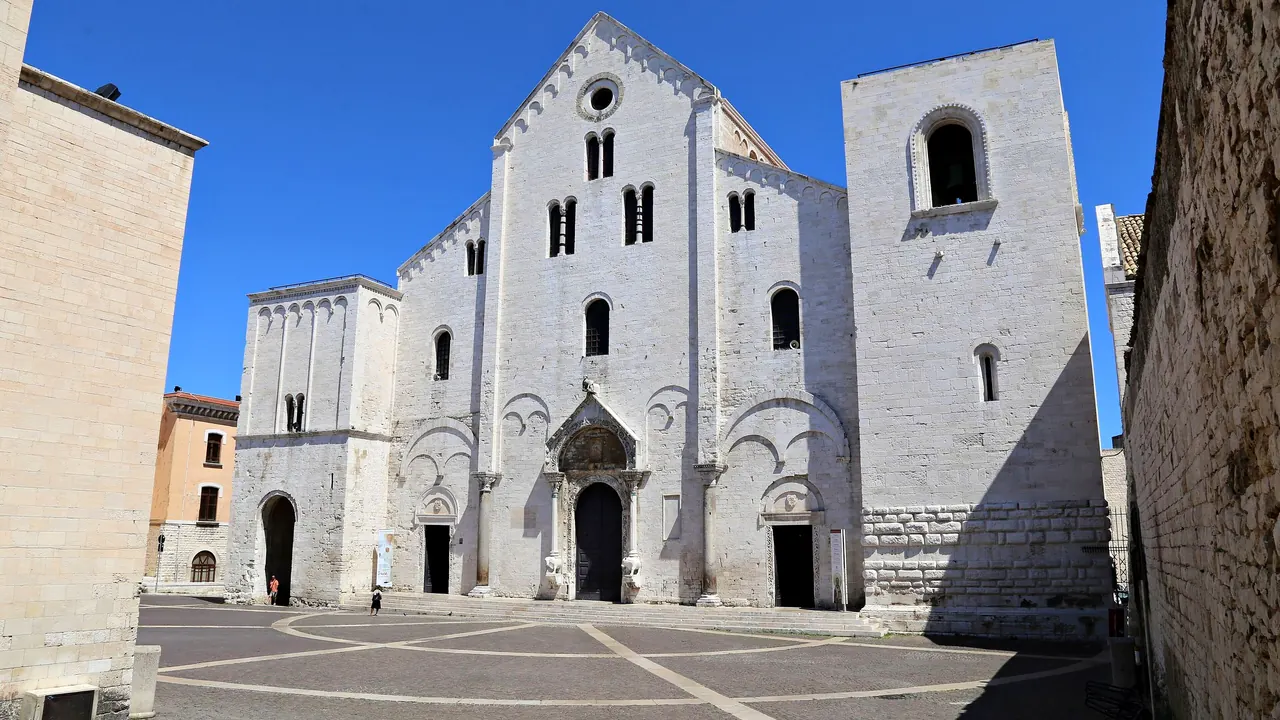
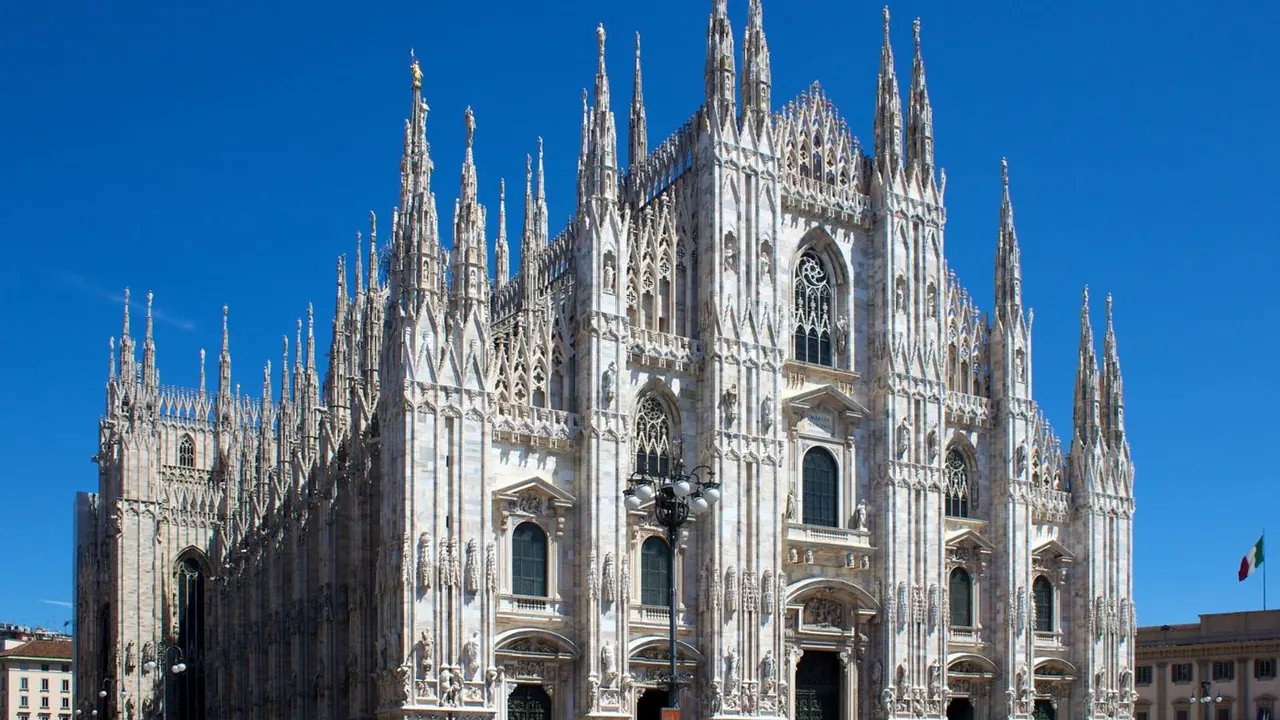
Photos: Bari by Sailko, CC BY-SA 4.0, cropped; Milan by Jiuguang Wang, CC BY-SA 3.0, cropped.
Bari or Milan?
Our verdict in twelve categories, each scored against the same fixed benchmark cities, and the climate month by month, so you can choose for your trip.
Choose Bari for
- beaches
- prices
Bari suits a slower southern trip built around the sea, the table and the countryside. You get a sandy city beach and clear coves a short train ride away, generous Apulian cooking that costs little, and an old town where orecchiette are still rolled in the doorways. It is also a very good base for Matera, the trulli and the white towns of the Valle d'Itria. Pick it if warm water and good value matter more to you than big museums or shopping.
Choose Milan for
- shopping
- live music and the arts
- culture and sights
Milan is the choice for a trip led by the city itself. The Last Supper, the Duomo's rooftop and the Brera collection give it far deeper sights, La Scala gives it world-class evenings, and the Quadrilatero makes shopping a reason to go. Fast trains to Lake Como, Verona and Bergamo widen the trip without needing a car. It costs noticeably more, and you will not swim much, but for art, style and an easy metro it is clearly ahead.
Scoreboard
Twelve categories on one fixed scale from 0 to 100. The shaded stretch is the gap between the two.
Your match
Pick a travel style or drag the sliders, and both match scores follow your weighting.
Wins on beaches and prices with your weighting.
Wins on shopping and live music and the arts with your weighting.
What matters to you?
Category by category
What the scores mean for a trip.
Beaches & swimming
Bari has the sea on its doorstep and Milan does not. Bari's sandy city beach and the lidos around Torre Quetta are fine for a quick dip. The real reward is the coast to the south, where Polignano and Monopoli have clear water in pebble coves and rocky inlets, close enough for half-days throughout the summer.
Milan is landlocked, so swimming means the Idroscalo basin, a public pool or a train to the lidos of Lake Como or Maggiore. Lake water is a touch cooler than the Adriatic in August, and the beaches are pebbly platforms rather than sand.
Food & drink
Milan is the stronger food city overall, mainly because of its range. It has rich northern classics such as saffron risotto and ossobuco, a serious fine-dining tier, and some of the best food from other Italian regions you can find anywhere in the country. Add the aperitivo ritual in Brera and along the Navigli and the evenings take care of themselves.
Bari wins on character and price rather than breadth. Its street food, from focaccia barese to sgagliozze, raw sea urchins by the fishermen's pier and handmade orecchiette, is cooked with olive oil rather than butter and served with Primitivo. Expect simple, generous meals, but few smart restaurants and little from outside Puglia.
Culture & sights
Milan's sights are of a different order. Leonardo's Last Supper, the marble Duomo with its walkable roof, the Brera gallery and Michelangelo's Rondanini Pietà at the Castello could fill several days, though they come in clusters across a mostly modern city.
Bari offers one appealing old town rather than a list of masterpieces. The Basilica di San Nicola, the cathedral and the castle sit within a few minutes of each other in Bari Vecchia, and the Murat quarter adds nineteenth-century streets and a long seafront. A day or two covers it well.
Nightlife
Milan has more to offer after dark. Its nights run from aperitivo on the Navigli towpaths to dressy clubs around Corso Como and warehouse parties on the outskirts, with a gay scene centred on Porta Venezia. Dress well and expect a stylish crowd rather than a rowdy one.
Bari's evenings are simpler and largely outdoors. Students gather on the steps of Piazza Mercantile and Piazza Ferrarese, bars stay open late in the Umbertino streets, and in high summer the action moves to beach clubs south of town. One quirk: Milan empties in August, exactly when Bari is at its liveliest.
Nature & outdoors
Milan has the better scenery within reach, though neither city is green in itself. An hour north, Lake Como and Lake Maggiore sit among steep wooded slopes, the Grigne ridges offer real hiking and via ferrata, and ski resorts are reachable in winter for a long day out.
Around Bari the land is flat olive country with no mountains. The Alta Murgia plateau suits quiet walks and cycling, the Grotte di Castellana are underground, and the Valle d'Itria makes gentle bike country. It is pleasant rather than dramatic.
Day trips
Both cities make excellent bases, but for different kinds of day out. Bari's trips lead into rural Puglia and Basilicata: the cave town of Matera, the trulli of Alberobello, hilltop Ostuni, seaside Trani and Baroque Lecce. Because the regional trains can be slow, a car helps for the inland towns.
From Milan, high-speed trains bring major art cities within about an hour, including Verona, Turin and Bologna, with Bergamo, Lake Como and even Lugano just as close. You can manage it all without a car, and the destinations are bigger and grander, while Bari's are smaller, whiter and closer to the land.
Good for families
Neither city is built around children, and both work well enough. Bari's assets are simple: a sandy beach, gelato, car-free lanes and a seafront where families stroll every evening, with the caves and the Fasano safari park as outings.
Milan has more for rainy days and older children. The science and technology museum has a submarine and hands-on labs, and the Leolandia and Gardaland theme parks are within reach. The metro makes moving around with a pushchair easier than Bari's slow buses.
Getting around
In Bari you walk, and you hire a car for the countryside. In Milan trains, the metro and the trams do everything. Bari's flat centre puts the old town, the Murat streets and the seafront side by side, and a rail link serves the airport. Beyond that, the city buses are slow and confusing, and the regional lines run so rarely that many visitors drive to the Valle d'Itria and Castel del Monte.
Milan's five colour-coded metro lines take a contactless card at the gates, and trams, including the old orange cars, fill the gaps. Direct trains from Centrale, Garibaldi and Cadorna reach the lakes and the nearby towns, so you never need a car. The main drawback is the long transfer from Malpensa airport.
Shopping & style
This is where the two cities differ most. Milan is a world fashion capital, where the great Italian houses keep their flagships in the Quadrilatero, La Rinascente stands beside the Duomo, and design showrooms, Brera boutiques and vintage shops in Porta Ticinese fill out the picture.
Bari's shopping is everyday chains along Via Sparano. The things worth bringing home are olive oil, taralli, dried orecchiette, local wine and Puglian ceramics.
Affordability
Bari is much kinder to your wallet. Street food, trattoria lunches and local wine are cheap, the main sights are free, and rooms stay moderate except in July and August, although beach clubs and hire cars do add up.
Milan is Italy's most expensive city. Hotels are dear and almost impossible during trade fairs and fashion weeks, and central restaurants and bars charge accordingly. Aperitivo snacks, office-lunch set menus and a room near a metro stop outside the centre will soften the bill.
Live music & performing arts
Both cities have a major opera house, but Milan's is La Scala, one of the most famous in the world, and around it sit the Piccolo Teatro, a fine symphony orchestra, musicals at the Arcimboldi, jazz rooms and big stadium concerts at San Siro. A visitor can find something worth seeing on most nights outside summer.
Bari's Teatro Petruzzelli makes for a memorable evening of opera or ballet, and in summer there are open-air concerts and a jazz festival in the piazzas and the castle. Otherwise the stage is mostly Italian-language theatre.
Wellness & relaxation
Neither is a spa destination, but Milan has more on offer. A thermal complex with outdoor pools and saunas sits in the southern part of the centre, the 1930s Bagni Misteriosi open-air pools make a good summer afternoon, and the quiet lakeside villas are an hour away.
Bari has no bathing tradition and little beyond hotel spas. Its form of rest is the long lunch, the afternoon break and the evening walk on the seafront. For real pampering, visitors book a restored country estate outside the city.
When should you go?
Pick your month. The climate figures are measured averages, not a forecast.
Bari in July
Milan in July
Daytime high, °C
Rainfall in the month, mm
Where the figures come from
Bari has no rain gauge within 25 km of the centre, so its rainfall comes from a gridded climate dataset read at the city rather than from a gauge further away.
Bari's sunshine is measured 77 km from the centre, at Marina Di Ginosa.
Milan's sunshine is measured 41 km from the centre, at Novara / Cameri.
Temperature and rainfall are climate normals, averaged over the years shown. Bari: 1991-2020 (sunshine 1961-1990) normals, Bari / Palese Macchie (7 km from centre). Milan: 1991-2020 (rainfall 1971-2000) normals, Milano / Linate (8 km from centre).
Bari's summer is hot and very dry, with highs around 30°C in July and August. The sea is warm enough for swimming from June to September and warmest in August, near 26°C. At midday in high summer you are better off in the water than in the lanes, so late spring and early autumn are the times for walking the old town and touring Puglia. The rain starts in September and is heaviest in November, at about 83mm, but winters stay mild enough to sightsee comfortably in a light coat.
Milan gets just as hot in summer, but the air is humid and often hazy, so July and August are heavy going on foot, even though they are the sunniest months. Rain falls all year, with a wet May and a very wet autumn that peaks at about 75mm in November. Winters are cold and grey, with January highs near 7°C. For walking the city, April, June and September are the most comfortable. In winter Bari is the milder of the two, so a winter trip to Milan is about the galleries and the opera rather than the weather.
Which traveller are you?
On a beach and sun trip, choose Bari. The Adriatic fits into every summer day there, with a swim before lunch and another as the heat fades. From Milan, every swim means planning a train trip out to a lake.
For a shopping trip, Milan is the only real choice, and it pays to plan. Give the fashion houses a full day and keep another for Corso Buenos Aires and the design side. Check the fashion-week dates before booking a room. In Bari, shopping fills an hour between meals.
On a culture and arts trip, Milan has far more to see. Book the Last Supper early, then add Leonardo's drawings at the Ambrosiana, the Poldi Pezzoli house museum and a gallery seat at La Scala. Bari's basilica and the Petruzzelli fill a day, not a week.
Before you go
| Measure | Bari | Milan |
|---|---|---|
| Official language | Italian | Italian |
| Currency | Euro (EUR) | Euro (EUR) |
| Sockets | CFL230 V, 50 Hz | CFL230 V, 50 Hz |
| Driving side | Right | Right |
| Time zone | UTC+1, UTC+2 in summer | UTC+1, UTC+2 in summer |
| Emergency number | 112 | 112 |
| Elevation | 5 m | 138 m |
| Main airport | Bari Karol Wojtyła International Airport (BRI)9 km from centre104 non-stop destinations | Milan Malpensa International Airport (MXP)40 km from centre208 non-stop destinations |
| Public holidays this year | 13 days | 13 days |
By the numbers
| Measure | Bari | Milan |
|---|---|---|
| City population | 315,473 | 1,354,196 |
| People per km² | 2,687 | 7,453 |
| Museums within 10 km | 12 | 88 |
| UNESCO World Heritage sites within 50 km | 1 | 4 |
| Swim season, months above 21 °C | 4 months | - |
Where else could you go?
Every comparison below shares a destination with this one, so you can follow Bari or Milan somewhere new.