Photos: Bari by Sailko, CC BY-SA 4.0, cropped; Padua by Didier Descouens, CC BY-SA 4.0, cropped.
Bari or Padua?
Our verdict in twelve categories, each scored against the same fixed benchmark cities, and the climate month by month, so you can choose for your trip.
Choose Bari for
- beaches
- live music and the arts
- nightlife
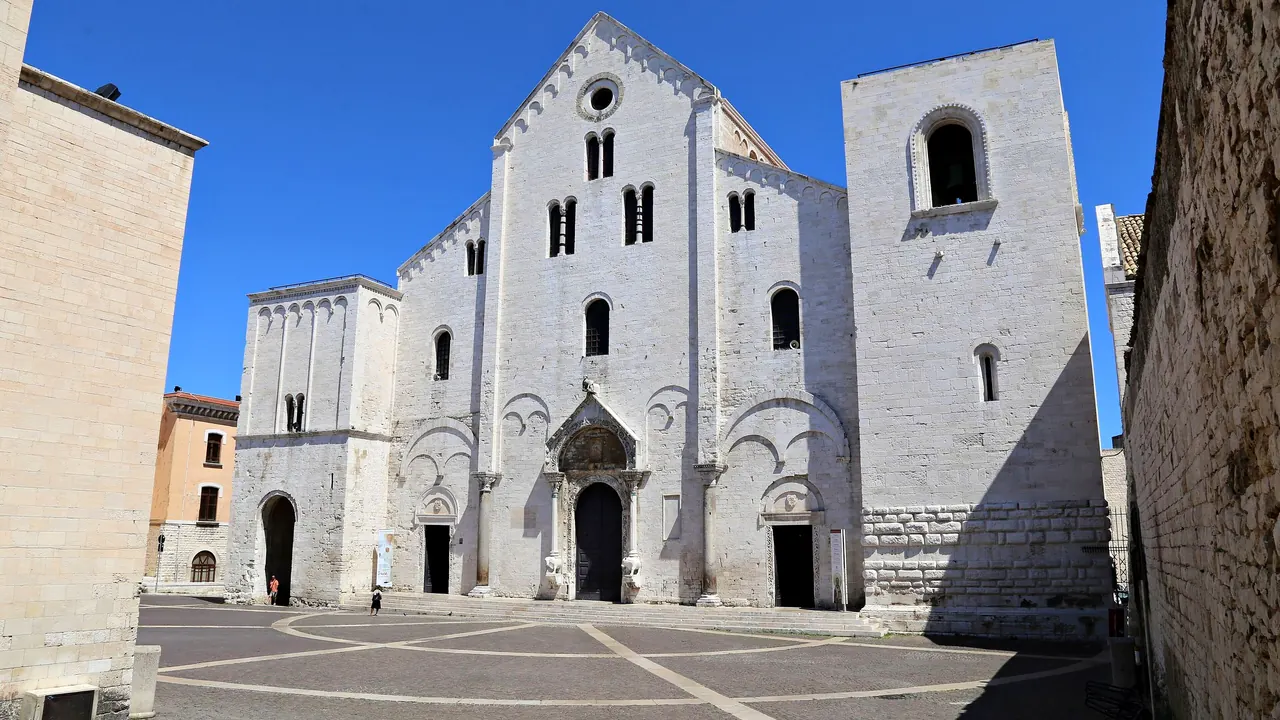
Bari suits a summer trip built around sea, sun and southern food. Its swimming coves at Polignano a Mare and Monopoli are a short train ride away. You can eat focaccia and raw seafood by the old pier, and evenings run late in the piazzas of the old town. It is also the natural base for Puglia, from Matera to the trulli, and it is a little easier on the wallet.
Choose Padua for
- wellness
- culture and sights
- getting around
Choose Padua for art and an easy northern base. Giotto's Scrovegni Chapel and the fresco cycles around it give the city more to see than Bari. The thermal pools of Abano are a short ride away for a restful afternoon. Fast trains put Venice, Verona and Bologna within reach for the day without a car. It suits a spring or autumn trip better than a beach summer.
Scoreboard
Twelve categories on one fixed scale from 0 to 100. The shaded stretch is the gap between the two.
Your match
Pick a travel style or drag the sliders, and both match scores follow your weighting.
Too close to call, level with your weighting
Wins on beaches and live music and the arts with your weighting.
Wins on wellness and culture and sights with your weighting.
What matters to you?
Category by category
What the scores mean for a trip.
Beaches & swimming
Bari has the sea on its doorstep. Pane e Pomodoro is a sandy city beach you can walk to, and the lidos and rocky platforms around Torre Quetta continue along the shore. The real draw is half an hour south by train, where the cove at Polignano a Mare and the inlets around Monopoli have clear water between limestone cliffs.
Padua has no beach of its own. Sottomarina and the Lido of Venice are about an hour away. The Adriatic there is just as warm and shallow, but the beaches are long, flat rows of umbrellas. They are fine for a paddle with children but not for a beach vacation.
Food & drink
Both cities cook in a home style, but Bari's food makes more of an impression on a visitor. Orecchiette is rolled by hand in the doorways of Bari Vecchia, and there is focaccia barese, fried sgagliozze and raw sea urchins at the fishermen's pier. With Primitivo or Negroamaro to drink, the food alone is a reason to come.
Padua's strengths are its markets and its drinking ritual. There are the stalls of Piazza delle Erbe and Piazza della Frutta, bigoli with duck sauce and baccalà, and a spritz taken standing in the squares at dusk. It is good Venetian cooking, but it has less of the street-level character that makes Bari stand out.
Culture & sights
Padua's sights carry far more weight. Giotto's frescoes in the Scrovegni Chapel changed European painting, and the other fourteenth-century cycles around them make up a UNESCO-listed group. There is also Donatello's altar and his Gattamelata at the Basilica of Saint Anthony, the world's oldest permanent anatomical theatre at Palazzo Bo and the botanical garden founded in 1545. The centre is compact, but almost every stop in it matters to art or science.
Bari's sights are charming but lighter. Bari Vecchia has the Romanesque Basilica di San Nicola, the cathedral and the castle within a few lanes of each other, and beyond them lie the Murat grid and its seafront. It makes a pleasant day or two of looking around rather than a lesson in art history.
Nightlife
Bari is the livelier place to go out. Evenings start late on the steps of Piazza Mercantile and Piazza Ferrarese, and the bars in the Umbertino streets stay open past midnight. In July and August the crowd moves to beach clubs along the coast.
In Padua the night centres on the aperitivo in the squares by the Palazzo della Ragione and on student wine bars in the old ghetto. It is a sociable evening, but there are few clubs, and the city empties in summer, just when Bari's nights are at their liveliest.
Nature & outdoors
Neither city has wild country on its doorstep, and both stand on flat land, so the difference is in what lies within reach. From Bari that means the open karst plateau of the Alta Murgia, the Grotte di Castellana and a coastline for walking and sailing.
Padua has the Euganean Hills about 15km away, with marked trails, vineyards and chestnut woods. The towpaths along the Brenta make for level cycling. For proper mountain walking, the pre-Alps around Monte Grappa are about an hour and a half away by car.
Day trips
Both are excellent bases, and Padua comes out slightly ahead because of its trains. Venice is under half an hour away and Vicenza a quarter of an hour. Verona, Bologna and Ferrara take about an hour, all without a car, and the Brenta villas and the walled towns around the Euganean Hills are close as well.
Bari's list is just as tempting in its own way: the cave city of Matera, the trulli of Alberobello, the white towns of the Valle d'Itria, Castel del Monte and Lecce. The catch is that some regional lines are slow, so the inland trips are easier with a hire car.
Good for families
Bari is the easier city with children, mostly because of the sea. There is a sandy city beach, gelato on the evening seafront stroll and the traffic-free lanes of the old town. For outings, the Grotte di Castellana and the Fasano safari park are within reach. In summer, plan the day around the midday heat.
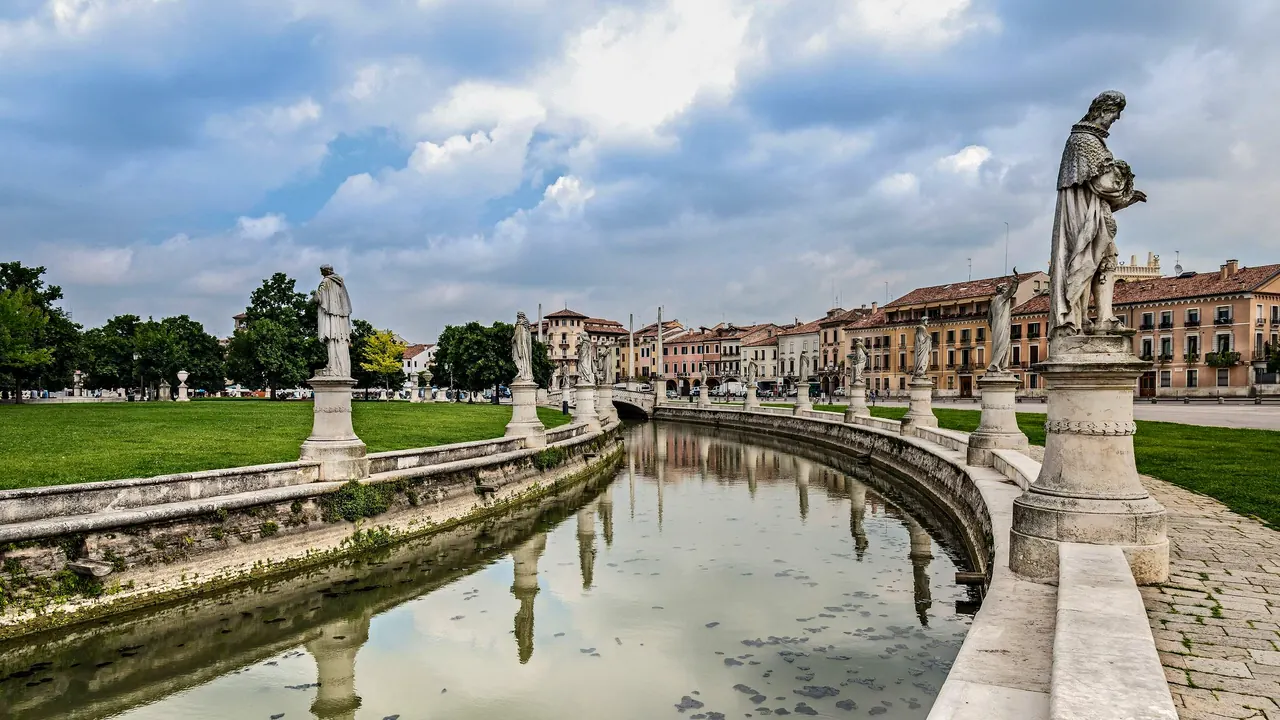
Padua is flat, safe and largely pedestrianised, and children can run freely in Prato della Valle, but the main sights are frescoes and churches. To keep children entertained, families there usually travel an hour or more to Lake Garda or the Adriatic.
Getting around
Padua is the simpler city to get around. Everything in the compact centre is within about twenty minutes on foot, and the arcades keep off sun and rain. A tram runs from the station, and with main railway lines in every direction most trips need no car.
Bari's centre is also flat and walkable, and a rail link runs to the airport. City buses are awkward for visitors, though, and the regional lines to Matera and the Valle d'Itria are slow and infrequent, so many visitors hire a car.
Shopping & style
Neither city is a shopping destination, and in both the best things to buy are edible. Bari has the Italian chains of Via Sparano, along with orecchiette, taralli, olive oil and Puglian ceramics. Padua has fashion and shoe shops under its arcades, university bookshops, the delicatessens below the Palazzo della Ragione and a monthly antiques market on Prato della Valle.
Affordability
Day to day, Bari is a little cheaper. Street food, trattoria lunches and local wine cost little, and the old town and the basilica are free to explore. Rooms get harder to find in July and August, though, and hiring a car for day trips adds up.
Padua has the prices of a typical northern Italian city: moderate rather than cheap, with paid entry to the Scrovegni Chapel and the main museums. Its saving comes from using it as a base. Sleeping here instead of in Venice and travelling in by train keeps the cost of a regional trip down.
Live music & performing arts
Bari has the bigger stage. The Teatro Petruzzelli, one of Italy's largest opera houses, runs a full season of opera, ballet and symphonic concerts. In summer, jazz and open-air concerts move into the piazzas and the castle.
Padua's programme is smaller and more intimate. The Teatro Verdi stages plays and some opera, and chamber music is played in the frescoed Sala dei Giganti and the Basilica of Saint Anthony. For grand opera, visitors take the train to the Fenice in Venice or the Arena in Verona.
Wellness & relaxation
This is where Padua pulls far ahead. Abano Terme and Montegrotto Terme, about 12km away at the foot of the Euganean Hills, have hot mineral pools and mud treatments used since Roman times. Many spa hotels there take day visitors, so a soak after a morning of sightseeing is easy.
Bari has no bathing tradition, and its spas are hotel facilities. Rest there comes from long lunches and the evening walk along the seafront promenade, or from a stay at one of the restored country estates beyond the city.
When should you go?
Pick your month. The climate figures are measured averages, not a forecast.
Bari in July
Padua in July
Daytime high, °C
Rainfall in the month, mm
Where the figures come from
Bari has no rain gauge within 25 km of the centre, so its rainfall comes from a gridded climate dataset read at the city rather than from a gauge further away.
Bari's sunshine is measured 77 km from the centre, at Marina Di Ginosa.
Padua's temperatures are measured 35 km from the centre, at Treviso / Istrana.
Padua has no rain gauge within 25 km of the centre, so its rainfall comes from a gridded climate dataset read at the city rather than from a gauge further away.
Padua's sunshine is measured 36 km from the centre, at Treviso / S. Angelo.
Temperature and rainfall are climate normals, averaged over the years shown. Bari: 1991-2020 (sunshine 1961-1990) normals, Bari / Palese Macchie (7 km from centre). Padua: 1991-2020 normals, Treviso / Istrana (35.4 km from centre).
Bari is the warmer, sunnier and drier of the two for most of the year. June to August are its driest months, with highs around 30°C, long sunny days and a sea that reaches 26°C by August, so beach days are easy. September is still warm enough to swim, but the rain comes back that month and is heaviest in October and November. Winters are mild, around 12°C. That is pleasant enough for walking the old town, though the beach season is over.
Padua has a sharper inland climate. Winters are chilly at about 8°C, often with fog over the plain, and July and August are hot and humid enough to make afternoons in the streets tiring. Rain falls all year, peaks in late autumn and does not ease off in summer the way Bari's does. Padua also gets noticeably less sunshine. April, May, September and October are the best months for walking the centre and bathing at Abano. The Adriatic, an hour away, is only warm enough to swim in from June to September.
Which traveller are you?
On a beach and sun trip, Bari is the clear choice. It has its own sandy city beach, and the clear coves of Polignano a Mare and Monopoli are half an hour south. Summers are long, dry and sunny, while Padua's nearest sand is an hour away and flat.
For a culture and arts trip, Padua offers more. Bari's compact old town can't match Giotto's frescoes in the Scrovegni Chapel, the UNESCO-listed fresco cycles, the Basilica of Saint Anthony and the old anatomical theatre. Vicenza and Venice are only minutes away by train.
On a relaxing and wellness trip, Padua wins easily. One of Europe's largest thermal districts lies just outside town, with hot pools and mud treatments open to day visitors. Bari has only hotel spas, so the rest it offers comes from its slow southern pace.
Before you go
| Measure | Bari | Padua |
|---|---|---|
| Official language | Italian | Italian |
| Currency | Euro (EUR) | Euro (EUR) |
| Sockets | CFL230 V, 50 Hz | CFL230 V, 50 Hz |
| Driving side | Right | Right |
| Time zone | UTC+1, UTC+2 in summer | UTC+1, UTC+2 in summer |
| Emergency number | 112 | 112 |
| Elevation | 5 m | 12 m |
| Main airport | Bari Karol Wojtyła International Airport (BRI)9 km from centre104 non-stop destinations | Venice Marco Polo Airport (VCE)39 km from centre103 non-stop destinations |
| Public holidays this year | 13 days | 13 days |
By the numbers
| Measure | Bari | Padua |
|---|---|---|
| City population | 315,473 | 206,496 |
| People per km² | 2,687 | 2,220 |
| Museums within 10 km | 12 | 29 |
| UNESCO World Heritage sites within 50 km | 1 | 5 |
| Swim season, months above 21 °C | 4 months | 4 months |
Where else could you go?
Every comparison below shares a destination with this one, so you can follow Bari or Padua somewhere new.