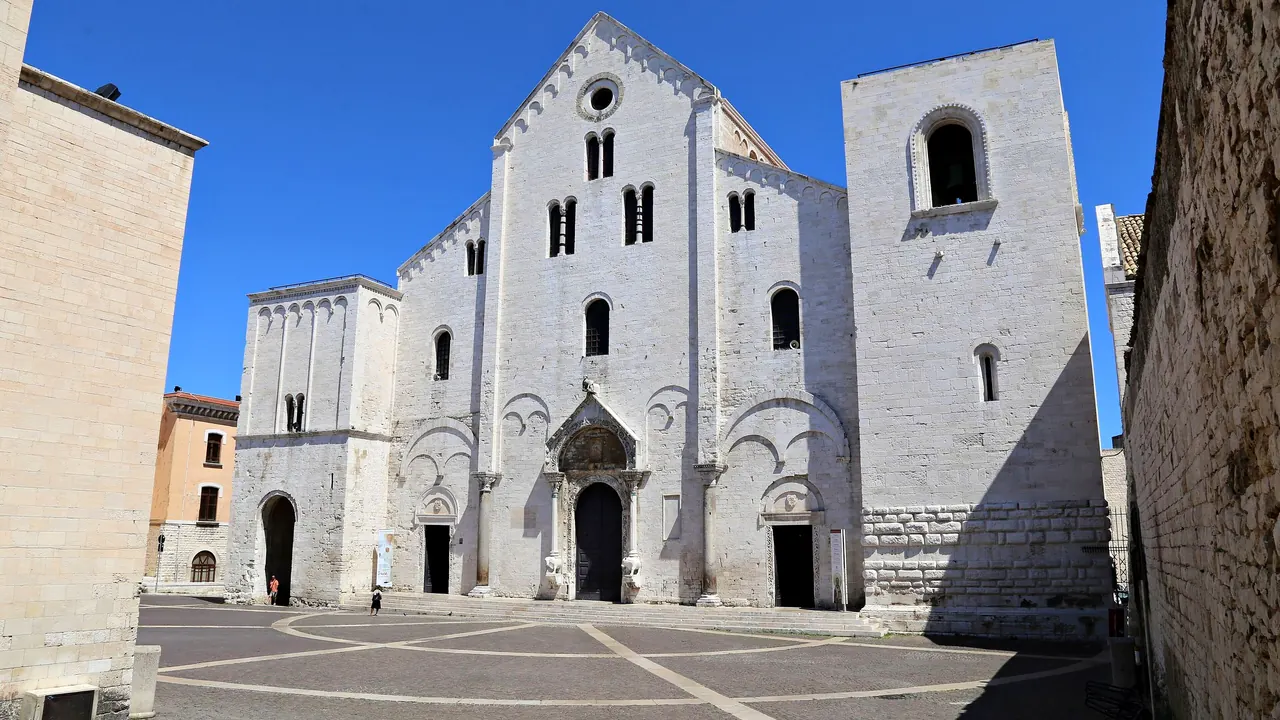
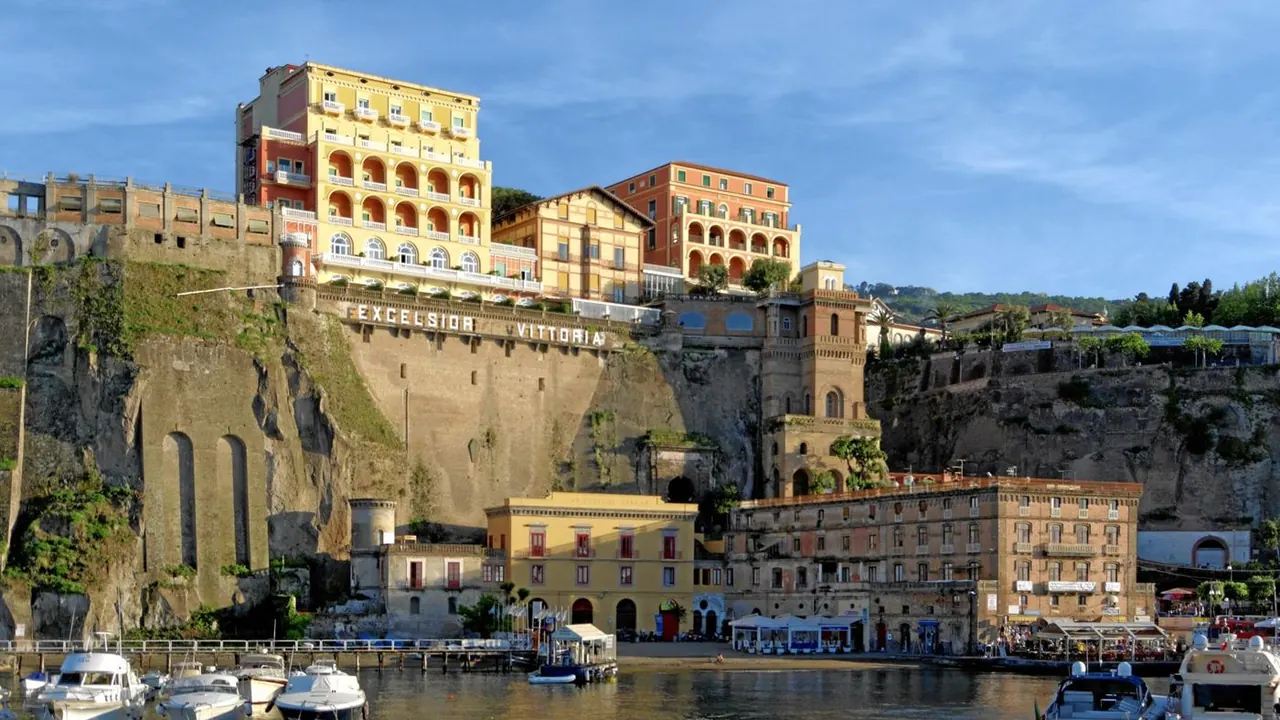
Photos: Bari by Sailko, CC BY-SA 4.0, cropped; Sorrento by Berthold Werner, CC BY-SA 3.0, cropped.
Bari or Sorrento?
Our verdict in twelve categories, each scored against the same fixed benchmark cities, and the climate month by month, so you can choose for your trip.
Choose Bari for
- live music and the arts
- prices
- nightlife
Bari suits travellers who want a real southern Italian city rather than a resort. It has cheap and specific street food in the lanes of Bari Vecchia, late outdoor evenings in the piazzas, an opera house of national standing and costs that stay moderate. It also makes a fine base for Puglia: Matera, the trulli of Alberobello and the white hill towns are all within reach, best of all with a hire car.
Choose Sorrento for
- nature and the outdoors
- wellness
- day trips
Sorrento is the choice for scenery and for the classic sights of the Bay of Naples. Pompeii, Capri and the Amalfi Coast are a short train or boat ride away, and the terraced ridge behind the town has excellent walking. It costs noticeably more and goes quiet early in the evening, so it works best for couples, walkers and sightseers who want views and a calm terrace at night more than a night out.
Scoreboard
Twelve categories on one fixed scale from 0 to 100. The shaded stretch is the gap between the two.
Your match
Pick a travel style or drag the sliders, and both match scores follow your weighting.
Wins on live music and the arts and prices with your weighting.
Wins on nature and the outdoors and wellness with your weighting.
What matters to you?
Category by category
What the scores mean for a trip.
Beaches & swimming
The two are broadly level for swimming, but the kind of swimming is quite different. Bari has a sandy town beach in Pane e Pomodoro, busy with local families, and a short train ride takes you to the cliff-framed cove at Polignano a Mare and the small rocky and sandy inlets around Monopoli.
Sorrento has almost no sand. You swim from lidos on wooden piers at Marina Piccola and Marina Grande, straight into deep, clear water, or from the rocks at the Bagni della Regina Giovanna. Space is tight in high summer and much of the shore is paid lidos, though boats to the coves of Capri make up for it.
Food & drink
Bari has the more rewarding food, mainly because so much of it happens in the street. You can watch orecchiette being rolled outside doorways, buy squares of sgagliozze from kitchen windows and eat sea urchins at the old pier, all at fair prices with Primitivo or Negroamaro to drink.
Sorrento cooks well too, with gnocchi alla sorrentina, fish all'acqua pazza and lemons in everything. The catch is the tourist menus around Piazza Tasso. The good meals are on the back lanes, at Marina Grande and in the hill villages, where some celebrated fine dining sits in a way Bari's small top tier cannot match.
Culture & sights
Bari has much more to see inside the town itself. The Basilica di San Nicola, which holds the relics of St Nicholas and draws Orthodox pilgrims, is a landmark of Apulian Romanesque. The cathedral and the Norman-Swabian castle are close by, and the Murat quarter's palazzi and the Pinacoteca fill a second day.
Sorrento's own sights are slighter: the cloister of San Francesco, the Sedile Dominova, the Museo Correale's Neapolitan collections and the odd sunken ravine of the Vallone dei Mulini. Its cultural pull lies outside town, which is a matter for day trips.
Nightlife
Bari is far livelier after dark. Students and young locals fill the steps of Piazza Ferrarese late into the night, bars along the Umbertino streets run past midnight, and in summer the crowd moves to beach clubs on the coast.
Sorrento's evening is a passeggiata on Corso Italia and a drink over the bay, with piano bars and a pub or two, and the town goes quiet early for most of the year. With the last trains and ferries leaving in the evening, a real night out in Naples or on Capri means staying over.
Nature & outdoors
Sorrento has the far more dramatic landscape. Vesuvius sits across the bay, and behind the town a steep limestone ridge of lemon terraces drops to sheer coast. Trails run to Punta Campanella and the protected bay of Ieranto, with Monte Faito and the Path of the Gods close by, and kayaks and small boats explore the grottoes.
Bari's surroundings are flat olive country. The Alta Murgia plateau, about an hour inland, offers quiet walks and cycling on open karst grassland, and the Grotte di Castellana go underground, but there are no mountains or cliffs to compare.
Day trips
Both are outstanding bases, and Sorrento has a slight edge for how much lies a short hop away. Pompeii is about half an hour by train, Capri is under an hour by ferry, Naples and its archaeological museum are about an hour off, and in summer boats run to Positano and Amalfi.
Bari's range covers a whole region: Matera's cave dwellings, the trulli of Alberobello, Ostuni and the Valle d'Itria, Castel del Monte, Trani's seafront cathedral and Baroque Lecce. The distances are longer, though, and the slow regional lines mean a car pays off inland.
Good for families
Bari is the easier family base. Its sandy city beach suits small children, the old town lanes are free of traffic, and the Fasano safari park and the Grotte di Castellana make good outings.
Sorrento is just as welcoming, and the boats to Capri and the ruins of Pompeii go down well with children. The swimming is off piers and rocks into deep water, though, and many hotels sit on steep lanes without pavements, so families with young children tend to rely on a hotel pool.
Getting around
Getting around is similar in both, and both centres are flat and easy on foot. What differs is how you get further out. Bari has a rail link to its airport and is the hub of several regional lines, but they are slow and infrequent enough that many visitors hire a car for the inland towns.
In Sorrento a car is more trouble than it is worth because of the narrow roads and restricted traffic zones. Instead you juggle the crowded Circumvesuviana, packed buses on the Amalfi hairpins and the ferries, which are often the most comfortable option.
Shopping & style
Neither is a shopping destination, but Bari has a little more range. Via Sparano and the Murat streets have Italian fashion chains and some upmarket boutiques, and the best things to take home are edible: dried orecchiette, taralli, olive oil and wine.
Sorrento's lanes around Via San Cesareo lean heavily on lemon souvenirs. It does have a few genuine crafts, such as intarsia woodwork and leather sandals made to measure, but for fashion people go to Naples or Capri.
Affordability
Bari is much the cheaper stay. Street food and trattoria meals are inexpensive, the main sights are free, and rooms are moderate apart from the July and August squeeze.
Sorrento charges resort prices in summer for sea-view rooms, terrace dinners, lido sunbeds and boat trips. Its cheap trains and buses, pizza away from the main squares and lower hotel rates in spring and late autumn soften this, but not to Bari's level.
Live music & performing arts
Bari is clearly the place for a night at the theatre. The Teatro Petruzzelli, one of Italy's largest opera houses, stages opera, ballet and symphonic concerts, and in summer jazz and open-air concerts fill the piazzas and the castle.
Sorrento offers shows of Neapolitan song and tarantella put on for visitors, chamber music in the cloister of San Francesco and hotel pianists playing 'Torna a Surriento'. For opera you go to the San Carlo in Naples.
Wellness & relaxation
Sorrento is the better choice for a restful stay. Clifftop hotels have spas, pools and terraces over the bay, the villa gardens and lemon groves set a slow pace, and Ischia's thermal gardens by the sea are an hour away by ferry.
Bari has no bathing tradition and few spas outside hotels. Its relaxation lies in long lunches and the evening walk along the seafront, and for real pampering visitors go out to restored country estates.
When should you go?
Pick your month. The climate figures are measured averages, not a forecast.
Bari in July
Sorrento in July
Daytime high, °C
Rainfall in the month, mm
Where the figures come from
Bari has no rain gauge within 25 km of the centre, so its rainfall comes from a gridded climate dataset read at the city rather than from a gauge further away.
Bari's sunshine is measured 77 km from the centre, at Marina Di Ginosa.
Sorrento has no rain gauge within 25 km of the centre, so its rainfall comes from a gridded climate dataset read at the city rather than from a gauge further away.
Sorrento's sunshine is measured 54 km from the centre, at Grazzanise.
Temperature and rainfall are climate normals, averaged over the years shown. Bari: 1991-2020 (sunshine 1961-1990) normals, Bari / Palese Macchie (7 km from centre). Sorrento: 2005-2025 (sunshine 1991-2020, rainfall 1991-2020) normals, Capri (17 km from centre).
The summers are almost identical. Highs reach about 30°C in July and August, the sea warms to around 26°C, and June to mid-September is reliable swimming weather in both places. Midsummer afternoons are too hot for long walks through Bari Vecchia or along Sorrento's exposed hill trails, so mornings and evenings do the work. Sorrento also has plenty of sun, with well over 300 hours in July.
The wet season is where they part. Rain returns to both in September, but Sorrento gets far more of it: about 151mm in November against Bari's 83mm, and it stays wetter right through to March. Sorrento's sea holds its warmth a little better into October. For a winter or early spring trip Bari is the safer bet. April, May and early October suit both, and spring is Sorrento's best season for hiking.
Which traveller are you?
On a food and nightlife trip, Bari is the stronger pick. Focaccia, panzerotti and raw seafood by the fishermen's pier come cheap, and evenings run late in Piazza Mercantile and on the seafront. Sorrento's nights mostly end on a quiet terrace.
For an outdoors trip, Sorrento wins clearly. There are cliff-edge footpaths to Punta Campanella and the bay of Ieranto, the Path of the Gods and the rim of Vesuvius, plus boat and kayak trips around the coves. Bari's flat plain offers gentle cycling at best.
On a trip with a tight budget, Bari goes much further. Street food, trattoria lunches and local wine cost little, the old town and the basilica are free, and rooms are moderate outside midsummer. In Sorrento, sea-view rooms, lidos and boat trips are all expensive.
Before you go
| Measure | Bari | Sorrento |
|---|---|---|
| Official language | Italian | Italian |
| Currency | Euro (EUR) | Euro (EUR) |
| Sockets | CFL230 V, 50 Hz | CFL230 V, 50 Hz |
| Driving side | Right | Right |
| Time zone | UTC+1, UTC+2 in summer | UTC+1, UTC+2 in summer |
| Emergency number | 112 | 112 |
| Elevation | 5 m | 50 m |
| Main airport | Bari Karol Wojtyła International Airport (BRI)9 km from centre104 non-stop destinations | Naples International Airport (NAP)30 km from centre131 non-stop destinations |
| Public holidays this year | 13 days | 13 days |
By the numbers
| Measure | Bari | Sorrento |
|---|---|---|
| City population | 315,473 | 15,407 |
| People per km² | 2,687 | 1,541 |
| Museums within 10 km | 12 | 6 |
| UNESCO World Heritage sites within 50 km | 1 | 5 |
| Swim season, months above 21 °C | 4 months | 5 months |
Where else could you go?
Every comparison below shares a destination with this one, so you can follow Bari or Sorrento somewhere new.