Photos: Bari by Sailko, CC BY-SA 4.0, cropped; Zadar by Böhringer Friedrich, CC BY-SA 2.5, cropped.
Bari or Zadar?
Our verdict in twelve categories, each scored against the same fixed benchmark cities, and the climate month by month, so you can choose for your trip.
Choose Bari for
- food and drink
- live music and the arts
- day trips
Bari suits travellers who plan their days around the table and the road. The orecchiette rolled in the old town lanes, the focaccia and raw seafood by the fishermen's pier, and a network of rail lines out to Matera, Alberobello, Lecce and the white towns of the Valle d'Itria make it a strong base for a varied week of eating and sightseeing. It is also the cheaper of the two, has the livelier evenings, and an opera house for a night out.
Choose Zadar for
- nature and the outdoors
- beaches
- wellness
Zadar is the pick if what you want is the sea and the landscape. Hundreds of islands lie off the harbour, the Velebit rises behind the coast, and Paklenica, Kornati, Krka and Plitvice are all within reach for hiking, climbing, sailing and kayaking. Swimming is part of every summer day, and the evenings are quieter, mostly a drink at sunset by the Sea Organ rather than a long night out.
Scoreboard
Twelve categories on one fixed scale from 0 to 100. The shaded stretch is the gap between the two.
Your match
Pick a travel style or drag the sliders, and both match scores follow your weighting.
Wins on food and drink and live music and the arts with your weighting.
Wins on nature and the outdoors and beaches with your weighting.
What matters to you?
Category by category
What the scores mean for a trip.
Beaches & swimming
Zadar makes swimming more of a daily habit. You can climb into clear water straight off the stone promenade on the peninsula, and ferries open up quiet island coves, with Nin's shallow sand and the pale beach at Sakarun on Dugi Otok as the standouts. The catch is that the city beaches are pebble and concrete, and they get crowded.
Bari has the sandier city beach in Pane e Pomodoro, but it is an ordinary urban strip. The swimming worth travelling for is half an hour south, at Polignano's cliff-walled cove and the rocky inlets around Monopoli, so beach time there tends to be a half-day outing rather than the rhythm of the trip.
Food & drink
Food is one of the main reasons to choose Bari, and here the gap is wide. The city has its own street food, focaccia barese, panzerotti and fried sgagliozze, alongside raw urchins and octopus at the old pier and generous plates of tiella, burrata and orecchiette with turnip tops, all at fair prices.
Zadar eats well enough on grilled fish, black risotto and lamb under the peka, and Maraschino and Pag cheese give it some local character. But the restaurants on the peninsula mostly serve the same menu, so after a few days there is less to discover than in Bari's lanes.
Culture & sights
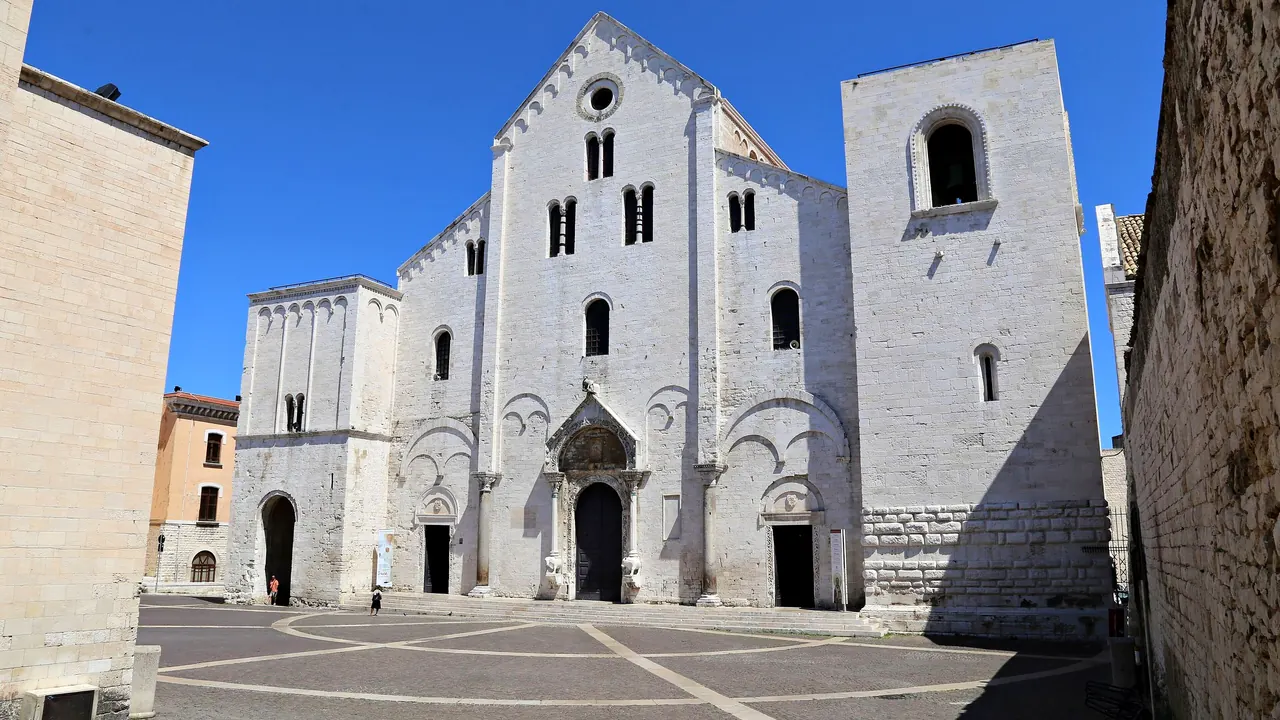
These two are evenly matched: in either one, a compact old town on a peninsula can be covered in a couple of days. What differs is the character. Bari's draw is religious and Romanesque, with the Basilica di San Nicola and its pilgrims, the cathedral and the Norman-Swabian castle, plus the nineteenth-century grid and promenade of the Murat quarter.
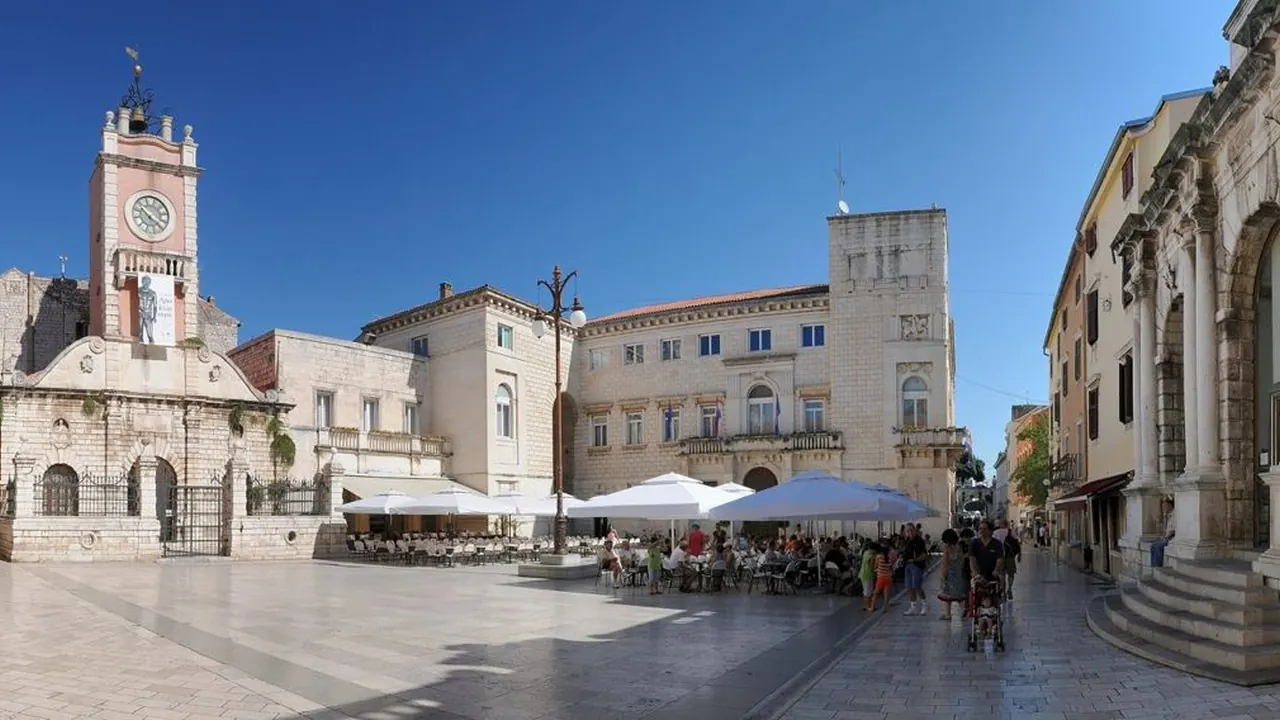
Zadar packs in more layers of time, from the open Roman forum and round St Donatus to the UNESCO-listed Venetian walls. It also has the better small museums, ancient glass in particular, and two modern waterfront pieces, the Sea Organ and the Greeting to the Sun, that have no equivalent in Bari.
Nightlife
Bari has the busier nights out. Students and young locals pack Piazza Mercantile and Piazza Ferrarese late into the evening, bars in the Umbertino streets and along the seafront stay open past midnight, and in high summer beach clubs south of the city take over. It is mostly a local crowd, and it calms down on winter weeknights.
Zadar's evenings are gentler: sunset at the Sea Organ, then café-bars along Kalelarga and a few terraces on the walls. Anyone after proper clubbing has to make the hour's trip to Zrće on Pag, and outside summer the town is very quiet.
Nature & outdoors
Zadar is far stronger for the outdoors. The Velebit rises right behind the coast, with Paklenica's limestone gorges for serious hiking and climbing, and the islands offer sailing to Kornati and Telašćica, sea kayaking and birdwatching at Lake Vrana. Krka's waterfalls and Plitvice are both within reach.
Around Bari the land is flat, with olive groves and stone walls. The Alta Murgia plateau and the Valle d'Itria suit quiet walks and gentle cycling, and the Castellana caves make a good outing, but there are no mountains and nothing as wild as the Croatian coast.
Day trips
Bari is one of the best bases in southern Italy for day trips. Matera's cave dwellings, the trulli of Alberobello, Ostuni and the Valle d'Itria towns, Castel del Monte, Trani's seafront cathedral and Baroque Lecce are all reachable in a day, many of them by train.
Zadar has a good list too, with Šibenik's UNESCO cathedral, little Nin and the island villages by ferry. Its big names, Split and Trogir, make long days, though, and you will mostly need a car or an organised excursion.
Good for families
Both work about equally well with children, and neither has much built for them. In both, children join the evening stroll and the old towns are traffic-free. Bari gives you a sandy city beach and outings to the Castellana caves and the Fasano safari park.
Zadar's appeal for children is the sea. The Sea Organ and the light-up tiles of the Greeting to the Sun, Nin's shallow sandy beaches and short ferry rides to the islands make easy, cheerful days out.
Getting around
Both centres are small and flat enough to cover on foot, and in both the local buses are of little use to visitors. Bari has the edge for public transport. A rail link runs to the airport, and regional lines run to Polignano, Trani, Matera and Alberobello, though they are slow enough that many people still hire a car for the inland towns.
Zadar's advantage is the water: island ferries leave from the edge of the pedestrian peninsula. For the national parks and the wider coast, though, a car or a tour is almost essential, and parking near the old town is difficult in summer.
Shopping & style
Neither city is a shopping destination, but Bari offers more. Via Sparano and the Murat streets around it have Italian chains and a few upmarket boutiques, and the old town's pasta, taralli, olive oil and Puglian ceramics make good gifts to take home.
Zadar offers jewellers and souvenir shops along Kalelarga and malls on the edge of town. The best of it is the market by the walls and local produce: Maraschino, Pag cheese, figs and Pag lace.
Affordability
Bari is the easier city on the wallet. Street food, trattoria lunches and local wine are cheap, the old town and basilica cost nothing, and rooms stay moderately priced except in high summer.
Zadar is better value than the famous towns further down the Dalmatian coast, but it is still priced roughly like a mid-range Western European city. The old town's main streets are expensive to eat on, and national park tickets and boat trips quickly add to the cost of the outdoor days that are its main draw.
Live music & performing arts
Bari has the stronger stage. The Teatro Petruzzelli, one of Italy's largest opera houses, runs a full season of opera, ballet and concerts, and in summer a long-running jazz festival and open-air concerts fill the piazzas and the castle.
Zadar's highlight is narrower but memorable: early and chamber music in the ninth-century St Donatus during the summer series, with the chance of hearing klapa singing in the squares. Outside July and August there is little on.
Wellness & relaxation
Neither city has a spa tradition, so in both relaxing means slowing down. Zadar edges it, with resort spas at Borik, the old mud-bathing custom in Nin's lagoon and sunset on the Sea Organ steps.
In Bari, unwinding means long lunches and the evening walk along the promenade. For real pampering, visitors head out to the restored country estates beyond the city.
When should you go?
Pick your month. The climate figures are measured averages, not a forecast.
Bari in July
Zadar in July
Daytime high, °C
Rainfall in the month, mm
Where the figures come from
Bari has no rain gauge within 25 km of the centre, so its rainfall comes from a gridded climate dataset read at the city rather than from a gauge further away.
Bari's sunshine is measured 77 km from the centre, at Marina Di Ginosa.
Zadar has no rain gauge within 25 km of the centre, so its rainfall comes from a gridded climate dataset read at the city rather than from a gauge further away.
Temperature and rainfall are climate normals, averaged over the years shown. Bari: 1991-2020 (sunshine 1961-1990) normals, Bari / Palese Macchie (7 km from centre). Zadar: 1999-2020 (rainfall 1991-2020) normals, Zadar / Zemunik (9.9 km from centre).
The two share a very similar summer. From June to September both are warm enough for the beach, with July and August highs of around 30°C and the sea at its warmest in August, about 26°C off Bari and a degree cooler off Zadar. Midday in high summer is hot for walking either old town, and in Zadar it also makes the mountain trails hard going. May and late September are the gentler months for sightseeing in both, with the sea just about swimmable by June.
The real difference comes in autumn and winter. Both turn wetter from September, but Zadar much more so, with over 100mm a month from September to November against a milder autumn in Bari. Zadar's winters are also a little colder, around 10°C by day in January, so Bari is the better choice for an off-season city visit, while spring suits Zadar's walking country best.
Which traveller are you?
On an outdoors trip, Zadar is the clear choice. Paklenica's gorges for hiking and climbing are under an hour away, Krka and Plitvice are reachable for a day, and the coast and islands make for easy kayaking and cycling, which flat, mountainless Bari cannot match.
For a food and nightlife trip, Bari wins. Its street food, handmade pasta, raw seafood and Primitivo give it a far deeper table than Zadar's repeated konoba menus, and the late, crowded piazzas at the edge of the old town keep going long after Zadar's café-bars go quiet.
For sailors and island hoppers, Zadar has what Bari lacks. Ferries to Ugljan, Pašman and car-free Silba leave from the edge of the old town, and charters head out to the stark Kornati archipelago and Telašćica, whereas Bari's coast offers pleasant sailing but no islands to explore.
Before you go
| Measure | Bari | Zadar |
|---|---|---|
| Official language | Italian | Croatian |
| Currency | Euro (EUR) | Euro (EUR) |
| Sockets | CFL230 V, 50 Hz | CF230 V, 50 Hz |
| Driving side | Right | Right |
| Time zone | UTC+1, UTC+2 in summer | UTC+1, UTC+2 in summer |
| Emergency number | 112 | 112 |
| Elevation | 5 m | 5 m |
| Main airport | Bari Karol Wojtyła International Airport (BRI)9 km from centre104 non-stop destinations | Zadar Airport (ZAD)10 km from centre66 non-stop destinations |
| Public holidays this year | 13 days | 14 days |
By the numbers
| Measure | Bari | Zadar |
|---|---|---|
| City population | 315,473 | 70,779 |
| People per km² | 2,687 | - |
| Museums within 10 km | 12 | 1 |
| UNESCO World Heritage sites within 50 km | 1 | 2 |
| Swim season, months above 21 °C | 4 months | 4 months |
Where else could you go?
Every comparison below shares a destination with this one, so you can follow Bari or Zadar somewhere new.