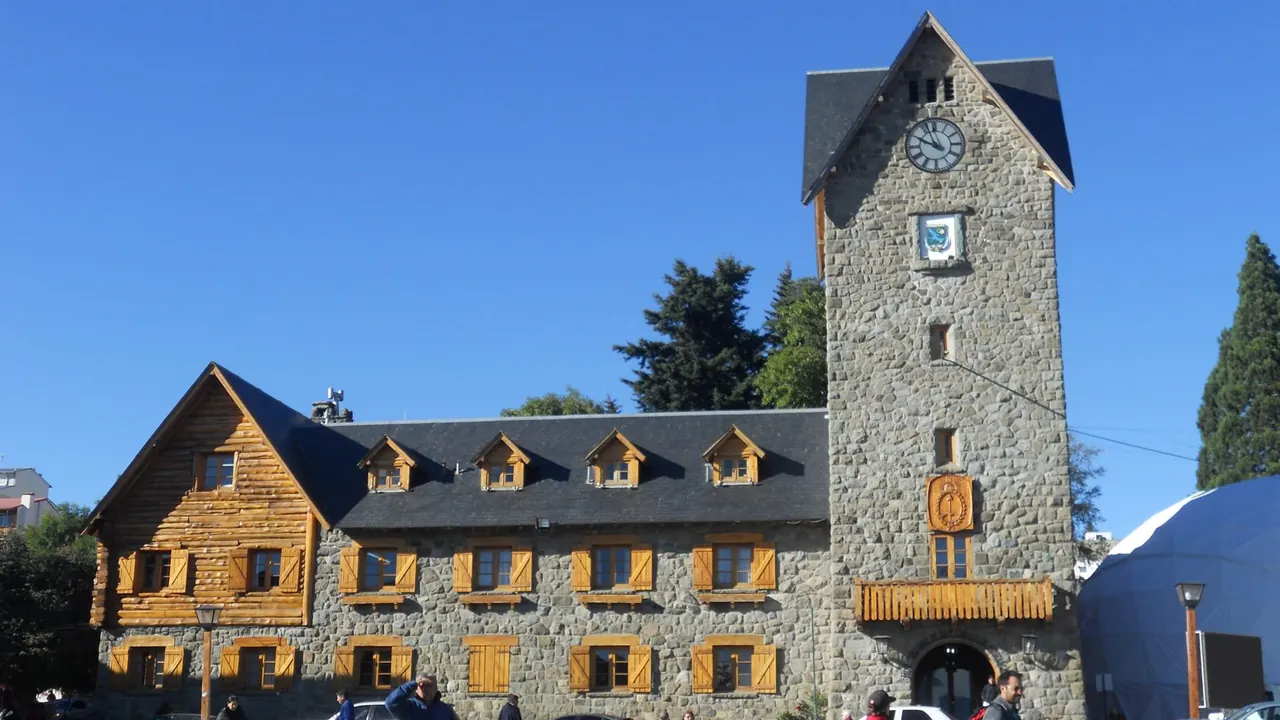
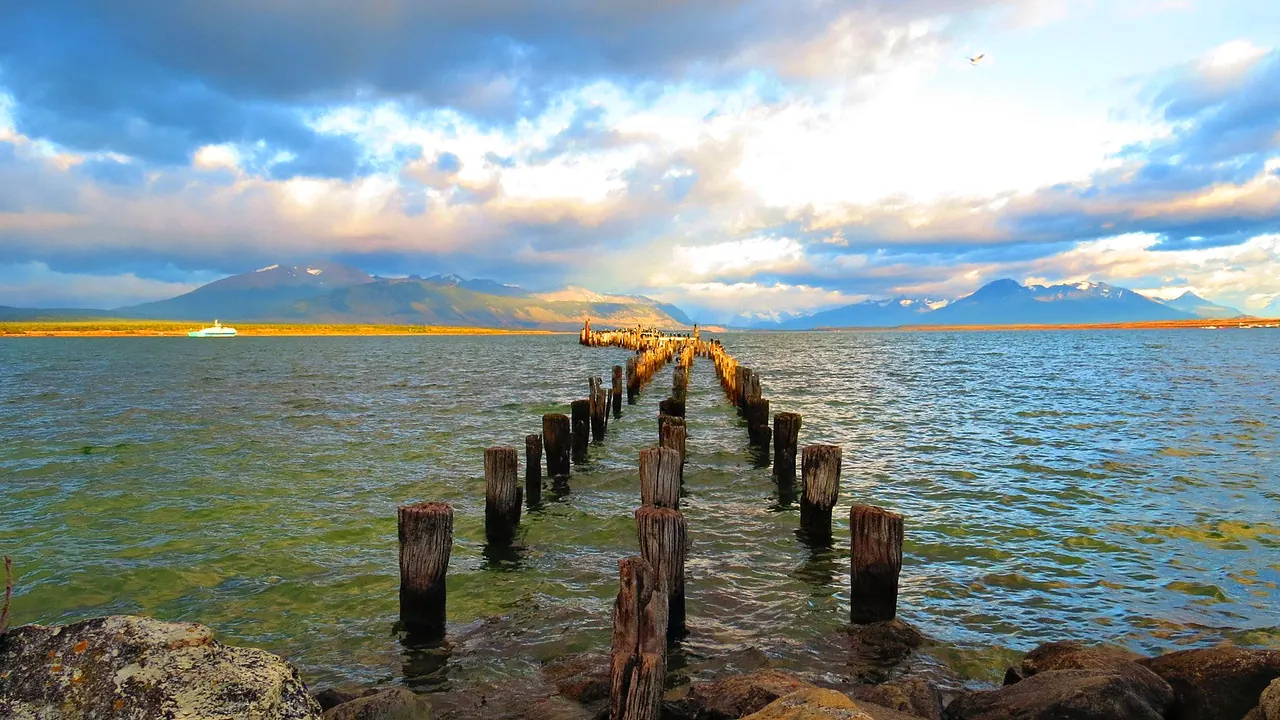
Photos: Bariloche by Maclemo, CC BY-SA 3.0, cropped; Puerto Natales by Rosario Nieto Chadwick, CC BY 3.0, cropped.
Bariloche or Puerto Natales?
Our verdict in twelve categories, each scored against the same fixed benchmark cities, and the climate month by month, so you can choose for your trip.
Choose Bariloche for
- day trips
- families
- beaches
Bariloche is the better choice for a rounded mountain vacation. You get Nahuel Huapi's lakes and forests on the doorstep, skiing at Cerro Catedral in winter and hiking in summer, and a real town to come back to, with chocolate shops, brewpubs, an alpine-style civic centre and a few comfortable lakeside spas. Families, mixed-interest groups and anyone who wants scenery with some ease around it will find more to do here in every season.
Choose Puerto Natales for
Puerto Natales does not lead in any category we score.
Puerto Natales suits travellers who are there for one thing: Torres del Paine. It is a small, windswept base for the W and O treks, the granite towers and the glacier boats up the fjords, and very little else. Come here to hike hard in the southern summer and sleep early. If evenings, shopping or day trips to other towns matter to you, Bariloche serves them far better.
Scoreboard
Twelve categories on one fixed scale from 0 to 100. The shaded stretch is the gap between the two.
Your match
Pick a travel style or drag the sliders, and both match scores follow your weighting.
Wins on day trips and families with your weighting.
Has no clear advantage with the weighting you have chosen.
What matters to you?
Category by category
What the scores mean for a trip.
Beaches & swimming
Neither town is a place for beach days, but Bariloche at least has shores worth sitting on. Playa Bonita, Villa Tacul and the edges of Lago Gutiérrez and Lago Moreno are pleasant for sun and a picnic in January and February, and a quick, cold dip in glacial lake water is possible, a little milder in the shallower lakes.
Puerto Natales has nothing to match it. Its waterfront on the Última Esperanza Sound is gravel and rock, the fjord stays near 8°C even in summer and the wind rarely lets you settle. A walk along the shore is as far as it goes.
Food & drink
Both towns roast Patagonian lamb on the iron cross over an open fire, but Bariloche has more around it: lake trout, venison, wild boar, smoked meats and fondue, plus the chocolate tradition of Calle Mitre and breweries with lake-view gardens along the road to Cerro Catedral.
Puerto Natales has the sea on its side, with king crab and cold-water seafood from the southern channels, its own small beers and Chilean wine. The choice is shorter, though, and in winter many kitchens cut back or close. Neither town is a destination for fine dining.
Culture & sights
Bariloche has a modest but distinct set of sights: the stone-and-timber Centro Cívico by Bustillo and de Estrada, the Museo de la Patagonia beside it, the neo-Gothic cathedral above the lake and, out on the Circuito Chico, the Llao Llao hotel and its wooden chapel. A morning covers them.
Puerto Natales offers less to look at. Its colourful corrugated-iron houses, a small museum on the Aónikenk and Kawésqar peoples and the old Bories cold-storage plant tell the story of the sheep-farming era in an afternoon. In both places culture is a side dish.
Nightlife
Bariloche has more going on after dark, though not all of it is aimed at adults. The big dance clubs in the centre are the domain of school-leavers on graduation trips. Grown-up evenings mean brewpubs, late dinners and a handful of bars around Calle Mitre and the lakefront.
Puerto Natales has no clubs at all. A few pubs fill with trekkers trading trail stories in summer, then the town goes to bed early ahead of the morning bus to the park, and in winter even that fades.
Nature & outdoors
This is where the two meet as equals, and the difference is in character. Bariloche sits inside Nahuel Huapi National Park, so lakes, coihue and lenga forest and chairlifts up Cerro Campanario and Cerro Otto are minutes away. Summer brings refuge-to-refuge hiking past Frey and Jakob, cycling the Circuito Chico, kayaking and trout fishing, and winter brings skiing at Cerro Catedral.
Puerto Natales is wilder and more dramatic. The towers and Cuernos of Torres del Paine, glaciers spilling off the Southern Ice Field and guanacos and pumas on the steppe lie about two hours away, and boats from the town pier reach the Balmaceda and Serrano glaciers. The trade-off is fierce wind, fast-changing weather and a season limited to roughly October to April.
Day trips
Only from Bariloche can you spend a day in another town and be back for dinner. Villa La Angostura, a quiet village of wooden houses and gardens on the north shore of the lake, is the best of these outings. Colonia Suiza, a short drive west, adds a weekend craft fair and curanto cooked in an earth pit, and El Bolsón's market and hop farms are about two hours south in a warmer valley.
Around Puerto Natales the only stops with human interest are close to town: the old Bories cold-storage plant and the Milodón Cave. Punta Arenas and El Calafate, across the border, are too far for a return day and work better as overnight stays.
Good for families
Bariloche gives children far more variety. Winter brings gentle ski slopes and sledging on Cerro Otto, and summer offers lake shores, easy forest walks, cable cars and boat trips. In town there are chocolate workshops and the St Bernard dogs in the Centro Cívico, though a rainy day can still drag.
Puerto Natales is safe and easy to manage, and the life-size giant sloth at the cave and guanacos and flamingos seen from the road go down well. Beyond that, the long drives and exhausting wind make it a trip for active families with older children rather than toddlers.
Getting around
Bariloche is easier to manage without a car. The centre is small, if steep, and although the town strings out for about 25km along Avenida Bustillo, city buses run out to Llao Llao and up to Cerro Catedral. A car or a tour is needed mainly for Villa La Angostura and Tronador.
Puerto Natales has a flat grid you can cross in minutes, but everything that matters is two hours away. Seasonal coaches reach the park entrances and a catamaran and shuttles link trailheads, but seeing more than one corner takes a tour or a hire car on windy gravel roads, and buses thin out off-season.
Shopping & style
Bariloche gives you a proper main street to browse. Calle Mitre is lined with chocolate, Patagonian wool knitwear, leather, smoked trout and ski gear, and the craft fair near the Centro Cívico and the Colonia Suiza market add woodwork, ceramics and Mapuche-style textiles.
Puerto Natales is about practical shopping: supermarkets to stock up for the trail and gear shops for anything forgotten. A few craft shops sell sheepskin, wool and lapis lazuli jewellery as souvenirs, and that is the extent of it.
Affordability
Neither is cheap, but Bariloche leaves more room to economise. Resort prices peak in July and January, yet hostels and cabins in the side valleys, city buses, self-catering and free hiking in the national park bring costs down a good deal, and spring and autumn are calmer on the wallet.
Puerto Natales is harder to do on a budget. Supplies come a long way, so food costs more, and rooms are scarce in the short season. The biggest expense is Torres del Paine itself: park entry, transfers, glacier boats and refugio nights add up, so booking early matters.
Live music & performing arts
Classical music gives Bariloche a small but genuine claim here. The Camerata Bariloche grew out of a festival held in the town in the 1960s, the Semana Musical Llao Llao brings a yearly week of chamber concerts to the hotel above the lake, and a municipal theatre stages local productions, although on most nights there is little to attend.
Puerto Natales has no theatre or concert programme at all. Your best chance of live music is a guitarist in a bar or traditional dancing at a local festival.
Wellness & relaxation
Neither town has thermal springs or a bathing culture, so wellness means hotel spas in both. Bariloche has more of them, the grand Llao Llao among them, and a stay in the wooded valleys towards Colonia Suiza settles into a slow round of lake views, fires and long dinners, provided you stay away from the busier centre.
In Puerto Natales the comfort comes from the hot tubs and saunas of upscale lodges along the sound, and the quiet evenings watching light over the fjord. Most visitors are there to push themselves on the trail rather than to rest.
When should you go?
Pick your month. The climate figures are measured averages, not a forecast.
Bariloche in July
Puerto Natales in July
Daytime high, °C
Rainfall in the month, mm
Where the figures come from
Puerto Natales has no weather station within reach, so its figures come from a gridded climate model rather than a measured record, and read a broad area rather than the city itself.
Temperature and rainfall are climate normals, averaged over the years shown. Bariloche: 1991-2020 normals, Bariloche Aerodrome (11.2 km from centre). Puerto Natales: 1991-2020 normals, TerraClimate 4 km grid at the town, no weather station within 90 km.
Bariloche has the clearer seasons. From December to March the days are warm, around 23°C at their peak, and dry and bright, which makes this the season for hiking, cycling and sitting by the lakes. From May to August it turns cold and wet, with June the wettest month at about 172mm. That is the snow that feeds the ski season, but it is a poor time for walking around town. Spring and autumn sit in between, mild and fairly dry.
Puerto Natales is cooler all year and more even. Summer highs reach only about 17°C, and winter days hover near 6°C. Rain is spread lightly across every month with no real wet season, so the year is defined by temperature and daylight rather than rain. For the outdoors, October to April is the window. In winter both towns are cold, but Bariloche has skiing to offer and Puerto Natales mostly goes quiet.
Which traveller are you?
On a family trip with children, Bariloche is the easy pick. It has ski schools and sledging in winter, lake paddling and boat trips to Isla Victoria in summer, cable cars and chocolate workshops, whereas Puerto Natales means long drives and tiring wind.
For an outdoors trip built around serious trekking, Puerto Natales edges ahead. The W and O circuits in Torres del Paine, glaciers off the Southern Ice Field and pumas on the steppe make for wilder, multi-day hiking. Bariloche's lakes and refuge trails are gentler and more varied.
Skiers have only one option here, and it is Bariloche. Cerro Catedral, the largest ski area in South America, is about half an hour from town, while Puerto Natales has no slopes and becomes cold and quiet once winter arrives.
Before you go
| Measure | Bariloche | Puerto Natales |
|---|---|---|
| Official language | Spanish | Spanish |
| Currency | Argentine Peso (ARS) | Chilean Peso (CLP) |
| Sockets | CI220 V, 50 Hz | CL220 V, 50 Hz |
| Driving side | Left | Right |
| Time zone | UTC-3 | UTC-3 |
| Emergency number | 117 or 911 | Police 133/134, ambulance 131, fire 132 |
| Elevation | 794 m | 3 m |
| Main airport | Teniente Luis Candelaria International Airport (BRC)12 km from centre17 non-stop destinations | President Carlos Ibáñez International Airport (PUQ)181 km from centre7 non-stop destinations |
| Public holidays this year | 16 days | 16 days |
By the numbers
| Measure | Bariloche | Puerto Natales |
|---|---|---|
| City population | 136,381 | 21,477 |
| People per km² | 619 | - |
| Museums within 10 km | 3 | 0 |
| UNESCO World Heritage sites within 50 km | 0 | 0 |
Where else could you go?
Every comparison below shares a destination with this one, so you can follow Bariloche or Puerto Natales somewhere new.
- El Calafatevs Puerto Natales
- Ushuaiavs Puerto Natales
- Santiagovs Bariloche
- Mendozavs Bariloche
- El Calafatevs Bariloche
- Buenos Airesvs Bariloche