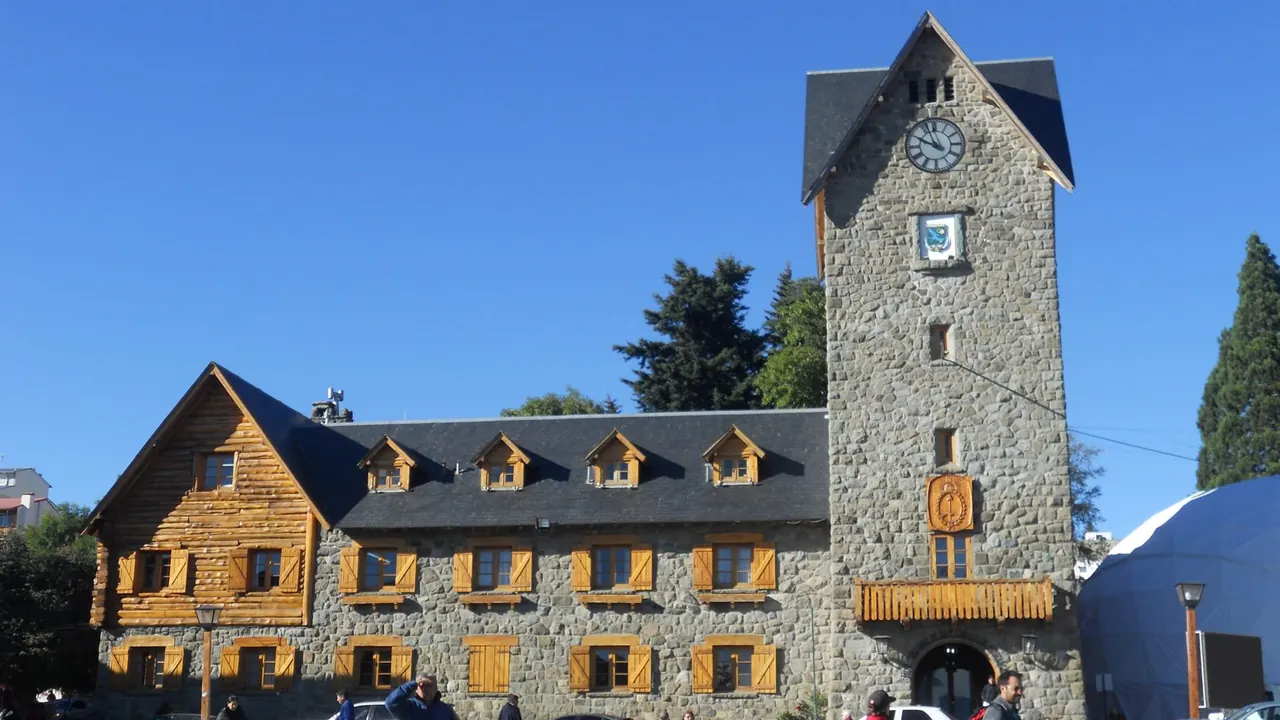
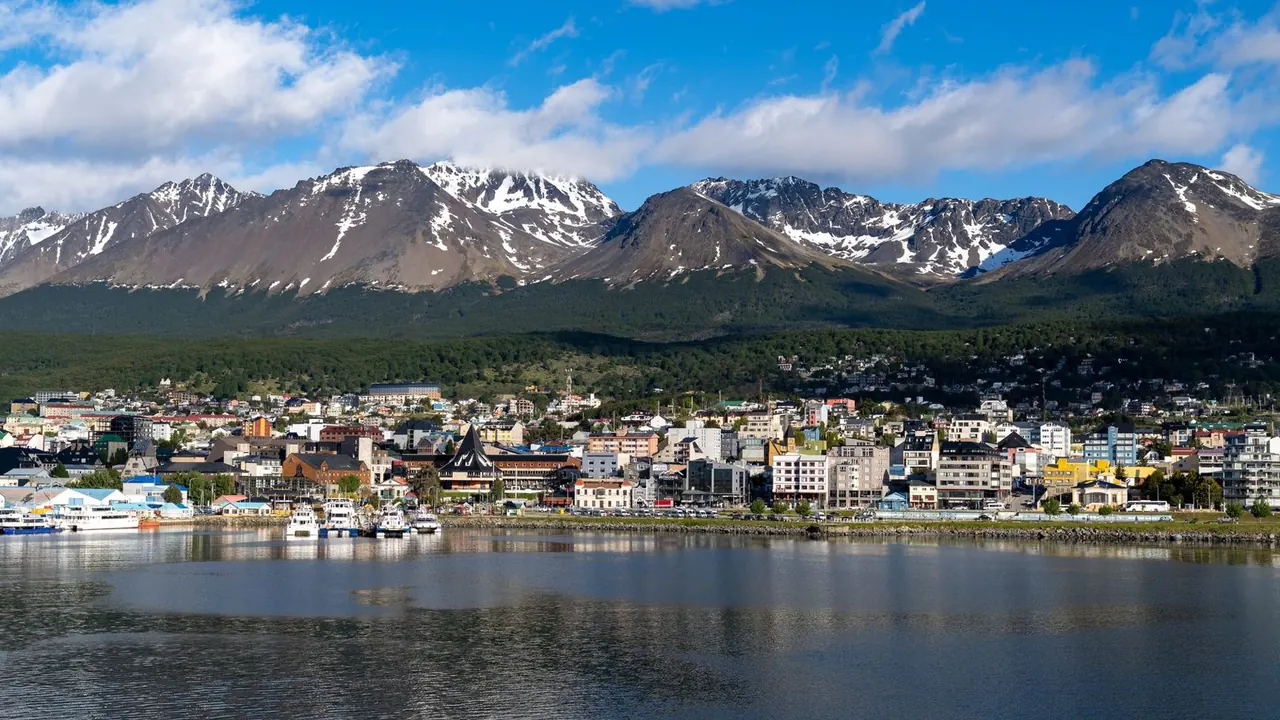
Photos: Bariloche by Maclemo, CC BY-SA 3.0, cropped; Ushuaia by Jan Tang, Pexels License.
Bariloche or Ushuaia?
Our verdict in twelve categories, each scored against the same fixed benchmark cities, and the climate month by month, so you can choose for your trip.
Choose Bariloche for
- beaches
- day trips
- live music and the arts
Bariloche is the more rounded trip. It sits on a large glacial lake inside Nahuel Huapi National Park, with hut-to-hut hiking in summer and South America's largest ski area in winter. It also has brewery gardens, chocolate shops on Calle Mitre and sunny, dry Januaries for afternoons by the lake. Families, keen walkers and anyone who wants a comfortable base with more to do in the evening will find it easier going.
Choose Ushuaia for
- getting around
Ushuaia is for the traveller who wants to reach the far end of the land. Its strengths lie on the Beagle Channel, where boats pass sea lions, cormorants and penguins. You can walk to the Martial Glacier and into Tierra del Fuego National Park from the edge of town, eat centolla king crab for dinner and visit the old prison museum. It suits people who will accept cool, changeable weather in return for a wilder, more remote setting, and anyone boarding a ship for Antarctica.
Scoreboard
Twelve categories on one fixed scale from 0 to 100. The shaded stretch is the gap between the two.
Your match
Pick a travel style or drag the sliders, and both match scores follow your weighting.
Wins on beaches and day trips with your weighting.
Wins on getting around with your weighting.
What matters to you?
Category by category
What the scores mean for a trip.
Beaches & swimming
Neither is a swimming destination, but Bariloche at least has beaches you can use. Playa Bonita, Villa Tacul and the shores of Lago Gutiérrez and Lago Moreno are pleasant for sunbathing and picnics in January and February, and the smaller lakes allow a short, cold dip.
Ushuaia's shore on the Beagle Channel is rock, shingle and kelp in a steady wind, and the water is too cold for anything but a polar plunge. There the water is something to see from a boat.
Food & drink
Both kitchens rest on lamb roasted on iron crosses over an open fire and the Argentine parrilla, and both have a narrow range beyond their specialities. The difference is in what comes from the water. Bariloche leans on its lakes and forests, with trout, wild boar, venison, smoked meats and fondue. Its real pleasures are the chocolatiers on Calle Mitre and the brewery gardens on the road to Cerro Catedral.
Ushuaia cooks from the cold sea. Centolla king crab, toothfish and mussels from the channel are the dishes worth the journey, and cafés serve cake and hot chocolate against the wind. Its craft beer is poured in pubs rather than lakeside gardens.
Culture & sights
Neither town is visited for its sights, and either can be seen in a morning or a day. Bariloche's interest is its architecture. The stone and timber Centro Cívico by Bustillo and de Estrada gave the town its alpine look, and there is also the Museo de la Patagonia, the neo-Gothic cathedral and the Llao Llao hotel with its wooden chapel.
Ushuaia's one big sight is the old penal colony, whose radial cell blocks now house the Maritime Museum with displays on Antarctic exploration. Smaller museums cover the Yámana people, and pioneer houses of wood and corrugated iron stand in the streets. Its history is about a frontier and a prison rather than a planned mountain town.
Nightlife
Bariloche has more going on after dark, though not in a form most adults want. Its big central clubs belong to school-leavers on graduation trips through winter and spring. Away from them, brewpubs and bars around Calle Mitre and the lakefront make for relaxed late evenings, busier in the ski season and January.
Ushuaia is quieter still. There are a few craft-beer pubs, a casino and the odd late bar, and an early boat trip or trek usually ends the night.
Nature & outdoors
Both are outdoor destinations first, and both have skiing, glaciers and national park trails, but Bariloche offers the bigger and more varied playground. It has the lakes and forests of Nahuel Huapi, the network of mountain huts beyond Cerro Catedral, cable cars up Cerro Campanario and Cerro Otto, kayaking, trout fishing and the long day out to Tronador's hanging glaciers. Its summers are also warmer and sunnier.
Ushuaia offers the sea and the far south instead. Boats on the Beagle Channel pass sea lions and cormorants on the way to a penguin colony, hikes climb to the Martial Glacier and Laguna Esmeralda, and dog-sledding fills the winter. The country is wilder and more exposed, and the weather can change within the hour.
Day trips
Bariloche has more places to visit. Villa La Angostura's wooden houses and gardens lie along the north shore, Colonia Suiza has its weekend fair and curanto, and El Bolsón, two hours south in a warmer valley, has a craft market and hop farms.
From Ushuaia the list is short. You can visit Estancia Harberton and its marine mammal museum, stop at Tolhuin on the way to Lago Fagnano, or take the boat across to Puerto Williams in Chile. From either town most outings are into the landscape, but Ushuaia runs out of them sooner.
Good for families
Bariloche is the easier family choice. It has ski schools and gentle slopes at Cerro Catedral, sledging on Cerro Otto, lake paddling in a warm summer, boat trips to Isla Victoria and chocolate shops with workshops. Children have plenty to do, even if a wet day drags.
Ushuaia appeals to children through wildlife and novelty: penguins and sea lions seen from a boat, and the small steam train on the old convict railway. The cold and wind shorten outdoor days, though, so it suits families who already enjoy walking.
Getting around
Both have small, walkable centres on steep hillsides, and in both you need transport to reach the countryside. The difference is in their shape. Bariloche stretches about 25km along Avenida Bustillo, with lodgings and trailheads spread out along it. City buses reach Llao Llao and Cerro Catedral, and a car or tours cover the rest.
Ushuaia is compact, and its boats leave from the central pier. Its local buses are of little use to visitors, though, so the national park, the glacier trailhead and the ski area mean shuttles, taxis or a hire car.
Shopping & style
Bariloche has more to buy, though the themes are similar. Calle Mitre has chocolate in every form, Patagonian wool knitwear, leather, smoked trout and outdoor gear. Craft fairs at the Centro Cívico and Colonia Suiza add woodwork, ceramics and Mapuche-style textiles.
Ushuaia's main street is mostly penguin souvenirs, chocolate, wool and outdoor shops that are handy for a forgotten fleece. Tierra del Fuego's special tax regime makes some goods cheaper, but there is no craft or market scene.
Affordability
Both are among the more expensive places to visit in Argentina, for different reasons. Bariloche charges resort rates, highest in the July school break and January, and ski passes and rental add up. Hostels, cabins in the side valleys, self-catering, city buses and free hiking in the park bring costs down a good deal.
Ushuaia's costs come from its remoteness and its role as a cruise and Antarctic port. Boat trips, guided treks, park entry and taxis to trailheads soon add up, though casual meals and hostels stay reasonable. In both towns, rooms cost less in spring and autumn.
Live music & performing arts
Bariloche has a real classical tradition. The Camerata Bariloche chamber orchestra grew out of a festival held here, and the Semana Musical Llao Llao brings a week of chamber concerts to the lakeside hotel each year. Outside that, there is a small municipal theatre and occasional folk music.
Ushuaia has only a cultural centre with occasional concerts and the odd pub band, nothing a visitor could plan around.
Wellness & relaxation
Neither has thermal springs or a bathing tradition, so rest comes from hotel spas and the setting. Bariloche has more of both. Lakeside lodges and the grand Llao Llao offer pools and saunas, and the wooded valleys towards Colonia Suiza slow the days to lake views and evenings by the fire, as long as you stay away from the busy centre.
Ushuaia's version is a hotel spa in the forest above the channel, or an afternoon at a window watching the weather move over the mountains. The town is quiet once the cruise passengers leave, but there are fewer places to rest in comfort.
When should you go?
Pick your month. The climate figures are measured averages, not a forecast.
Bariloche in July
Ushuaia in July
Daytime high, °C
Rainfall in the month, mm
Temperature and rainfall are climate normals, averaged over the years shown. Bariloche: 1991-2020 normals, Bariloche Aerodrome (11.2 km from centre). Ushuaia: 1991-2020 normals, Ushuaia Aerodrome (1 km from centre).
Bariloche has a real summer. From December to February afternoons reach about 23°C, with long hours of sunshine and little rain. This is the time for the lake shores, mountain hikes and cycling the Circuito Chico. November and March are cooler but still good for walking. The wet season runs from May to August and peaks at around 172mm in June. Highs then sit near 8°C and the mountains are under snow for skiing.
Ushuaia never truly warms up. Even in January and February the daytime high is about 14°C. That is fine for hiking in layers but never beach weather, and the town gets roughly half of Bariloche's summer sunshine. Rain falls fairly evenly through the year rather than in one season, so there is no dry spell to aim for. Winter brings highs around 4°C, short grey days and snow for skiing and dog-sledding. December to March is the season for boat trips and trails.
Which traveller are you?
On a family trip with young children, Bariloche leaves more room for things to go wrong. A warm, dry summer lets small children spend whole days outdoors, there is something to do in either season, and Argentine restaurants welcome children late into the evening. Ushuaia suits older children who already walk well.
For a relaxing and wellness trip, Bariloche suits the traveller whose idea of rest is comfort after gentle effort: a short walk, a long lunch, a sunny afternoon by the lake and a proper spa to come back to. In Ushuaia, rest mostly means quiet and weather.
For travellers heading on to Antarctica, or hoping to see penguins, Ushuaia is the clear choice, and a lake town like Bariloche has nothing to match it. Ushuaia is the main port for Antarctic ships, and a few days here make a fitting start to the voyage, with the channel's wildlife as a preview.
Before you go
| Measure | Bariloche | Ushuaia |
|---|---|---|
| Official language | Spanish | Spanish |
| Currency | Argentine Peso (ARS) | Argentine Peso (ARS) |
| Sockets | CI220 V, 50 Hz | CI220 V, 50 Hz |
| Driving side | Left | Left |
| Time zone | UTC-3 | UTC-3 |
| Emergency number | 117 or 911 | 117 or 911 |
| Elevation | 794 m | 23 m |
| Main airport | Teniente Luis Candelaria International Airport (BRC)12 km from centre17 non-stop destinations | Ushuaia - Malvinas Argentinas International Airport (USH)4 km from centre9 non-stop destinations |
| Public holidays this year | 16 days | 16 days |
By the numbers
| Measure | Bariloche | Ushuaia |
|---|---|---|
| City population | 136,381 | 82,615 |
| People per km² | 619 | 3,592 |
| Museums within 10 km | 3 | 5 |
| UNESCO World Heritage sites within 50 km | 0 | 0 |
Where else could you go?
Every comparison below shares a destination with this one, so you can follow Bariloche or Ushuaia somewhere new.