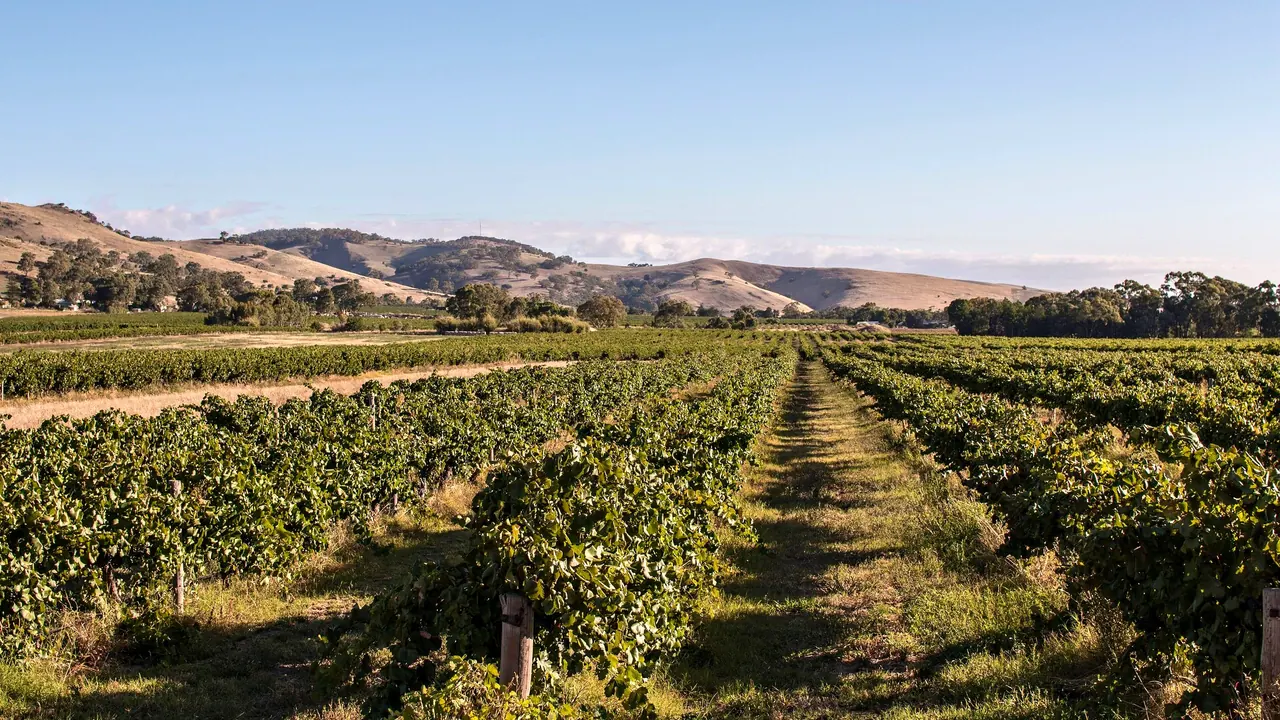
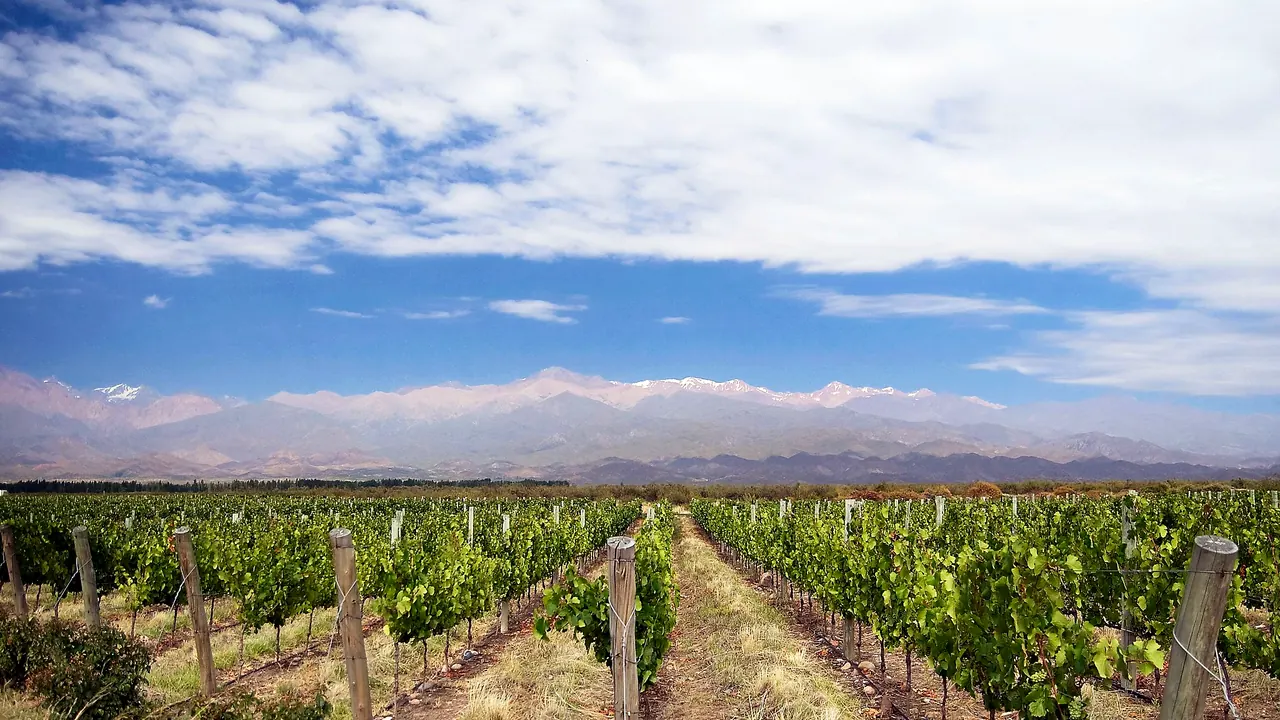
Photos: Barossa Valley by Olivier Lemoine, CC BY-SA 4.0, cropped; Mendoza by David, CC BY 2.0, cropped.
Barossa Valley or Mendoza?
Our verdict in twelve categories, each scored against the same fixed benchmark cities, and the climate month by month, so you can choose for your trip.
Choose Barossa Valley for
- beaches
- food and drink
- day trips
The Barossa suits couples who want a slow wine weekend and little else. Its cellar doors pour some of the world's oldest Shiraz and Grenache vines, the bakeries and butchers keep their German Lutheran roots, and the towns sit close together along one valley road. Adelaide, with its museums, beaches and theatres, is near enough to fill the gaps the valley leaves.
Choose Mendoza for
- nature and the outdoors
- nightlife
- prices
Mendoza is the better pick for a broader trip with wine at the centre. The Andes put rafting, high hiking and the Aconcagua road within a day, the evenings run late on Arístides Villanueva, and a walkable city base keeps day-to-day costs lower. Anyone who wants mountains, a night out or children's days out alongside the Malbec will find far more here.
Scoreboard
Twelve categories on one fixed scale from 0 to 100. The shaded stretch is the gap between the two.
Your match
Pick a travel style or drag the sliders, and both match scores follow your weighting.
Wins on beaches and food and drink with your weighting.
Wins on nature and the outdoors and nightlife with your weighting.
What matters to you?
Category by category
What the scores mean for a trip.
Beaches & swimming
Neither place is for a beach trip, but the Barossa at least has the sea within reach. The calm, sandy Gulf St Vincent beaches at Glenelg and Henley Beach are a little over an hour's drive away. From Mendoza the nearest coast is in Chile, on the far side of the Andes, so the choice comes down to a hotel pool or the Potrerillos reservoir, which is better for its views than for a swim.
Food & drink
The two are close, and in both the wine comes first. The Barossa pours old-vine Shiraz and Grenache, with Riesling from the Eden Valley hills, and its food has a German accent: mettwurst, rye bread, streusel cake and the Angaston farmers market. It is a daytime, country table, with little that is cheap or open late.
Mendoza is built on Malbec. Its signature meal is a long, many-course lunch with paired wines at a Uco Valley or Luján de Cuyo estate, with the Andes in view. Back in the city, wood-fired parrillas, empanadas mendocinas and late terrace dinners give it an urban evening side that the Barossa does not have.
Culture & sights
There is little to choose between them. Each has a day or two of modest sights, but the heritage is of a different kind. The Barossa's is rural and spread across the valley: Bethany's cottages on their narrow strip fields, the Lutheran spires of Tanunda and Langmeil, and the Depression-era palm avenue leading to the bluestone estate at Seppeltsfield.
Mendoza's heritage is urban and compact. The city rebuilt after the 1861 earthquake is itself the main sight, a planned grid of shaded plazas and kerbside irrigation channels that is best seen on foot. The founding ruins are kept in a museum, and the Cerro de la Gloria monument stands above the park.
Nightlife
Mendoza is far ahead here, though neither is a party destination. In the Barossa a night out amounts to dinner, perhaps a drink with locals in a country pub, and then an early night. Anyone wanting more faces a taxi to Adelaide, more than an hour each way.
Mendoza gives you a proper evening without leaving town. Because Argentines dine so late, the night only gets going around ten, and the student strip along Arístides Villanueva keeps going into the small hours. The mood is sociable rather than wild, and there are clubs at weekends for anyone who wants to stay out until morning.
Nature & outdoors
This is where the two differ most. The Barossa is a gentle, farmed landscape of low ranges and vineyards. You see it best from Mengler Hill, on the granite outcrops of Kaiserstuhl with their kangaroos, along the Barossa Trail by bike, or from a dawn balloon.
Mendoza sits at the foot of the Andes. Within an hour there is white-water rafting and high-altitude hiking around Potrerillos, and paragliders launch from Cerro Arco above the city. A longer day reaches Puente del Inca and Aconcagua, at 6,961m the highest summit in the Americas, and winter brings skiing at Vallecitos.
Day trips
The outings from each are about as rewarding, but the Barossa's are much more varied. From the valley you can spend a city day in Adelaide, walk the German main street of Hahndorf and the orchard towns of the Adelaide Hills, visit the national motor museum at Birdwood, or see the copper-mining heritage of Kapunda and Burra.
Mendoza's day trips are almost all wine. There are flat bike rides between old bodegas in Maipú, the big Malbec estates of Luján de Cuyo and the bold high-altitude wineries of the Uco Valley. For a traveller who doesn't drink wine, there is little else.
Good for families
Mendoza works better with children. Parque San Martín has a lake with paddle boats and plenty of room to run, the Cacheuta hot pools and gentle rafting at Potrerillos make good days out, and children are welcome in the plazas late in the evening.
The Barossa is safe and quiet, but there is little for children to do beyond the echo of the Whispering Wall, flat stretches of the cycle trail and cellar-door lawns. Families usually end up driving to Adelaide's zoo and beaches.
Getting around
Getting around is similar in both, but the problem is a different one. The Barossa is car country with almost no public transport. The towns are only ten to twenty minutes apart, but because of the tastings someone has to stay sober, book a driver or cycle the Barossa Trail.
Mendoza has a flat, shaded centre that is easy to walk, and the Metrotranvía runs out towards Maipú. The difficulty starts beyond the city, where the Uco Valley and the mountain road need a hired car, a driver or a tour.
Shopping & style
In both places the thing to take home is wine, often from small producers whose bottles are hard to find elsewhere, but Mendoza offers a little more besides. It adds olive oil, dried fruit and leather, a weekend craft fair in Plaza Independencia, and the Peatonal Sarmiento and malls for everyday fashion. The Barossa's shopping beyond the cellar door is mostly smallgoods, cheese and preserves, plus a few gift and antique shops in Angaston and Tanunda.
Affordability
Mendoza is the cheaper base. Simple hotels, buses and steak dinners in the city cost a moderate amount, and the bill only climbs with winery lunches, vineyard lodges and drivers. Visitors' costs also swing with Argentina's unsteady currency.
Much of the Barossa's accommodation is boutique cottages and lodges priced for couples, and its winery restaurants charge Australian fine-dining prices. Motels and caravan parks around Nuriootpa, bakery lunches and cycling between cellar doors keep costs down.
Live music & performing arts
Neither has much of a stage, but Mendoza has more to offer. Its high point is the Vendimia harvest festival, which ends in a huge night show of music, dance and light in the amphitheatre in the hills of Parque San Martín. Through the year there are folk nights with cueca, and the philharmonic plays at the Teatro Independencia.
In the Barossa, the music is Lutheran choirs, brass bands and the occasional pipe-organ recital at the Tanunda gallery, plus concerts at the Vintage Festival. For theatre or opera, visitors drive to Adelaide.
Wellness & relaxation
Mendoza has the better offer here, mainly because of the Cacheuta hot springs, about 40km up the river canyon, which have drawn bathers for more than a century. Vineyard lodges in Luján de Cuyo and the Uco Valley add spas with grape-based treatments, and the long afternoon break slows the whole city down.
The Barossa has no bathing tradition and only a few treatment rooms. What it offers instead is stillness: unhurried tastings, quiet villages and a verandah view over the vines, best outside vintage and festival weekends.
When should you go?
Pick your month. The climate figures are measured averages, not a forecast.
Barossa Valley in July
Mendoza in July
Daytime high, °C
Rainfall in the month, mm
Where the figures come from
Barossa Valley's sunshine is measured 68 km from the centre, at Adelaide Airport.
Temperature and rainfall are climate normals, averaged over the years shown. Barossa Valley: 1991-2020 normals, Nuriootpa (4.5 km from centre). Mendoza: 1991-2020 normals, Mendoza Aerodrome (8.5 km from centre).
Both are at their best in the southern autumn and spring, roughly March to April and October to November, when days are warm without being punishing. On the Barossa valley floor, summer brings dry heat around 30°C. The sea off Adelaide reaches about 22°C in January and February, which is the time for a beach escape. Winter is cool and the wettest season, with around 50mm a month from June to September, and the sun is out much less.
Mendoza runs hotter in summer, reaching about 33°C in January, and most of its rain arrives then in short storms. Its winter is the opposite of the Barossa's: cool, clear and very dry, with as little as 8mm in July. Plenty of sunshine through the cold months makes Mendoza the better winter choice for mountain days or skiing. The Barossa in winter is more about long lunches indoors.
Which traveller are you?
On an outdoors trip, the Barossa gives gentle walks at Kaiserstuhl, a vineyard cycle trail and dawn balloon flights. Mendoza is the clear choice, with rafting at Potrerillos, high hiking in the Cordón del Plata, paragliding from Cerro Arco and the road to Aconcagua.
For a food and nightlife trip, the two eat about equally well, the Barossa mostly by day at its cellar doors and village bakeries. Mendoza comes out ahead because its evenings carry on after the meal, with late terrace dinners and bars busy past midnight.
On a tight budget, the Barossa is hard to do cheaply, because tasting fees and a car or driver come with almost every day. In Mendoza, stay in the city, take the light rail to Maipú and cycle between its bodegas, and eat at parrillas rather than winery lunches.
Before you go
| Measure | Barossa Valley | Mendoza |
|---|---|---|
| Official language | English | Spanish |
| Currency | Australian Dollar (AUD) | Argentine Peso (ARS) |
| Sockets | I230 V, 50 Hz | CI220 V, 50 Hz |
| Driving side | Left | Left |
| Time zone | UTC+9:30, UTC+10:30 in summer | UTC-3 |
| Emergency number | 000 | 117 or 911 |
| Elevation | - | 769 m |
| Main airport | Adelaide International Airport (ADL)35 non-stop destinations | Governor Francisco Gabrielli International Airport (MDZ)8 km from centre9 non-stop destinations |
| Public holidays this year | 12 days | 16 days |
By the numbers
| Measure | Barossa Valley | Mendoza |
|---|---|---|
| Population | - | 127,160 |
| People per km² | - | 2,355 |
| Museums within 10 km | - | 1 |
| UNESCO World Heritage sites within 50 km | - | 0 |
| Swim season, months above 21 °C | 3 months | - |
Where else could you go?
Every comparison below shares a destination with this one, so you can follow Barossa Valley or Mendoza somewhere new.
- Kangaroo Islandvs Barossa Valley
- Santiagovs Mendoza
- Vina del Marvs Mendoza
- Valparaisovs Mendoza
- Great Ocean Roadvs Barossa Valley
- Barilochevs Mendoza