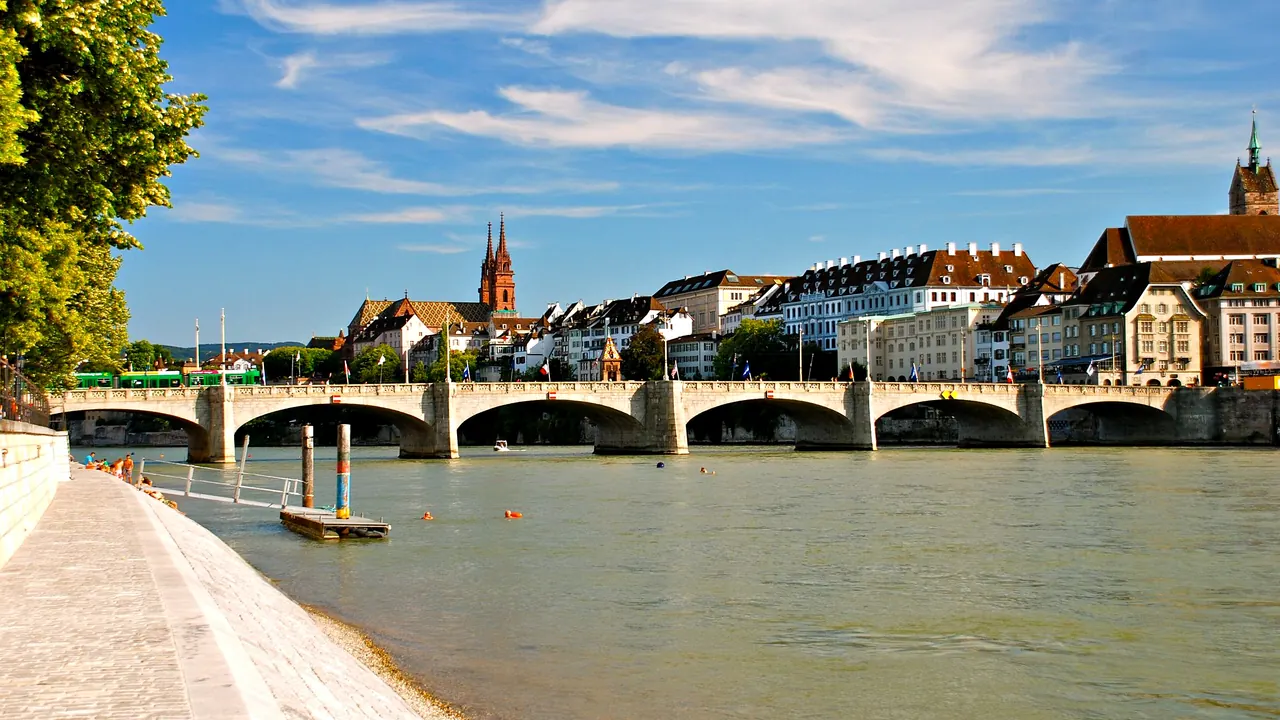
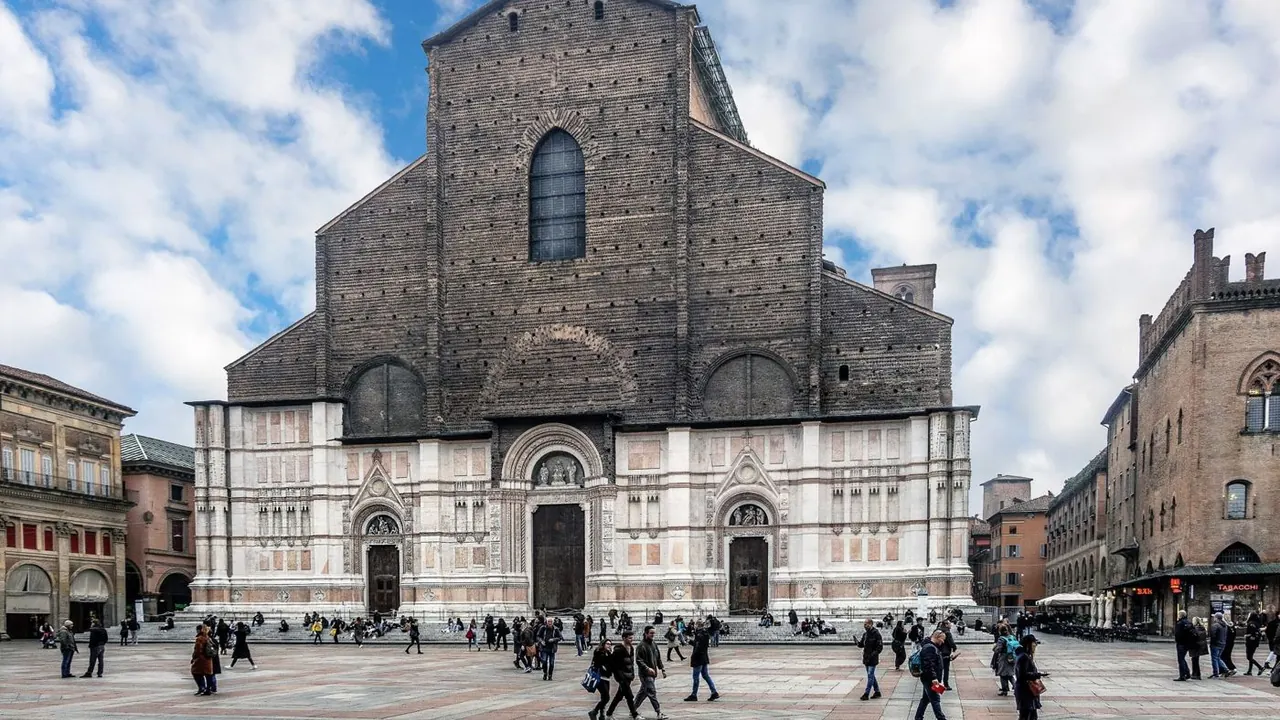
Photos: Basel by Lucazzitto, CC BY-SA 3.0, cropped; Bologna by Vanni Lazzari, CC BY-SA 4.0, cropped.
Basel or Bologna?
Our verdict in twelve categories, each scored against the same fixed benchmark cities, and the climate month by month, so you can choose for your trip.
Choose Basel for
- getting around
- families
- wellness
Basel suits travellers who care more about ease and art than about price. Its galleries stand up against cities many times its size, the trams and free transport card make every day smooth, and children are well looked after with a first-rate zoo and quiet, safe streets. Summer adds swimming in the Rhine, and the Black Forest and Jura give walkers somewhere to go. Expect to pay heavily for all of it.
Choose Bologna for
- prices
- food and drink
- nightlife
Bologna is the choice if eating is the point of the trip. The fresh pasta, cured meats and long aperitivo hours make every meal part of the reason for coming, and a large student population keeps the evenings livelier than Basel's. The arcaded medieval centre is a sight in itself, Florence and Venice are easy rail outings, and a stay costs noticeably less, although the high summer heat is hard going.
Scoreboard
Twelve categories on one fixed scale from 0 to 100. The shaded stretch is the gap between the two.
Your match
Pick a travel style or drag the sliders, and both match scores follow your weighting.
Wins on getting around and families with your weighting.
Wins on prices and food and drink with your weighting.
What matters to you?
Category by category
What the scores mean for a trip.
Beaches & swimming
Neither city is a beach destination, and they offer different kinds of water. In Basel, swimming happens right in town: you float down the Rhine past the old town on a summer afternoon, then sunbathe on the gravel banks. It is memorable, but the current is strong and only confident swimmers should try it.
Bologna has no water in the city to speak of. Instead it has the Adriatic about an hour away by train, with shallow, warm water at Rimini or Cervia, though the shore is lined with organised lidos of rented sunbeds. If you want a seaside day, go to Bologna. If you want a swim between museums, Basel is the better fit.
Food & drink
This is where Bologna clearly comes out ahead. Tortellini in brodo, ragù and lasagne verdi are made here with real pride, Parmigiano and Parma ham come from towns close by, and the market lanes of the Quadrilatero are worth visiting just to look. The weak point is variety, since almost everything on offer is Emilian, and it is heavy food in summer.
Basel eats well but modestly. It borrows tarte flambée and Baden wines from its neighbours, and everyday meals often feel expensive for what they are. Its best casual stops are the Markthalle and the Marktplatz market.
Culture & sights
Bologna comes out slightly ahead because the whole city is the attraction. Its brick medieval centre and kilometres of UNESCO-listed porticoes lead you to Piazza Maggiore, the leaning Two Towers, the seven churches of Santo Stefano and the anatomical theatre of the Archiginnasio, all within an easy walk.
Basel's strength is its art collections rather than its streets. The Kunstmuseum's Holbeins, the Fondation Beyeler and the Vitra campus are of a quality few small cities can match. Its old town, running from the Münster to the Spalentor, is handsome but compact. Gallery lovers may still prefer Basel.
Nightlife
Bologna goes out much more. Thousands of students crowd the cheap bars around Piazza Verdi, Via del Pratello stays busy late into the night, and wine bars carry on after aperitivo. It is informal rather than polished, and it falls silent in August.
Basel is calmer, with drinks on the Kleinbasel riverside steps in summer, a few bars around the Kaserne and some clubs in old harbour buildings. Its standout is Fasnacht, three days of drums and lanterns in late winter that begin at four in the morning.
Nature & outdoors
Basel has more countryside within easy reach. The Jura ridges start at the city's edge, the Black Forest summits are within an hour, and the Vosges lie to the west, so walkers have three very different ranges to choose from. Flat Rhine paths also lead cyclists into Germany and France.
Bologna's walking starts in the hills just above its rooftops, on the climb to San Luca and around the gypsum caves of the Parco dei Gessi. The Via degli Dei sets out from Piazza Maggiore for Florence. The flat farmland to the north is less inviting, and the humid summers push outdoor time into spring and autumn.
Day trips
Both are superb bases, and Bologna has the edge. Florence is barely half an hour away by fast train. Ravenna's mosaics, Ferrara, Modena and Parma are short hops, and Venice, Verona and Padua all work as day trips.
Basel's strength is having three countries on its doorstep. You can visit the Alsace wine villages and Colmar in France, Freiburg and the Black Forest towns in Germany, and Lucerne, Bern and the Rhine Falls in Switzerland. The variety of languages and landscapes is wider, even if no single trip matches the pull of Florence or Venice.
Good for families
Basel is the easier city with children. The Zolli is a short walk from the station, the Natural History Museum and toy museum cover a rainy morning, and the free animal park in the Lange Erlen makes a simple afternoon. Small children cannot swim in the Rhine, though, and Sundays are quiet.
Bologna's car-free centre and shady arcades are pleasant to walk with children, and pizza and gelato keep mealtimes simple. Older children may enjoy climbing the Asinelli tower, but there is no zoo, and the summer heat is tough. Both cities have a big theme park about an hour away, Europa-Park from Basel and Mirabilandia from Bologna.
Getting around
Basel is the smoother of the two. Green trams reach every part of the city and even cross into France and Germany, hotel guests ride them free, and small river ferries carry you between the banks.
Bologna has no metro, but it hardly needs one. The medieval centre is flat and best walked, and the porticoes keep you out of the sun and rain. Buses cover the rest, and the station's fast trains are what really matter. Watch for bikes under the arches.
Shopping & style
Bologna is the better place to shop, mainly because of what you can carry home to eat: aged Parmigiano, mortadella, fresh tortellini and balsamic vinegar from the Quadrilatero. Galleria Cavour has a small cluster of luxury fashion, and the Montagnola and Santo Stefano markets are good for browsing.
Basel's Freie Strasse sells Swiss watches, jewellery and chocolate, and the Spalenberg lanes have small design shops. Its Christmas market around the Münster is the one time the city becomes a real shopping draw.
Affordability
The difference in cost is large. Basel is expensive in every way, from rooms and restaurant meals to museum entry. The free transport card helps, and so do cheaper meals or a hotel across the German or French border.
Bologna is mid-priced. Food and local wine cost less than in Italy's main tourist cities, and most of the sights are free churches and squares. Hotels in the old town are the expensive part. Both cities' rooms become scarce and costly during big trade fairs.
Live music & performing arts
The two are evenly matched but have different strengths. Basel leans towards serious classical music and stage work: bold productions at Theater Basel, the Sinfonieorchester in the acoustically fine Stadtcasino, and a strong early-music tradition. Its season winds down in July and August.
Bologna's Teatro Comunale is one of Italy's historic opera houses, and the city adds jazz in basement clubs and student indie gigs. In summer, outdoor concerts and films fill Piazza Maggiore, just when Basel's halls go quiet.
Wellness & relaxation
Calm comes easily in Basel. Sundays are hushed and the Rhine banks are made for an afternoon of doing nothing. Proper bathing is close too: the saline thermal pools at Rheinfelden are about twenty minutes away, the mineral baths and saunas of Badenweiler and Bad Krozingen are just over the German border, and Baden-Baden works as a longer day out.
Bologna has fewer ways to unwind. A slow lunch under the porticoes is a kind of rest in itself, but the university quarter is noisy and the summer heat weighs on you. Castel San Pietro Terme and the green valley spa town of Porretta Terme each make a pleasant half day, though neither offers the range of the spa towns around Basel.
When should you go?
Pick your month. The climate figures are measured averages, not a forecast.
Basel in July
Bologna in July
Daytime high, °C
Rainfall in the month, mm
Where the figures come from
Bologna has no rain gauge within 25 km of the centre, so its rainfall comes from a gridded climate dataset read at the city rather than from a gauge further away.
Bologna's sunshine is measured 82 km from the centre, at Cervia.
Temperature and rainfall are climate normals, averaged over the years shown. Basel: 1991-2020 (sunshine 1961-1990) normals, Basel / Binningen (1.9 km from centre). Bologna: 1991-2020, 14 years observed normals, Bologna / Borgo Panigale (5.5 km from centre).
Basel has the gentler summer. July reaches about 26°C, which is pleasant for walking and warm enough to float down the Rhine from June to early September. Those are also its wettest months, though, with rain on the heavier side from May to August. Winters are cold and grey, and the shortest days get very little sun, so the season for being outdoors there runs from late spring to early autumn.
Bologna turns hot in July and August, when highs reach about 32°C. That makes sightseeing on foot tiring outside the shade of the porticoes. These are also its driest and sunniest months. The rain arrives in autumn and peaks in November at about 95mm. May, June and September give the best balance in Bologna, while high summer is the time Basel is the more comfortable of the two.
Which traveller are you?
On a food and nightlife trip, choose Bologna. Hand-rolled tagliatelle, mortadella and the Quadrilatero's delicatessens make eating the main event, and the evenings carry on from aperitivo to the student bars of Piazza Verdi and Via del Pratello. Basel's cooking is good, but its nights are quiet.
On a tight budget, Bologna is far easier to manage. Trattoria meals, aperitivo with food included and free-to-enter churches keep daily spending modest. In Basel, Swiss prices apply to rooms, meals, drinks and museums alike, and only the free transport card softens the cost.
On a family trip with children, Basel does more for younger ones. The Zolli is one of Europe's best zoos, the current-driven ferries are a small adventure, and trams take prams without fuss. In Bologna the sights are mostly churches and palaces, and the summer heat is hard on small children.
Before you go
| Measure | Basel | Bologna |
|---|---|---|
| Official language | French, German, Italian, Romansh | Italian |
| Currency | Swiss Franc (CHF) | Euro (EUR) |
| Sockets | CJ230 V, 50 Hz | CFL230 V, 50 Hz |
| Driving side | Right | Right |
| Time zone | UTC+1, UTC+2 in summer | UTC+1, UTC+2 in summer |
| Emergency number | 112 | 112 |
| Elevation | 247 m | 54 m |
| Main airport | EuroAirport Basel–Mulhouse–Freiburg (BSL)7 km from centre112 non-stop destinations | Bologna Guglielmo Marconi Airport (BLQ)6 km from centre98 non-stop destinations |
| Public holidays this year | 10 days | 13 days |
By the numbers
| Measure | Basel | Bologna |
|---|---|---|
| City population | 176,329 | 387,971 |
| People per km² | 7,378 | 2,754 |
| Museums within 10 km | 61 | 68 |
| UNESCO World Heritage sites within 50 km | 2 | 3 |
Where else could you go?
Every comparison below shares a destination with this one, so you can follow Basel or Bologna somewhere new.