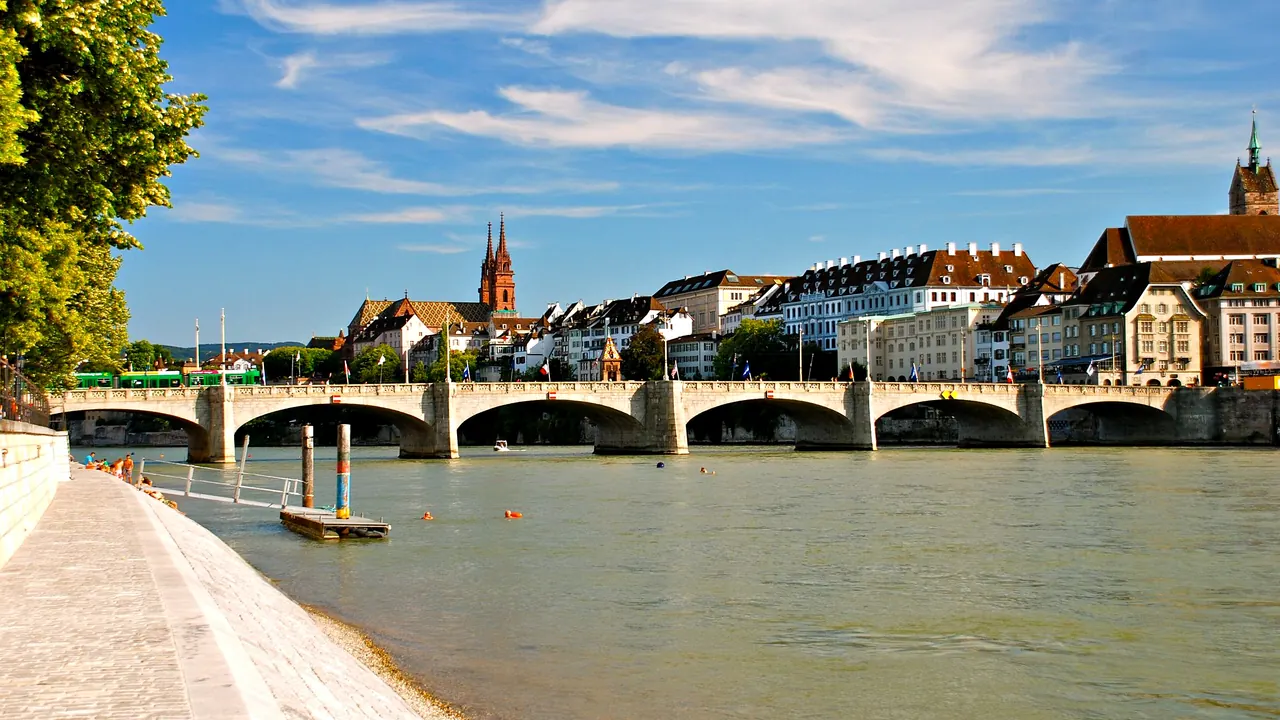
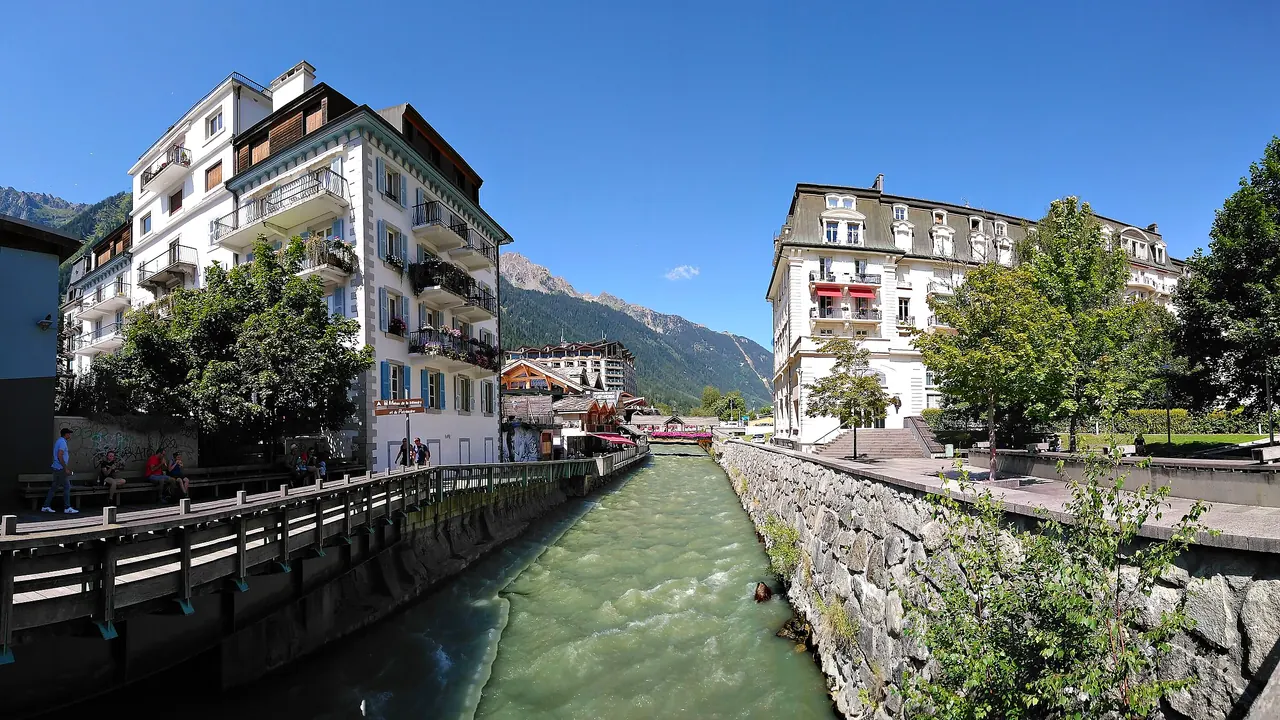
Photos: Basel by Lucazzitto, CC BY-SA 3.0, cropped; Chamonix by Tiia Monto, CC BY-SA 3.0, cropped.
Basel or Chamonix?
Our verdict in twelve categories, each scored against the same fixed benchmark cities, and the climate month by month, so you can choose for your trip.
Choose Basel for
- culture and sights
- live music and the arts
- day trips
Basel is the choice for a city trip with depth. Its museums punch far above the size of the town, from Holbein in the Kunstmuseum to the Fondation Beyeler and the Vitra campus, and Theater Basel and the Stadtcasino give it an evening programme to match. Trams and fast trains do the rest, so it makes a superb base for a week of day trips into Alsace, the Black Forest and the Swiss old towns without ever needing a car.
Choose Chamonix for
- nature and the outdoors
- prices
Chamonix is for people who want to spend their days looking up. The Mont Blanc massif rises straight out of the valley, and cable cars, the Mer de Glace railway and trails from the edge of town put glaciers, ridges and high meadows within easy reach. You give up museums, concerts and much choice at the table, but for skiing, hiking, climbing or simply standing in front of Western Europe's highest summit, Basel has nothing like it.
Scoreboard
Twelve categories on one fixed scale from 0 to 100. The shaded stretch is the gap between the two.
Your match
Pick a travel style or drag the sliders, and both match scores follow your weighting.
Wins on culture and sights and live music and the arts with your weighting.
Wins on nature and the outdoors and prices with your weighting.
What matters to you?
Category by category
What the scores mean for a trip.
Beaches & swimming
Neither place has a beach, but Basel offers a far better swim. In summer the city floats down the Rhine past the old town on the current, then dries off on the gravel banks and the steps by the old bathing huts. It is a real local ritual, though only for confident swimmers.
In Chamonix, swimming is something you do on a free afternoon. You can drive down to the small Lac de Passy, with Mont Blanc straight ahead, or make a day of Lake Annecy, while in town there is only the municipal pool.
Food & drink
Basel eats a little better and with more variety. Its kitchens draw on Alsace and Baden as well as Switzerland, so you get tarte flambée, Baden wines and a small fine-dining tier, with the Markthalle and Marktplatz market for casual meals.
In Chamonix you eat Savoyard food: fondue, raclette and tartiflette on terraces facing the glaciers. It is satisfying after a day outside, but menus repeat from place to place and many kitchens close out of season. Its cheese shops and bakeries are best used for putting together a picnic to take into the hills.
Culture & sights
This is where the two differ most. Basel has an art collection of world standing in the Kunstmuseum, the Fondation Beyeler's park-set galleries and the architecture of the Vitra campus, all set around an old town of red sandstone, painted façades and guild houses. Seeing it properly takes several days.
Chamonix's heritage is the story of mountaineering, told in the Musée Alpin, the guides' quarter and the climbers' cemetery. It is moving if alpinism interests you, but you will see it all in a morning.
Nightlife
Both are modest places to go out, but the crowds are quite different. Basel's nights are relaxed and grown-up: drinks on the Kleinbasel riverbank steps in summer, bars around the Kaserne, and electronic clubs in old harbour buildings. Once a year, Fasnacht turns the whole city into three days of drums and lantern processions.
Chamonix is louder and younger. Après-ski spills from the foot of the slopes into a lane of pubs full of guides, seasonal workers and English-speaking visitors, but summer evenings are calmer and out of season many places shut.
Nature & outdoors
Chamonix is in a different league. Glaciers, granite needles and the summit of Mont Blanc rise almost 4km above the valley, and cable cars put you in high-mountain terrain within minutes. Skiing, mountaineering, via ferrata, paragliding and long-distance trails all start from town.
Basel's outdoors is gentler and more spread out. There are wooded ridges in the Jura, Black Forest summits above 1,400m and flat Rhine cycle paths into France and Germany, which suits walkers and cyclists who are happy to go out for the day and come back to the city.
Day trips
Basel is one of the best bases in Europe for excursions. Colmar, Strasbourg, Freiburg, Bern, Lucerne and Zurich are all within about an hour or so by fast train, with Augusta Raurica and Rheinfelden closer still, so you could fill a week without a car.
Chamonix has good options too. Courmayeur and the Roman town of Aosta are through the tunnel in Italy, and Annecy and Geneva are each a little over an hour away. Beyond those, mountain roads stretch the journeys and most places within reach are other resorts.
Good for families
Both work well for families, but in different ways. Basel is the gentler choice for young children. It is compact and safe, prams roll straight onto the trams, and the Zolli, one of Europe's finest zoos, is a short walk from the station. If the weather turns, natural history and toy collections give you somewhere to go indoors, and on fine days the river ferries, carried across by the current, and the free animal park in the Lange Erlen make cheap outings. The one big thrill is Europa-Park, about an hour away in Germany, and the Rhine is too strong for young children to swim in.
Chamonix suits families who want to be outdoors all day, and it gives the most to older children. In winter children learn to ski on gentle slopes or go sledging. In summer there is the luge, the treetop courses, ibex and marmots at the Merlet park and the little train up to the glacier. The highest cable cars and the glacier terrain are wrong for toddlers, a run of wet days leaves you short of things to do, and lift tickets and activities cost far more than a day at Basel's zoo.
Getting around
Basel is easier. You can walk between the old town and both banks, the green trams cover everything else and even cross into France and Germany, and the main station runs direct trains in every direction. The free transport card for hotel guests makes all of it simple.
Chamonix's centre is small and walkable too, and a guest card gives free use of the valley buses and the Mont Blanc Express. In winter, though, the ski areas are spread out, which means crowded ski buses and thin evening services, and a car helps for trips over the border.
Shopping & style
Basel has the broader shopping, with watches, jewellery and chocolatiers on Freie Strasse, small design shops around Spalenberg and a pretty Christmas market by the Münster. It is still not a reason to make the trip.
Chamonix is narrower but has real expertise in one thing. Its old outdoor and climbing shops are where serious skiers and alpinists buy their technical gear. Apart from that it sells cheese, génépi and souvenirs.
Affordability
Both are expensive, and Basel is the harder of the two on a budget. Rooms, meals, drinks and museum tickets all cost Swiss prices, and during the big trade fairs rooms become scarce. Eating or staying across the border in Germany or France is the usual way to cut costs.
Chamonix is somewhat easier to manage. Self-catering apartments, supermarket picnics, free valley transport and trails you can walk without a lift keep everyday costs down, especially outside the peak weeks. Lift passes, guides and paragliding are where the money goes.
Live music & performing arts
Basel has a real stage life and Chamonix does not. Theater Basel stages opera, ballet and drama with a reputation well beyond Switzerland, and the Stadtcasino is home to its symphony orchestra, with early-music concerts and small jazz clubs adding to the calendar from autumn to early summer.
In Chamonix, live performance mostly means the summer jazz festival, some of it played high in the mountains, plus occasional church concerts and mountain film evenings. For opera or an orchestra you would have to go to Geneva.
Wellness & relaxation
Basel is a calm city whose baths are out of town. Sundays are quiet and the riverside is made for doing nothing. For proper bathing you go to the saline pools at Rheinfelden, about twenty minutes away, or to the German spa towns of southern Baden.
Chamonix is a busy resort with its spa right in town. Its hot outdoor pools and saunas look up at the glaciers and are at their best on a winter evening after skiing, and the thermal springs of Saint-Gervais are down the valley. Here you relax after effort, in a town that starts its days early and fills up in high season.
When should you go?
Pick your month. The climate figures are measured averages, not a forecast.
Basel in July
Chamonix in July
Daytime high, °C
Rainfall in the month, mm
Where the figures come from
Chamonix's temperatures are measured 35 km from the centre, at Bourg-St-Maurice.
Chamonix has no rain gauge within 25 km of the centre, so its rainfall comes from a gridded climate dataset read at the city rather than from a gauge further away.
Temperature and rainfall are climate normals, averaged over the years shown. Basel: 1991-2020 (sunshine 1961-1990) normals, Basel / Binningen (1.9 km from centre). Chamonix: 1999-2020 (rainfall 1991-2020) normals, Bourg-St-Maurice (34.9 km from centre).
Through the year the two have almost the same daytime temperatures. Both are cold in midwinter and mild in spring and autumn, and from June to August they are warm, with highs around 26°C. Basel is much the drier. Its driest months run from winter into early spring, but they are also grey and short of sun, so that is the time for museums rather than long walks. Its rain comes mostly from May to August, between long sunny days, and June to early September is the season for floating down the Rhine and sitting out by the river.
Chamonix is wet in every month, from about 105mm in high summer to nearly 170mm in December. The heaviest falls come from November to January, when much of it lands as snow on the slopes, and again in May. July to September are the steadiest months for hiking and the high lifts, though mountain weather can still turn in an afternoon.
Which traveller are you?
On a culture and arts trip, Basel is the clear pick. The Kunstmuseum, the Fondation Beyeler and the Museum Tinguely could fill several days, and opera, ballet and orchestral concerts carry on into the evening, while Chamonix's museums take half a day.
For an outdoors trip, go to Chamonix. The Aiguille du Midi, the Grand Balcon trails, Lac Blanc and the start of the Tour du Mont Blanc are on the doorstep. Basel's Jura and Black Forest walks are pleasant, but they are hills next to Chamonix's high mountains.
For a ski vacation, Chamonix is the place to be, with steep areas along the valley, ski touring and the Vallée Blanche glacier descent, plus ski schools for beginners. From Basel you would get only light skiing in the Black Forest, and the real Alps are hours away.
Before you go
| Measure | Basel | Chamonix |
|---|---|---|
| Official language | French, German, Italian, Romansh | French |
| Currency | Swiss Franc (CHF) | Euro (EUR) |
| Sockets | CJ230 V, 50 Hz | CE230 V, 50 Hz |
| Driving side | Right | Right |
| Time zone | UTC+1, UTC+2 in summer | UTC+1, UTC+2 in summer |
| Emergency number | 112 | 112 |
| Elevation | 247 m | 995 m |
| Main airport | EuroAirport Basel–Mulhouse–Freiburg (BSL)7 km from centre112 non-stop destinations | Geneva International Airport (GVA)68 km from centre150 non-stop destinations |
| Public holidays this year | 10 days | 11 days |
By the numbers
| Measure | Basel | Chamonix |
|---|---|---|
| City population | 176,329 | 8,705 |
| People per km² | 7,378 | 75 |
| Museums within 10 km | 61 | 3 |
| UNESCO World Heritage sites within 50 km | 2 | 0 |
Where else could you go?
Every comparison below shares a destination with this one, so you can follow Basel or Chamonix somewhere new.