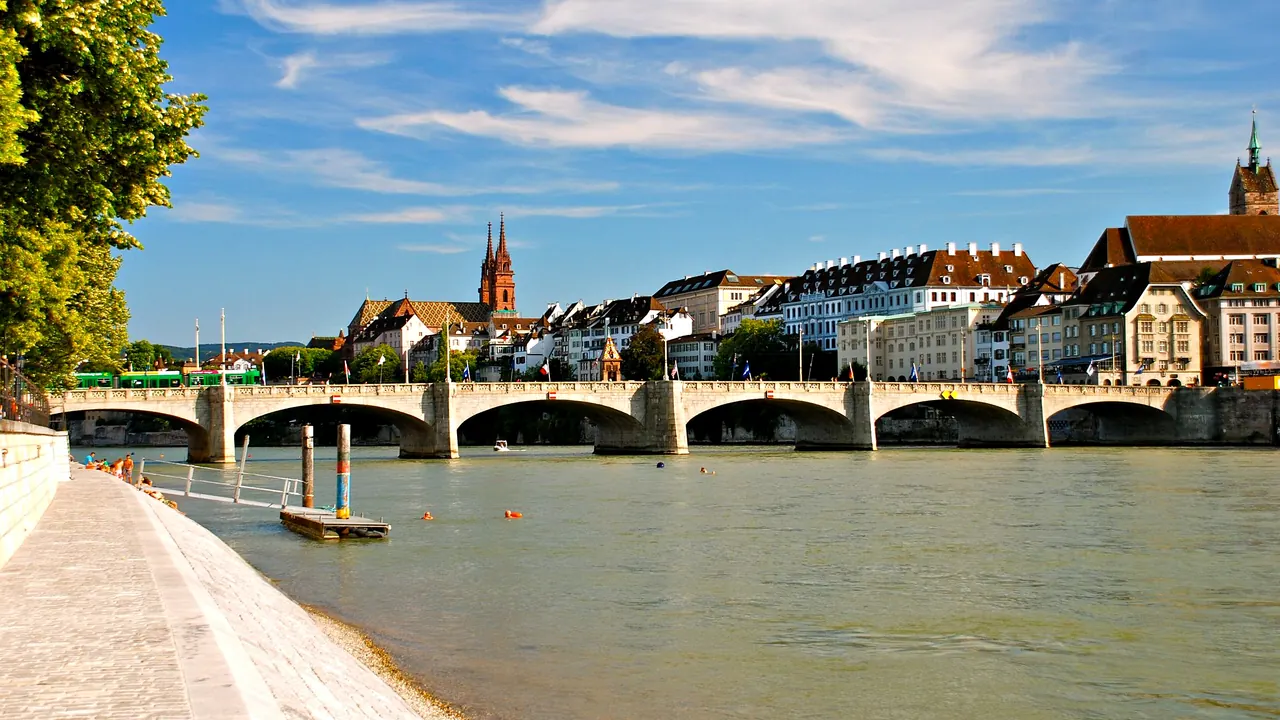
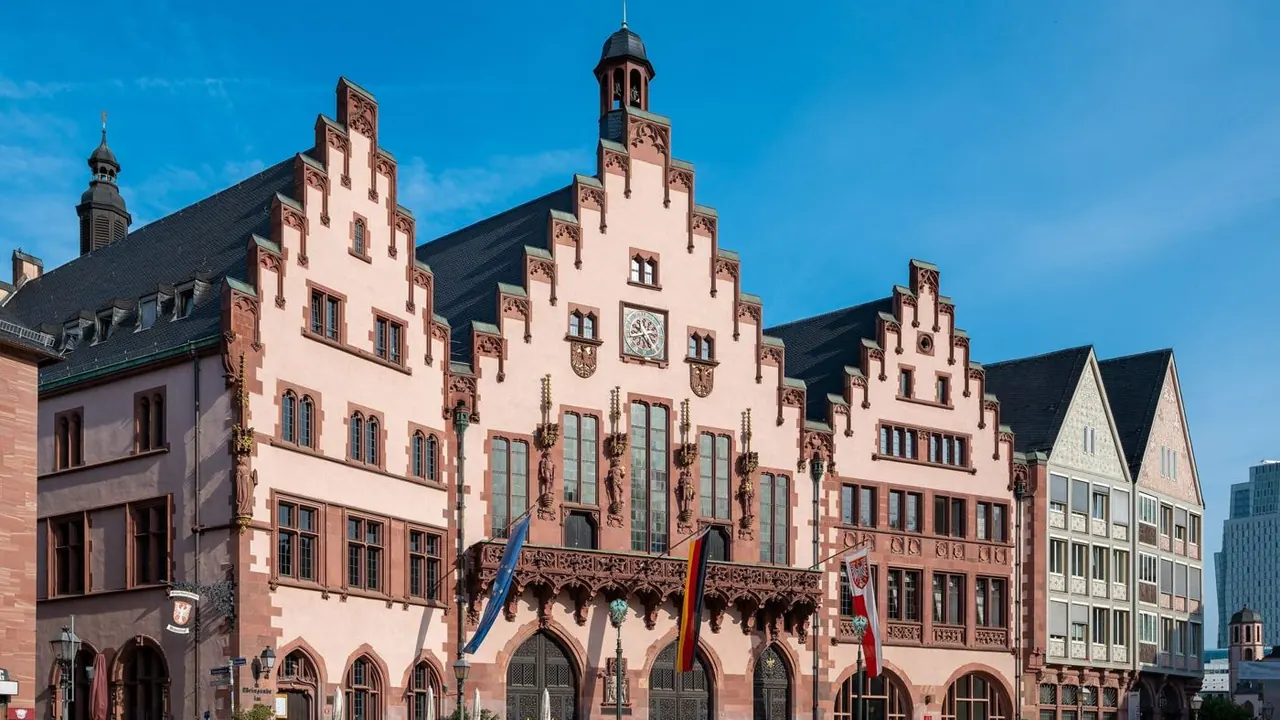
Photos: Basel by Lucazzitto, CC BY-SA 3.0, cropped; Frankfurt by Thomas Wolf, CC BY-SA 3.0 DE, cropped.
Basel or Frankfurt?
Our verdict in twelve categories, each scored against the same fixed benchmark cities, and the climate month by month, so you can choose for your trip.
Choose Basel for
- beaches
- getting around
- culture and sights
Basel suits a traveller who wants a compact, polished city of first-rate art with three countries on the doorstep. The Kunstmuseum and the Fondation Beyeler give it the deeper museum offer, the trams and the free transport card make it effortless, and summer adds the rare pleasure of floating down the Rhine past the Münster. Come with a generous budget and a taste for quiet evenings.
Choose Frankfurt for
- prices
- nightlife
- shopping
Frankfurt is the better pick if you want more going on after dark and a bill that bites less. Its techno heritage, the Bahnhofsviertel bars and the apple-wine taverns of Sachsenhausen give evenings more range. Its opera company is among Germany's most respected, and the Zeil and Berger Straße offer more for shoppers. Rail links to Heidelberg, Cologne and the Rhine Gorge match Basel's reach, and hotels stay reasonable if you avoid the trade fairs.
Scoreboard
Twelve categories on one fixed scale from 0 to 100. The shaded stretch is the gap between the two.
Your match
Pick a travel style or drag the sliders, and both match scores follow your weighting.
Too close to call, 1 point apart
Wins on beaches and getting around with your weighting.
Wins on prices and nightlife with your weighting.
What matters to you?
Category by category
What the scores mean for a trip.
Beaches & swimming
Neither city has a beach, but Basel has a real summer swimming culture. People walk up the Kleinbasel bank and float back past the old town in water that is often above 20°C in August. You need to be a confident swimmer, because the current is strong.
Frankfurt offers less. The Main is for sitting beside, not swimming in, so a swim means an outdoor pool or a trip out to the gravel-pit lakes such as the Langener Waldsee, which at least has sandy shores.
Food & drink
Neither city is a food destination, and the difference is one of character. Basel borrows from its neighbours, with Alsatian tarte flambée, Baden wines and a small, polished fine-dining tier, plus Läckerli biscuits and sausages by the Rhine. Everyday meals can feel expensive for what they are.
Frankfurt has a stronger local ritual in the apple-wine taverns of Sachsenhausen, with Grüne Soße and Handkäs at long tables. Its international mix runs from cheap global eating in the Bahnhofsviertel to business-dinner restaurants. Each has a good market hall for grazing: the Markthalle in Basel and the Kleinmarkthalle in Frankfurt.
Culture & sights
Basel offers more to an art lover. The Kunstmuseum, the Fondation Beyeler and the Vitra Design Museum together beat what most cities many times its size can show. Its old town around the Münster and the Spalenberg is original medieval fabric rather than reconstruction.
Frankfurt's Museumsufer is broader, with more than a dozen institutions, but only the Städel reaches the same international level. Its centre around the Römer was largely rebuilt after 1944. The Paulskirche, Goethe's birthplace and the tower skyline give it a different interest, more about German history and modern ambition.
Nightlife
Frankfurt is the livelier night out. The Bahnhofsviertel has rough-edged cocktail bars and late kiosks, Sachsenhausen has taverns and rowdier pubs, and a small club scene keeps the techno and house tradition it shares with Offenbach going at weekends.
Basel is calmer and costlier. It is at its best on summer evenings on the Kleinbasel steps, and a few clubs run in old harbour buildings. Its trump card is Fasnacht: three days of drums and lanterns in late winter, starting at four in the morning.
Nature & outdoors
Both cities sit in gentle, wooded country that suits walkers and cyclists more than climbers. Basel has more variety close by, with the Jura, the Black Forest and the Vosges all near, summits above 1,400m and some light skiing.
Frankfurt's Taunus is lower but easy to reach by S-Bahn. The Stadtwald puts a large forest inside the city, and the vineyard paths of the Rheingau and the Rhine Gorge give it the more scenic river walking.
Day trips
Both are excellent bases, and the difference is the direction you travel in. From Basel you cross borders: Colmar and the Alsace wine route, Freiburg in Germany, then Lucerne, Bern and the Rhine Falls by Swiss trains.
From Frankfurt you stay in Germany, but the high-speed lines take you a long way: Heidelberg, the castles of the Rhine Gorge, Cologne Cathedral and Würzburg's Residenz, with Mainz and Wiesbaden right next door. The choice is three countries against the heart of Germany.
Good for families
Basel's Zolli, a short walk from the station, is the stronger single draw, as one of Europe's best zoos. The little river ferries pulled across by the current delight younger children, and Europa-Park is about an hour away by car. The Rhine is too strong for small swimmers, though, and Swiss prices and quiet Sundays take some planning.
Frankfurt spreads its appeal more widely. There is the dinosaur hall at the Senckenberg, the Palmengarten glasshouses, scooter-friendly paths along the Main and boat trips past the towers. A wildlife park and a small fairy-tale park in the Taunus make easy outings further out.
Getting around
Basel is the simpler city to get around. Its centre and both river banks are walkable, green trams cover the rest of the city and even run into Germany and France, and hotel guests travel free, so there are no tickets to think about.
Frankfurt's centre is compact too and needs no car, but its U-Bahn, S-Bahn, trams and buses come with zones to learn. In return, its airport is far better connected, with trains to the centre in about a quarter of an hour. Basel's shared airport relies on a bus.
Shopping & style
Frankfurt offers shoppers more choice. The Zeil has department stores and large malls, Goethestraße holds the luxury houses, and Berger Straße and Schweizer Straße have independent boutiques and delis. A Saturday flea market runs on the Main bank.
Basel is smaller and tidier. Freie Strasse has the watches, jewellery and chocolate, the Spalenberg has design shops, and the Christmas market by the Münster is a pretty one. Even locals often cross into Germany for cheaper high-street buys.
Affordability
Frankfurt is noticeably easier on the wallet. Hotels are its main expense, especially during trade fairs, but rooms get cheaper at weekends and in summer. Cheap taverns, Turkish grills and the Museumsufer pass keep daily spending moderate.
Basel is expensive across the board, from rooms and meals to museum tickets, and Art Basel makes rooms scarce. The free trams help, and many visitors save by eating or even staying across the border in Germany or France.
Live music & performing arts
Both have stages well beyond what their size might suggest, and Frankfurt has the edge in range. Its opera company is among Germany's most respected, the Alte Oper is home to the radio symphony orchestra, and contemporary dance, an English-language theatre and jazz cellar clubs widen the choice.
Basel answers with Theater Basel's bold opera, ballet and drama under one roof, the fine acoustics of the Stadtcasino and an unusual early-music tradition. In both cities the season goes quiet in high summer.
Wellness & relaxation
Day to day, Basel is the more unhurried city. Its Sundays are quiet and the Rhine banks invite you to do nothing at all, while Frankfurt keeps a working pace, and the Palmengarten and the quieter riverbanks are where you go to slow down.
For a proper spa day both rely on the towns around them. Basel has the saline baths at Rheinfelden about twenty minutes away, the mineral pools of southern Baden just over the border, and Baden-Baden for a longer day. Frankfurt has Bad Homburg's thermal complex at the foot of the Taunus and Wiesbaden's Art Nouveau Kaiser-Friedrich-Therme, fed by hot springs.
When should you go?
Pick your month. The climate figures are measured averages, not a forecast.
Basel in July
Frankfurt in July
Daytime high, °C
Rainfall in the month, mm
Temperature and rainfall are climate normals, averaged over the years shown. Basel: 1991-2020 (sunshine 1961-1990) normals, Basel / Binningen (1.9 km from centre). Frankfurt: 1991-2020 normals, Frankfurt Westend (2 km from centre).
Temperatures in the two cities run almost in step. January highs sit around 5°C, spring warms steadily, and both peak at about 26°C in high summer. Rain is where they part. From March to November Frankfurt is clearly the drier of the two, while Basel's wettest stretch falls in late spring and summer, with about 96mm in May against Frankfurt's summer peak of 68mm. In midwinter the gap disappears: Frankfurt gets slightly more rain in January, and February is level. Frankfurt has the sunnier April, while Basel's short winter days are noticeably brighter.
In Basel, June to early September is the time to float down the Rhine. July and August are the warmest months, but pack for showers. Frankfurt's drier weather makes April to September reliable for walking the riverbanks and the Taunus trails. From November to February both are grey and cold, better for museums and concert halls than for long days outdoors.
Which traveller are you?
On a trip on a tight budget, Frankfurt is the clear choice. Its cider taverns, Turkish grills and market stalls are cheap by Western European standards, and hotel rates fall at weekends. Basel charges Swiss prices for nearly everything except its free trams.
For a food and nightlife trip, Frankfurt again comes out ahead. Apple wine at shared tables in Sachsenhausen, cocktail bars in the Bahnhofsviertel and a serious techno club scene give more choice than Basel's summer riverside kiosks and handful of weekend clubs.
On a culture and arts trip, Basel wins on the museums: Holbein at the Kunstmuseum, the Beyeler's modern collection and the Vitra campus just over the border, all around a well-kept medieval old town. Frankfurt's opera gives it a slight edge for evening performances.
Before you go
| Measure | Basel | Frankfurt |
|---|---|---|
| Official language | French, German, Italian, Romansh | German |
| Currency | Swiss Franc (CHF) | Euro (EUR) |
| Sockets | CJ230 V, 50 Hz | CF230 V, 50 Hz |
| Driving side | Right | Right |
| Time zone | UTC+1, UTC+2 in summer | UTC+1, UTC+2 in summer |
| Emergency number | 112 | 112 |
| Elevation | 247 m | 101 m |
| Main airport | EuroAirport Basel–Mulhouse–Freiburg (BSL)7 km from centre112 non-stop destinations | Frankfurt Main Airport (FRA)13 km from centre281 non-stop destinations |
| Public holidays this year | 10 days | 10 days |
By the numbers
| Measure | Basel | Frankfurt |
|---|---|---|
| City population | 176,329 | 760,656 |
| People per km² | 7,378 | 3,063 |
| Museums within 10 km | 61 | 53 |
| UNESCO World Heritage sites within 50 km | 2 | 4 |
Where else could you go?
Every comparison below shares a destination with this one, so you can follow Basel or Frankfurt somewhere new.