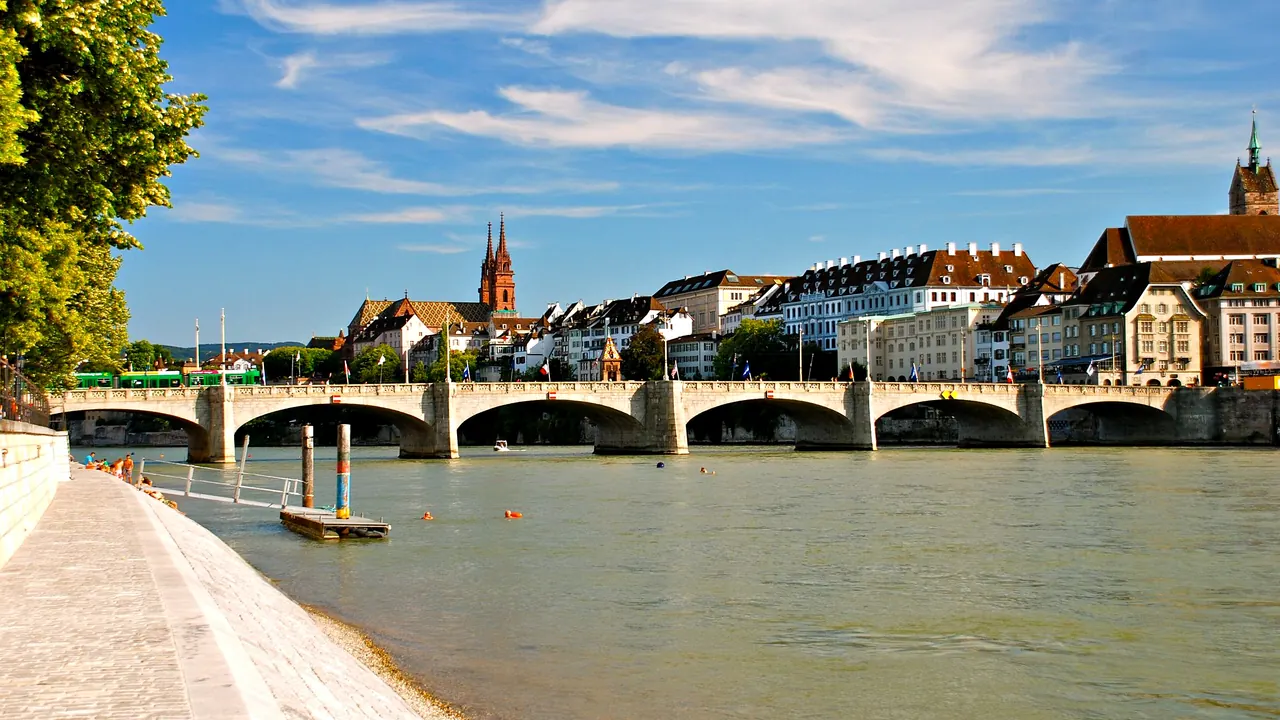
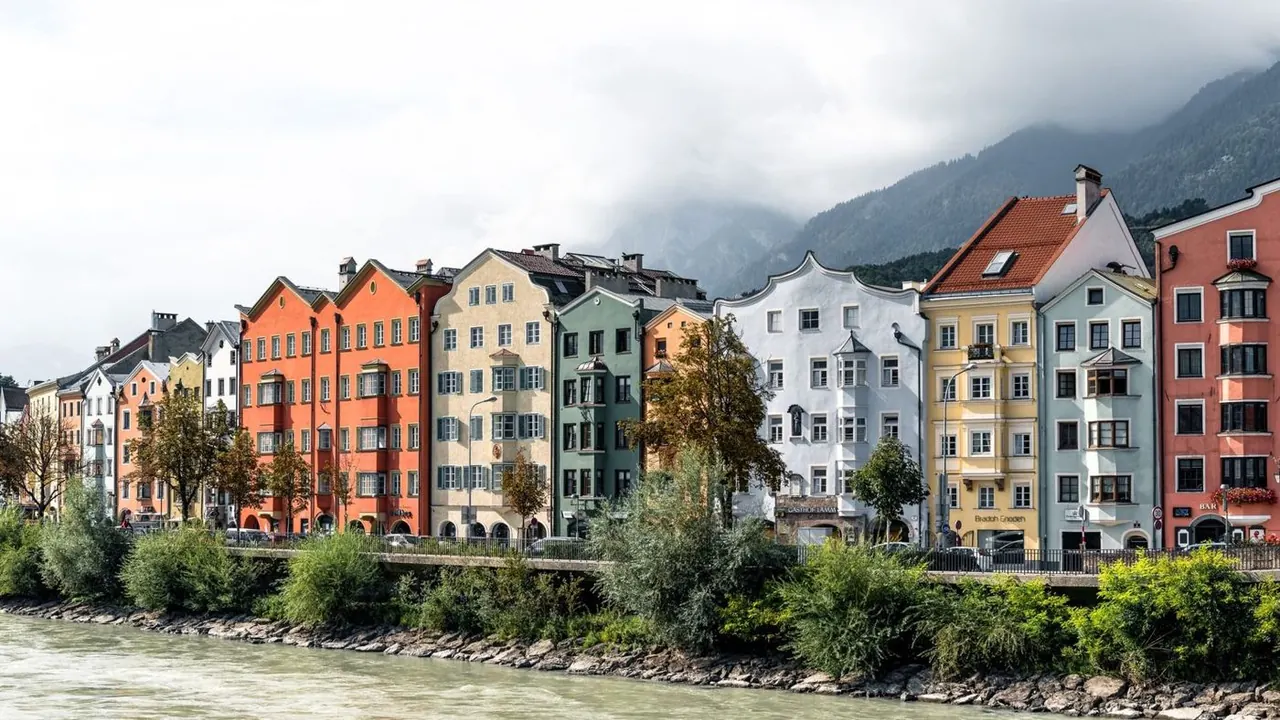
Photos: Basel by Lucazzitto, CC BY-SA 3.0, cropped; Innsbruck by Wolfgang Weiser, Pexels License.
Basel or Innsbruck?
Our verdict in twelve categories, each scored against the same fixed benchmark cities, and the climate month by month, so you can choose for your trip.
Choose Basel for
- live music and the arts
- beaches
- day trips
Basel is the choice for travellers who want art, music and easy movement. Its museums punch far above the city's size, from Holbein in the Kunstmuseum to the Fondation Beyeler, and Theater Basel and the Stadtcasino give the evenings real substance. Sitting on the borders of France and Germany, it makes a superb base for train day trips to Alsace, the Black Forest and the Swiss cities, and the free tram card makes the whole place effortless. The catch is the bill, which is among the steepest anywhere.
Choose Innsbruck for
- nature and the outdoors
- prices
Innsbruck belongs to people who want the mountains on the doorstep. A funicular from the edge of the old town connects with cable cars to a high ridge in under half an hour, and from there the Karwendel, ski areas, hut hikes and via ferratas open up. The Habsburg old town is compact and handsome, though thinner on great collections than Basel's. It costs a good deal less, and summer or winter it suits an active trip far better than a gallery-led one.
Scoreboard
Twelve categories on one fixed scale from 0 to 100. The shaded stretch is the gap between the two.
Your match
Pick a travel style or drag the sliders, and both match scores follow your weighting.
Too close to call, 2 points apart
Wins on live music and the arts and beaches with your weighting.
Wins on nature and the outdoors and prices with your weighting.
What matters to you?
Category by category
What the scores mean for a trip.
Beaches & swimming
Neither city has a beach, but Basel's summer swimming is the better part of daily life. Floating down the Rhine past the old town with a swim bag, then sunbathing on the gravel banks, is a ritual the whole city shares, though the current asks for confident swimmers.
Innsbruck's swimming means driving or taking a bus up to small plateau lakes such as the Lanser See, which warm up nicely in high summer, or the lovely but chilly Achensee. It is a pleasant afternoon out rather than part of the city's rhythm.
Food & drink
Basel eats a little better, mainly because of where it sits. Alsatian tarte flambée, Baden wines and Swiss-German cooking share the menus, the Markthalle and Marktplatz market give it a casual side, and a fine-dining tier sits above that.
Innsbruck's cooking is narrower and heartier: Gröstl, Kaspressknödel and Kaiserschmarrn, at their best in a mountain hut after a walk. In town there are coffee houses with strudel but no market culture, and the inns around the Golden Roof lean towards tour groups.
Culture & sights
Basel has the deeper cultural offer, built on world-class collections. The Kunstmuseum, the Beyeler in its Renzo Piano building and the Vitra Design Museum across the border give it a range of art Innsbruck cannot match, and the old town adds the red sandstone Münster, the painted Rathaus and modern Herzog & de Meuron buildings.
Innsbruck's strength is Habsburg history rather than art. The Golden Roof, the Hofburg and above all the Hofkirche with Maximilian's bronze figures are memorable, and Ambras Castle's cabinet of curiosities is a fine outing. It all fits into two or three days, a little less than Basel needs.
Nightlife
Both are quiet after dark, but in different ways. Basel's best evenings are outdoors in summer, drinking on the Kleinbasel steps by the river, plus a few clubs in harbour buildings, and in late winter Fasnacht takes over the streets for three days and nights from four in the morning.
Innsbruck's scene is student-driven, with bars and small clubs packed into the brick arches under the railway viaduct. In winter many visitors skip town altogether for après-ski in the surrounding resorts.
Nature & outdoors
This is Innsbruck's great advantage. High mountains rise straight from the city, with the Nordkette reached in under half an hour by funicular and cable car, the Karwendel nature park behind it and the Stubai Glacier holding snow for most of the year. Skiing, paragliding, mountain biking and hut-to-hut hiking all start within easy reach.
Basel's countryside is gentler. The Jura, the Black Forest and the Vosges offer good marked walks and some light skiing, and the flat Rhine paths are lovely for cycling into France and Germany, but it suits walkers rather than anyone after real Alpine terrain.
Day trips
Basel is the better base for days out, chiefly because its trips are short. Colmar and the Alsace wine villages, Freiburg, Lucerne, Bern and Zurich are each roughly an hour by train, and Augusta Raurica is a quarter of an hour away.
Innsbruck reaches three countries too, but the big names lie further off. Hall in Tirol and Rattenberg are close, while Munich, Salzburg and Bolzano take nearer two hours, and Neuschwanstein is easiest by car.
Good for families
Both are safe, clean and easy with children, and both hinge on a zoo. Basel's Zolli is one of Europe's best and a short walk from the station, the river ferries delight small children, and Europa-Park makes a big day out across the border.
Innsbruck's Alpenzoo shows only mountain animals and is reached by funicular, which is half the fun. Its real draw for families is the outdoors: hut playgrounds, plateau lakes for swimming and gentle ski slopes in winter, with rainy days harder to fill.
Getting around
Basel is simply the easier city to move around. Hotel guests ride the tram network free, some lines run into France and Germany, and the main station's direct trains mean day trips never need a car.
Innsbruck's flat centre is just as walkable, and the funicular to the Nordkette makes the mountains unusually accessible. For the remoter valleys and lakes, though, a car still helps.
Shopping & style
Basel has a little more to browse. Freie Strasse and Gerbergasse carry Swiss watches and chocolatiers, Spalenberg has small design and craft shops, and the Christmas market around the Münster is one of Switzerland's prettiest.
Innsbruck's shopping is about Tyrolean goods: loden jackets, dirndls, woodcarvings, Speck and schnapps in the old town arcades. Its outdoor and ski shops are the best reason to spend money here.
Affordability
Innsbruck is clearly the cheaper of the two, though it still carries Alpine resort prices, especially in ski season. Spring and autumn bring hotel rates down, and city cards that bundle transport, lifts and sights keep an active trip under control.
Basel costs full Swiss prices for everything, and rooms become scarce during trade fairs such as Art Basel. Free tram travel helps, and many visitors eat or even stay across the border in Germany or France to soften the bill.
Live music & performing arts
Basel has the more serious stage scene. Theater Basel is known well beyond Switzerland for bold opera, ballet and drama, and the Stadtcasino's fine acoustics serve two resident orchestras, though July and August are quiet.
Innsbruck's programme is solid but provincial, with the Tiroler Landestheater and the Tyrolean Symphony Orchestra. Its standout is the summer Festival of Early Music in settings like the Spanish Hall at Ambras Castle, so early-music lovers will find something in both cities.
Wellness & relaxation
Basel offers slightly better spa options, thanks to its borders. The saline thermal baths at Rheinfelden are about twenty minutes away, the German spa towns of southern Baden are close, and Sundays by the river are calm.
Innsbruck has no thermal springs of its own. Its wellness is the Alpine kind, with hotel saunas in Igls looking out on the peaks, and the large thermal complexes in the Ötztal and Zillertal lie about an hour away.
When should you go?
Pick your month. The climate figures are measured averages, not a forecast.
Basel in July
Innsbruck in July
Daytime high, °C
Rainfall in the month, mm
Temperature and rainfall are climate normals, averaged over the years shown. Basel: 1991-2020 (sunshine 1961-1990) normals, Basel / Binningen (1.9 km from centre). Innsbruck: 1991-2020 normals, Innsbruck-Flughafen (3.3 km from centre).
The two cities have almost the same temperatures all year. Both climb to about 26°C in July and cool to low single figures in mid-winter, so neither gets too hot for walking and both are good for sightseeing from May to September. The real difference is rain and sun. Innsbruck's summers are noticeably wetter, with afternoon storms in the mountains and about 144mm in August, while Basel stays drier and suits Rhine swimming from June to early September.
In winter the balance turns. Innsbruck gets far more sunshine from November to February, often above the valley fog, and that clear weather is what skiers want. Basel's winters are greyer and darker, with only about 53 hours of sun in December, though that is the season for its Christmas market and, later, Fasnacht. Spring and autumn are mild in both, and October is especially fine in Innsbruck for walking.
Which traveller are you?
On an outdoors trip, Innsbruck is in a different league. Cable cars lift you from the old town to Nordkette ridges, the Karwendel starts behind them, and summer brings hut hikes, via ferratas and rafting, while winter has several ski areas on one pass.
For a culture and arts trip, Basel is the stronger city. The Kunstmuseum, Fondation Beyeler, Museum Tinguely and Vitra campus make a rich museum circuit, and Theater Basel and the Stadtcasino fill evenings with opera, ballet and orchestral concerts from autumn to early summer.
On a trip with a tight budget, Innsbruck is the more realistic option, though neither is cheap. Basel carries full Swiss prices for rooms, meals and drinks. Innsbruck has student cafés, cheaper spring and autumn stays, and city cards that bundle transport with lifts.
Before you go
| Measure | Basel | Innsbruck |
|---|---|---|
| Official language | French, German, Italian, Romansh | German, Austrian Sign Language |
| Currency | Swiss Franc (CHF) | Euro (EUR) |
| Sockets | CJ230 V, 50 Hz | CF230 V, 50 Hz |
| Driving side | Right | Right |
| Time zone | UTC+1, UTC+2 in summer | UTC+1, UTC+2 in summer |
| Emergency number | 112 | 112 |
| Elevation | 247 m | 574 m |
| Main airport | EuroAirport Basel–Mulhouse–Freiburg (BSL)7 km from centre112 non-stop destinations | Innsbruck Airport (INN)4 km from centre40 non-stop destinations |
| Public holidays this year | 10 days | 16 days |
By the numbers
| Measure | Basel | Innsbruck |
|---|---|---|
| City population | 176,329 | 132,499 |
| People per km² | 7,378 | 1,263 |
| Museums within 10 km | 61 | 28 |
| UNESCO World Heritage sites within 50 km | 2 | 1 |
Where else could you go?
Every comparison below shares a destination with this one, so you can follow Basel or Innsbruck somewhere new.
- Colmarvs Basel
- Bernvs Basel
- Zurichvs Basel
- Lucernevs Basel
- Munichvs Innsbruck
- Cortina d'Ampezzovs Innsbruck