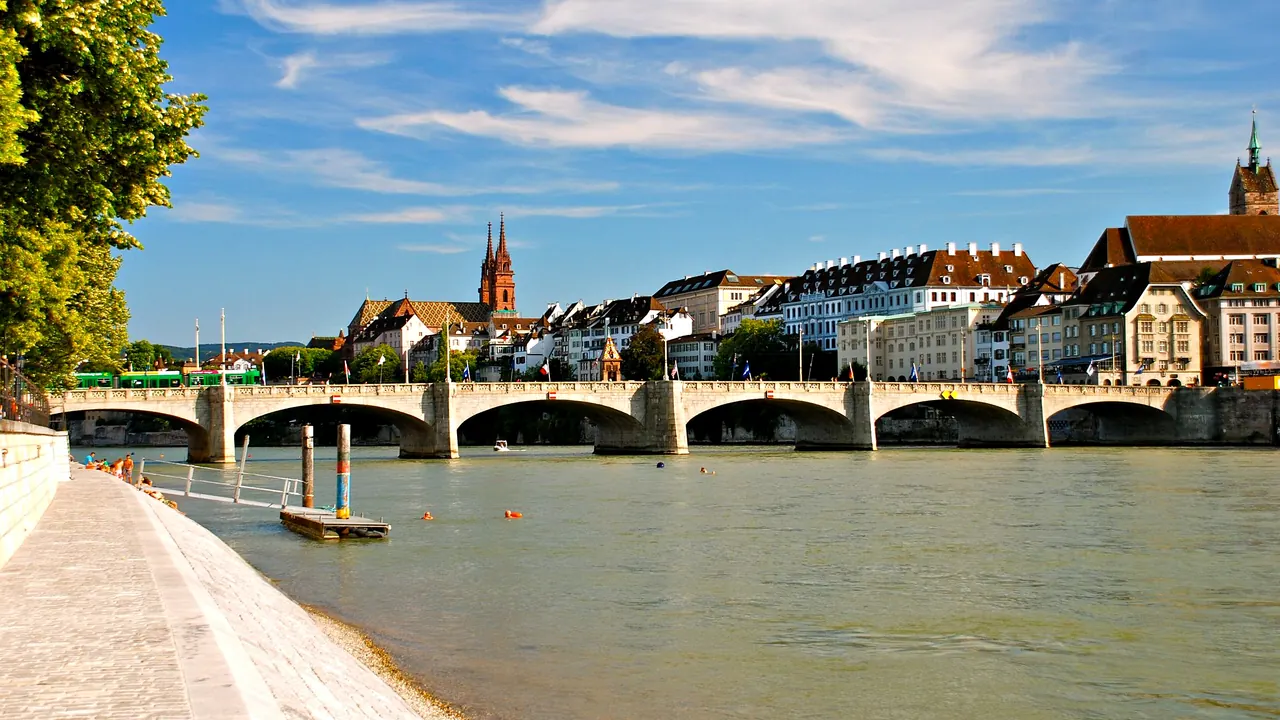
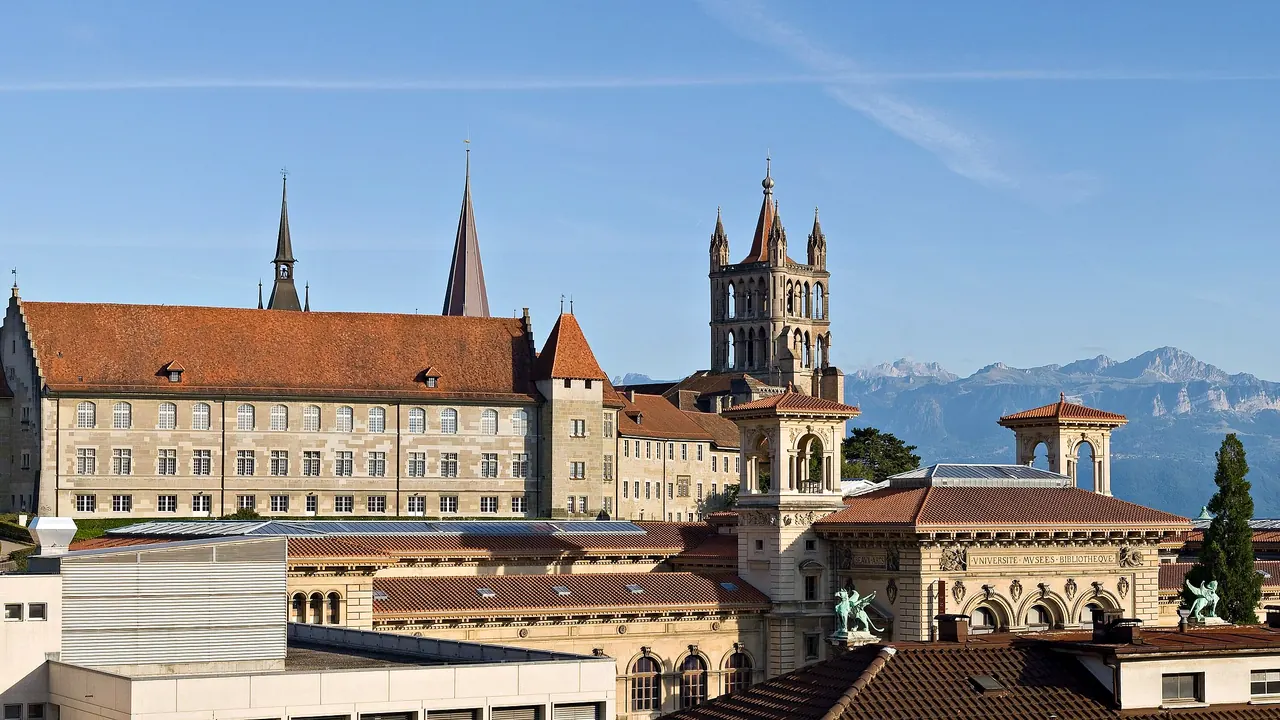
Photos: Basel by Lucazzitto, CC BY-SA 3.0, cropped; Lausanne by Christian Mehlführer, CC BY-SA 3.0, cropped.
Basel or Lausanne?
Our verdict in twelve categories, each scored against the same fixed benchmark cities, and the climate month by month, so you can choose for your trip.
Choose Basel for
- culture and sights
- getting around
- day trips
Basel is the better choice if museums and easy movement matter most. Its art collections reach far beyond what a city this size would suggest, from Holbein at the Kunstmuseum to the Fondation Beyeler and the Vitra campus, and the flat, walkable centre and dense tram network make a few days here unusually relaxed. Sitting on the borders of France and Germany, it also gives you Alsace, Freiburg and the Black Forest as easily as Bern or Lucerne.
Choose Lausanne for
- nature and the outdoors
- food and drink
- beaches
Lausanne suits travellers who want scenery around their city stay. The Alps rise across Lake Geneva, the Lavaux vineyard terraces start just east of town, and the Vaud Alps and the Jura are both about an hour away for hiking or skiing. It also eats and drinks a little better, thanks to Chasselas from the local growers and lake perch, though you pay for that with steep streets and a wetter climate.
Scoreboard
Twelve categories on one fixed scale from 0 to 100. The shaded stretch is the gap between the two.
Your match
Pick a travel style or drag the sliders, and both match scores follow your weighting.
Too close to call, 1 point apart
Wins on culture and sights and getting around with your weighting.
Wins on nature and the outdoors and food and drink with your weighting.
What matters to you?
Category by category
What the scores mean for a trip.
Beaches & swimming
Neither city has a beach, and summer swimming is about equally good in both, but the experience is very different. In Basel you join the locals floating down the Rhine past the old town, with your clothes in a waterproof bag, which is great fun but only for confident swimmers in a strong current.
Lausanne's swimming is calmer lake bathing from lawns, piers and pebble shores at Vidy, Bellerive and Lutry, with the Bellerive lido offering proper pools. The lake suits mixed groups and weaker swimmers better.
Food & drink
Lausanne has the edge at the table, mainly because of wine. Chasselas from the Lavaux terraces is served everywhere and you can taste it in the growers' village caveaux, alongside Vaudois dishes such as lake perch and papet vaudois, plus a strong top tier of restaurants around the city.
Basel cooks carefully but has fewer specialities of its own beyond Läckerli and Fasnacht flour soup. Its strength is its neighbours: tarte flambée from Alsace, Baden wines, and cheaper meals just across the border.
Culture & sights
Basel is the clear choice for culture. The Kunstmuseum's old public collection, the Fondation Beyeler in its Renzo Piano building and the Vitra campus over the German border give it depth that rewards three or four days. Herzog & de Meuron buildings sit comfortably beside the red sandstone Münster and the painted Rathaus.
Lausanne offers less, but it has a few memorable sights. Its Gothic cathedral, where a night watchman still calls the hours, crowns a steep old town. Among the museums, the Olympic Museum at Ouchy and the Collection de l'Art Brut stand out, and two or three days are enough.
Nightlife
Both cities offer a modest, expensive night out, but in different forms. Basel's best evenings are spent outdoors in summer, drinking on the steps by the riverside kiosks of Kleinbasel, and the city is transformed for three days at Fasnacht, its carnival, which starts at four in the morning.
Lausanne's large student population gives it more of a club scene, packed into the old warehouses of the Flon on weekend nights. On weeknights it goes quiet.
Nature & outdoors
Lausanne's setting is far more dramatic. The French Alps rise straight out of Lake Geneva in front of the city, the UNESCO-listed Lavaux terraces make a superb walk, and Villars, Leysin and Les Diablerets offer proper Alpine hiking and skiing within about an hour. There is also sailing, rowing and paddleboarding on the lake.
Basel's countryside is gentler but close at hand. The Jura, the Black Forest and the Vosges all suit walkers, and the flat Rhine paths make easy cycling into France and Germany. For high mountains, though, you need a couple of hours.
Day trips
Both are excellent bases for day trips by train. The difference is in the range. From Basel you can cross three countries: Colmar and the Alsace wine villages, Strasbourg, and Freiburg in Germany are all as easy to reach as Lucerne, Bern or the Rhine Falls.
Lausanne's day trips are mostly lakes and castles in French-speaking Switzerland: Montreux, the Château de Chillon, Gruyères, Geneva and walled Murten. Boats also cross the lake to Évian in France.
Good for families
Basel's family trip centres on one outstanding attraction, the Zolli, a short walk from the station and one of the best zoos in Europe. The toy museum and the Natural History Museum fill a wet morning, and the little Rhine ferries, pulled across by the current, are a treat for small children. Beyond that, the big outing is Europa-Park, about an hour away by car in Germany.
Lausanne has more for children: the hands-on Olympic Museum, the aquarium-vivarium on the city's northern edge, pedal boats and a wooden lookout tower in the Sauvabelin woods, and paddle steamers on the lake. Its lakeside lawns and pools also give children somewhere to swim, which Basel's strong river does not. The catch is the hills, which are hard going with a pushchair, while Basel's level streets and trams make getting about simple.
Getting around
Basel is the easier city to get around. It is flat, both banks of the Rhine are walkable, trams run everywhere, and hotel guests get free local transport. Some tram lines even cross into France and Germany.
Lausanne works well, but its gradient takes some effort. The city climbs in layers from the lake to the cathedral, and while the m2 metro covers the 300m climb, getting between stairs, bridges and lifts takes more planning than Basel's level streets.
Shopping & style
Neither city is worth the trip for shopping. Both offer the same Swiss staples of watches, jewellery and chocolate along a main street, Freie Strasse in Basel and Rue de Bourg in Lausanne.
The souvenirs are what really differ. Basel adds Läckerli and one of Switzerland's prettiest Christmas markets around the Münster, while Lausanne's best buy is a bottle of Lavaux wine from its market squares.
Affordability
In Basel the cheaper meal is often in another country. A short tram ride takes you into Germany or France, where restaurants and shops cost less, and many visitors sleep across the border too. Hotel guests also travel free on local transport. Rooms are scarce during big trade fairs such as Art Basel.
Lausanne has no border on its doorstep, so saving money there means making the most of what costs nothing. You can picnic on supermarket and bakery food along the promenades at Ouchy and Vidy, spend time in the parks and walk through the Lavaux vines. A glass of Chasselas in a village caveau is the best-value treat. Rooms, meals and drinks cost Swiss prices in either city.
Live music & performing arts
Basel's strength is opera and orchestral music. Theater Basel stages opera, ballet and drama under one roof and is known for bold productions. The Sinfonieorchester Basel plays in the Stadtcasino, a hall with fine acoustics, and the city's long early-music tradition adds historical concerts. The season goes quiet in July and August.
Lausanne is above all a dance city. It is home to the Béjart Ballet Lausanne and the Prix de Lausanne competition for young dancers, and the lakeside Théâtre de Vidy stages contemporary work that tours across Europe. Summer is covered too, because the Montreux Jazz Festival is a short train ride along the lake in July.
Wellness & relaxation
Neither city has a bathing tradition of its own, but both have thermal water nearby. From Basel you reach the saline baths of Rheinfelden in about twenty minutes, and German-style spa towns such as Badenweiler and Bad Krozingen sit just over the border. The city's quiet Sundays set an easy pace.
From Lausanne, the thermal waters are at Yverdon-les-Bains and at Lavey-les-Bains, which has the hottest springs in Switzerland. The grand lakeside hotel spas and the Lavaux vineyard lanes offer calm close by, though the centre itself feels busier.
When should you go?
Pick your month. The climate figures are measured averages, not a forecast.
Basel in July
Lausanne in July
Daytime high, °C
Rainfall in the month, mm
Where the figures come from
Lausanne's temperatures are measured 40 km from the centre, at Payerne.
Lausanne has no rain gauge within 25 km of the centre, so its rainfall comes from a gridded climate dataset read at the city rather than from a gauge further away.
Temperature and rainfall are climate normals, averaged over the years shown. Basel: 1991-2020 (sunshine 1961-1990) normals, Basel / Binningen (1.9 km from centre). Lausanne: 1991-2020 (sunshine 1961-1990) normals, Payerne (39.7 km from centre).
Through the year the two cities are almost identical in temperature. Both are cold and grey from November to February and reach about 26°C in July, so June to early September is the season for river or lake swimming and for long evenings outdoors. Late spring and early autumn are comfortable for walking in either city, and neither gets too hot to explore in summer.
Rain is the real difference. Basel is clearly drier, especially in winter, with around 43mm in January against about 86mm in Lausanne, and Lausanne stays wetter in every month of the year. Lausanne gets a little more summer sunshine, though, and its gloomy winter fog often clears in the mountains above. For a winter city break Basel is the more reliable pick, while Lausanne is at its best from May to September.
Which traveller are you?
On a culture and arts trip, Basel is the stronger pick. The Kunstmuseum, the Fondation Beyeler, the Museum Tinguely and the Vitra Design Museum make a remarkable set for a small city, and the guild-house lanes around the Münster add a well-kept medieval centre.
For an outdoors trip, Lausanne wins clearly. You can walk the Lavaux terraces between Lutry and Saint-Saphorin, sail or paddleboard on the lake, and reach Alpine hiking, skiing and Glacier 3000 within about an hour. Basel's Jura and Black Forest walks are gentler.
For a short city break, Basel is the easier choice. Its compact, flat old town and free transport card for hotel guests mean no time is lost on hills, and its major museums fill two or three days without any planning.
Before you go
| Measure | Basel | Lausanne |
|---|---|---|
| Official language | French, German, Italian, Romansh | French, German, Italian, Romansh |
| Currency | Swiss Franc (CHF) | Swiss Franc (CHF) |
| Sockets | CJ230 V, 50 Hz | CJ230 V, 50 Hz |
| Driving side | Right | Right |
| Time zone | UTC+1, UTC+2 in summer | UTC+1, UTC+2 in summer |
| Emergency number | 112 | 112 |
| Elevation | 247 m | 495 m |
| Main airport | EuroAirport Basel–Mulhouse–Freiburg (BSL)7 km from centre112 non-stop destinations | Geneva International Airport (GVA)52 km from centre150 non-stop destinations |
| Public holidays this year | 10 days | 9 days |
By the numbers
| Measure | Basel | Lausanne |
|---|---|---|
| City population | 176,329 | 144,873 |
| People per km² | 7,378 | 3,499 |
| Museums within 10 km | 61 | 31 |
| UNESCO World Heritage sites within 50 km | 2 | 3 |
Where else could you go?
Every comparison below shares a destination with this one, so you can follow Basel or Lausanne somewhere new.