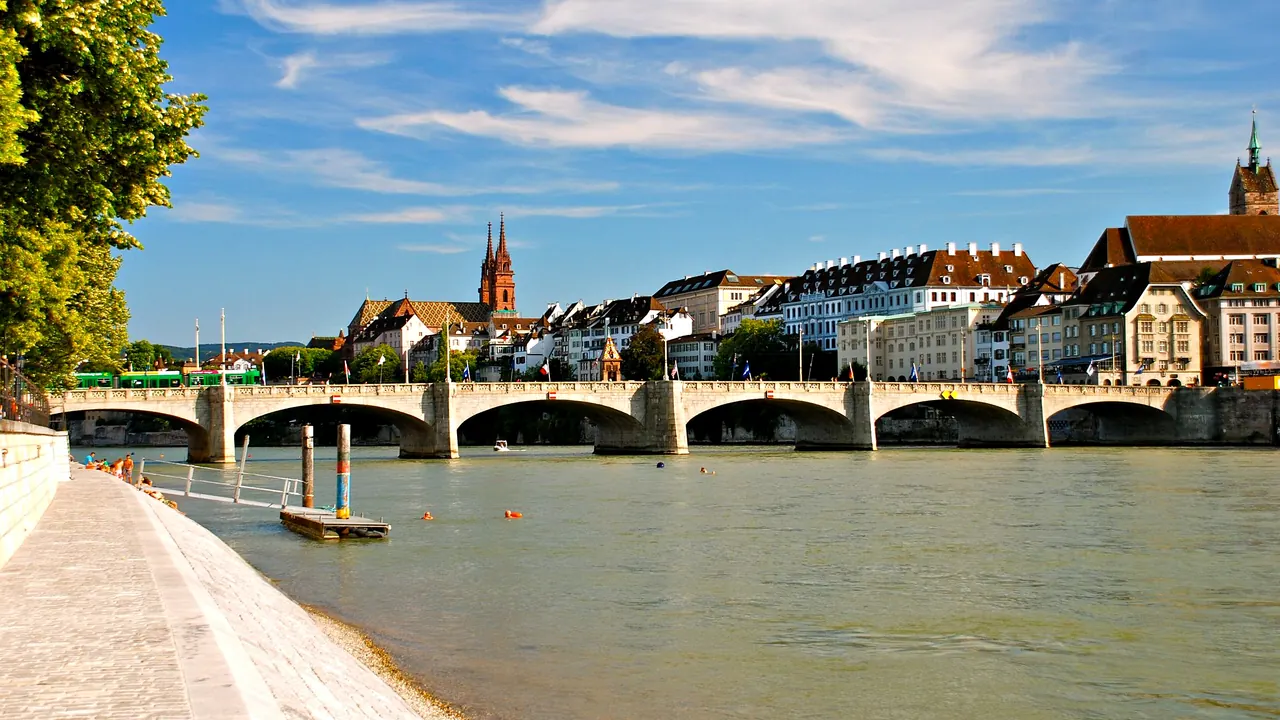
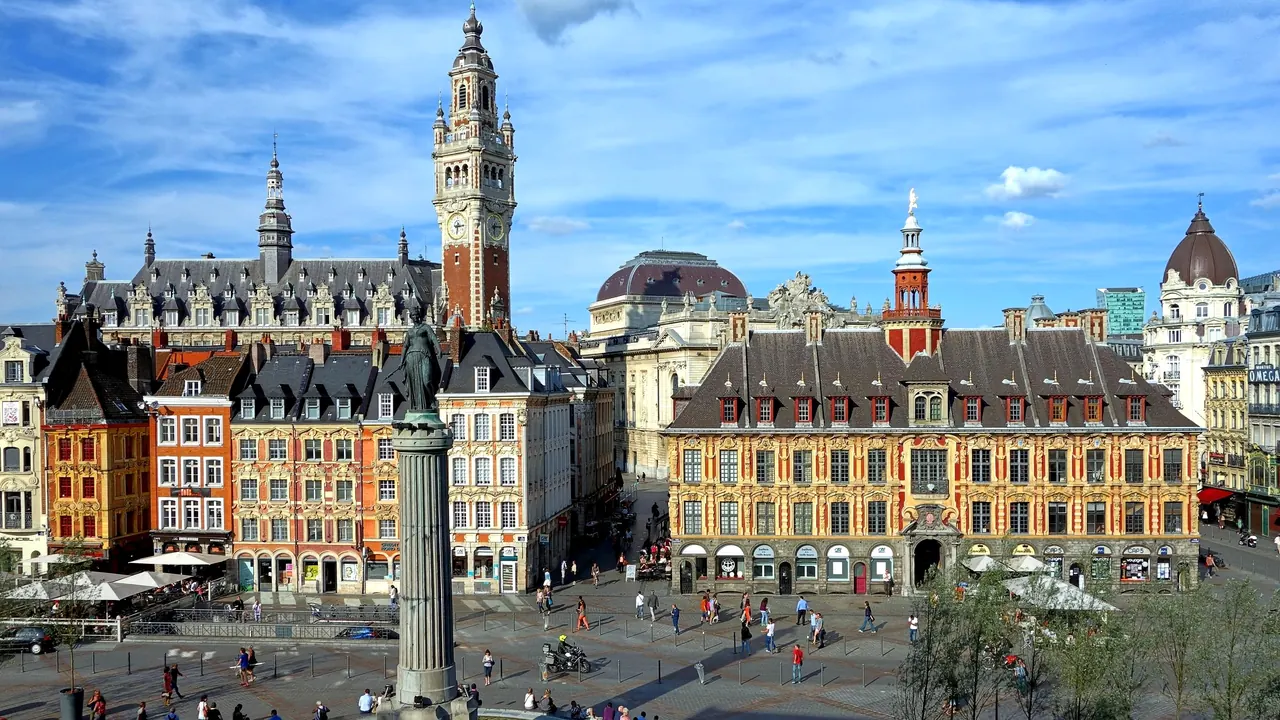
Photos: Basel by Lucazzitto, CC BY-SA 3.0, cropped; Lille by Velvet, CC BY-SA 3.0, cropped.
Basel or Lille?
Our verdict in twelve categories, each scored against the same fixed benchmark cities, and the climate month by month, so you can choose for your trip.
Choose Basel for
- nature and the outdoors
- wellness
- beaches
Basel suits the traveller who puts art, music and scenery first and can live with Swiss prices. Its museums go far beyond what a city its size usually offers. The Jura, the Black Forest and the Vosges are all close, and in summer floating down the Rhine gives it an outdoor life Lille cannot offer. Trams, trains and calm streets make every day easy, and the thermal baths at Rheinfelden are twenty minutes away.
Choose Lille for
- prices
- nightlife
- shopping
For anyone watching the budget or planning evenings around food and drink, Lille is the better pick. Its Flemish estaminet cooking, its Belgian and northern French beer and its large student crowd make the nights livelier. Its shops have more depth, and the whole stay costs far less. With Brussels, Bruges and Paris all within about an hour, it also works well as the hub of a wider trip through Flanders.
Scoreboard
Twelve categories on one fixed scale from 0 to 100. The shaded stretch is the gap between the two.
Your match
Pick a travel style or drag the sliders, and both match scores follow your weighting.
Too close to call, 2 points apart
Wins on nature and the outdoors and wellness with your weighting.
Wins on prices and nightlife with your weighting.
What matters to you?
Category by category
What the scores mean for a trip.
Beaches & swimming
Neither city has a beach, but Basel has the better answer to a hot day: the Rhine float. You walk upstream with a swim bag and drift back past the old town on the current, from about June to early September. It is strong water for confident swimmers, not a sandy afternoon.
Lille's nearest swim is the North Sea at Malo-les-Bains, an hour away by train, where the water stays cool even in August and the wind is usually up. The Opal Coast dunes are for walking and sand yachting, so the coast is a bracing day out rather than time on the beach.
Food & drink
Lille has a cuisine of its own, while Basel largely borrows one. In the wood-panelled estaminets of Vieux-Lille you eat carbonnade cooked in beer, potjevleesch, waterzooi and Maroilles tart, mostly with Belgian and northern French ales. The Sunday market at Wazemmes adds a multi-ethnic side.
Basel cooks carefully, and its small top tier of fine dining is stronger than Lille's. Everyday menus, though, are Alsatian and Swiss-German, the local specialities come down to Läckerli and the Fasnacht flour soup, and ordinary meals feel pricey for what arrives. Locals often cross into Alsace or Baden to eat.
Culture & sights
Both cities have a handsome old town and a major art museum, but Basel has many more great collections. The Kunstmuseum's Holbeins, the Fondation Beyeler in its Renzo Piano building, the Museum Tinguely and the Vitra campus over the border run from Old Masters to modern design. Around them stand the red sandstone Münster, the painted Rathaus and modern buildings by Herzog & de Meuron.
Lille's strength is concentrated in the Palais des Beaux-Arts, with its Flemish masters and relief maps, and in the Flemish baroque brick of Vieux-Lille and the Vieille Bourse. La Piscine in Roubaix is a memorable extra. Lille fills two or three days, and Basel needs three or four.
Nightlife
Lille goes out more. Its huge student population packs the cheap bars of Rue Masséna and Rue Solférino on Thursday nights. The cellar bars and beer cafés of Vieux-Lille suit a slower evening, and Belgium is close for later nights.
Evenings in Basel are quieter and more expensive: summer drinks on the steps of the Kleinbasel bank, bars around the Kaserne, and a few weekend clubs in old harbour buildings. Its trump card is Fasnacht in late winter, three days of drums, piccolos and lantern processions that start at four in the morning. It is worth timing a trip around.
Nature & outdoors
Basel is far better placed for the outdoors. The Jura ridges begin at the city's edge, the Black Forest summits rise above 1,400m within an hour, and the Vosges lie to the west. All three have marked trails, and flat Rhine paths make for easy cycling into Germany and France.
Lille sits in flat, farmed Flanders, so time outdoors means the green loop of the Citadel park, canal towpaths and short walks on low hills such as Mont des Cats. The chalk cliffs of Cap Blanc-Nez and Cap Gris-Nez are the one dramatic landscape, and they take a long day.
Day trips
Both are outstanding bases, and the difference lies in where they point. Lille is the base for cities. Brussels is about half an hour away, Ghent, Bruges and Antwerp follow close behind, and Paris, or even London for the determined, is in reach. Amiens cathedral, the squares of Arras and the First World War battlefields round out the list.
Basel offers more of a mix of towns and countryside. Colmar and the Alsace wine villages, Freiburg and the Black Forest, and Lucerne, Bern and Zurich are all about an hour away. The Roman ruins of Augusta Raurica are almost on the doorstep, and the Rhine Falls a little further.
Good for families
Basel is the easier city for a family, above all because of the Zolli, one of Europe's best zoos and a short walk from the station. Children also get the Rhine ferries pulled across by the current, the toy museum and a free animal park in the Lange Erlen. Trams take prams easily, though the river is too strong for small children and the prices add up.
In Lille, the Citadel park makes a good morning, with its small zoo, playgrounds and flat paths for scooters, and the Forum des Sciences helps on a wet day. The cobbles of Vieux-Lille are hard going with a pushchair, though, and the bigger outings, a large Belgian zoo park and the Nausicaá aquarium at Boulogne, mean a day out of town.
Getting around
Basel's green trams are the thing to envy. The network is dense, some lines carry on into Germany and France, and hotel guests ride free, so you rarely think about tickets. The four river ferries make crossing the Rhine part of the day, and the main station has direct trains across Switzerland and into both neighbouring countries.
Lille is just as easy on foot, with a flat, compact centre linking the Grand Place, Vieux-Lille and the Palais des Beaux-Arts. Lille Flandres and Lille Europe stand side by side near the old town, so setting off for the day is quick. Beyond the centre, though, there are only the two lines of the VAL, the world's first fully automated metro, and the tram to Roubaix and Tourcoing. They serve the metropolitan area but do not reach into the neighbouring country the way Basel's trams do.
Shopping & style
Lille has more to offer a shopper. Chains line Rue Neuve, the Euralille mall stands by the stations, and the narrow streets of Vieux-Lille hold independent fashion, design shops and delicatessens. In early September the Braderie turns the whole city into a vast flea market.
Basel is tidier and smaller. Freie Strasse and Gerbergasse have watches, jewellery and chocolatiers, and there are a few design shops around Spalenberg and a pretty Christmas market by the Münster. Many locals do their high-street shopping in Germany.
Affordability
Price is the widest gap between the two. Basel costs what Switzerland costs, from hotel rooms to museum tickets, and rooms become scarce during fairs such as Art Basel. Free trams for hotel guests and cheaper meals over the border only soften the bill.
Lille costs what any city in France does. Rooms are reasonable most of the year, estaminet meals and beer are fairly priced, the metro is inexpensive and the museums go easy on a budget. It is comfortable rather than cheap, but you feel the difference from Basel at every meal.
Live music & performing arts
Basel has the stronger stage. Theater Basel puts on opera, ballet and drama known well beyond Switzerland for bold productions. The Stadtcasino, with its fine acoustics, is home to the Sinfonieorchester Basel and hosts the Kammerorchester Basel, and a long early-music tradition adds historical concerts. July and August are quiet.
Lille offers a dependable programme rather than a reason to travel: the Opéra on the Place du Théâtre, the Orchestre National de Lille and the Théâtre du Nord. It covers more ground in rock and pop, with touring acts at the Zénith and the Aéronef.
Wellness & relaxation
Basel is the calmer city and the better base for a spa day. The saline thermal baths at Rheinfelden are twenty minutes away, and the German spa towns of southern Baden are just over the border. Quiet Sundays and the riverbank suit an unhurried stay.
Lille offers hotel spas, tea rooms and café terraces, with the thermal baths of Saint-Amand-les-Eaux a short train ride away. Its pace is easygoing, but it is not a place that sends you home rested.
When should you go?
Pick your month. The climate figures are measured averages, not a forecast.
Basel in July
Lille in July
Daytime high, °C
Rainfall in the month, mm
Temperature and rainfall are climate normals, averaged over the years shown. Basel: 1991-2020 (sunshine 1961-1990) normals, Basel / Binningen (1.9 km from centre). Lille: 1991-2020 normals, Lille (7.8 km from centre).
Basel has the warmer, sunnier summer. July reaches about 26°C, against 24°C in Lille, and from June to early September the Rhine is warm enough for the river float. The cost is rain. Basel's wettest stretch runs from May to August, peaking at about 96mm in May, so summer days often end in showers. Spring and September are the comfortable months for walking the old town and hiking in the hills nearby.
Lille is milder and more even. Its summers are pleasant for walking but rarely hot, and its rain is spread through the year, with the heaviest months in late autumn and winter, up to about 76mm in December. From November to February both cities are cold. Basel is the colder of the two, with January highs of about 5°C, but it also gets more sunshine in each of those months, so its winter days tend to be brighter. For both cities, late spring to early autumn is the time to go.
Which traveller are you?
On a trip on a tight budget, Lille is the clear choice. Rooms, estaminet meals, beer and the metro all cost what they do in urban France. Basel charges Swiss prices for everything, and free trams for hotel guests barely dent the total.
For a food and nightlife trip, Lille again comes out ahead. It has Flemish cooking in wood-panelled taverns, a deep beer culture and a big student crowd filling the bars. Outside Fasnacht, Basel's modest and expensive scene offers nothing like those evenings.
On an outdoors trip, choose Basel. The Jura, the Black Forest and the Vosges are all within about an hour, with marked trails, winter walks and Rhine cycle paths. Lille's flat Flemish farmland offers little beyond parks, towpaths and low hills.
Before you go
| Measure | Basel | Lille |
|---|---|---|
| Official language | French, German, Italian, Romansh | French |
| Currency | Swiss Franc (CHF) | Euro (EUR) |
| Sockets | CJ230 V, 50 Hz | CE230 V, 50 Hz |
| Driving side | Right | Right |
| Time zone | UTC+1, UTC+2 in summer | UTC+1, UTC+2 in summer |
| Emergency number | 112 | 112 |
| Elevation | 247 m | 17 m |
| Main airport | EuroAirport Basel–Mulhouse–Freiburg (BSL)7 km from centre112 non-stop destinations | Lille Airport (LIL)8 km from centre61 non-stop destinations |
| Public holidays this year | 10 days | 11 days |
By the numbers
| Measure | Basel | Lille |
|---|---|---|
| City population | 176,329 | 238,246 |
| People per km² | 7,378 | 6,846 |
| Museums within 10 km | 61 | 23 |
| UNESCO World Heritage sites within 50 km | 2 | 6 |
Where else could you go?
Every comparison below shares a destination with this one, so you can follow Basel or Lille somewhere new.