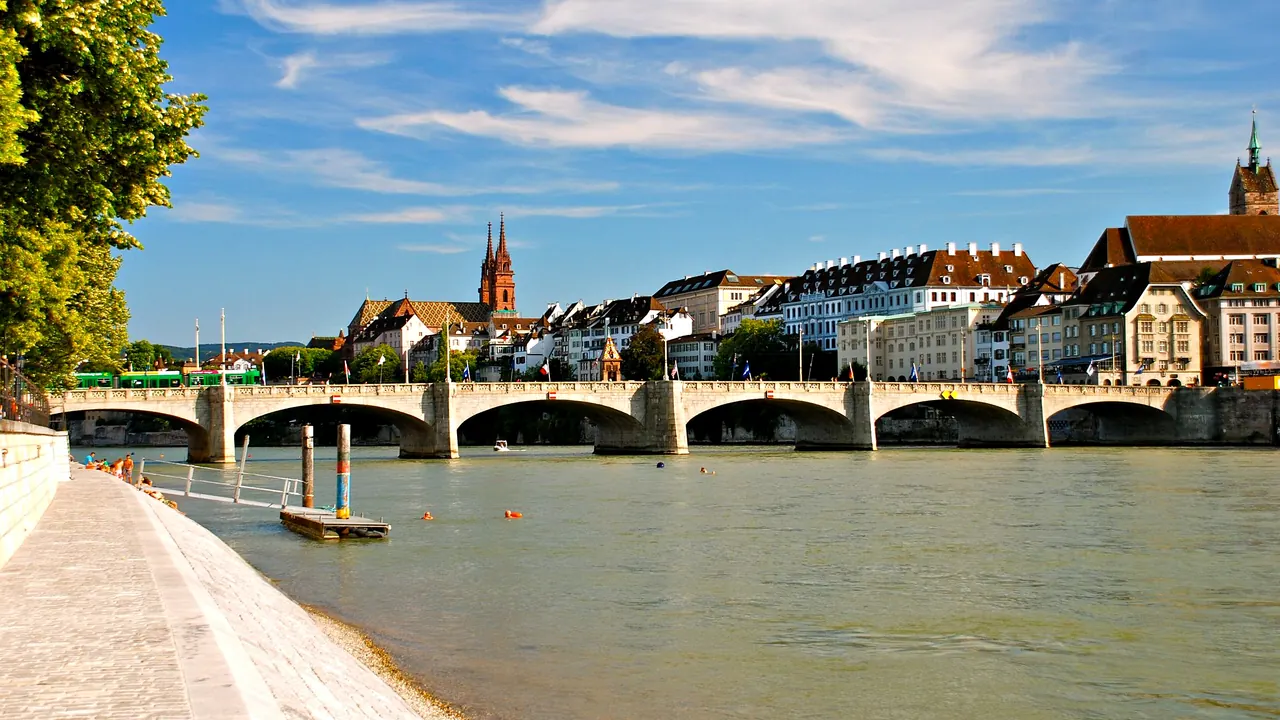
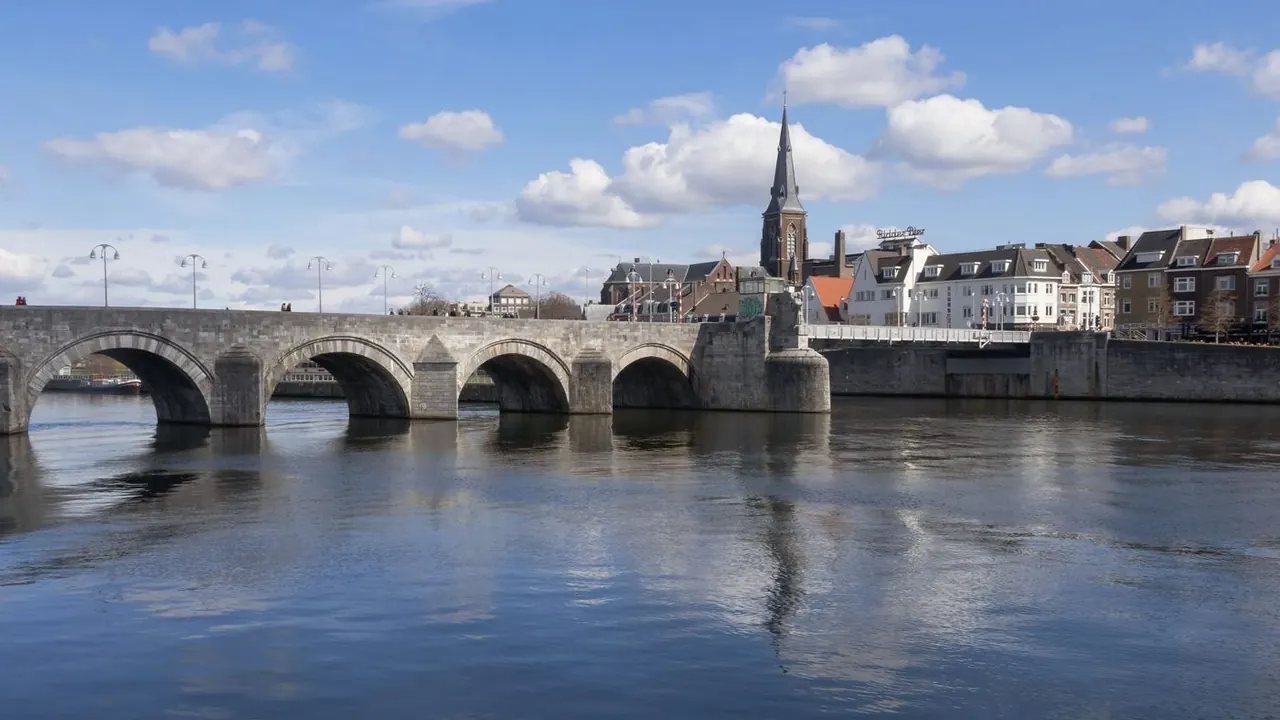
Photos: Basel by Lucazzitto, CC BY-SA 3.0, cropped; Maastricht by Michielverbeek, CC BY-SA 4.0, cropped.
Basel or Maastricht?
Our verdict in twelve categories, each scored against the same fixed benchmark cities, and the climate month by month, so you can choose for your trip.
Choose Basel for
- beaches
- live music and the arts
- getting around
Basel is the better pick for travellers who plan their days around art and music. Its museums, led by the Kunstmuseum and the Fondation Beyeler, and its opera and concert halls are well above what a city this small usually offers. Fast trains then carry you to Alsace, the Black Forest or central Switzerland. The city is easy to get around, and in summer you can float down the Rhine past the old town. The catch is cost: you need a budget that can take Swiss prices.
Choose Maastricht for
- prices
- shopping
- food and drink
Maastricht suits a slower, cheaper weekend built around tables and terraces. Limburg cooking, Belgian beer in brown cafés and the boutiques of the Stokstraat quarter are the main pleasures, and the Romanesque centre takes two easy days to see. Aachen and Liège are close enough for a half-day each, and the bills, while still Northern European, are noticeably gentler than Basel's.
Scoreboard
Twelve categories on one fixed scale from 0 to 100. The shaded stretch is the gap between the two.
Your match
Pick a travel style or drag the sliders, and both match scores follow your weighting.
Wins on beaches and live music and the arts with your weighting.
Wins on prices and shopping with your weighting.
What matters to you?
Category by category
What the scores mean for a trip.
Beaches & swimming
Neither city has a beach, but Basel offers an experience in summer that Maastricht cannot match. On warm afternoons people walk upstream along the Kleinbasel bank, drop into the Rhine with waterproof swim bags and drift back past the Münster, then sunbathe on the gravel banks. The current is strong, so this is for confident swimmers.
Maastricht's version is far more modest: lifeguarded gravel-pit lakes along the Maas with small sandy shores, fine for an afternoon and no more.
Food & drink
Basel feeds you well but gives you little to travel for. It has hardly any dishes of its own beyond Läckerli biscuits and the browned-flour soup of Fasnacht, so its menus borrow tarte flambée and choucroute from Alsace and wines from Baden. Everyday restaurants can feel pricey for what arrives. The Markthalle and the Marktplatz market are the best casual stops, and many locals simply cross the border to eat in the wine villages.
Maastricht gives you more reason to plan your days around meals. Limburg cooking brings sweet-sour zuurvlees with fries, vlaai in every bakery and asparagus and game in season, with Belgian beer in the brown cafés and white wine from the nearby hillsides. Terraces on the Vrijthof and the Markt set the scene, though beyond regional cooking the choice is narrow and there is little street food.
Culture & sights
Basel is the deeper museum city by some distance. The Kunstmuseum's Holbeins and Old Masters, the Fondation Beyeler in its Renzo Piano building, the Museum Tinguely and the Vitra Design Museum add up to three or four full days. The red sandstone Münster, the painted Rathaus and buildings by Herzog & de Meuron give the streets character too.
Maastricht's strength is age rather than collections. It has two Romanesque basilicas, the Helpoort gate, medieval walls along the Jeker and guided tours of the tunnels inside the Sint-Pietersberg. The Bonnefanten is its one major museum, and two days covers the city well.
Nightlife
Both cities are quiet after dark, but in different ways. Basel's best evenings are in summer at the riverside kiosks on the Kleinbasel bank, with bars around the Kaserne and a few electronic clubs in old harbour and industrial buildings, all at Swiss prices. Maastricht is a café town, and its large student population keeps the brown cafés around the Markt and Platielstraat full late at weekends during term.
Each city has one great exception in late winter. Basel's Fasnacht starts at four in the morning with piccolos, drums and lanterns. Maastricht's carnival is a round-the-clock street party in costume before Lent.
Nature & outdoors
Basel's hills are higher, and they lie in three directions. The wooded Jura starts just south of the city and the Vosges lie to the west. The Black Forest is within an hour, with summits such as the Feldberg above 1,400m and some light skiing in winter. Flat Rhine paths make easy cycling into Germany and France, though the real Alps are a couple of hours away.
Maastricht's countryside is lower and more pastoral, and it starts at the edge of town with the marl cliffs of the Sint-Pietersberg and the green Jeker valley. The Heuvelland adds sunken lanes, orchards and the short steep climbs road cyclists know from the spring classics, and the heath of Hoge Kempen is half an hour away. Spring and early autumn show it at its best.
Day trips
Basel has the richer choice, spread over three countries and well served by fast trains. Colmar and the Alsace wine villages, Freiburg's minster, Lucerne, Bern and Zurich each take about an hour, and Strasbourg a little longer. Roman Augusta Raurica and Rheinfelden are only a short hop away. Add the Rhine Falls and a long stay can have a different outing every day.
Maastricht's outings are closer to hand but fewer. Aachen's cathedral and Liège are about half an hour away, and Tongeren and Valkenburg are nearer still. Cologne, Brussels and Leuven take closer to two hours, and smaller places such as Thorn are easier to reach by car.
Good for families
Basel gives children more to do inside the city. The Zolli, one of Europe's best zoos, is a short walk from the station, the current-driven Rhine ferries delight younger children, and the toy and natural history museums cover rainy days. Europa-Park is the big outing, about an hour away.
Maastricht is just as safe and easy with a buggy, but its own attraction for children is mainly the tunnel tour. The rest lies outside the city, in Valkenburg's caves, cable car and fairy-tale park and the zoo in Kerkrade, and the city's real pleasures suit adults.
Getting around
Basel is the smoother city to move around. Green trams reach every district and even cross into Germany and France, hotel guests ride them free, and the main station sends direct trains in three directions, so you never need a car.
Maastricht is compact and flat, with almost everything within a fifteen-minute walk and bikes the natural way to get about. Its weakness is the countryside, where buses are limited and a car or bike makes the hill villages far easier to reach.
Shopping & style
Maastricht is the place to shop, and weekend visitors from three countries come here for it. The Stokstraat quarter's 17th- and 18th-century houses hold designer boutiques, the Grote Staat has the main brands, and Wyck has independent interiors, vintage and food shops.
Basel's offer is narrower: Swiss watches, jewellery and chocolate along Freie Strasse and Gerbergasse, a few design shops on Spalenberg and one of Switzerland's prettier Christmas markets around the Münster.
Affordability
Maastricht costs clearly less. Prices are around the Dutch norm and below those of the big Dutch cities, you will rarely pay for transport, and staying from Sunday to Thursday avoids the weekend rush on rooms.
Basel is one of the costliest places you could choose. Hotels, meals, drinks and museum tickets are all priced at Swiss levels, and rooms become scarce during trade fairs such as Art Basel. The free transport card helps, and many visitors eat or even stay across the border in Germany or France.
Live music & performing arts
Basel has the more serious stage. Theater Basel is known well beyond Switzerland for bold opera, ballet and drama, the Stadtcasino's fine acoustics serve two resident orchestras, and early-music concerts add something unusual. Bear in mind that the season goes quiet in July and August.
Maastricht's scene centres on the theatre on the Vrijthof, with regional orchestra and opera, organ and choral concerts in the churches and conservatory recitals. Its distinctive moment is the summer, when the Vrijthof becomes an open-air arena for large concerts.
Wellness & relaxation
The two are level here. Neither has its own bathing culture, and both rely on spas a short trip away. From Basel you can reach the saline baths at Rheinfelden in twenty minutes, the German-style spa towns of southern Baden and Baden-Baden for a longer day. From Maastricht there is the thermal spa above Valkenburg, Aachen's Roman-era baths and the Belgian town of Spa itself.
The day-to-day calm feels different. Basel offers quiet Sundays and riverside idling, Maastricht long lunches on its squares and walks along the Jeker.
When should you go?
Pick your month. The climate figures are measured averages, not a forecast.
Basel in July
Maastricht in July
Daytime high, °C
Rainfall in the month, mm
Temperature and rainfall are climate normals, averaged over the years shown. Basel: 1991-2020 (sunshine 1961-1990) normals, Basel / Binningen (1.9 km from centre). Maastricht: 1991-2020 normals, Maastricht Airport Zuid Limburg (10 km from centre).
The two climates are close, but Basel is a little warmer and clearly sunnier in high summer. July reaches about 26°C in Basel against 24°C in Maastricht, and from June to early September Basel is warm enough to float down the Rhine. Late spring and summer are Basel's wettest stretch, with May the wettest month of all, though the long sunny days of June and July make up for the showers. In Maastricht the rain is spread more evenly through the year and peaks in August.
Spring is where Maastricht has the edge. April is its driest month at 41mm, and the mild days suit walking and cycling in the hills of South Limburg. September and early October are pleasant in both cities for walking the streets. In winter Basel has the advantage. From December to February both stay around 5 to 7°C by day, but Basel is noticeably drier while Maastricht gets steadier rain. In either city a winter visit is for museums and cafés rather than long walks.
Which traveller are you?
On a culture and arts trip, Basel is the stronger choice. The Kunstmuseum, the Fondation Beyeler, the Museum Tinguely and the Vitra campus fill several days, and Theater Basel and the Stadtcasino give you opera, ballet and orchestral concerts in the evenings.
For a trip on a tight budget, Maastricht is far easier to manage. Hotels, meals and drinks cost the Dutch norm rather than Swiss prices, the walkable centre means you hardly spend on transport, and bakery lunches and café beers stay modest.
On a shopping trip, choose Maastricht. The restored houses of the Stokstraat quarter hold fashion boutiques, Wyck adds independent interiors and vintage shops, and the Markt has a weekly market. Basel's shopping is mostly watches, chocolate and the usual chains.
Before you go
| Measure | Basel | Maastricht |
|---|---|---|
| Official language | French, German, Italian, Romansh | Dutch |
| Currency | Swiss Franc (CHF) | Euro (EUR) |
| Sockets | CJ230 V, 50 Hz | CF230 V, 50 Hz |
| Driving side | Right | Right |
| Time zone | UTC+1, UTC+2 in summer | UTC+1, UTC+2 in summer |
| Emergency number | 112 | 112 |
| Elevation | 247 m | 49 m |
| Main airport | EuroAirport Basel–Mulhouse–Freiburg (BSL)7 km from centre112 non-stop destinations | Maastricht Aachen Airport (MST)9 km from centre5 non-stop destinations |
| Public holidays this year | 10 days | 11 days |
By the numbers
| Measure | Basel | Maastricht |
|---|---|---|
| City population | 176,329 | 120,227 |
| People per km² | 7,378 | 2,000 |
| Museums within 10 km | 61 | 21 |
| UNESCO World Heritage sites within 50 km | 2 | 6 |
Where else could you go?
Every comparison below shares a destination with this one, so you can follow Basel or Maastricht somewhere new.