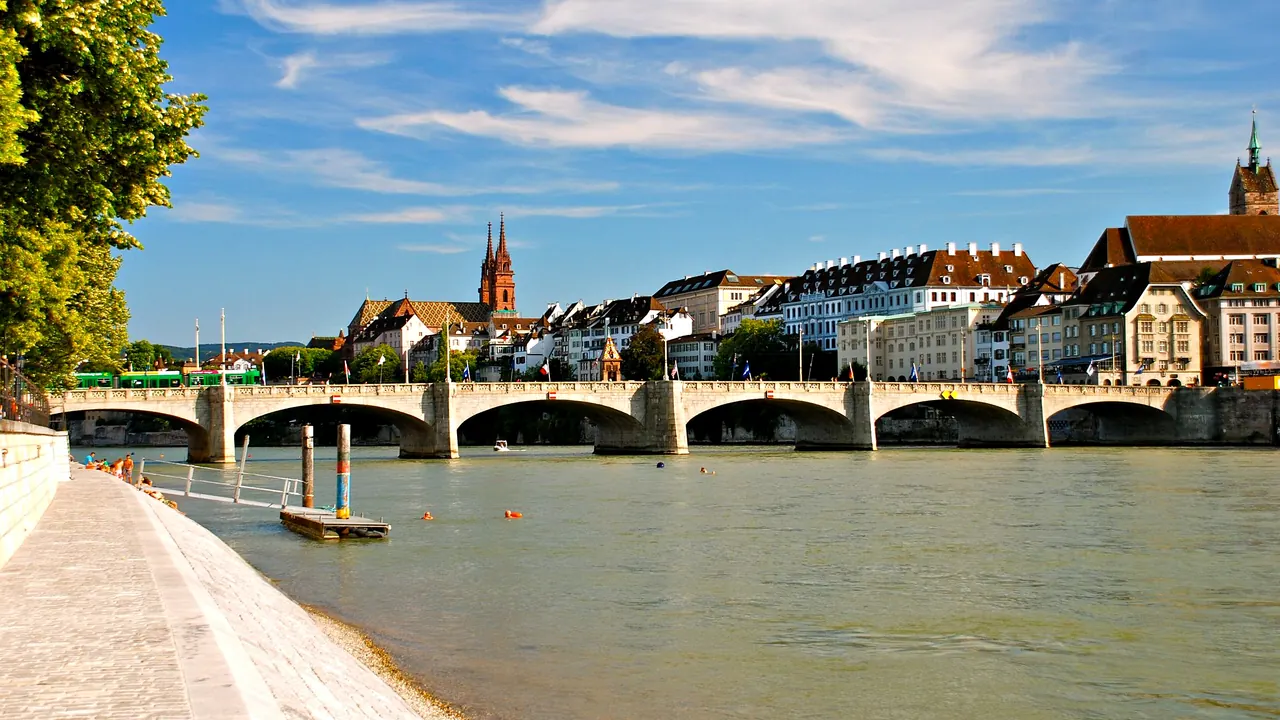
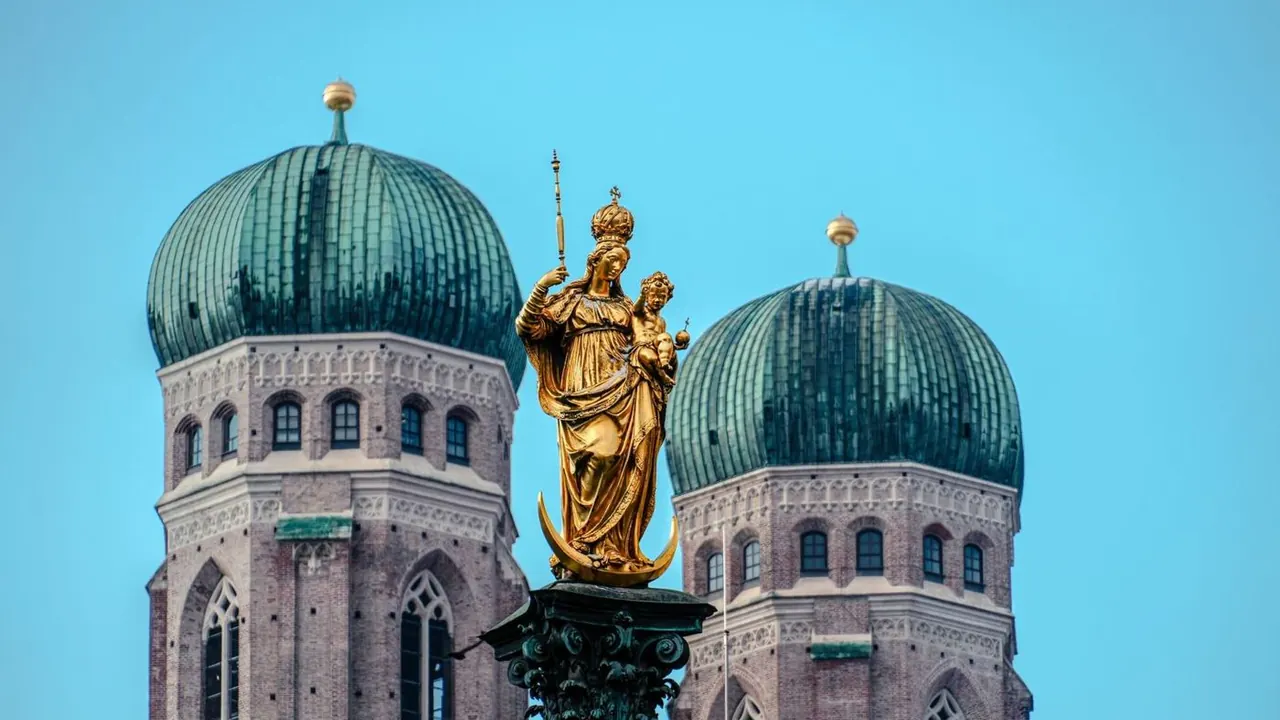
Photos: Basel by Lucazzitto, CC BY-SA 3.0, cropped; Munich by 0xd1ma, Pexels License.
Basel or Munich?
Our verdict in twelve categories, each scored against the same fixed benchmark cities, and the climate month by month, so you can choose for your trip.
Choose Basel for
- beaches
- getting around
Basel suits a compact, art-led trip where you want to do a lot without much effort. Its old town and museums sit within walking distance of one another, the Rhine turns into a public swimming lane in summer, and the station puts Alsace, the Black Forest and half of Switzerland within easy reach. Come for three or four days of painting, architecture and border-hopping, and be ready for Swiss prices.
Choose Munich for
- shopping
- prices
- live music and the arts
Munich is the better choice for a longer or broader trip. It has the deeper museums, a world-class opera house and three major orchestras, beer gardens that work for families as well as for drinkers, and real Alps on the horizon for hiking or skiing. It is also more generous after dark and a better place to shop, and although it is expensive, it is noticeably kinder to the wallet than Basel.
Scoreboard
Twelve categories on one fixed scale from 0 to 100. The shaded stretch is the gap between the two.
Your match
Pick a travel style or drag the sliders, and both match scores follow your weighting.
Wins on beaches and getting around with your weighting.
Wins on shopping and prices with your weighting.
What matters to you?
Category by category
What the scores mean for a trip.
Beaches & swimming
Neither city is a beach destination, but Basel has the more memorable swim. You can float down the Rhine past the old town in the middle of the city, with bathing huts, ladders and gravel banks to climb out on. It is river swimming in a strong current, though, so it suits confident adults.
Munich's Isar banks are better for sunbathing and barbecues than for swimming. For a proper swim you take the S-Bahn out to the Starnberger See or the Ammersee, where the water is calmer but fresher and the trip takes up half a day.
Food & drink
Munich gives you more reasons to plan meals. Its brewery beer halls and chestnut-shaded beer gardens are an experience in themselves, the Bavarian cooking has a strong identity, from roast pork with crackling to white sausage before noon, and the Viktualienmarkt is a fine place to graze.
Basel eats well but borrows much of its character from its neighbours, with Alsatian tarte flambée and Baden wines next to Swiss-German comfort food. Everyday meals can feel expensive for what they are. Its best eating is often a short trip across the border into the wine villages.
Culture & sights
Both are serious art cities. Munich's collections are bigger and grander: the Kunstareal groups the Alte Pinakothek, the Pinakothek der Moderne, the Glyptothek and the Lenbachhaus, and then come the Wittelsbach Residenz, Nymphenburg and the vast Deutsches Museum.
Basel's strength is concentration rather than scale. Holbein at the Kunstmuseum, the Fondation Beyeler and the Vitra campus give a remarkable run of art and architecture for a small city. Its old town, with the red sandstone Münster and the painted Rathaus, survived largely intact, while much of Munich's centre was rebuilt after the war.
Nightlife
Munich has more going on after dark. Beer halls set an easy start to the evening, the Glockenbachviertel and Gärtnerplatz have dense rows of cocktail and gay bars, and a few serious techno clubs run until morning. Oktoberfest takes over the city for just over two weeks from late September.
Basel is quieter: summer drinks on the steps by the Kleinbasel riverside kiosks, bars around the Kaserne and a handful of weekend clubs. Its one big night is Fasnacht in late winter, three days of drums, piccolos and lantern processions starting at four in the morning.
Nature & outdoors
Munich has the mountains. The Alps begin about an hour south, with real alpine hiking around the Wetterstein and the Zugspitze, skiing in winter and the Five Lakes for sailing and cycling. In town, the English Garden is huge, and surfers ride the Eisbach wave at its edge.
Basel's countryside is gentler. The Jura ridges, the Black Forest and the Vosges are all close and well waymarked, and the flat Rhine paths carry cyclists into France and Germany. It suits walkers and cyclists rather than anyone after high peaks.
Day trips
From Basel a single morning can take you into France, Germany or deeper into Switzerland. Half-timbered Colmar and the villages of the Alsace wine route are about an hour away, with Strasbourg's cathedral a little further, and Freiburg's minster is under an hour by train into Germany. Bern, Lucerne and Zurich are each about an hour by train, and the Roman town of Augusta Raurica is only a quarter of an hour out.
Munich's list has fewer border crossings but more depth in one region. Augsburg, Nuremberg and medieval Regensburg make a run of historic German towns, and Salzburg and Innsbruck are within easy reach in Austria. Neuschwanstein, about two hours away near Füssen, is the best-known single outing from either city. Herrenchiemsee adds another royal palace on its island in the Chiemsee.
Good for families
Munich is the easier city to fill with children's days. The Hellabrunn zoo along the Isar, the hands-on sections of the Deutsches Museum, the transport museum and an aquarium are all there, beer gardens often have playgrounds, and the lake beaches make summer simple.
Basel is safe and pram-friendly, and its Zolli is one of Europe's best zoos. Beyond that and a rainy-day museum or two, the options thin out, and the Rhine is too strong for small swimmers.
Getting around
Both are effortless without a car, but they work differently. Basel is small enough to walk, its green trams cross into France and Germany, hotel guests ride free, and current-driven ferries cross the Rhine.
Munich is bigger. Its pedestrianised old town is walkable, but you will use the integrated U-Bahn, S-Bahn and tram network to reach Nymphenburg, the Olympic Park and the lakes. It is also flat and very good for cycling, though delays on the central S-Bahn line are a known nuisance.
Shopping & style
Munich is a far better place to shop. Maximilianstrasse has the luxury houses, Neuhauser Strasse and Kaufingerstrasse carry the department stores, and Glockenbach and Schwabing have independent boutiques. The distinctive buy is Tracht, dirndls and lederhosen from specialist tailors.
Basel offers a tidy main street of watches, chocolate and chains, with small design shops around Spalenberg. Its Christmas market by the Münster is lovely, but locals themselves cross into Germany for cheaper shopping.
Affordability
Neither is cheap, but Basel is the harder hit. Hotels, meals, drinks and museum tickets all come at Swiss prices, and rooms during Art Basel are scarce. Free transport for hotel guests and cheaper meals over the border help a little.
Munich is dear by German standards, especially for hotels during Oktoberfest and trade fairs, but day-to-day costs are gentler. Beer-hall food is fair value, you can bring a picnic to a beer garden, the parks and lakes are free, and some museums charge only a token fee on Sundays.
Live music & performing arts
Munich is one of Europe's great music cities. The Bavarian State Opera in the National Theatre is world-class, three orchestras of real standing play in halls such as the Herkulessaal, and the rococo Cuvilliés Theatre is a jewel for chamber opera. Its season runs through most of the year, summer included.
Basel punches above its size. Theater Basel is known for bold opera and ballet, the Stadtcasino has fine acoustics, and early music is a local speciality. Its season goes quiet in July and August, though.
Wellness & relaxation
Munich has its own bathing culture in the city. You can swim under the Art Nouveau vaults of the Müller'sches Volksbad, try German-style textile-free saunas with infusion rituals, or go to the huge thermal complex at Erding, about forty minutes away.
Basel relaxes you through its calm pace and quiet riverside rather than its facilities. For a real soak you head out to the saline baths at Rheinfelden or the spa towns of southern Baden, so it suits an easy trip with a spa day added.
When should you go?
Pick your month. The climate figures are measured averages, not a forecast.
Basel in July
Munich in July
Daytime high, °C
Rainfall in the month, mm
Temperature and rainfall are climate normals, averaged over the years shown. Basel: 1991-2020 (sunshine 1961-1990) normals, Basel / Binningen (1.9 km from centre). Munich: 1991-2020 normals, München (1.9 km from centre).
The two climates are close, with cold, grey winters and warm summers. Both cities sit around 5°C in December and January, which is fine for museums and Christmas markets but not for long days outdoors. Spring warms up properly in May. Summer peaks in July at about 26°C in Basel and a degree lower in Munich, and June to August are the only months warm enough for river or lake swimming. Sunshine is much the same in both, longest from June to August.
The real difference is rain. Munich's summers are distinctly wetter, with well over 110mm a month from June to August against roughly 90mm in Basel, so expect more afternoon downpours in Bavaria. For walking and hiking, September is a good month in either city, still warm and drier than high summer. In Munich it also suits a trip to the mountains before the snow arrives.
Which traveller are you?
For a short city break, Basel is the easier fit. Its art, its river and its medieval lanes all sit together in one small centre, so a long weekend feels complete. Munich's palaces, galleries and parks are spread further apart, and you leave wanting more time.
On a food and nightlife trip, Munich gives your evenings far more shape. Eating and drinking are part of how the city sees itself, and dinner can run on into late bars a few streets away. Outside summer and carnival, Basel's evenings are quiet and costly.
On a trip on a tight budget, Munich is the safer choice, though neither city is cheap. In Basel, Swiss prices make every meal and drink count unless you sleep across the border. In Munich, free outdoor life and plain, hearty food make the money go further.
Before you go
| Measure | Basel | Munich |
|---|---|---|
| Official language | French, German, Italian, Romansh | German |
| Currency | Swiss Franc (CHF) | Euro (EUR) |
| Sockets | CJ230 V, 50 Hz | CF230 V, 50 Hz |
| Driving side | Right | Right |
| Time zone | UTC+1, UTC+2 in summer | UTC+1, UTC+2 in summer |
| Emergency number | 112 | 112 |
| Elevation | 247 m | 519 m |
| Main airport | EuroAirport Basel–Mulhouse–Freiburg (BSL)7 km from centre112 non-stop destinations | Munich Airport (MUC)29 km from centre210 non-stop destinations |
| Public holidays this year | 10 days | 12 days |
By the numbers
| Measure | Basel | Munich |
|---|---|---|
| City population | 176,329 | 1,505,036 |
| People per km² | 7,378 | 4,844 |
| Museums within 10 km | 61 | 75 |
| UNESCO World Heritage sites within 50 km | 2 | 1 |
Where else could you go?
Every comparison below shares a destination with this one, so you can follow Basel or Munich somewhere new.