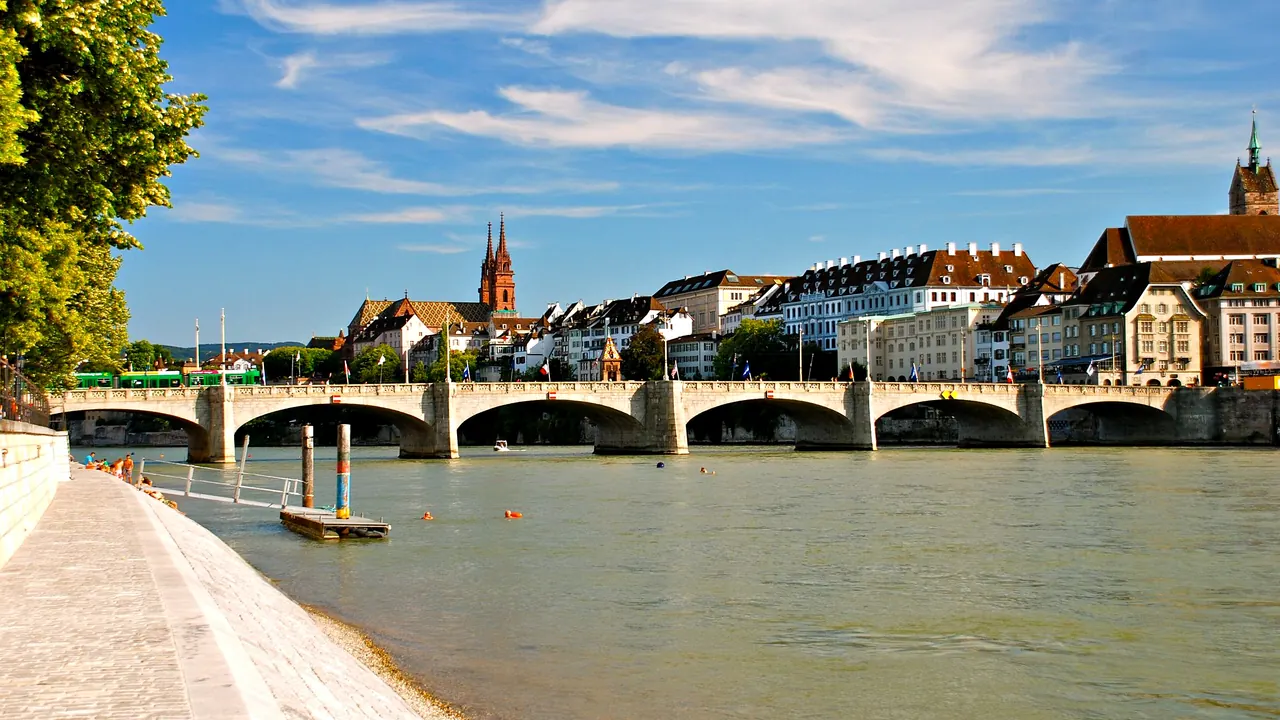
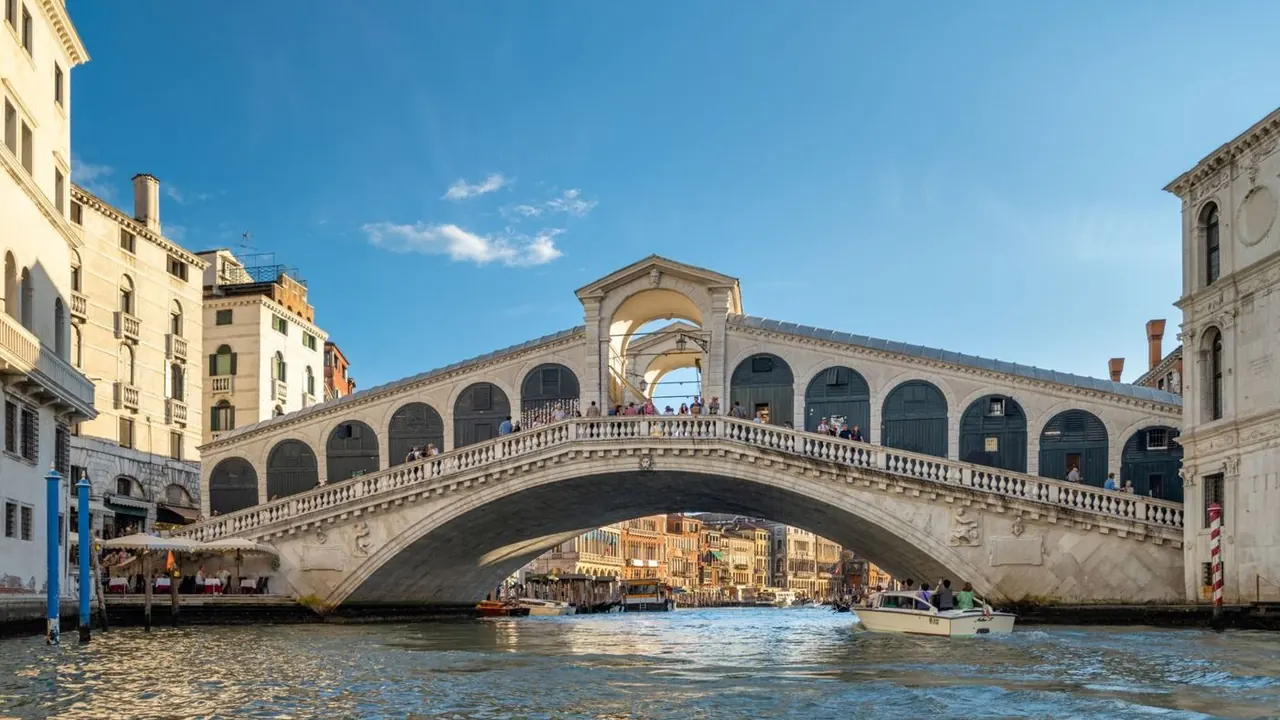
Photos: Basel by Lucazzitto, CC BY-SA 3.0, cropped; Venice by David Vives, Pexels License.
Basel or Venice?
Our verdict in twelve categories, each scored against the same fixed benchmark cities, and the climate month by month, so you can choose for your trip.
Choose Basel for
- getting around
- nature and the outdoors
- families
Basel is the better choice for travellers who want an easy, orderly base and plenty of variety around it. Trams and trains make everything simple, the Jura, Black Forest and Vosges are close for walking, the Zolli and calm streets make it easy with children, and in summer you can float down the Rhine past the old town. Its museums are strong for a city of its size, and the bars are low-key.
Choose Venice for
- culture and sights
- beaches
- food and drink
Venice suits the traveller who wants the sights to be the reason for going. The whole city is the attraction: palaces on the Grand Canal, Titian and Tintoretto in their own churches, and enough art for a week. Add cicchetti in the bacari, craft workshops and the Lido for a hot afternoon. In return you get crowds on the main routes, stepped bridges everywhere and quiet evenings.
Scoreboard
Twelve categories on one fixed scale from 0 to 100. The shaded stretch is the gap between the two.
Your match
Pick a travel style or drag the sliders, and both match scores follow your weighting.
Too close to call, level with your weighting
Wins on getting around and nature and the outdoors with your weighting.
Wins on culture and sights and beaches with your weighting.
What matters to you?
Category by category
What the scores mean for a trip.
Beaches & swimming
Neither city is a beach destination, but Venice has an actual one. The Lido offers kilometres of fine sand on the open Adriatic, a short vaporetto ride away, with shallow, warm water that suits waders, plus quieter Pellestrina beyond it.
Basel's swimming is the Rhine. Swimmers walk upstream on the Kleinbasel bank and float back down on the current, then sunbathe on the gravel banks. It is a memorable summer ritual, but it is strong-current swimming for confident adults, with no sand anywhere.
Food & drink
Venice has the more rewarding food, mainly because of its bacari. Eating cicchetti at the counter with a spritz, cuttlefish risotto, and lagoon seafood from the Rialto market give it a cuisine you would travel for. The catch is the picture-menu places around San Marco, so the good meals take some seeking out.
Basel eats well without a strong local identity. Its tables borrow from Alsace and Baden, with a small but excellent fine-dining tier. The Markthalle and the Marktplatz market are its easiest casual meals.
Culture & sights
Venice is in a different class here. Six centuries of palaces and churches stand on water with nothing modern in view, and the art runs from the Accademia's Venetian painters to Tintoretto's cycle at San Rocco and modern work at the Peggy Guggenheim. A week does not exhaust it.
Basel is a museum city out of proportion to its size, with Holbein at the Kunstmuseum, the Fondation Beyeler and the Vitra campus. It adds a modern architectural edge that Venice deliberately lacks. Three or four days covers it.
Nightlife
Neither city is built for big nights, but Basel at least stays up. On summer evenings the riverside steps are busy long after dark, and a few weekend clubs in old harbour buildings give it the dancing that Venice lacks entirely. Then there is Fasnacht in late winter, when the whole city stays out for three days and nights of drums and lanterns, something no ordinary weekend in Venice comes close to.
Venice goes out early and goes home early. Its best hour is a spritz and cicchetti at a bacaro counter before dinner, and by midnight the canals are dark and silent, which makes for a lovely late walk rather than a late night. Anyone who wants to dance has to leave the city.
Nature & outdoors
Basel has better outdoors within easy reach. The Jura begins just south of town, Black Forest peaks such as the Feldberg rise above 1,400m within an hour, and flat Rhine paths make cross-border cycling easy.
Venice's nature is the lagoon itself, with flamingos and egrets in the marshes around Torcello, kayaking and rowing lessons. Beyond that the land is flat, and the Dolomites are a long trip away.
Day trips
Both are superb bases, but the trips differ in kind. From Basel you reach three countries: Colmar and the Alsace wine villages, Freiburg in Germany, and Lucerne, Bern and the Rhine Falls in Switzerland, so the days mix wine country, mountains and lakes.
From Venice the trips are one rich region of Italian art cities: Giotto in Padua, Verona's arena, Palladio's Vicenza and the Brenta villas. It also has trips that need no train, with Murano, Burano and Torcello a boat ride across the lagoon.
Good for families
Basel is the easier city with children. It is small and safe, the trams take prams without fuss, the Zolli is among Europe's best zoos, and Europa-Park is within an hour. The Rhine is too strong for small swimmers, though.
Venice appeals to children's imagination, with boats instead of buses and no traffic, and the Lido is gentle for paddling. Day to day, its stepped bridges, packed summer routes and lack of playgrounds wear families down, so it works better for older children on a short stay.
Getting around
Basel is effortless. Its walkable centre and dense tram network, free to hotel guests, reach even into Germany and France, and trains run straight to day-trip destinations.
Venice is all on foot and by water. The centre is crossable in about forty minutes, but the alleys confuse, hundreds of bridges have steps that punish wheeled luggage, and the vaporetti are slow and crowded. It is part of the experience, but it is hard work in a way Basel never is.
Shopping & style
Venice offers the more distinctive shopping. Murano glass, Burano lace, papier-mâché masks, marbled paper and furlane slippers are still made in workshops in Dorsoduro and Castello, and the big fashion names line Calle Larga XXII Marzo. Watch out for imported fakes on the main routes.
Basel's shopping is neat but limited: watches, chocolate and Läckerli on Freie Strasse, small design shops on Spalenberg, and a pretty Christmas market around the Münster.
Affordability
Both are expensive, but Basel is harder on the wallet. Swiss prices apply to every room, meal and drink, and they rise further during fairs such as Art Basel. Free transport for hotel guests and cheaper meals just over the German or French border take some of the edge off.
Venice is costly mainly for central hotels, water taxis and café tables on the piazza. Eating cicchetti at the counter, staying in Cannaregio or at Mestre, and coming in late autumn or winter bring it down more easily.
Live music & performing arts
Both cities have serious stages, of different kinds. Basel's strength is breadth and daring: Theater Basel's bold opera, ballet and drama, the Sinfonieorchester at the acoustically fine Stadtcasino, a strong early-music tradition and small jazz clubs. Things go quiet in July and August.
Venice centres on La Fenice, the house where Verdi and Rossini premiered works, along with the Biennale's contemporary festivals. Most evenings there are also Vivaldi concerts in churches and scuole grandi, of uneven quality but with a unique setting. Beyond these, jazz and independent music are thin.
Wellness & relaxation
Basel makes an easier place to unwind. Its pace is calm all over, Sundays are hushed, and real thermal bathing is close, with Rheinfelden's saline baths about twenty minutes away and the German spa towns of southern Baden just over the border.
Venice's calm depends on where you are. Castello, Cannaregio and Giudecca are quiet early and late, but San Marco by day is the opposite. Its nearest thermal pools, at Abano Terme, are about an hour away.
When should you go?
Pick your month. The climate figures are measured averages, not a forecast.
Basel in July
Venice in July
Daytime high, °C
Rainfall in the month, mm
Temperature and rainfall are climate normals, averaged over the years shown. Basel: 1991-2020 (sunshine 1961-1990) normals, Basel / Binningen (1.9 km from centre). Venice: 1991-2020 (sunshine 1971-2000, rainfall 1981-2010) normals, Venezia / Tessera (6.7 km from centre).
Both cities are best from late spring to early autumn, but they get there differently. Basel warms to about 26°C in July and is pleasant for walking from May to September. That is also its wettest stretch, with summer showers rather than settled weather, and the Rhine is only good for swimming from June to early September. Winters are grey and cold, with very little sunshine in December, and late winter is mainly worth it if you are there for Fasnacht.
Venice runs a few degrees warmer and is noticeably sunnier in high summer, reaching about 29°C in July, which can feel heavy in the narrow alleys. The Adriatic is warm enough for the Lido from June to September and peaks at around 26°C in August. Venice's rain comes in early summer and autumn, with June the wettest month, while its winters are mild and brighter than Basel's. For walking, May, June and September suit Venice best.
Which traveller are you?
On a culture and arts trip, Venice is the clear choice. The Basilica of San Marco, the Doge's Palace, the Accademia, the Frari and the Biennale go well beyond Basel's fine but smaller set of museums, and the city itself is the main sight.
On a family trip with children, Basel is easier. Trams take pushchairs and there are no stepped bridges to haul them over. The Zolli, the current-driven ferries and the Natural History Museum suit children, and Europa-Park is a day out. Venice has few playgrounds or parks.
For an outdoors trip, choose Basel. The Jura ridges, Black Forest summits and Vosges hills all have marked trails within an hour, and the flat Rhine paths take cyclists into Germany and France. Venice's outdoors is mostly kayaking in the lagoon and riding along the sea walls.
Before you go
| Measure | Basel | Venice |
|---|---|---|
| Official language | French, German, Italian, Romansh | Italian |
| Currency | Swiss Franc (CHF) | Euro (EUR) |
| Sockets | CJ230 V, 50 Hz | CFL230 V, 50 Hz |
| Driving side | Right | Right |
| Time zone | UTC+1, UTC+2 in summer | UTC+1, UTC+2 in summer |
| Emergency number | 112 | 112 |
| Elevation | 247 m | 2 m |
| Main airport | EuroAirport Basel–Mulhouse–Freiburg (BSL)7 km from centre112 non-stop destinations | Venice Marco Polo Airport (VCE)7 km from centre103 non-stop destinations |
| Public holidays this year | 10 days | 13 days |
By the numbers
| Measure | Basel | Venice |
|---|---|---|
| City population | 176,329 | 250,369 |
| People per km² | 7,378 | 602 |
| Museums within 10 km | 61 | 52 |
| UNESCO World Heritage sites within 50 km | 2 | 5 |
| Swim season, months above 21 °C | - | 4 months |
Where else could you go?
Every comparison below shares a destination with this one, so you can follow Basel or Venice somewhere new.