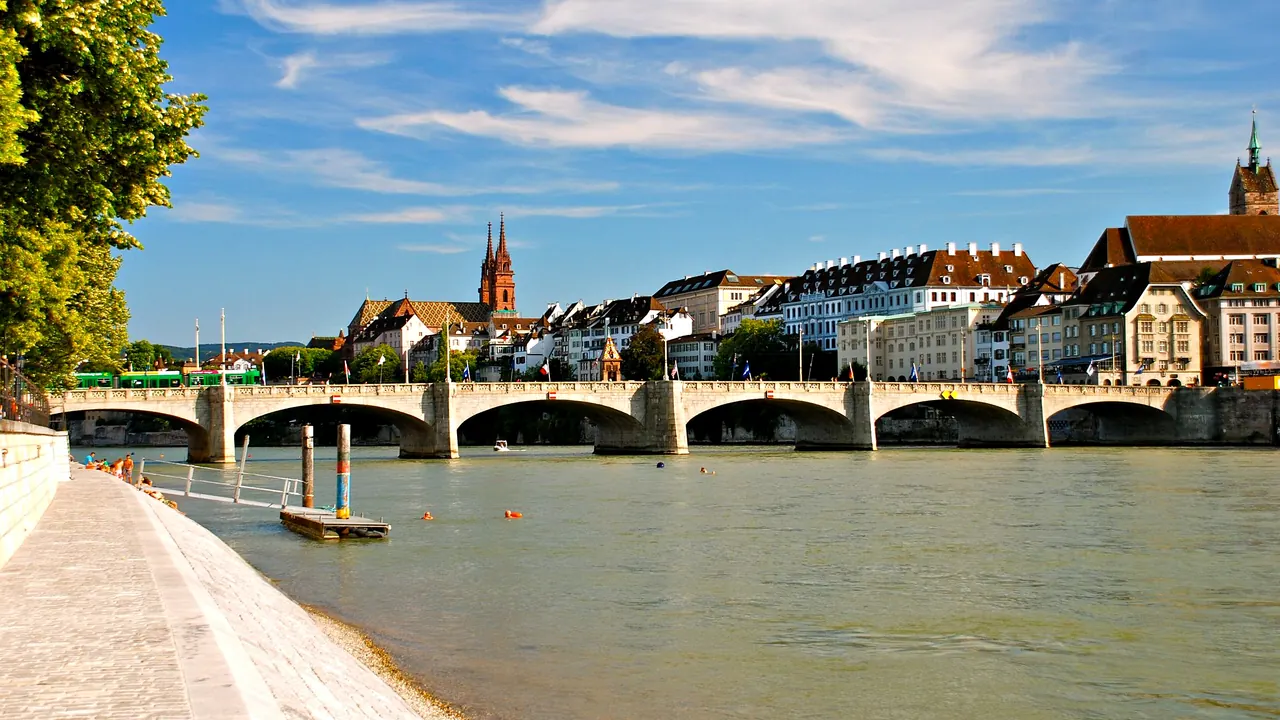
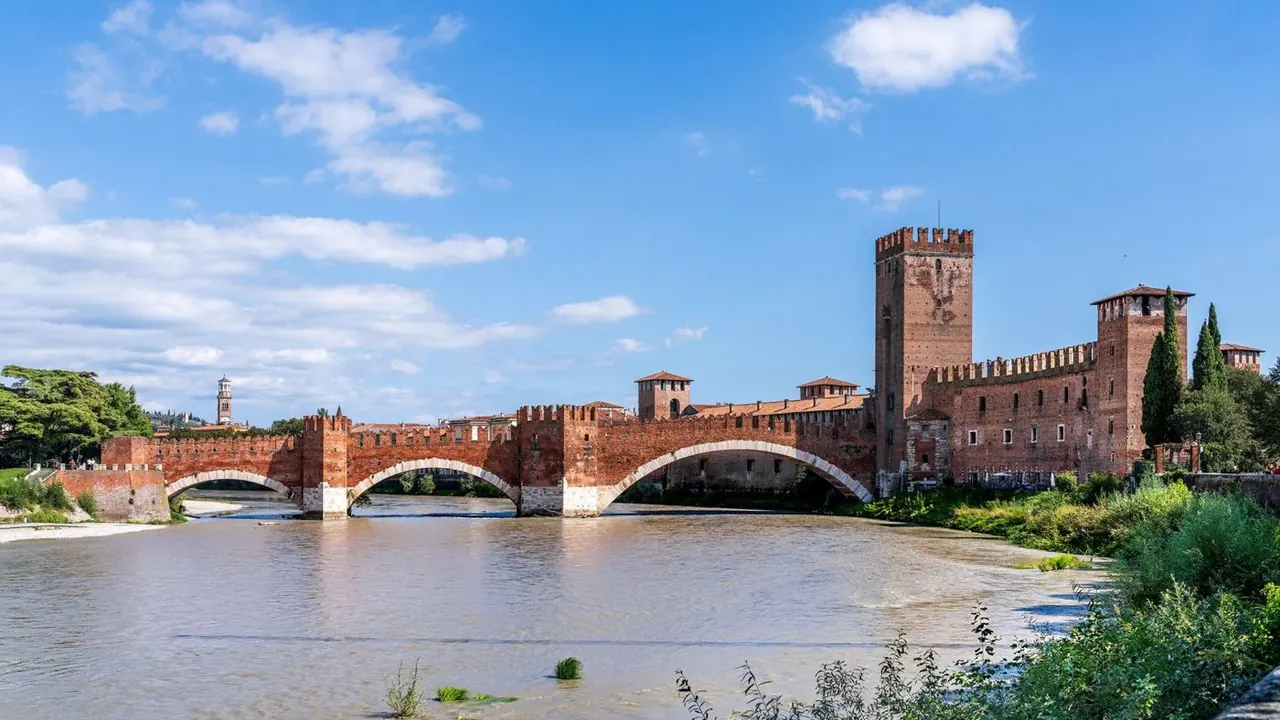
Photos: Basel by Lucazzitto, CC BY-SA 3.0, cropped; Verona by NorbertNagel, CC BY-SA 4.0, cropped.
Basel or Verona?
Our verdict in twelve categories, each scored against the same fixed benchmark cities, and the climate month by month, so you can choose for your trip.
Choose Basel for
- getting around
- wellness
- nightlife
Basel suits a traveller who wants things to run smoothly and doesn't mind paying for it. It's a compact museum city with the Kunstmuseum, the Fondation Beyeler and Vitra close together, trams that even cross into Germany and France, and fast trains to Lucerne, Bern, Colmar and Freiburg. It's best for art lovers, rail travellers and anyone who would gladly swap a bigger food scene for a stress-free stay.
Choose Verona for
- prices
- food and drink
- beaches
Verona is the better pick for a trip built around eating, drinking and long warm evenings. Inside the river loop you get Roman, medieval and Renaissance layers, risotto all'Amarone in old osterie, the Valpolicella vineyards on the doorstep and Lake Garda half an hour away. It also costs far less, and in summer it adds opera under the stars in the Arena. Venice, Padua and Vicenza are all easy day trips.
Scoreboard
Twelve categories on one fixed scale from 0 to 100. The shaded stretch is the gap between the two.
Your match
Pick a travel style or drag the sliders, and both match scores follow your weighting.
Wins on getting around and wellness with your weighting.
Wins on prices and food and drink with your weighting.
What matters to you?
Category by category
What the scores mean for a trip.
Beaches & swimming
Neither city is on the coast, so swimming here means fresh water, and each city does it its own way. Basel's version is the Rhine itself. You walk upstream along the Kleinbasel bank and float back past the old town in a strong current. It's memorable, but only for confident swimmers.
Verona gives you the better swimming because of Lake Garda, about half an hour away. The water is calm and clear, with lidos, lawns and Sirmione's flat limestone shelves to lie on, and it's much easier for weaker swimmers and children. It is still an outing rather than something on your doorstep, and the shores get crowded on summer weekends.
Food & drink
Verona is the city for eating. Its cooking has deep local roots: risotto made with Amarone or Vialone Nano rice, bigoli, pastissada and bollito misto with pearà. Valpolicella, Soave and Bardolino are all made within a short drive. The one weak spot is tired tourist cooking around the Arena.
Basel cooks carefully, but it doesn't have much of its own beyond Läckerli and the browned-flour soup of Fasnacht. It borrows tarte flambée from Alsace and wine from Baden, and everyday meals feel expensive. The Markthalle and the Marktplatz market are the best places for casual eating.
Culture & sights
Verona edges ahead because the whole city is the monument. The Roman Arena, the Roman theatre, the Scaliger tombs, San Zeno's bronze doors and Castelvecchio in its Scarpa setting all stand within a UNESCO-listed loop of the Adige.
Basel has the stronger art collections. The Kunstmuseum's Holbeins, the Fondation Beyeler and the Vitra campus would draw visitors to a much larger city, and modern architecture by Herzog & de Meuron sits beside the sandstone Münster. Choose Verona for history you can walk through, and Basel for great galleries.
Nightlife
Both cities are quiet after dark, but in different ways. Basel's best evenings are spent on the summer river steps and at the bars around the Kaserne, and a few clubs in old harbour buildings play electronic music at weekends. Fasnacht, when the city drums through three days and nights, is the great exception.
Verona's evenings revolve around the aperitivo in Piazza delle Erbe, with cheaper wine bars in student Veronetta. In summer the opera crowd leaving the Arena near midnight livens things up late, but there is no real dance scene in the centre.
Nature & outdoors
The two are close on the outdoors and differ in terrain. Basel sits between three ranges of wooded hills, the Jura, the Black Forest and the Vosges, and flat Rhine paths run into Germany and France. It suits walkers and cyclists.
Verona's surroundings are a little more varied. There are vineyard walks in Valpolicella, the Adige cycle route north and pastures on the Lessinia. Monte Baldo above Garda offers ridge walks and paragliding, and the north of the lake has reliable wind for sailing and windsurfing.
Day trips
Both cities make superb bases, and Verona has the slight edge because of the places in reach. Venice, Padua's Scrovegni Chapel, Palladio's Vicenza and Mantua are all an easy train ride away. The Garda harbours and Soave's walls are even closer.
Basel's strength is reaching three countries in a day. You can visit Colmar and the Alsace wine villages, Freiburg and the Black Forest, then Lucerne, Bern or the Rhine Falls, all on fast trains.
Good for families
Families do about equally well in both, though the days look different. Basel keeps things in town. The Zolli is a short walk from the station, the Rhine ferries are pulled across by the current, and trams take prams easily. Europa-Park is the big outing, about an hour away in Germany.
Verona's main draws lie just outside the city. Gardaland, Parco Natura Viva's drive-through safari and the shallow Garda shore are all about half an hour away, but they usually need a car. Summer afternoons in town can be very hot for small children.
Getting around
Basel is much easier to get around. Green trams cover the city and some lines run across the borders, hotel guests ride them free, and the river ferries add a pleasant way to cross. The main station's direct trains mean you never need a car.
Verona's centre is small, flat and mostly closed to traffic, so it's lovely on foot. Beyond it there is no metro or tram. Buses run thinly to the Valpolicella and the Lessinia, so those trips are much easier with a car.
Shopping & style
Verona has the slightly better shopping. Via Mazzini's marble paving is lined with Italian fashion and shoe labels, and the best things to take home are edible or drinkable: Amarone, Garda olive oil and pandoro. Serious shoppers still head to Milan.
Basel's Freie Strasse is mostly watches, chocolate and chains, with small design shops on Spalenberg. Its Christmas market around the Münster is the seasonal highlight.
Affordability
The gap in cost is wide. In Basel, hotels, meals, drinks and museum tickets all cost Swiss prices. The free transport card and cheaper meals over the borders in Germany and France help only a little.
Verona is not cheap either, especially for rooms in the centre on opera nights. Still, osterie, wine counters and walking everywhere keep daily spending far lower. Staying near the station or across the river saves more.
Live music & performing arts
Which city wins here depends on the season more than on quality. Basel's stage year runs from autumn to early summer. Theater Basel puts opera, ballet and drama under one roof, with bold productions known well beyond Switzerland, and the Sinfonieorchester plays in the fine acoustics of the Stadtcasino. The city's long early-music tradition adds historical concerts, but in July and August the programme thins out and the river takes over.
Those are exactly the months when Verona is at its best. On summer evenings, Verdi, Puccini and Bizet fill the Roman Arena, with thousands of people seated on the stone tiers as the candles are lit, and the Roman theatre stages Shakespeare, dance and jazz under the stars. In the cooler months the Teatro Filarmonico keeps a season going, but it is a smaller affair than winter in Basel.
Wellness & relaxation
Neither city has a bathing culture of its own, and both rely on spas nearby. From Basel you can reach the saline baths at Rheinfelden in about twenty minutes, and the German-style spa towns of southern Baden are close across the border. Basel's quiet Sundays also make for a calm pace.
Verona's warm springs are at Sirmione, with thermal pools facing the lake, and at Caldiero, used since Roman times. In town, a slow lunch and a walk on the Giusti terraces offer calm, except around the Arena in summer.
When should you go?
Pick your month. The climate figures are measured averages, not a forecast.
Basel in July
Verona in July
Daytime high, °C
Rainfall in the month, mm
Temperature and rainfall are climate normals, averaged over the years shown. Basel: 1991-2020 (sunshine 1961-1990) normals, Basel / Binningen (1.9 km from centre). Verona: 1991-2020 normals, Verona / Villafranca (11.6 km from centre).
Both cities have warm summers and grey, chilly winters, but Verona runs a few degrees warmer all year and gets noticeably more sun. Basel is at its best from June to August, with highs in the mid-20s that are ideal for floating down the Rhine and walking the old town. Its wettest stretch runs from May through summer, with about 96mm in May, so showers are part of the trip. From November to February it is cold and dull, and short winter days are mainly for museums.
Verona reaches 30°C in July and August. Lake Garda is pleasant then, but walking the stone streets in the afternoon is tiring, so plan to start early and spend evenings at the Arena. In July Verona gets around 310 hours of sunshine. May, June and September are the most comfortable months for sightseeing, although September and the autumn months bring Verona's heaviest rain. Winters are cool rather than harsh and a little milder than Basel's.
Which traveller are you?
On a tight budget, Verona is much the easier city. You can eat cheaply in Veronetta's student osterie and at wine counters that serve a snack with your glass. Local wine is good value, and the walkable centre saves on transport. In Basel, Swiss prices apply to almost everything.
For a food and nightlife trip, Verona wins on the food side. It has bigoli with duck, bollito with pearà and Amarone from the nearby hills, then spritz in Piazza delle Erbe. Neither city goes out late, but Basel's cooking leans on its neighbours more than on any strong local tradition.
For a short city break, Basel is hard to beat. Hotel guests ride the trams for free, the old town and both riverbanks are walkable, and the Kunstmuseum, Münster and Museum Tinguely fit into a weekend. Its rail connections make arriving and leaving equally easy.
Before you go
| Measure | Basel | Verona |
|---|---|---|
| Official language | French, German, Italian, Romansh | Italian |
| Currency | Swiss Franc (CHF) | Euro (EUR) |
| Sockets | CJ230 V, 50 Hz | CFL230 V, 50 Hz |
| Driving side | Right | Right |
| Time zone | UTC+1, UTC+2 in summer | UTC+1, UTC+2 in summer |
| Emergency number | 112 | 112 |
| Elevation | 247 m | 59 m |
| Main airport | EuroAirport Basel–Mulhouse–Freiburg (BSL)7 km from centre112 non-stop destinations | Verona Villafranca Valerio Catullo Airport (VRN)10 km from centre96 non-stop destinations |
| Public holidays this year | 10 days | 13 days |
By the numbers
| Measure | Basel | Verona |
|---|---|---|
| City population | 176,329 | 255,588 |
| People per km² | 7,378 | 1,285 |
| Museums within 10 km | 61 | 18 |
| UNESCO World Heritage sites within 50 km | 2 | 5 |
Where else could you go?
Every comparison below shares a destination with this one, so you can follow Basel or Verona somewhere new.