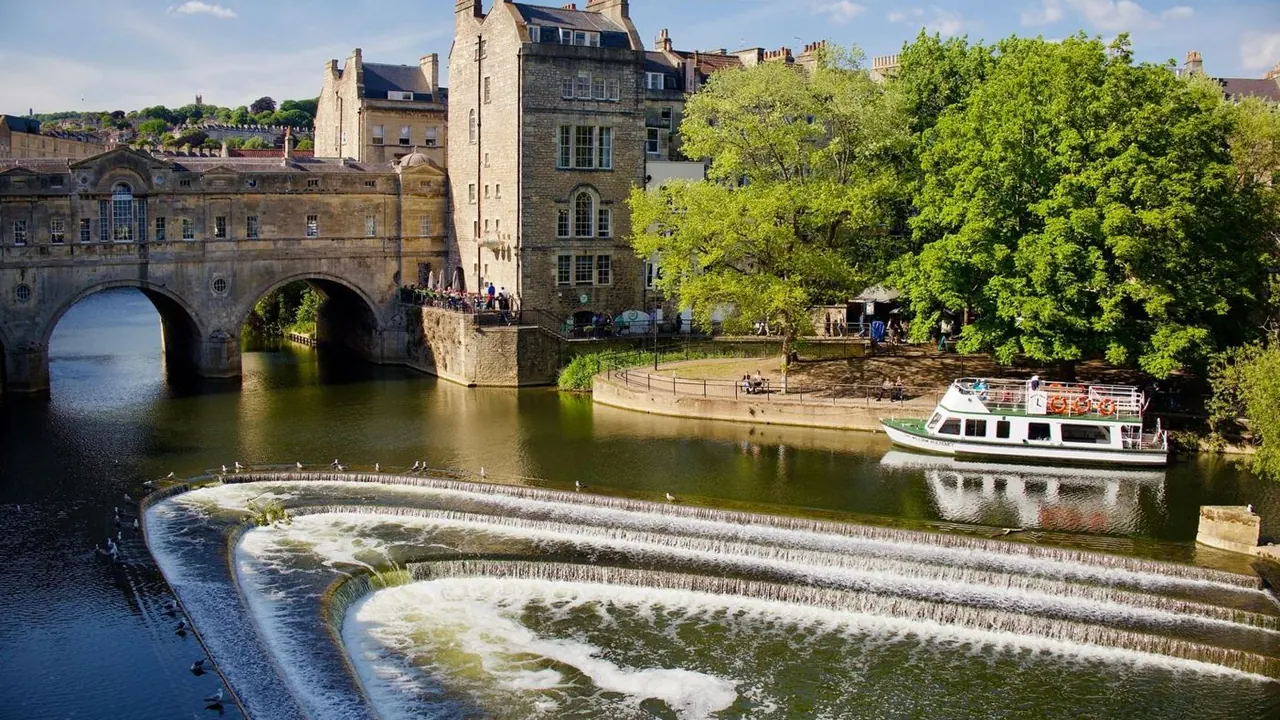
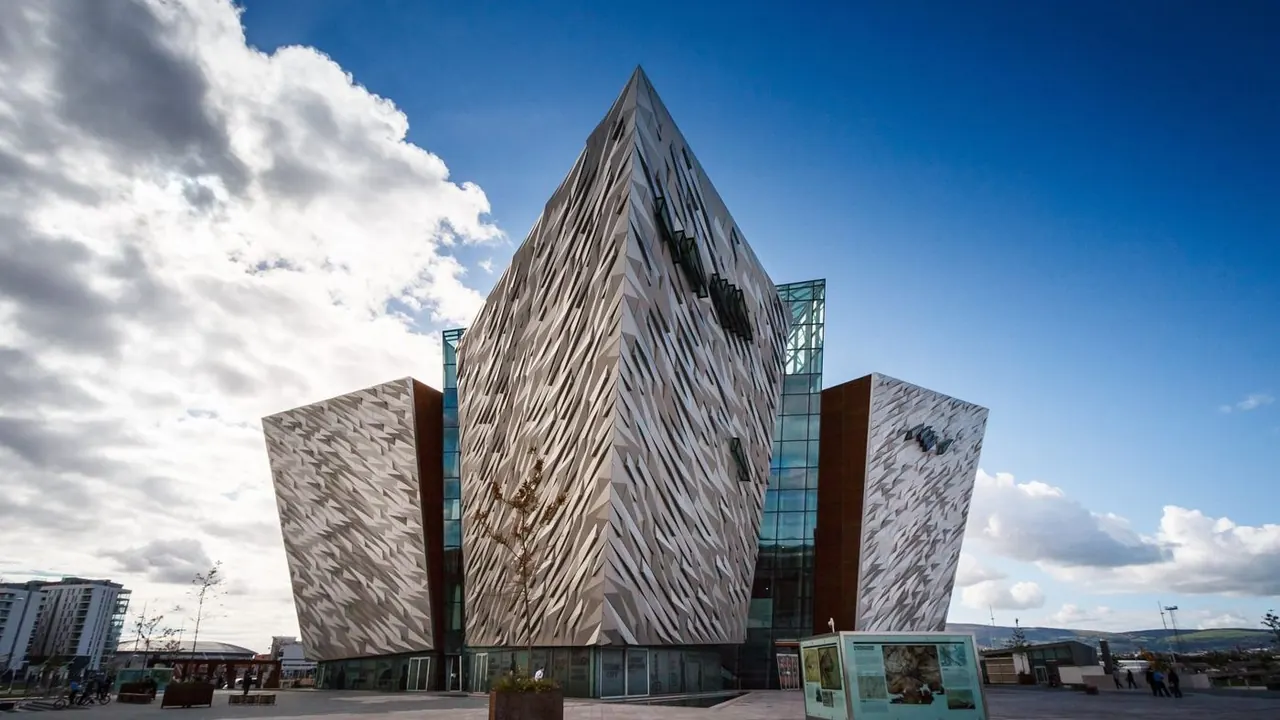
Photos: Bath by Lucas Carlini, Pexels License; Belfast by Nico Kaiser, CC BY 2.0, cropped.
Bath or Belfast?
Our verdict in twelve categories, each scored against the same fixed benchmark cities, and the climate month by month, so you can choose for your trip.
Choose Bath for
- wellness
- day trips
- culture and sights
Bath suits a slower, gentler trip: Georgian streets, the Roman Baths and an evening soak in naturally hot water, with a ring of day trips from Stonehenge to Wells and the Cotswolds. Pick it if you want history packed closely together and walkable, and you don't mind paying more for a bed or turning in early.
Choose Belfast for
- prices
- nightlife
- nature and the outdoors
Choose Belfast for livelier evenings and wilder country. Its pubs have traditional music most nights, the Causeway Coast and the Mournes give you real walking and cliff scenery, and rooms cost less. Its sights are fewer and more recent, built around shipbuilding and the Troubles, so it suits travellers curious about modern history more than those looking for a polished old town.
Scoreboard
Twelve categories on one fixed scale from 0 to 100. The shaded stretch is the gap between the two.
Your match
Pick a travel style or drag the sliders, and both match scores follow your weighting.
Too close to call, level with your weighting
Wins on wellness and day trips with your weighting.
Wins on prices and nightlife with your weighting.
What matters to you?
Category by category
What the scores mean for a trip.
Beaches & swimming
Neither city works for a beach vacation, but Belfast has the edge because real sand is close. Helen's Bay and Crawfordsburn are a short train ride away in County Down, and the north-coast strands at Whiterocks and Portstewart make a fine day out, even if the cold Irish Sea means only a quick dip.
Bath is inland. Its nearest shore, at Weston-super-Mare, is an hour away, with brown water and a tide that goes out a long way. A summer swim from Bath is more likely to be in the Avon by the weir, and for clean sand you need the Dorset or Devon coast.
Food & drink
Belfast has a slight lead, mostly thanks to what comes from the sea and the loughs. Strangford oysters, mussels and dry-aged beef appear on short seasonal menus, there is grazing at St George's Market at the weekend, and the pubs keep a serious whiskey shelf. The Ulster fry with soda farls is a breakfast worth planning around.
Bath is gentler and more genteel, a city of tearooms, gastropubs and its own baked goods such as the Sally Lunn bun, with West Country cheese and cider at the Green Park market. Neither city offers much cooking from elsewhere.
Culture & sights
Bath is the stronger city for sightseeing. Its entire centre is a World Heritage Site, and the Roman Baths, the Abbey, the Circus and the Royal Crescent are all within minutes of each other. Smaller museums such as the Holburne and No. 1 Royal Crescent add more.
Belfast appeals in a different way, with industrial and recent history told with real force. Titanic Belfast on the old slipways, Crumlin Road Gaol and a guided walk past the murals of the Falls and Shankill roads leave a sharper sense of modern events than anything in Bath. But there are fewer sights, and nothing like Bath's continuous historic core.
Nightlife
Belfast is clearly the better place for a night out. You can go from pub to pub through the cobbled entries of the Cathedral Quarter, settle into the carved snugs of the Crown Liquor Saloon and talk with the friendly weekend crowds. Clubs are few and close fairly early.
Bath's evenings end soon after dinner on weeknights, and its old inns and the real-ale houses on Walcot Street suit a quiet pint more than a long night. For anything bigger, people take the train to Bristol.
Nature & outdoors
Belfast wins for anyone who wants scenery with some drama. Cave Hill's basalt cliffs and the Black Mountain are a short bus ride out, the granite Mournes are about an hour south, and the Causeway Coast has the Giant's Causeway, the rope bridge at Carrick-a-Rede and long cliff paths.
Bath's countryside is softer and closer at hand. You can walk the Skyline loop over the ridges, follow the Kennet and Avon canal towpath, cycle through the Two Tunnels or head into the Cotswolds and Mendips. It suits easy half-day walks rather than mountain and sea views.
Day trips
Bath has the richer choice. Stonehenge, Avebury, Wells, Glastonbury, Lacock and the southern Cotswolds are all within about an hour, and Bristol is fifteen minutes by train, so you could fill a week without repeating yourself, though many of the villages need a car.
Belfast's outings are fewer and longer. Dublin is reached by the cross-border train, and the Antrim coast offers Dunluce and Bushmills. Walled Derry and the Norman castle at Carrickfergus also make good trips, but expect more time on the road.
Good for families
Belfast is a little easier with children. W5 and Titanic Belfast are on the same waterfront, the zoo sits on Cave Hill above the lough, and the steam engines and trams at the Ulster Folk and Transport Museum can fill a day. Have indoor plans ready for the rain.
Bath has the Roman Baths, which children tend to love, and the playground in Royal Victoria Park, but little beyond that. Its steep streets are hard going with a pushchair, so families staying there often go to Bristol or Longleat for the bigger attractions.
Getting around
Bath is the easier city to get around, because nearly everything a visitor comes for sits in one tight Georgian core. The Abbey, the Roman Baths, the Circus and the Royal Crescent are minutes apart, mostly on traffic-free streets. The catch is the gradient: the upper crescents and the viewpoints mean a stiff climb or a bus. Bath's railway is the intercity kind, with fast trains from London and Bristol arriving a short stroll from the baths. Drivers do better to leave the car at the edge of town.
Belfast's centre is flatter but more spread out. City Hall, the Cathedral Quarter, the Titanic Quarter across the Lagan and the university district are further apart than anything in Bath, so the Glider buses earn their keep. Its trains are mostly suburban, running along the lough to Holywood, Bangor and Carrickfergus, and late in the evening you are more likely to need a taxi than in Bath. In both cities the countryside belongs to drivers: the Causeway Coast and the Mournes, like the villages around Bath, are far easier with a hire car or a tour.
Shopping & style
Bath is the more enjoyable place to browse. Beyond the fashion shops of Milsom Street and the SouthGate chains, its strength is its independent shops: antiques on Bartlett Street, makers and salvage dealers on Walcot Street, the old Guildhall Market and the little shops on Pulteney Bridge.
Belfast is mostly high-street shopping around Donegall Place and under the Victoria Square dome, with fewer independents. Where it does better is souvenirs: Irish linen, whiskey, and weekend crafts and vintage stalls at St George's Market.
Affordability
Belfast is noticeably kinder to your budget. Rooms are easier to find at a fair price outside big event weekends, and the Ulster Museum, the Botanic Gardens and the City Hall tours are free, though meals and drinks still cost what they do elsewhere in the UK.
Bath is an expensive small city to sleep in, especially on summer weekends and at Christmas, and the Roman Baths and the spa are dear. Its compact centre saves on transport, and staying midweek or in Bristol makes the bill smaller.
Live music & performing arts
Belfast has more going on during an ordinary week. Traditional sessions run in city-centre pubs most nights, the Ulster Orchestra plays the Ulster Hall, and the Lyric Theatre carries a strong tradition of Irish drama.
Bath's stage life centres on the gilded Georgian Theatre Royal, with touring drama, opera and pantomime, while the Abbey and the Assembly Rooms hold concerts. Its long-running literature, music and Mozart festivals are a draw, but on most nights there is little live music to choose from.
Wellness & relaxation
This is Bath's great advantage. It is the one place in Britain where you can bathe in natural hot springs, either in the open-air rooftop pool looking over the Abbey after dark or in the small Georgian Cross Bath. Tea in the Pump Room and slow walks through the parade gardens keep the pace easy.
Belfast has no bathing tradition of its own. There, relaxing means hotel spas, a cold dip with the swimmers on the lough shore or a quiet hour in the Botanic Gardens.
When should you go?
Pick your month. The climate figures are measured averages, not a forecast.
Bath in July
Belfast in July
Daytime high, °C
Rainfall in the month, mm
Where the figures come from
Bath's temperatures are measured 29 km from the centre, at Lyneham.
Bath has no rain gauge within 25 km of the centre, so its rainfall comes from a gridded climate dataset read at the city rather than from a gauge further away.
Temperature and rainfall are climate normals, averaged over the years shown. Bath: 1991-2020 normals, Lyneham (29.2 km from centre). Belfast: 1991-2020 normals, Belfast / Aldergrove Airport (19.4 km from centre).
The two cities have almost the same winter, with highs of around 7°C from December to February and short, dull days. In Bath that is the season for an evening in the rooftop pool. Late spring and summer are the best time to visit either city. Bath is a little warmer, reaching about 21°C in July and August, and it is clearly sunnier through the summer, with roughly half as much sunshine again as Belfast in July.
Belfast is driest in April and May, and May is also its brightest month, so late spring is a good time for the Causeway Coast and the Mournes. From June the rain builds, August is one of its wettest months and late autumn is wetter still, so pack waterproofs whenever you go. In Bath the summer stays fairly settled, and the damp sets in with October. Neither city is warm enough for a beach trip. The sea near Bath reaches about 18°C at best in late summer, and off Belfast it barely gets to 14°C even in early autumn.
Which traveller are you?
For a relaxing and wellness trip, Bath is the clear choice. Belfast has nothing to match its natural thermal water, open-air rooftop pool and quiet Cross Bath, and the walkable Georgian centre, tearooms and riverside gardens keep the whole stay unhurried.
On a food and nightlife trip, Belfast suits you better. You can have oysters and seasonal tasting menus, graze at St George's Market at the weekend, then spend a long evening of pubs and traditional music in the Cathedral Quarter. Bath goes quiet soon after dinner.
For a trip on a tight budget, Belfast makes your money go further. Hotel rooms are easier to find at fair prices, several major sights cost nothing, and buses are moderate. In Bath the central hotels, the Roman Baths and the spa are all expensive.
Before you go
| Measure | Bath | Belfast |
|---|---|---|
| Official language | English | English |
| Currency | Pound Sterling (GBP) | Pound Sterling (GBP) |
| Sockets | G230 V, 50 Hz | G230 V, 50 Hz |
| Driving side | Left | Left |
| Time zone | UTC, UTC+1 in summer | UTC, UTC+1 in summer |
| Emergency number | 112 or 999 | 112 or 999 |
| Elevation | 132 m | 3 m |
| Main airport | Bristol Airport (BRS)25 km from centre117 non-stop destinations | George Best Belfast City Airport (BHD)4 km from centre25 non-stop destinations |
| Public holidays this year | 8 days | 10 days |
By the numbers
| Measure | Bath | Belfast |
|---|---|---|
| City population | 94,092 | 345,006 |
| People per km² | 3,245 | 3,000 |
| Museums within 10 km | 17 | 8 |
| UNESCO World Heritage sites within 50 km | 2 | 1 |
| Swim season, months above 21 °C | None | None |
Where else could you go?
Every comparison below shares a destination with this one, so you can follow Bath or Belfast somewhere new.