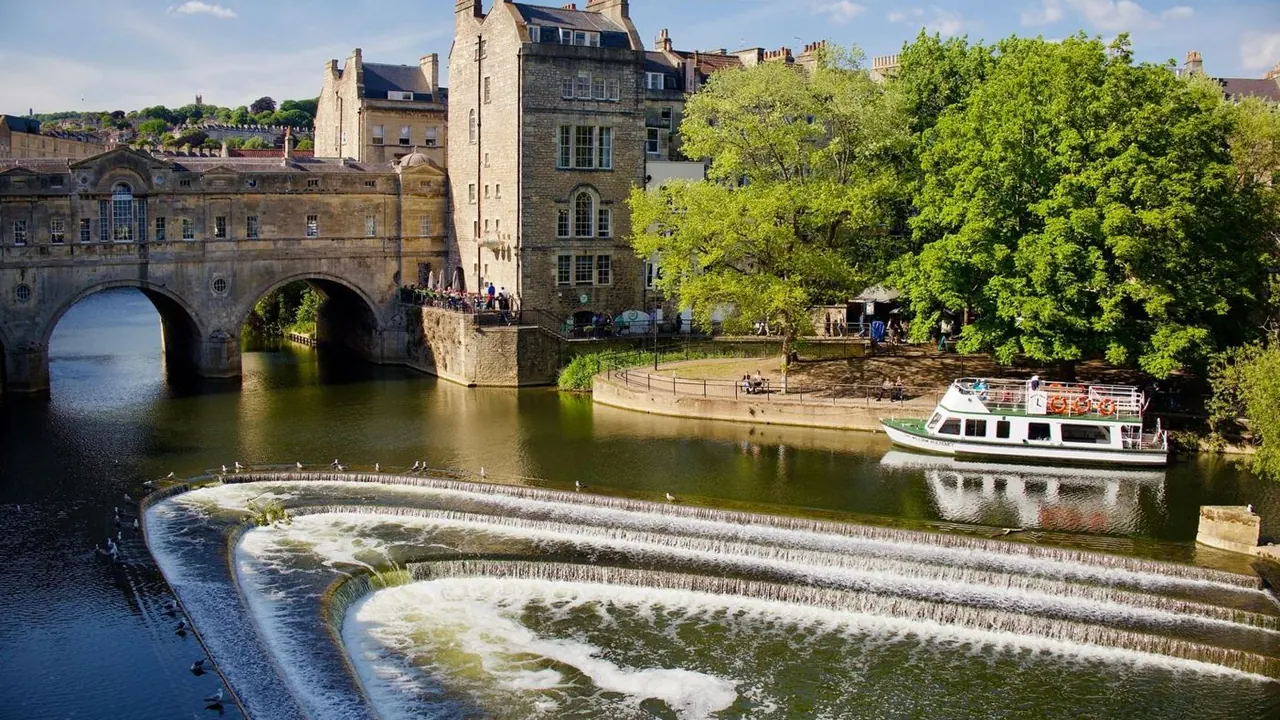
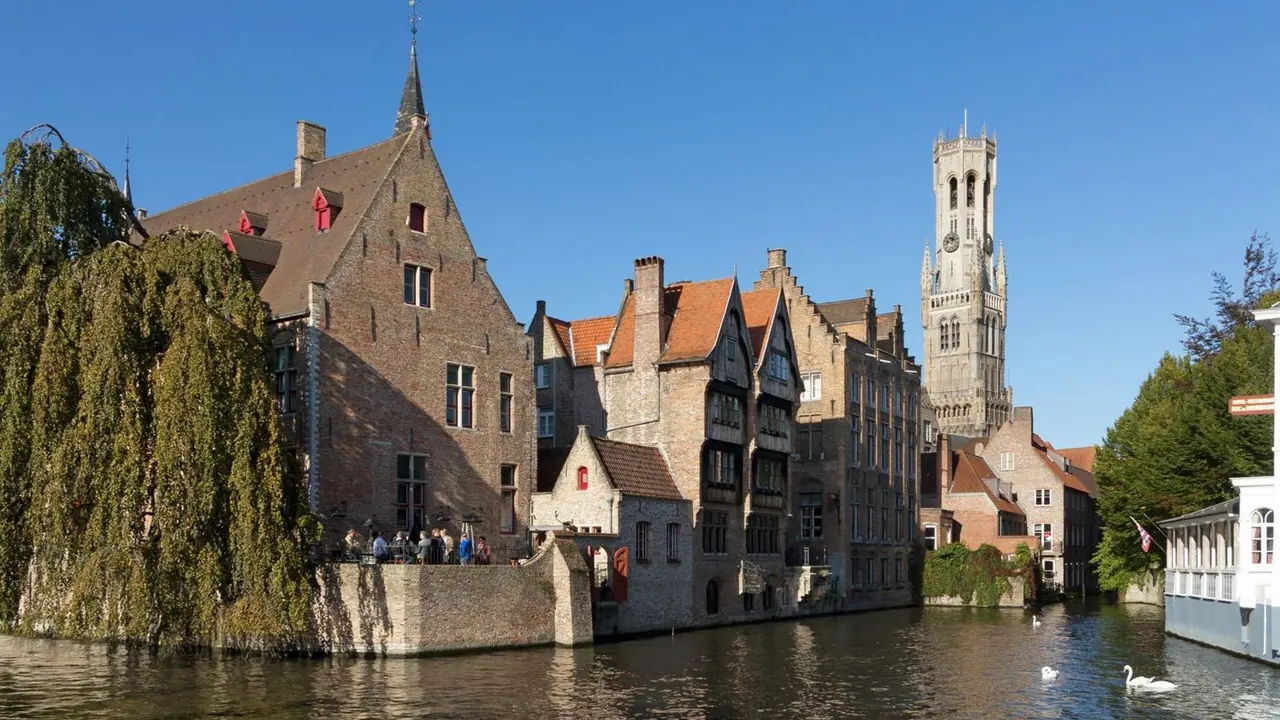
Photos: Bath by Lucas Carlini, Pexels License; Bruges by Michielverbeek, CC BY-SA 4.0, cropped.
Bath or Bruges?
Our verdict in twelve categories, each scored against the same fixed benchmark cities, and the climate month by month, so you can choose for your trip.
Choose Bath for
- wellness
- nature and the outdoors
- shopping
Bath suits the traveller who wants to slow down. It has the only natural thermal bathing in Britain, a rooftop pool looking over the Abbey, and green hills you can walk into straight from the Georgian streets. Its independent shops are better than Bruges's and the countryside is more varied, so it works well for a restful few days of soaking, walking and browsing, with Stonehenge, Wells and the Cotswolds close by if you have a car.
Choose Bruges for
- beaches
- food and drink
- prices
Pick Bruges if you care most about art, beer and an easy trip. The medieval canal city has the stronger collection of old masters, a deeper food and drink culture built around Trappist ales, mussels and chocolate, and fast trains to Ghent, Brussels and Antwerp. It is flat and car-free, a little cheaper, and has proper sand within a short train ride. That makes it the better base for a varied, low-effort tour of Flanders.
Scoreboard
Twelve categories on one fixed scale from 0 to 100. The shaded stretch is the gap between the two.
Your match
Pick a travel style or drag the sliders, and both match scores follow your weighting.
Too close to call, 1 point apart
Wins on wellness and nature and the outdoors with your weighting.
Wins on beaches and food and drink with your weighting.
What matters to you?
Category by category
What the scores mean for a trip.
Beaches & swimming
Neither city is a place for the beach, but Bath is further from good sand. Its nearest seaside, Weston-super-Mare, is an hour away on a muddy channel where the tide goes out a very long way, and clear water means a long day trip to Dorset or Devon. In summer, local swimmers use the Avon instead.
From Bruges a train reaches Blankenberge in about fifteen minutes, and the coast tram runs along an unbroken line of wide sandy beaches. The North Sea is cool and windy, so expect a paddle and a promenade walk rather than a swim, but it is an easy half-day out.
Food & drink
Bruges has more to offer here, mostly because of Belgian beer. Trappist and abbey ales come each in its own glass, alongside mussels with frites, beef stewed in beer and chocolate in every street. There is street food too, from the frites stands near the Markt. To eat well you need to walk a few streets away from the set menus on the main squares.
Bath's food is good but has less range. It cooks with West Country cheese, cider and lamb, has its own Bath bun and Sally Lunn bun, holds a farmers' market in the old Green Park station, and serves afternoon tea all over town. There is little cooking from other countries and almost no street food.
Culture & sights
Both centres are World Heritage Sites, but Bruges has the deeper art collections. Its medieval canals, guildhalls and Begijnhof come with the Flemish Primitives in the Groeninge Museum, Memling in St John's Hospital and a Michelangelo Madonna in the Church of Our Lady. The streets fill with day-trippers by late morning.
Bath's appeal is its architecture: the Royal Crescent, the Circus and Pulteney Bridge in honey-coloured Georgian stone, with the Roman Baths and the Abbey beneath and beside them. Its museums are smaller and more domestic in scale, such as No. 1 Royal Crescent and the Holburne, with Jane Austen in the background.
Nightlife
Both cities go to bed early. The difference is in the kind of drinking. Bath's evenings are pub evenings, with coaching inns and real-ale houses along Walcot Street, student clubs during term and noisy groups on Saturdays. For a bigger night, Bristol is fifteen minutes away by train.
Bruges is better for a long, quiet session over strong ales in a brown café or vaulted cellar around the Eiermarkt, followed by a walk along the lit canals. Clubbing amounts to one or two small venues at weekends.
Nature & outdoors
Bath has much more for walkers. The city sits in a bowl of steep hills, so the Skyline loop, the Kennet and Avon towpath and the Two Tunnels Greenway all start from town. The southern Cotswolds and the Mendips, with Cheddar Gorge and its caves, are within an hour.
Bruges sits in flat polder country, which is lovely by bike but offers little else. The classic outing is the poplar-lined canal ride to Damme, and beyond that there are birds at the Zwin salt marsh and windy walks in the dunes.
Day trips
Both are excellent bases. The difference is what you reach and how you get there. From Bruges, frequent trains reach Ghent in under half an hour and Brussels and Antwerp in about an hour, so a string of great art cities needs no car. Ypres and the First World War sites of the Westhoek are an easy hour away.
Bath's best trips are mostly in the countryside: Stonehenge and Avebury, Wells and Glastonbury, Lacock and the Cotswold villages. Apart from Bristol and Cardiff, which are easy by rail, these work best with a hire car or a small-group tour.
Good for families
Families will find little between them, as both are small, safe cities built more for adults. Bath's highlight for children is the steaming Roman Baths, along with the playground in Royal Victoria Park. Its steep streets wear out anyone pushing a pushchair, and the bigger attractions, such as Bristol's science centre or the safari park at Longleat, are a train ride or drive away.
Bruges has more within easy reach: canal boats, the Belfry climb, the chocolate museum, swans at the Minnewater and Boudewijn Seapark on the edge of town. Beaches for building sandcastles are close too, though the cobbles are hard on pushchairs.
Getting around
Bruges is the easier city to get around. The old town is flat and mostly free of cars, and bikes are easy to hire, so the half-hour walk across the canal ring is no effort apart from the cobbles. Trains to the rest of Flanders are frequent, though the station is a fair walk from the Markt.
Bath's centre is smaller and its station is right in town, but the hills are steep and buses are needed for the higher viewpoints. Once you leave the city, the countryside is poorly served by public transport.
Shopping & style
Bath is the better shopping town. Milsom Street has British fashion brands in Georgian buildings, and the real pleasure is in the independents: bookshops and jewellers in the lanes around the Abbey, antiques on Bartlett Street, the makers and salvage dealers of Walcot Street, and the old covered Guildhall Market.
In Bruges you mostly buy things to eat and drink, such as chocolate and Belgian beer with the right glasses. Much of the lace near the Markt is imported, and the main street is mostly chains. The Saturday market on 't Zand and the flea market on the Dijver are worth browsing.
Affordability
Neither city is cheap, but Bruges costs a little less. Its beer is good value for the quality, day trips by train are reasonably priced, and a room near the station rather than inside the canal ring brings the bill down.
Bath is the dearer stay, especially on summer weekends and at Christmas. The Roman Baths and the spa both cost a fair amount on top. Pub lunches help, and sleeping in Bristol and taking the train over saves the most.
Live music & performing arts
The two are evenly matched, each with modest options, but they suit different tastes. Bath is a theatre town, built around the gilded Georgian Theatre Royal with its touring plays, opera and Christmas pantomime. Bands and comedy play at the Art Deco Forum, and there are festivals of literature and Mozart.
Bruges is stronger on music. The Concertgebouw specialises in early music, chamber music and contemporary dance, a long-running summer festival of early music draws listeners from across Europe, and the Belfry carillon plays over the rooftops.
Wellness & relaxation
For relaxation, Bath is well ahead. It was built on hot springs that rise at about 46°C, and you can still bathe in the water. Thermae Bath Spa has a rooftop pool overlooking the Abbey, and across the lane is the small Cross Bath. Tea in the Pump Room and walks through the Parade Gardens keep the pace slow.
Bruges has no bathing tradition, only hotel and day spas. Its calm comes from timing: the Begijnhof, the Minnewater and the Sint-Anna quarter are peaceful early and late in the day, once the tour groups have gone.
When should you go?
Pick your month. The climate figures are measured averages, not a forecast.
Bath in July
Bruges in July
Daytime high, °C
Rainfall in the month, mm
Where the figures come from
Bath's temperatures are measured 29 km from the centre, at Lyneham.
Bath has no rain gauge within 25 km of the centre, so its rainfall comes from a gridded climate dataset read at the city rather than from a gauge further away.
Bruges has no rain gauge within 25 km of the centre, so its rainfall comes from a gridded climate dataset read at the city rather than from a gauge further away.
Bruges's sunshine is measured 37 km from the centre, at Vlissingen.
Temperature and rainfall are climate normals, averaged over the years shown. Bath: 1991-2020 normals, Lyneham (29.2 km from centre). Bruges: 2009-2025 (sunshine 1991-2020, rainfall 1991-2020) normals, Zeebrugge / Zeemanshaard (15.8 km from centre).
The two cities follow almost the same temperature curve. Both are cold and grey from December to February, mild in spring, and reach about 21°C to 22°C in July and August, which is pleasant for walking but never beach weather. The difference is in rain and light. Bath is driest from February to September and wettest from October through January, when October brings about 87mm. Winter is still its most atmospheric time to bathe outdoors in the warm spring water.
Bruges is clearly the sunnier of the two, especially from April to June, and April is its driest month at about 43mm, which makes late spring its best season. Its rain builds through late summer and stays high into winter. Both cities have the sea data of a cool northern coast, reaching about 19°C off Bruges in August, warm enough for a paddle and little more.
Which traveller are you?
On a relaxing and wellness trip, choose Bath. You can soak in natural hot spring water in the rooftop pool or the small Cross Bath, then take tea in the Pump Room. Bruges has only hotel spas and quiet canals early in the morning.
For an outdoors trip, Bath is the better base. The Skyline walk, the canal towpath and the Two Tunnels cycle route start from town, and the Cotswolds and Cheddar Gorge are close. The flat polder around Bruges is pleasant for gentle cycling but has nothing more demanding.
On a food and nightlife trip, Bruges comes out ahead. Long beer lists in wood-panelled cafés, mussels, stews and frites stands give it more depth than Bath's pubs and tearooms. Neither city stays up late, but Bruges's cellar bars make a better evening.
Before you go
| Measure | Bath | Bruges |
|---|---|---|
| Official language | English | French, German, Dutch |
| Currency | Pound Sterling (GBP) | Euro (EUR) |
| Sockets | G230 V, 50 Hz | CE230 V, 50 Hz |
| Driving side | Left | Right |
| Time zone | UTC, UTC+1 in summer | UTC+1, UTC+2 in summer |
| Emergency number | 112 or 999 | 112 |
| Elevation | 132 m | 2 m |
| Main airport | Bristol Airport (BRS)25 km from centre117 non-stop destinations | Brussels Airport (BRU)94 km from centre191 non-stop destinations |
| Public holidays this year | 8 days | 14 days |
By the numbers
| Measure | Bath | Bruges |
|---|---|---|
| City population | 94,092 | 118,509 |
| People per km² | 3,245 | 840 |
| Museums within 10 km | 17 | 38 |
| UNESCO World Heritage sites within 50 km | 2 | 3 |
| Swim season, months above 21 °C | None | None |
Where else could you go?
Every comparison below shares a destination with this one, so you can follow Bath or Bruges somewhere new.