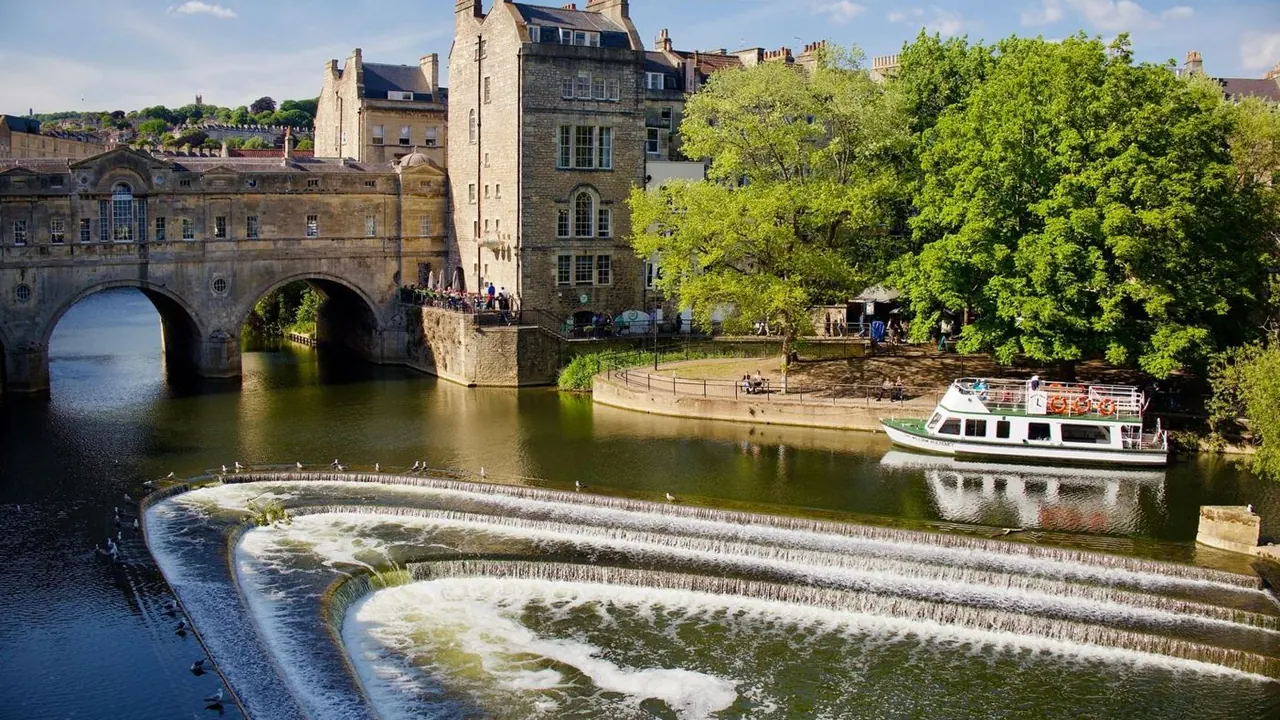
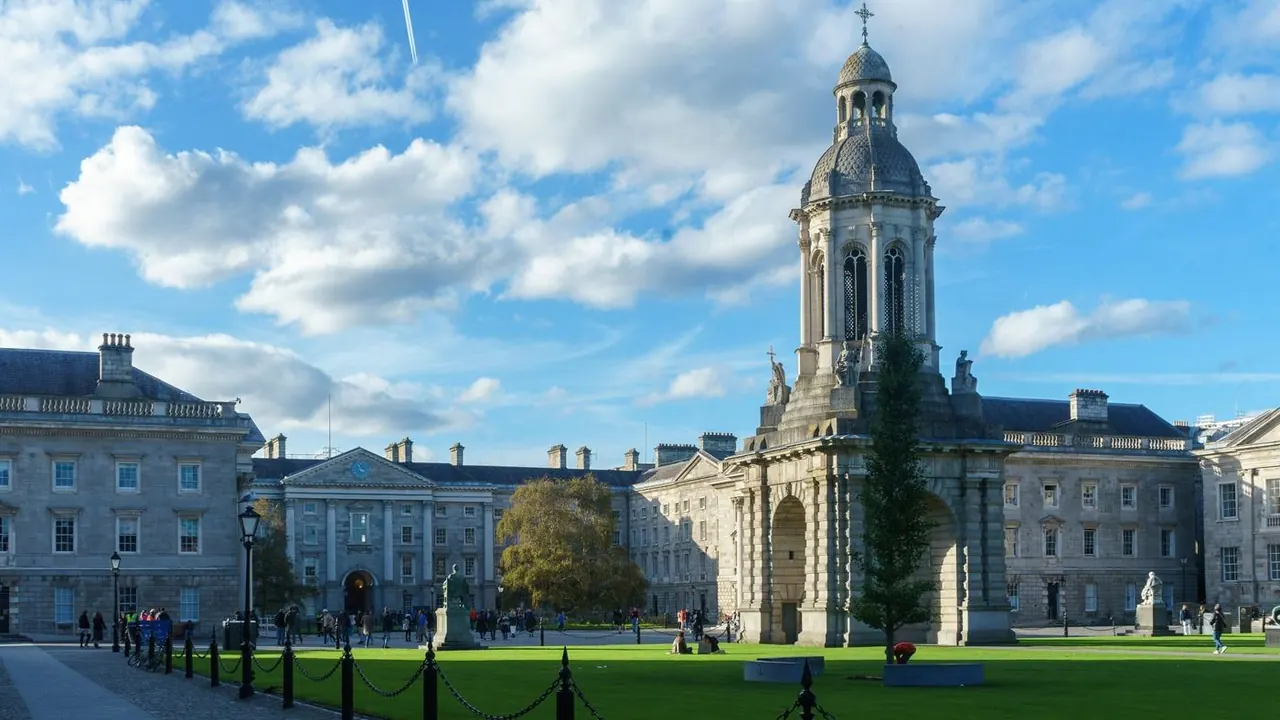
Photos: Bath by Lucas Carlini, Pexels License; Dublin by David Kernan, CC BY 4.0, cropped.
Bath or Dublin?
Our verdict in twelve categories, each scored against the same fixed benchmark cities, and the climate month by month, so you can choose for your trip.
Choose Bath for
- wellness
- day trips
- prices
Bath suits a slower, gentler trip: a couple of days among the Georgian crescents and the Roman Baths, an evening soak in the rooftop thermal pool, and outings to Stonehenge, Wells or the Cotswold villages. It is the better base for travellers who would rather turn in early than stay out late, and its small centre makes a short stay easy.
Choose Dublin for
- nightlife
- live music and the arts
- beaches
Pick Dublin if the evenings matter as much as the days. Its pubs, traditional music sessions and theatres such as the Abbey and the Gate give it a social life Bath cannot match. The DART puts the sea cliffs at Howth within easy reach, and the Wicklow hills are close by. It is also the easier city with children, though rooms cost even more.
Scoreboard
Twelve categories on one fixed scale from 0 to 100. The shaded stretch is the gap between the two.
Your match
Pick a travel style or drag the sliders, and both match scores follow your weighting.
Too close to call, 2 points apart
Wins on wellness and day trips with your weighting.
Wins on nightlife and live music and the arts with your weighting.
What matters to you?
Category by category
What the scores mean for a trip.
Beaches & swimming
Neither is a beach city, but Dublin at least has a coast. The sandy strands at Dollymount, Sandymount and Killiney are a DART ride away, and the year-round swimmers at the Forty Foot make a cold dip a sociable local habit that is worth trying.
Bath has no seafront at all. The nearest sea is the brown, tidal Bristol Channel at Weston-super-Mare, an hour away, so swimming in Bath means a river dip in the Avon on a hot day or a long drive to Dorset or Devon.
Food & drink
Dublin eats a little better, largely because of what it pours: stout drawn slowly in Victorian pubs, whiskey distilleries and some Saturday market street food, along with modern bistros cooking Atlantic fish and Irish beef. Bath has the more particular local flavour, with Sally Lunn and Bath buns, West Country cheese and cider, the farmers' market at Green Park and afternoon tea, but it has less variety and its kitchens wind down early.
Culture & sights
These two are close, and both are built on Georgian streets, but they feel quite different. Bath is a single architectural set piece in honey-coloured stone, with the Royal Crescent, the Circus and the Roman Baths, and the city itself is the main exhibit.
Dublin's Georgian terraces are red brick, and its best culture is found indoors: the Book of Kells at Trinity, the free national museums, the Chester Beatty Library and the hard history told at Kilmainham Gaol. Choose Bath for the townscape and the Roman remains, and Dublin for its collections and its literary and political history.
Nightlife
Both cities go out to the pub, but Dublin does it on a different scale. Between the old bars with snugs and mahogany counters, the younger late-night strip along Camden and Wexford Streets and the noise of Temple Bar, a full night out is easy to find.
Bath has cosy coaching inns and real-ale houses on Walcot Street, but on weeknights it goes quiet soon after dinner, and its few student clubs offer even less than Dublin's thin club scene. For a big night, people in Bath take the train to Bristol.
Nature & outdoors
Dublin has more on its doorstep and more variety. Phoenix Park with its deer, the wading birds on North Bull Island, the sea cliffs at Howth and the bog, forest and lakes of the Wicklow Mountains around Glendalough give it coast and hills together.
Bath's countryside is softer and entirely inland: the Skyline walk along the ridges, the Kennet and Avon towpath, the Two Tunnels cycle route and, within an hour, Cheddar Gorge in the Mendips. Bath's paths get muddy in a grey winter, while Dublin stays green all year.
Day trips
Bath is the stronger base for outings, with famous places packed closely around it: Stonehenge and Avebury, Wells and Glastonbury, Lacock and the Cotswold villages, and Bristol a quarter of an hour away by train.
Dublin's best outing, the prehistoric tombs of Newgrange and Knowth in the Boyne Valley, is as good as anything near Bath, and Glendalough, Kilkenny and Belfast add to it, but the choice is narrower. Around both cities, the rural sites are far easier with a car or a tour.
Good for families
Dublin is the easier city with children. Dublin Zoo sits inside Phoenix Park, the natural history museum is free, Dublinia's Vikings and the hands-on children's museums fill a wet afternoon, and pubs welcome families at lunchtime.
Children enjoy Bath's Roman Baths and the playground in Royal Victoria Park, but there is little else aimed at them, and the steep streets are hard going with a pushchair. Families staying there tend to head out to Bristol's science centre or the safari park at Longleat.
Getting around
Both centres are walkable, and Bath's is slightly more so: its main sights fit into a twenty-minute walk, much of it pedestrianised, though buses help with the steep climbs to the outer viewpoints. Dublin's flat centre covers more ground. Its trams and the DART along the bay make the coast simple to reach, but buses elsewhere can crawl in traffic.
Drivers do best to leave the car at a park-and-ride outside Bath, while in Dublin you need no car at all within the city.
Shopping & style
The two are evenly matched for shopping, but the goods differ. In Bath the pleasure is browsing: antiques on Bartlett Street, the makers and salvage dealers of Walcot Street, the centuries-old Guildhall Market and the little shops on Pulteney Bridge. Dublin's shopping centres on Grafton Street, with its long-established department store and the Powerscourt Townhouse arcade, and what you take home is distinctly Irish, from Aran knitwear and linen to whiskey.
Affordability
Neither is cheap, but Dublin is harder on a budget. Its hotel rooms are among the dearest in Europe, and a round in a central pub adds up quickly.
Bath is expensive too, especially on summer weekends and at Christmas, and the Roman Baths and the spa cost a fair amount, though pub lunches help. Dublin's free national museums and gallery are a real saving. In both cities, sleeping outside the centre, in Bristol or near a DART stop, cuts the bill the most.
Live music & performing arts
Dublin offers far more for an evening out. The Abbey, the national theatre, and the Gate stage serious drama, the National Concert Hall is home to the national symphony orchestra, and fiddle and bodhrán sessions play in pubs almost every night.
Bath has one fine Georgian playhouse, the Theatre Royal, with touring plays, opera and pantomime, plus concerts in the Abbey and the Assembly Rooms and festivals of literature and music. Neither city has a permanent opera house, but on an ordinary weeknight Bath has much less on.
Wellness & relaxation
This is where Bath is furthest ahead. Its springs rise at about 46°C, and no other British city lets you soak in natural thermal water, whether in the open-air rooftop pool at Thermae Bath Spa or the small Georgian Cross Bath, with tea in the Pump Room afterwards.
Dublin has no thermal tradition. Its one ritual is a cold sea dip at the Forty Foot followed by a seafront sauna, and its calm comes from parks and quiet squares rather than spas.
When should you go?
Pick your month. The climate figures are measured averages, not a forecast.
Bath in July
Dublin in July
Daytime high, °C
Rainfall in the month, mm
Where the figures come from
Bath's temperatures are measured 29 km from the centre, at Lyneham.
Bath has no rain gauge within 25 km of the centre, so its rainfall comes from a gridded climate dataset read at the city rather than from a gauge further away.
Temperature and rainfall are climate normals, averaged over the years shown. Bath: 1991-2020 normals, Lyneham (29.2 km from centre). Dublin: 1991-2020 normals, Dublin Airport (9.3 km from centre).
Neither city has real beach weather. Summer highs peak around 21°C in Bath in July and August, with Dublin a degree or so cooler, and the sea never warms up: off Dublin it tops out near 15°C, and the Bristol Channel nearest Bath is only a few degrees warmer. Late spring to early September is the best time for both. Bath is clearly the sunnier of the two in high summer, while Dublin gets its brightest weather in May.
Rain falls all year in both cities, but the wet seasons differ a little. Bath is wettest from October to January, peaking at about 90mm in December, while Dublin has a damp August and is wettest in November. Winters in both are mild but grey and short of daylight, with highs of around 7 to 8°C. That is fine for museums and, in Bath, a hot spring soak, but less inviting for long walks.
Which traveller are you?
On a relaxing and wellness trip, Bath is the clear choice. It is the one place in Britain where you can bathe in natural thermal water, in a rooftop pool above the Abbey or the small Cross Bath. Dublin's nearest equivalent is a cold sea dip and a sauna.
For a food and nightlife trip, Dublin wins. The old pubs around Baggot Street and the late bars on Camden and Wexford Streets are still busy long after Bath has gone quiet, and stout, whiskey and Irish produce give you more to explore than Bath's tearooms.
On an outdoors trip, Dublin has the edge. Phoenix Park, the cliff path at Howth and the granite hills and lakes of Wicklow are all close by. Bath offers gentler walking on its Skyline loop, the canal towpath and the southern Cotswolds.
Before you go
| Measure | Bath | Dublin |
|---|---|---|
| Official language | English | English, Irish |
| Currency | Pound Sterling (GBP) | Euro (EUR) |
| Sockets | G230 V, 50 Hz | G230 V, 50 Hz |
| Driving side | Left | Left |
| Time zone | UTC, UTC+1 in summer | UTC, UTC+1 in summer |
| Emergency number | 112 or 999 | 112 |
| Elevation | 132 m | 20 m |
| Main airport | Bristol Airport (BRS)25 km from centre117 non-stop destinations | Dublin Airport (DUB)9 km from centre200 non-stop destinations |
| Public holidays this year | 8 days | 11 days |
By the numbers
| Measure | Bath | Dublin |
|---|---|---|
| City population | 94,092 | 592,713 |
| People per km² | 3,245 | 5,154 |
| Museums within 10 km | 17 | 40 |
| UNESCO World Heritage sites within 50 km | 2 | 1 |
| Swim season, months above 21 °C | None | None |
Where else could you go?
Every comparison below shares a destination with this one, so you can follow Bath or Dublin somewhere new.