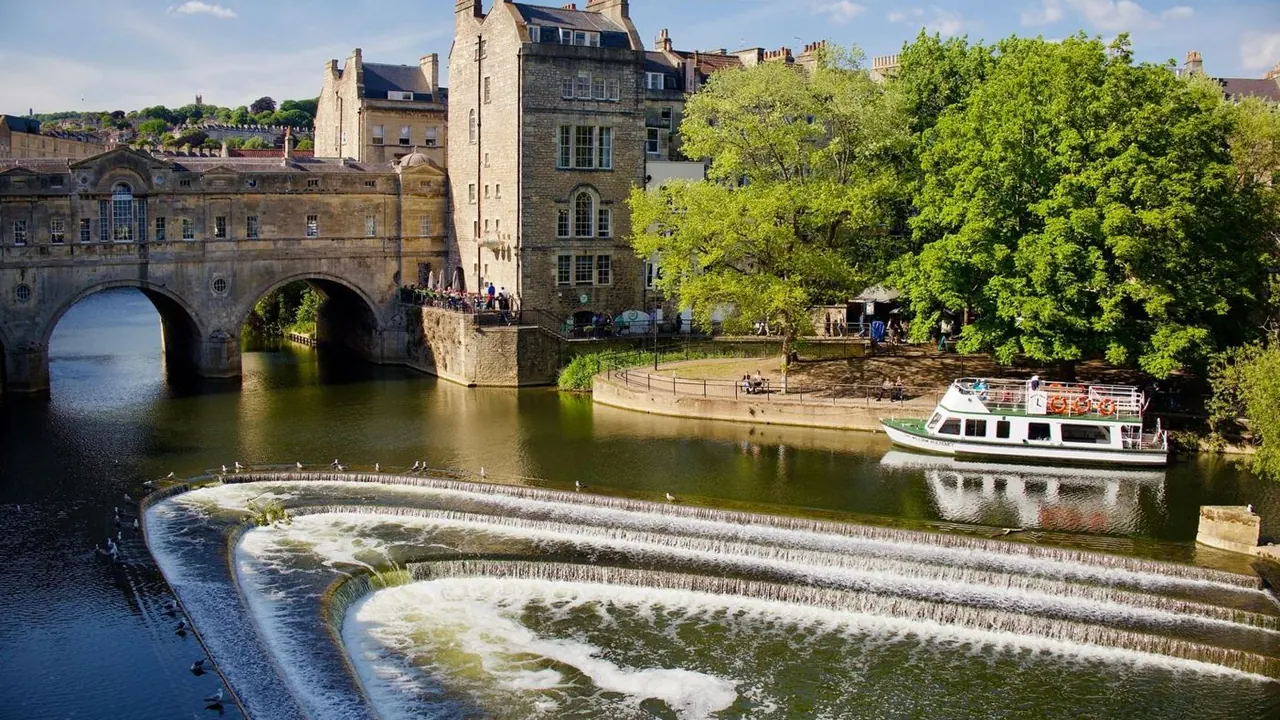
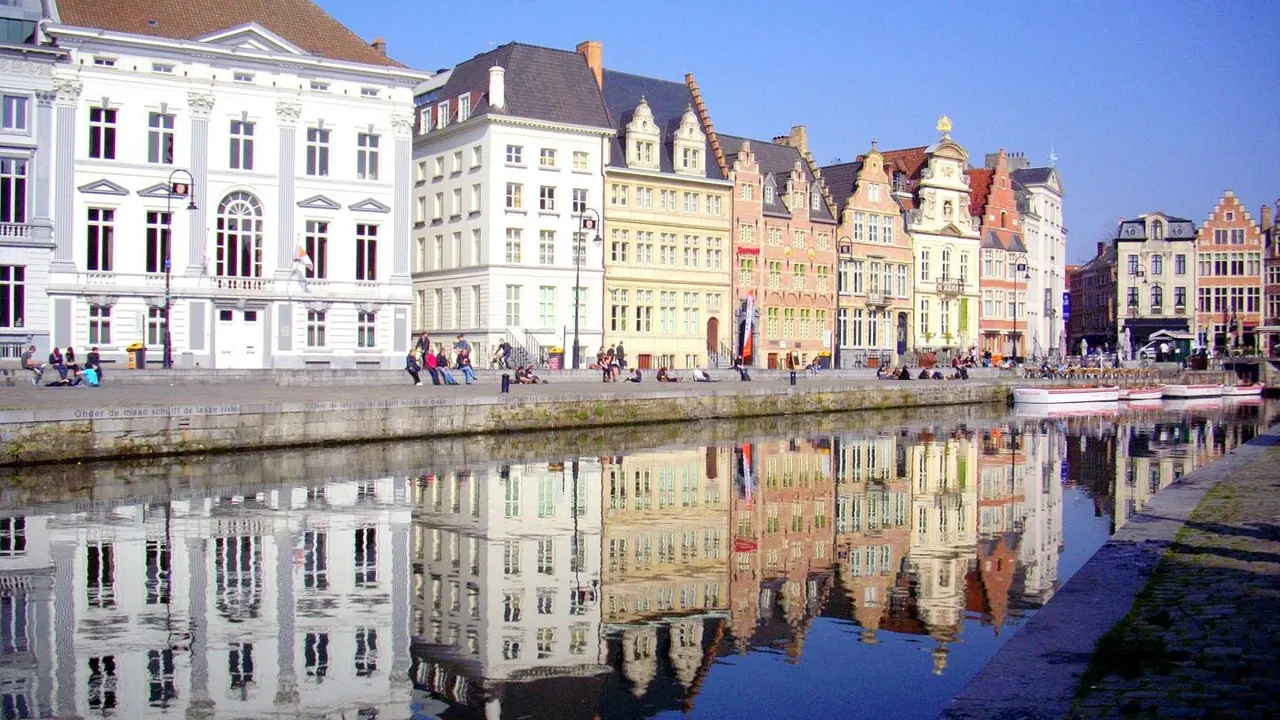
Photos: Bath by Lucas Carlini, Pexels License; Ghent by ykeiko, CC BY-SA 3.0, cropped.
Bath or Ghent?
Our verdict in twelve categories, each scored against the same fixed benchmark cities, and the climate month by month, so you can choose for your trip.
Choose Bath for
- wellness
- nature and the outdoors
- shopping
Bath suits a slower, gentler trip. Its draw is the warm spring water that still fills the Roman Baths and the rooftop spa pool, a Georgian townscape in honey-coloured stone, and green hills you can walk into straight from the centre. Pick it for a restful long weekend of soaking, strolling and afternoon tea, and accept that evenings end early and rooms are dear.
Choose Ghent for
- nightlife
- food and drink
- live music and the arts
Ghent is the better choice if you want more going on after dark and more to see within an easy train ride. Its brown cafés pour long beer lists, the student quarter keeps going late, and the opera house and city theatre give it a real stage life. Bruges, Brussels and Antwerp are all close by rail, and the bill is somewhat kinder, which makes it a good base for exploring Flanders without a car.
Scoreboard
Twelve categories on one fixed scale from 0 to 100. The shaded stretch is the gap between the two.
Your match
Pick a travel style or drag the sliders, and both match scores follow your weighting.
Wins on wellness and nature and the outdoors with your weighting.
Wins on nightlife and food and drink with your weighting.
What matters to you?
Category by category
What the scores mean for a trip.
Beaches & swimming
Neither city is a beach destination, but Ghent gets you to proper sand more easily. Trains reach Ostend in about an hour, and the coast tram links a long line of wide beaches backed by dunes. In summer the Blaarmeersen lake on the city's edge also has a sandy shore with supervised swimming.
From Bath, the nearest seaside is Weston-super-Mare, where the water is brown and shallow and the tide goes out a very long way. For good sand you need Dorset or Devon, two hours or more each way. Locals cool off in the Avon instead.
Food & drink
Ghent gives you more to eat and drink. It has its own dishes, such as waterzooi and beef stewed in dark beer, plus grey shrimp croquettes, frites from paper cones and an unusually good choice for vegetarians. Its real strength is beer, poured from long lists in the old cafés of the Patershol and the Vrijdagmarkt.
Bath eats well within narrower limits. Expect West Country cheese, Somerset cider, the Sally Lunn bun and afternoon tea in Georgian tearooms, with the farmers' market at Green Park station as a highlight. There is little cooking from other cuisines and almost no street food.
Culture & sights
Both reward two or three days of sightseeing equally well, but in different ways. Bath is a single Georgian set piece. The Circus, the Royal Crescent and Pulteney Bridge sit a short walk apart, with the Roman Baths and their steaming great bath below.
Ghent is a working medieval city with a castle, guildhalls along the Leie and three towers lined up in one view. Its single great treasure is the van Eyck brothers' Ghent Altarpiece, and its art museums, from Flemish masters to the contemporary SMAK, are stronger than Bath's smaller house museums.
Nightlife
Ghent is much livelier after dark. Its large university keeps the Overpoort bars loud and late in term time, the cafés around Oudburg suit long evenings over strong beer, and in summer people drink along the quaysides. For ten days every July, the Gentse Feesten turns the whole centre into a street party.
Bath's evenings revolve around coaching inns and real-ale pubs, and on weeknights the city is quiet soon after dinner. For a bigger night out, most people take the short train ride to Bristol.
Nature & outdoors
Bath has the better walking country. It sits in a bowl of steep hills, so you can climb straight from town onto the Skyline ridges or follow the Kennet and Avon towpath east. The Cotswolds and the Mendips, with Cheddar Gorge and its caves, are within an hour.
Ghent's surroundings are flat farmland. Outdoors there means riverside cycling towards Sint-Martens-Latem, birdwatching at the Bourgoyen-Ossemeersen wetland and kayaking at the Blaarmeersen. It is pleasant, but it has nothing to match Bath's hills.
Day trips
Both make excellent bases, but Ghent's day trips are easier to do. Bruges, Brussels and Antwerp are each under an hour away by frequent train, and Mechelen, Leuven, Ypres and Lille are also in range, so you never need a car.
Bath has a remarkable list of its own, including Stonehenge, Avebury, Wells, Glastonbury and Lacock, with Bristol fifteen minutes away by rail. Many of the stone circles and villages, though, are much easier to reach by car or on a small-group tour.
Good for families
With children the two are evenly matched, and both are safe and small. Bath has the steaming Roman Baths with costumed characters and a big playground in Royal Victoria Park, and Bristol's science centre and aquarium are close by train. Steep streets make pushchairs a struggle.
Ghent counters with the armour and battlements of the Gravensteen, the old toys at the House of Alijn and a lake beach at the Blaarmeersen. Its largely car-free centre is a relief with small children, though the cobbles are hard on wheels.
Getting around
Ghent is a little easier to get around. Its centre is flat and largely free of cars, trams cover the rest of the city, and bikes are the local way to travel, with lanes everywhere. The main station is a twenty-minute walk from the centre, but frequent trains reach the rest of Flanders.
Bath's centre is just as walkable end to end, and its station sits right at the bottom of town. The hills are steep, though, and the countryside sights beyond the city are poorly served by public transport.
Shopping & style
Shopping is on a similar level in both, and neither has a luxury tier. Bath is better for browsing independent shops, with antiques on Bartlett Street, makers and salvage dealers on Walcot Street, and little shops lining Pulteney Bridge.
Ghent's strengths are its markets and edible souvenirs. There is the weekend flea market at Sint-Jacobs, flowers on the Kouter, and chocolate, cuberdons and the city's mustard to take home. The student quarter is good for vintage clothes.
Affordability
Ghent is easier on the budget. Its hotel rooms are moderately priced for a historic city for most of the year, July aside, and several churches, including St Bavo's Cathedral, are free to enter. Long dinners with Belgian beer still add up.
Bath is dear to sleep in, especially on summer weekends and around Christmas, and both the Roman Baths and the spa cost a lot. Visiting midweek or staying in Bristol is the usual way to cut the bill.
Live music & performing arts
Ghent has the stronger stage life. Its nineteenth-century opera house stages opera and ballet for the Flemish national company, NTGent is known abroad for bold productions, mostly in Dutch, and De Bijloke hosts early and classical music in a medieval hospital.
Bath relies on the gilded Theatre Royal for touring drama, opera and pantomime, along with concerts in the Abbey and festivals of literature, music and Mozart. It has no resident company, and on most nights there is little choice.
Wellness & relaxation
Here Bath is in a different league. It is the one place in Britain where you can bathe in natural thermal water, either in the open-air rooftop pool looking out over the Abbey or in the small Georgian Cross Bath. Tea in the Pump Room and the riverside gardens complete a slow day.
Ghent has no bathing culture beyond a few hotel spas. Its quiet comes from the enclosed beguinage gardens, walks along the Coupure canal and calm Sundays.
When should you go?
Pick your month. The climate figures are measured averages, not a forecast.
Bath in July
Ghent in July
Daytime high, °C
Rainfall in the month, mm
Where the figures come from
Bath's temperatures are measured 29 km from the centre, at Lyneham.
Bath has no rain gauge within 25 km of the centre, so its rainfall comes from a gridded climate dataset read at the city rather than from a gauge further away.
Ghent has no rain gauge within 25 km of the centre, so its rainfall comes from a gridded climate dataset read at the city rather than from a gauge further away.
Ghent's sunshine is measured 45 km from the centre, at Vlissingen.
Temperature and rainfall are climate normals, averaged over the years shown. Bath: 1991-2020 normals, Lyneham (29.2 km from centre). Ghent: 2009-2025 (sunshine 1991-2020, rainfall 1991-2020) normals, Melle / Kalverhaag (10.1 km from centre).
The two cities follow almost the same temperature curve. Both are cold and grey from November to February and mild by May, and both peak in July and August at around 21°C to 22°C, which is pleasant walking weather but never beach heat. The sea within reach of either city stays cool even at its warmest, so swimming is an occasional bracing dip rather than a reason to go.
The rain falls at different times of year. In Bath, late spring and summer are the drier part of the year and the wettest spell is autumn into winter, peaking around 90mm in December, when the hill paths turn muddy. Ghent is driest in spring, with about 45mm in April, and wetter from July through to winter. It also gets noticeably more sunshine from spring to early autumn. For walking, May and June suit Ghent best, while Bath is at its best from late spring through September. Bath's thermal pools also make a cold, dark winter evening worth having.
Which traveller are you?
On a relaxing and wellness trip, Bath is the clear choice. You can bathe in natural thermal water at the rooftop spa or the small Cross Bath, then take tea in the Pump Room. Ghent has no bathing culture and offers only quiet canal walks.
For a food and nightlife trip, choose Ghent. Waterzooi, mussels and frites come with old brown cafés pouring Trappist and lambic beers, and the student bars of the Overpoort run late. Bath's evenings mostly end at the pub soon after dinner.
On an outdoors trip, Bath gives you much more. The Skyline loop, the canal towpath and the Two Tunnels Greenway start from the edge of town, and the Cotswolds and Cheddar Gorge are close. Around Ghent the countryside is flat farmland, which is good mainly for gentle cycling.
Before you go
| Measure | Bath | Ghent |
|---|---|---|
| Official language | English | French, German, Dutch |
| Currency | Pound Sterling (GBP) | Euro (EUR) |
| Sockets | G230 V, 50 Hz | CE230 V, 50 Hz |
| Driving side | Left | Right |
| Time zone | UTC, UTC+1 in summer | UTC+1, UTC+2 in summer |
| Emergency number | 112 or 999 | 112 |
| Elevation | 132 m | 12 m |
| Main airport | Bristol Airport (BRS)25 km from centre117 non-stop destinations | Brussels Airport (BRU)56 km from centre191 non-stop destinations |
| Public holidays this year | 8 days | 14 days |
By the numbers
| Measure | Bath | Ghent |
|---|---|---|
| City population | 94,092 | 272,657 |
| People per km² | 3,245 | 1,728 |
| Museums within 10 km | 17 | 30 |
| UNESCO World Heritage sites within 50 km | 2 | 5 |
| Swim season, months above 21 °C | None | None |
Where else could you go?
Every comparison below shares a destination with this one, so you can follow Bath or Ghent somewhere new.