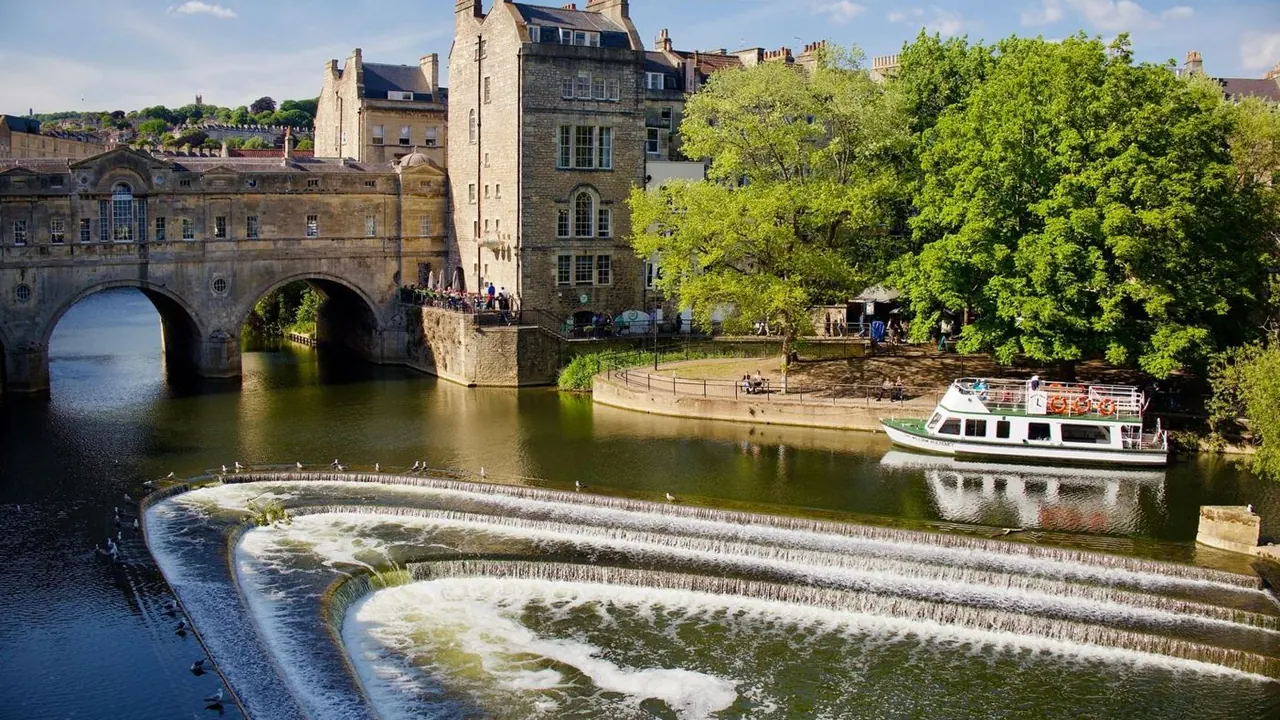
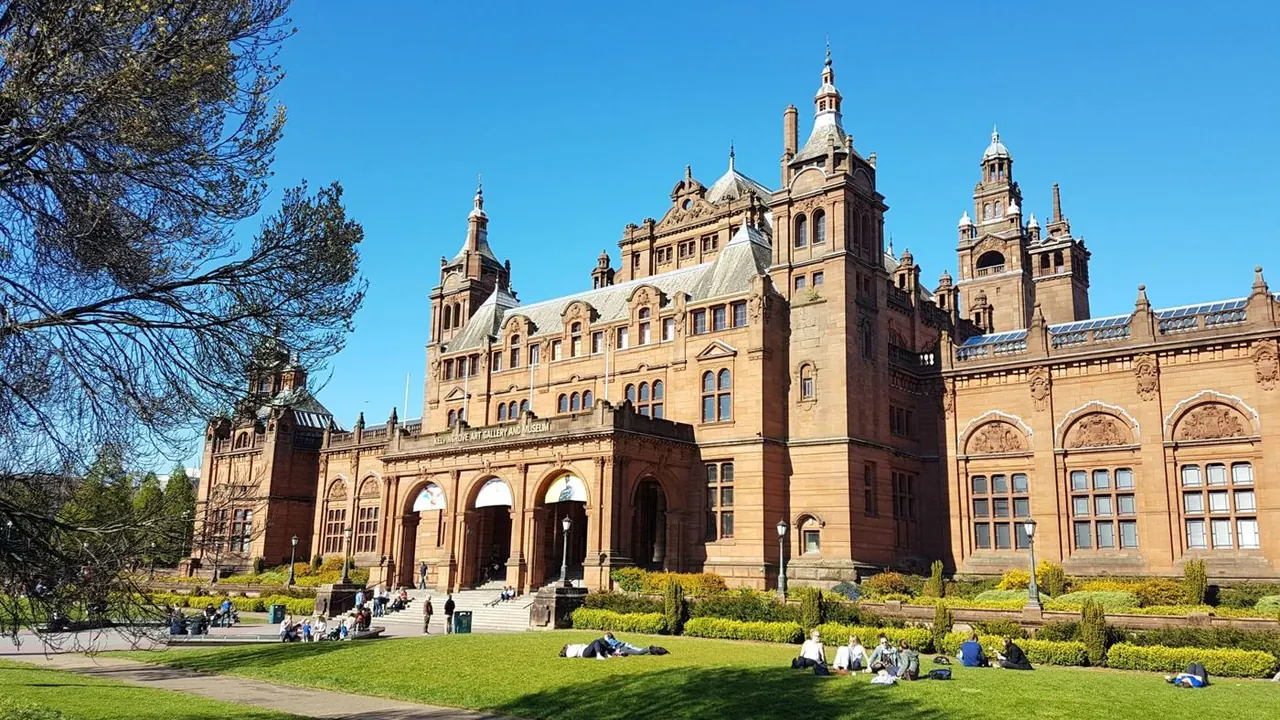
Photos: Bath by Lucas Carlini, Pexels License; Glasgow by Stinglehammer, CC BY-SA 4.0, cropped.
Bath or Glasgow?
Our verdict in twelve categories, each scored against the same fixed benchmark cities, and the climate month by month, so you can choose for your trip.
Choose Bath for
- wellness
- culture and sights
- getting around
Bath suits a slow, polished trip where the setting is the point. The whole town is a Georgian set piece you can cover on foot, with the Roman Baths and the Abbey at its centre, and it is the one place in Britain where you can soak in natural hot spring water, on a rooftop above the city. Couples, architecture lovers and anyone wanting a restful few days will feel at home, as long as they accept quiet evenings and a higher bill.
Choose Glasgow for
- nightlife
- live music and the arts
- prices
Choose Glasgow if you want a big, sociable city with more going on after dark and more to do for less. Its gig circuit, orchestras and late bars are in a different league from Bath's, its great museums cost nothing to enter, and Loch Lomond and the start of the Highlands are close by. It is the better pick for music fans, groups of friends and walkers who don't mind rain.
Scoreboard
Twelve categories on one fixed scale from 0 to 100. The shaded stretch is the gap between the two.
Your match
Pick a travel style or drag the sliders, and both match scores follow your weighting.
Wins on wellness and culture and sights with your weighting.
Wins on nightlife and live music and the arts with your weighting.
What matters to you?
Category by category
What the scores mean for a trip.
Beaches & swimming
Neither city is a place for beach days, but the water you can reach is different. Around Bath, the summer swim is in the river, at a weir on the Avon or at spots upstream, while the nearby sea at Weston is shallow and brown, and good sand means a long drive to Dorset or Devon.
Glasgow has the Firth of Clyde about an hour away by train, with promenades at Largs, Troon and Ayr and views across to Arran. The sea there is colder, so this coast is for a walk and fish and chips rather than for swimming.
Food & drink
Glasgow gives you more range at the table. South Asian cooking is its strongest card, Italian families shaped its cafés and chip shops, and you can move between Finnieston's modern Scottish seafood and game, brunch in the West End and small local places in Shawlands and Strathbungo.
Bath is narrower but has a West Country character of its own: farmhouse cheese, Somerset cider, the Sally Lunn bun, the farmers' market in the old Green Park station and afternoon tea in Georgian rooms. You will find little food from other cuisines, almost no street food, and kitchens close early.
Culture & sights
Bath has the stronger set of sights, because the city itself is the monument. The Royal Crescent, the Circus, Pulteney Bridge and the Assembly Rooms form one complete Georgian townscape in honey-coloured stone, with the Roman Baths and the Abbey's fan vaulting at its heart, all a few minutes' walk apart.
Glasgow's culture is Victorian and spread more widely, and its strength is its collections rather than any one famous landmark. Kelvingrove and the Burrell hold enormous and varied collections, and Mackintosh's buildings and the Necropolis above the medieval cathedral give the city a character that is entirely its own.
Nightlife
Glasgow is by far the better night out. Merchant City cocktail bars, the late bars and student clubs around Sauchiehall Street and a well-respected underground techno and house scene keep things going until the clubs close in the small hours.
Bath's evenings are built around the pub, such as a coaching inn or a real-ale house on Walcot Street, and on weeknights most visitors are back at their hotel early. Locals who want a big night take the train to Bristol.
Nature & outdoors
Glasgow sits on the edge of real mountain and loch country. Loch Lomond and Ben Lomond are well under an hour away, the Trossachs lie just beyond, the West Highland Way begins on the city's northern edge, and the ferry to Arran leads to rugged island walking around Goatfell.
From Bath, the countryside starts at the end of the street. The Skyline loop, the Kennet and Avon towpath and the Two Tunnels Greenway are easy to reach on foot or by bike, and the Cotswolds and Cheddar Gorge are close by. The landscape is gentler, though: rolling and pastoral rather than wild.
Day trips
Both make excellent bases, but they lead to different journeys. From Bath you head into ancient and rural England: Stonehenge and Avebury, Wells and Glastonbury, Lacock and the Cotswold villages. Bristol is a short train hop, but many of the best stops are far easier with a car or on a tour.
Glasgow's big outings mostly run by train: Edinburgh in under an hour, Stirling Castle, Linlithgow Palace and New Lanark. Ferries add island days on Bute and Arran, so its trips mix capital-city sightseeing with the sea.
Good for families
Glasgow keeps children busier inside the city. The Riverside Museum's trams and tall ship, the Spitfire at Kelvingrove and the Science Centre on the Clyde are all hands-on, and most are free, which helps on the rainy days you will certainly get.
In Bath the Roman Baths and the playground in Royal Victoria Park are the main draws, and families soon end up taking the train to Bristol or driving to Longleat. Both cities have steep streets that make pushing a buggy hard work.
Getting around
Bath is simpler to get around because there is so little ground to cover. Its main sights and shops sit within a twenty-minute walk across a largely pedestrianised centre, with the station at the foot of the town. You only need transport for the country villages beyond.
Glasgow is bigger, with a walkable grid at its core, a small circular Subway to the West End and a wide suburban rail network for the South Side and the coast. Buses run by several separate companies can be confusing, but you never need a car unless you are heading to the Highlands.
Shopping & style
Shopping in Bath means small independents in Georgian lanes. There are bookshops and jewellers around the Abbey, antiques on Bartlett Street, furniture makers and salvage dealers on Walcot Street, and little shops along both sides of Pulteney Bridge. Milsom Street and SouthGate add the familiar names, but there are no big department stores.
Glasgow's centre gives you a much bigger shopping scene. A pedestrian loop of Buchanan, Sauchiehall and Argyle Streets is lined with department stores and major British brands, and there is fashion in Princes Square and jewellers in the Argyll Arcade, both under Victorian glass. The West End lanes are good for vintage clothes, and the Barras market in the East End is rough but full of character.
Affordability
Bath costs more on almost every count. Far more people want to sleep in a town this compact than it has beds for, so a central room costs more than in Glasgow and climbs again on summer weekends and around Christmas. Its two headline experiences, the Roman Baths and the thermal spa, both charge a hefty entry. A walkable centre and pub lunches soften the bill, and a weeknight stay or a bed in Bristol, fifteen minutes away by train, cuts it the most.
Glasgow is the cheaper stay overall. Rooms usually cost less than in Bath, although they climb when a big concert or football match fills the city, and curry houses and pub lunches keep meals reasonable. You can spend a whole day between Kelvingrove, the Burrell, the Riverside Museum and the Hunterian without paying for entry. The cost that adds up is rail fares for day trips.
Live music & performing arts
Glasgow is one of Britain's great music cities, with gigs nearly every night from the Barrowland Ballroom to small rooms and riverside arenas. It also has folk sessions in pubs and Celtic Connections in winter, and Scottish Opera, Scottish Ballet and two symphony orchestras are based in the city.
Bath's stage life revolves around the gilded Georgian Theatre Royal and its touring plays, opera and pantomime, along with concerts in the Abbey and festivals of literature, music and Mozart. On a typical evening, though, there is far less choice of live music.
Wellness & relaxation
This is Bath's speciality. Natural hot water rises beneath the city, and you can bathe in it at Thermae Bath Spa's rooftop pool, which looks over the Abbey and hills, or in the more intimate Cross Bath. The town's gardens and tearooms keep the pace slow.
Glasgow is a loud, energetic city rather than a place to unwind. Its Victorian Turkish baths are mainly for members, so relaxing there usually means a hotel spa, a quiet park or a trip out to the lochs.
When should you go?
Pick your month. The climate figures are measured averages, not a forecast.
Bath in July
Glasgow in July
Daytime high, °C
Rainfall in the month, mm
Where the figures come from
Bath's temperatures are measured 29 km from the centre, at Lyneham.
Bath has no rain gauge within 25 km of the centre, so its rainfall comes from a gridded climate dataset read at the city rather than from a gauge further away.
Glasgow has no rain gauge within 25 km of the centre, so its rainfall comes from a gridded climate dataset read at the city rather than from a gauge further away.
Glasgow's sunshine is measured 90 km from the centre, at Eskdalemuir.
Temperature and rainfall are climate normals, averaged over the years shown. Bath: 1991-2020 normals, Lyneham (29.2 km from centre). Glasgow: 1991-2020 normals, Glasgow Airport (11.5 km from centre).
Neither city is ever warm enough for a beach trip, and both are at their best from May to September, when the days are long and mild enough to walk around all day. Bath is the warmer and much drier of the two, reaching about 21°C in July and August with far more sunshine, and spring there is often pleasantly dry. Its wettest stretch runs from October to January.
Glasgow is a degree or two cooler, at about 19°C in high summer, and it is wet all year. Even its driest months, April and May, get more rain than Bath's wettest. Winter is the hard season, with around 141mm in January against Bath's 78mm, short grey days and highs near 7°C in both. Late spring is Glasgow's best window, while Bath also rewards a cold winter evening spent in its rooftop thermal pool.
Which traveller are you?
On a relaxing and wellness trip, Bath is the clear choice. Its natural hot springs feed an open-air rooftop pool and the small Georgian Cross Bath, and tea in the Pump Room and walks along the river gardens set an unhurried pace.
For a food and nightlife trip, Glasgow wins easily. Curry houses, Finnieston's seafood kitchens and South Side neighbourhood restaurants lead into loud, friendly pubs, Merchant City cocktail bars and basement techno clubs. Bath has good pubs, but it goes quiet soon after dinner.
On an outdoors trip, Glasgow puts real hill country within reach. Loch Lomond, Ben Lomond, the Trossachs and the West Highland Way are all close, and Arran is a ferry ride away. Bath offers gentle ridge walks, canal towpaths and Cotswold footpaths instead.
Before you go
| Measure | Bath | Glasgow |
|---|---|---|
| Official language | English | English |
| Currency | Pound Sterling (GBP) | Pound Sterling (GBP) |
| Sockets | G230 V, 50 Hz | G230 V, 50 Hz |
| Driving side | Left | Left |
| Time zone | UTC, UTC+1 in summer | UTC, UTC+1 in summer |
| Emergency number | 112 or 999 | 112 or 999 |
| Elevation | 132 m | 21 m |
| Main airport | Bristol Airport (BRS)25 km from centre117 non-stop destinations | Glasgow Airport (GLA)11 km from centre95 non-stop destinations |
| Public holidays this year | 8 days | 10 days |
By the numbers
| Measure | Bath | Glasgow |
|---|---|---|
| City population | 94,092 | 626,410 |
| People per km² | 3,245 | 190 |
| Museums within 10 km | 17 | 29 |
| UNESCO World Heritage sites within 50 km | 2 | 2 |
| Swim season, months above 21 °C | None | None |
Where else could you go?
Every comparison below shares a destination with this one, so you can follow Bath or Glasgow somewhere new.