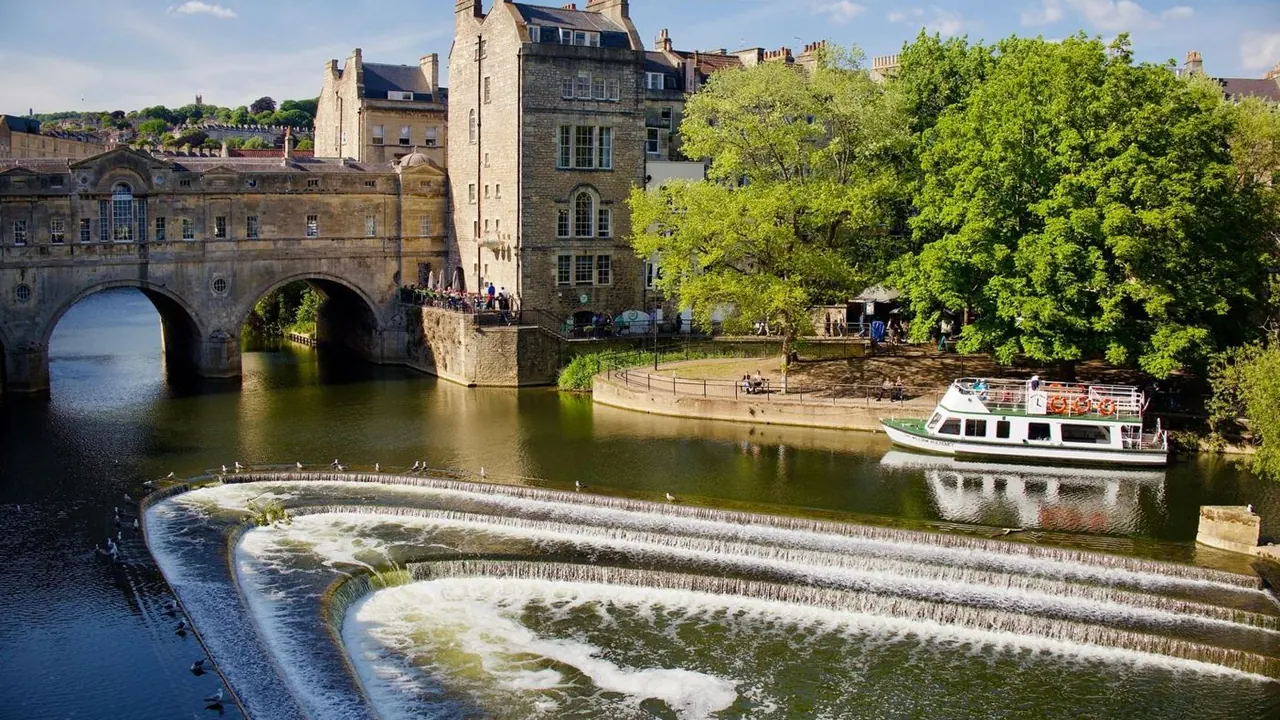
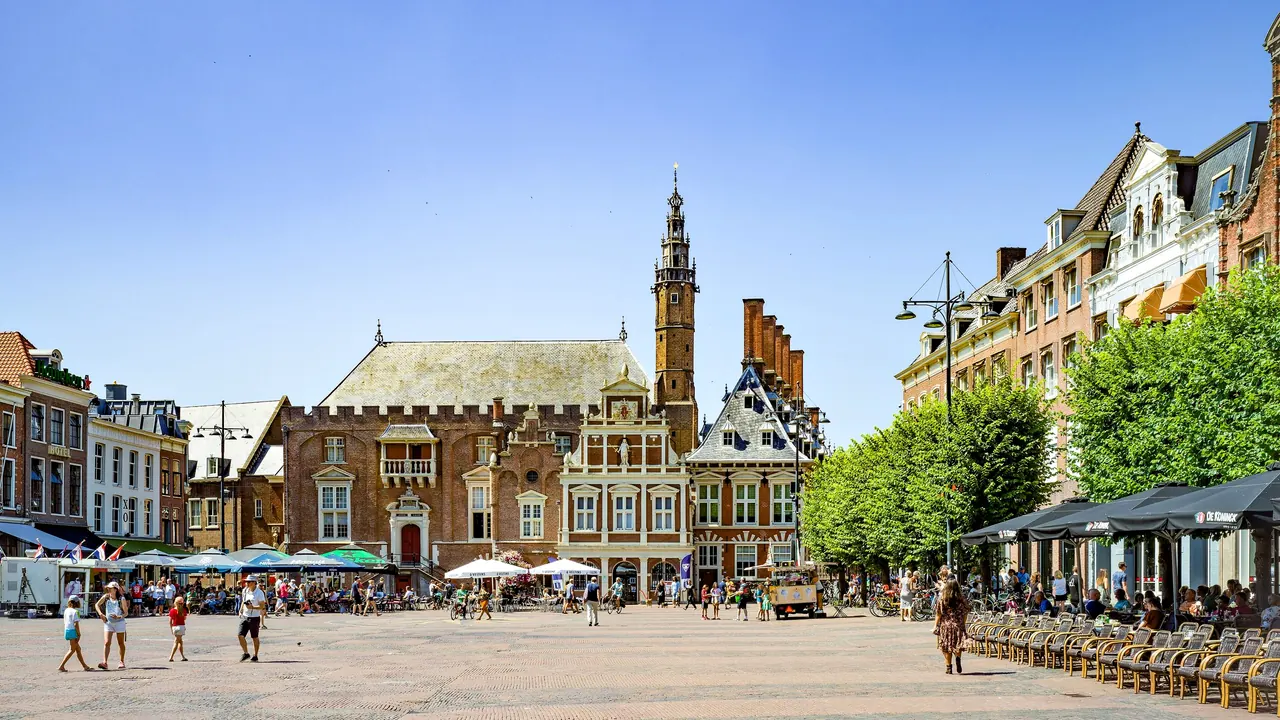
Photos: Bath by Lucas Carlini, Pexels License; Haarlem by Moroder, CC BY-SA 4.0, cropped.
Bath or Haarlem?
Our verdict in twelve categories, each scored against the same fixed benchmark cities, and the climate month by month, so you can choose for your trip.
Choose Bath for
- wellness
- culture and sights
Bath is the choice when the city itself is the point of the trip. Its Georgian streets, the Roman Baths and the Abbey make a richer set of sights than Haarlem can offer, and its hot springs give it a kind of relaxation the Dutch town has nothing to match. It suits couples and slower travellers who want to walk, look, soak in warm water at dusk and drive out into the West Country, and who don't mind the steep streets or the early nights.
Choose Haarlem for
- beaches
- day trips
- getting around
Haarlem works better as a base than as a destination in its own right. Amsterdam, Leiden, The Hague and the bulb fields are all an easy train ride away, the flat car-free centre is built for bikes and pushchairs, and dunes and a sandy North Sea beach start at the edge of town. Travellers who want to see a lot of a region without a car, or families who want room to run, will find it the more practical pick.
Scoreboard
Twelve categories on one fixed scale from 0 to 100. The shaded stretch is the gap between the two.
Your match
Pick a travel style or drag the sliders, and both match scores follow your weighting.
Too close to call, 1 point apart
Wins on wellness and culture and sights with your weighting.
Wins on beaches and day trips with your weighting.
What matters to you?
Category by category
What the scores mean for a trip.
Beaches & swimming
Neither city is a beach destination, but Haarlem at least has the coast close by. Zandvoort's long sandy beach is ten minutes away by train, and Bloemendaal's dune-backed strand is a short bike ride. A summer afternoon there with a quick, cold dip in the North Sea makes an easy outing.
Bath is inland. Its nearest sea is the muddy, tidal water at Weston-super-Mare, about an hour away. Locals swim in the Avon above the city in warm weather, but for clean sand you have to drive two hours or more to Dorset or Devon.
Food & drink
The two cities eat about equally well, in a solid small-city way, and in neither do you get much street food or late-night dining. The difference is in what they eat and drink. Bath leans on West Country produce: cheese, cider, lamb, afternoon tea in Georgian tearooms and its own baked goods, the Sally Lunn bun and the Bath Oliver biscuit.
Haarlem's food is more about the market and the beer. You can get herring and fried kibbeling at the Saturday stalls on the Grote Markt, sit on café terraces, and choose from a strong range of local craft brewers on tap.
Culture & sights
Bath has the deeper set of sights. The whole city is a World Heritage Site, with the Royal Crescent, the Circus and Pulteney Bridge forming one continuous Georgian set piece. Under it lie the Roman Baths, still steaming, with the fan-vaulted Abbey right beside them. Smaller museums such as the Holburne and No. 1 Royal Crescent fill in the detail.
Haarlem's appeal is more intimate. You get canals and gables, the vast St Bavo church, Frans Hals's portraits in the museum named after him, and the 18th-century oval room at Teylers. Part of the pleasure is in finding the quiet hofje courtyards behind their plain doors.
Nightlife
Both cities go quiet early, and both have a much bigger city about fifteen minutes away by train for a proper night out: Bristol for Bath, Amsterdam for Haarlem. In Bath an evening means the pub, from old coaching inns to real-ale houses on Walcot Street, with students livening things up in term time. Haarlem's evenings are spent at terrace tables and in brown cafés around the Grote Markt and Botermarkt, which are at their liveliest on summer nights.
Nature & outdoors
Both have pleasant, gentle countryside right on the doorstep, but the landscapes could hardly be more different. Bath sits in a bowl of steep hills. You can walk the Skyline ridges above the city, follow the canal towpath through the Limpley Stoke valley, or drive under an hour to the Cotswolds and to Cheddar Gorge in the Mendips.
Haarlem is completely flat. Dunes, pinewoods and small lakes in Zuid-Kennemerland start at the western edge of town, with grazing ponies and deer, and in spring you can cycle between the striped bulb fields.
Day trips
Both are excellent bases, but Haarlem's dense rail network gives it the edge. Amsterdam, Leiden, The Hague, Delft and Utrecht are all easy train rides away, and Alkmaar, Zaanse Schans and Keukenhof are close as well, so you rarely need to plan in advance.
Bath's day trips are just as memorable: Stonehenge, Avebury, Wells, Glastonbury, Lacock and the Cotswold villages. Apart from Bristol and Cardiff, though, most of them really need a car or a tour.
Good for families
Haarlem is a little easier with children. Its centre is flat and mostly car-free, cycling with kids is normal, and the dunes and beach give them space to run. The Roman Baths in Bath are a real highlight for children, and Royal Victoria Park has a large playground.
Beyond that, Bath's steep streets are hard going with a pushchair and the city is mostly geared to adults. Neither town has a zoo or an aquarium, so families end up heading to Bristol or Longleat from Bath, or to Amsterdam from Haarlem.
Getting around
Both centres take about twenty minutes to cross on foot and neither needs a car in town. Haarlem is the easier of the two. It is flat, the bike is the natural way to travel, there are separate cycle paths to the dunes and the sea, and one contactless card covers trains and buses all over the region.
In Bath, steep hills slow you down beyond the compact core and drivers rely on the park-and-ride sites. Once you leave the railway line, the countryside is poorly served by public transport.
Shopping & style
Both are good for an afternoon of browsing rather than serious shopping, with no luxury tier and no big department store in either. Bath has more character in its oddities: antiques on Bartlett Street, salvage and furniture makers on Walcot Street, the old covered Guildhall Market and the little shops along Pulteney Bridge. Haarlem is stronger on contemporary design, with fashion and interiors boutiques on Gierstraat and Kleine Houtstraat and flower and cheese stalls on market days.
Affordability
Neither is cheap, and the bills come out at much the same level. Haarlem is a touch easier, though its few hotels fill up quickly in tulip season. In Bath, hotels are particularly dear on summer weekends and at Christmas, and entry to the Roman Baths and the spa adds up.
The ways to save are different too. In Bath, staying midweek or sleeping in Bristol helps most. In Haarlem, it is market lunches and a hired bike, though the train fares for your day trips mount up over a stay.
Live music & performing arts
The two have a similar amount on stage, each a solid programme for a small city, and in both you go to the nearby big city for major opera. Bath's centrepiece is the gilded Georgian Theatre Royal, with touring drama, shows on their way to the West End and pantomime, along with literature and Mozart festivals.
Haarlem's speciality is the organ. Concerts are played on St Bavo's great instrument, which Mozart himself played as a boy, and the city hosts a long-running international organ festival. Classical music at the Philharmonie adds to that, but most of the Stadsschouwburg's theatre is in Dutch.
Wellness & relaxation
This is where Bath is far ahead. It is the one place in Britain where you can bathe in natural hot spring water. The rooftop pool at Thermae Bath Spa looks over the Abbey, and on a winter evening it is hard to beat. The small Cross Bath and tea in the Pump Room keep the old spa-town routine going.
Haarlem has no springs and no bathing tradition. You unwind there by cycling in the dunes, lingering on café terraces, or going to one of the sauna complexes elsewhere in the region.
When should you go?
Pick your month. The climate figures are measured averages, not a forecast.
Bath in July
Haarlem in July
Daytime high, °C
Rainfall in the month, mm
Where the figures come from
Bath's temperatures are measured 29 km from the centre, at Lyneham.
Bath has no rain gauge within 25 km of the centre, so its rainfall comes from a gridded climate dataset read at the city rather than from a gauge further away.
Haarlem has no rain gauge within 25 km of the centre, so its rainfall comes from a gridded climate dataset read at the city rather than from a gauge further away.
Haarlem's sunshine is measured 49 km from the centre, at De Bilt.
Temperature and rainfall are climate normals, averaged over the years shown. Bath: 1991-2020 normals, Lyneham (29.2 km from centre). Haarlem: 1991-2020 normals, Amsterdam Airport Schiphol (12.7 km from centre).
The two climates are close. Both warm up slowly from April and peak in July and August at about 21°C to 22°C, which is good weather for walking but never truly beach weather. The North Sea at Haarlem's door and the Bristol Channel an hour from Bath both reach only about 18°C in late summer, so a swim is a short, brisk one in either place. Winters are grey and chilly in both, with few hours of sun from November to January.
The main difference is when the rain comes. Bath's rain is fairly even through the year and gets heavier from October to December. Haarlem has a drier spring, with April its driest month at around 40mm, and then gets steadily wetter through late summer to an October peak of about 109mm. That makes April and May the best time for Haarlem, with dry days, plenty of sun and the bulb fields in flower. Bath is at its best from May to September, when its hill walks are dry and the long light falls on the stone.
Which traveller are you?
On a relaxing and wellness trip, Bath is the clear choice. Its natural hot springs feed a rooftop thermal pool and a small Georgian bath, and the slow, unhurried pace of the city suits the trip. Haarlem offers quiet canals and saunas, but nothing like Bath's springs.
For a beach and sun trip, Haarlem comes out ahead, though neither is a true seaside resort. Zandvoort's sand is ten minutes away by train and Bloemendaal is a short ride through the dunes. From Bath, the nearest decent beaches are two hours away.
On a culture and arts trip, Bath gives you more. A whole Georgian townscape, the Roman Baths and the Abbey are all within walking distance of each other. Haarlem's Frans Hals and Teylers museums are excellent, but there are fewer major sights to fill the days.
Before you go
| Measure | Bath | Haarlem |
|---|---|---|
| Official language | English | Dutch |
| Currency | Pound Sterling (GBP) | Euro (EUR) |
| Sockets | G230 V, 50 Hz | CF230 V, 50 Hz |
| Driving side | Left | Right |
| Time zone | UTC, UTC+1 in summer | UTC+1, UTC+2 in summer |
| Emergency number | 112 or 999 | 112 |
| Elevation | 132 m | 2 m |
| Main airport | Bristol Airport (BRS)25 km from centre117 non-stop destinations | Amsterdam Airport Schiphol (AMS)12 km from centre287 non-stop destinations |
| Public holidays this year | 8 days | 11 days |
By the numbers
| Measure | Bath | Haarlem |
|---|---|---|
| City population | 94,092 | 162,543 |
| People per km² | 3,245 | 5,064 |
| Museums within 10 km | 17 | 28 |
| UNESCO World Heritage sites within 50 km | 3 | 5 |
| Swim season, months above 21 °C | None | None |
Where else could you go?
Every comparison below shares a destination with this one, so you can follow Bath or Haarlem somewhere new.
- Amsterdamvs Haarlem
- Bristolvs Bath
- The Haguevs Haarlem
- Utrechtvs Haarlem
- Rotterdamvs Haarlem
- Cardiffvs Bath