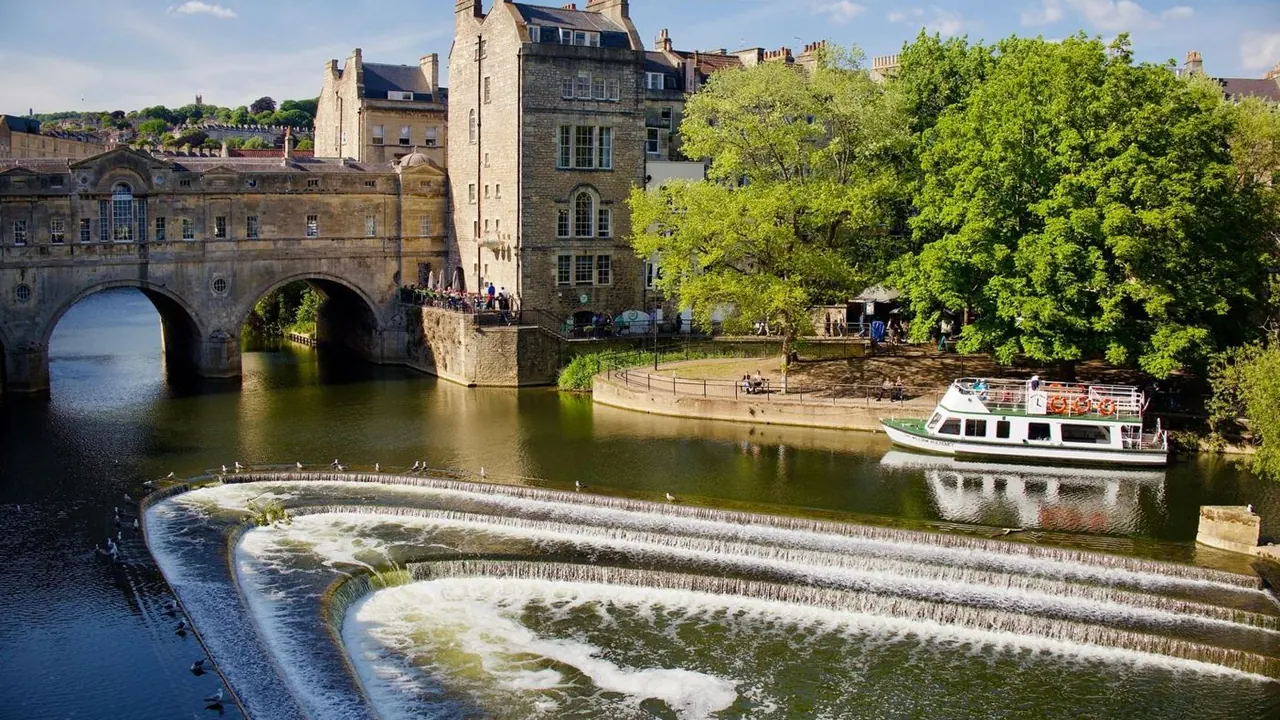
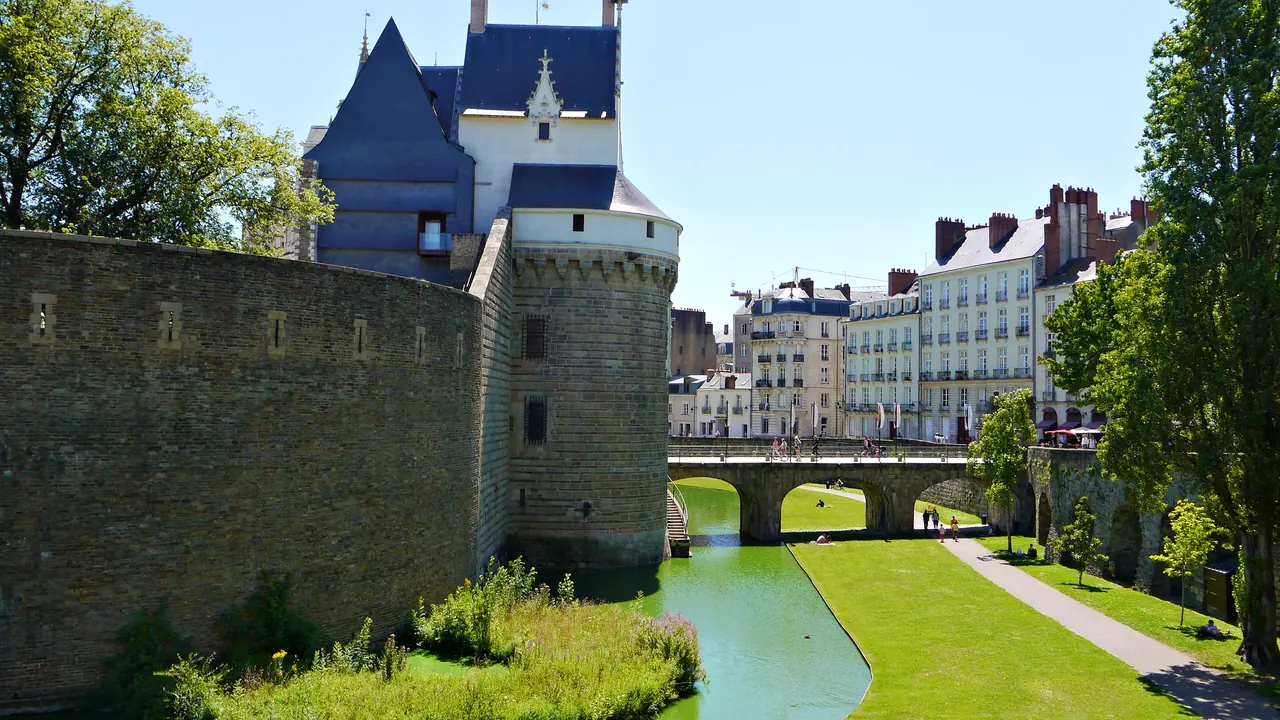
Photos: Bath by Lucas Carlini, Pexels License; Nantes by Carole44, CC BY-SA 3.0, cropped.
Bath or Nantes?
Our verdict in twelve categories, each scored against the same fixed benchmark cities, and the climate month by month, so you can choose for your trip.
Choose Bath for
- wellness
- culture and sights
- day trips
Bath suits a slower, grown-up trip built around architecture and warm water. You walk Georgian crescents in honey-coloured stone, see the Roman Baths, and end the day in a rooftop thermal pool. It is also the stronger base for touring, with Stonehenge, Wells and the Cotswolds close by. In return you get quiet evenings and a bigger bill.
Choose Nantes for
- beaches
- prices
- nightlife
If you want a city that stays up later and eats better, Nantes is the pick. It has Loire cooking and Muscadet, busy bar streets in Bouffay, a real opera and concert life, and a mechanical elephant that children remember for years. Atlantic sand is about an hour away, and the whole trip generally costs less.
Scoreboard
Twelve categories on one fixed scale from 0 to 100. The shaded stretch is the gap between the two.
Your match
Pick a travel style or drag the sliders, and both match scores follow your weighting.
Wins on wellness and culture and sights with your weighting.
Wins on beaches and prices with your weighting.
What matters to you?
Category by category
What the scores mean for a trip.
Beaches & swimming
Neither city is on the coast, but only Nantes has proper beaches within reach. Trains take about an hour to the long sandy bay at La Baule or the coves around Pornic, and on calm summer days these are clean, wide and good for children.
From Bath, the nearest seaside is Weston-super-Mare, where the tide goes out a very long way and the water is murky. Good sand means a long drive to Dorset or Devon. In hot weather, locals simply swim in the Avon instead.
Food & drink
Nantes is the better place to eat. It has a real regional kitchen: beurre blanc was born here, oysters arrive from the nearby coast, and Muscadet from the vineyards just outside town goes with all of it. The Talensac market and the lunch menus in the Bouffay lanes make eating well easy.
Bath does English things nicely, such as West Country cheese, cider, the Sally Lunn bun and afternoon tea in Georgian tearooms. But the range is narrow, there is little food from other countries, and dinner tends to finish early.
Culture & sights
Bath has the edge, because the whole city is the sight. The Royal Crescent, the Circus, Pulteney Bridge and the Roman Baths with their steaming great bath all lie a few minutes apart, and the Abbey stands right next to them. Few places in Europe keep an eighteenth-century townscape this complete.
Nantes is built more around single sights. These include the moated ducal château with a history museum that is frank about the slave trade, the abolition memorial on the riverbank, the merchant façades of Ile Feydeau and the Jules Verne museum. Both take two or three days to cover.
Nightlife
After dark Nantes is clearly the livelier of the two. The medieval lanes of Bouffay fill with terraces and wine bars, and the late crowd heads to the old banana warehouses on the Ile de Nantes, where riverside clubs run into the early hours.
Bath's evenings mostly happen in the pub, from coaching inns to real-ale houses on Walcot Street. On weeknights the streets empty soon after dinner. Anyone who wants a big night out takes the short train to Bristol.
Nature & outdoors
The countryside is about as good in both, but very different. Bath sits in a bowl of steep green hills. You can walk the Skyline ridges straight from town, follow the canal towpath through the Limpley Stoke valley, or head for the Cotswolds and the limestone of Cheddar Gorge.
Nantes is flat and watery. You can canoe or take a boat up the wooded Erdre, cycle the Loire à Vélo route through the vineyards, or punt through the reed beds of the Brière marsh. Walkers who like a climb will prefer Bath, while cyclists and birdwatchers will be happier in Nantes.
Day trips
Bath has more within easy reach. Bristol is fifteen minutes away by train, and Stonehenge, Avebury, Wells, Glastonbury and the stone villages of Lacock and Castle Combe all lie within about an hour. The catch is that many of these places need a car or a tour.
Nantes has a good spread of its own. You can visit the walled town of Guérande above its salt marshes, or take a fast train to Angers for the Apocalypse Tapestry. The Loire châteaux around Saumur are within two hours, and Vannes on the Gulf of Morbihan is about an hour and a quarter by train.
Good for families
Nantes is the easier city with children. The Machines de l'Ile lets them ride a 12-metre mechanical elephant and a carousel of giant sea creatures, and the Jardin des Plantes has playgrounds. Puy du Fou, the Port-Saint-Père safari park and calm sandy beaches fill the rest of a summer stay.
In Bath, the Roman Baths and the playground in Royal Victoria Park work well, but there is not much else for children. The steep streets are also hard going with a pushchair. Many families end up taking the train to Bristol for its science centre and aquarium.
Getting around
Both centres are easy to explore on foot, but the ground is very different. Bath's core takes about twenty minutes to cross, but the climb to the Crescent and the outer viewpoints is steep. Drivers are better off using the park-and-ride sites.
Nantes is flat. Its simple tram network, the river shuttles across the Loire and its cycle paths take the effort out of longer distances. Each city has direct trains to its capital, London from Bath and Paris from Nantes, but in both you need a car to reach the countryside villages.
Shopping & style
Bath is slightly the better place to browse, thanks to its independent shops. There are antiques on Bartlett Street, makers and salvage dealers on Walcot Street, shops built along Pulteney Bridge and the old Guildhall Market. Milsom Street adds fashion in Georgian buildings.
Nantes has the more memorable single building, the three-level Passage Pommeraye, and good second-hand shops around Decré. Its best souvenirs are things to eat and drink: Guérande salt, salted-butter biscuits and Muscadet. Neither city has much luxury shopping.
Affordability
Nantes is noticeably easier on the wallet. Hotels are plentiful and moderately priced, the set lunches are good value, and the trams keep transport cheap. The main thing to watch is the coast in high summer.
Bath is a small city with a lot of visitors, so central rooms are expensive and fill early at summer weekends and around Christmas. The Roman Baths and the spa add to the bill. Pub lunches help, and so does staying midweek or sleeping in Bristol.
Live music & performing arts
Bath's stage life centres on the Theatre Royal, a gilded Georgian playhouse that offers touring drama, plays bound for the West End, visiting opera and dance, and a Christmas pantomime. Concerts in the Abbey and the Assembly Rooms, and the long-running literature, music and Mozart festivals, are worth timing a trip around. On an ordinary night, though, the choice is small.
Nantes has a lot more on. The regional opera company performs at the neoclassical Théâtre Graslin, and the Pays de la Loire national orchestra plays at the city's concert hall. Each winter, La Folle Journée packs hundreds of short classical concerts into a few days. The Lieu Unique, an arts centre in the old LU biscuit factory, adds contemporary theatre and dance. Separately, the city's own tradition of giant street-theatre puppetry has given it a taste for spectacle in its public spaces.
Wellness & relaxation
This is where Bath is far ahead. Spring water rises at about 46°C, and you can bathe in it in the rooftop pool looking over the Abbey or in the small Georgian Cross Bath. Tea in the Pump Room and walks in the riverside gardens keep the pace slow.
Nantes has no bathing tradition of its own, only hotel and day spas and quiet afternoons by the Erdre. For a proper cure you go about an hour to the seawater thalassotherapy centres at La Baule or Pornic.
When should you go?
Pick your month. The climate figures are measured averages, not a forecast.
Bath in July
Nantes in July
Daytime high, °C
Rainfall in the month, mm
Where the figures come from
Bath's temperatures are measured 29 km from the centre, at Lyneham.
Bath has no rain gauge within 25 km of the centre, so its rainfall comes from a gridded climate dataset read at the city rather than from a gauge further away.
Temperature and rainfall are climate normals, averaged over the years shown. Bath: 1991-2020 normals, Lyneham (29.2 km from centre). Nantes: 1991-2020 normals, Nantes (6.6 km from centre).
Both cities are at their best from late May to September, but Nantes is warmer and sunnier throughout. In July and August Bath reaches about 21°C, which is pleasant for walking the hills but rarely beach weather, and the brown, shallow sea along the Bristol Channel stays cool. Nantes reaches about 25°C at the same time and has its driest stretch in high summer, with around 44mm of rain in July. Its Atlantic water warms to about 19°C in August, so a beach day out works best then.
From October the rain sets in at both, and November and December are the wettest months. Bath's winters are grey and short of daylight, with highs of about 7°C. That suits a soak in the open-air thermal pool more than a day on the muddy footpaths. Nantes stays a few degrees milder in winter but is just as damp, so spring and early autumn are the comfortable times for walking its streets.
Which traveller are you?
For a relaxing and wellness trip, Bath is the clear choice. It is the one place in Britain where you can bathe in natural thermal water, and the rooftop spa pool, the Cross Bath and tea in the Pump Room set a slow pace.
On a food and nightlife trip, Nantes gives you more. You can eat beurre blanc, Atlantic oysters and Muscadet in its bistros, then join the student crowd in Bouffay before moving on to the dockside clubs. Bath, by contrast, mostly goes quiet after dinner.
On a family trip with children, Nantes works better. You can ride the giant elephant, take the flat streets and trams with a buggy, and spend days at Puy du Fou or on the beaches. Bath's steep hills and adult-minded sights make it harder going.
Before you go
| Measure | Bath | Nantes |
|---|---|---|
| Official language | English | French |
| Currency | Pound Sterling (GBP) | Euro (EUR) |
| Sockets | G230 V, 50 Hz | CE230 V, 50 Hz |
| Driving side | Left | Right |
| Time zone | UTC, UTC+1 in summer | UTC+1, UTC+2 in summer |
| Emergency number | 112 or 999 | 112 |
| Elevation | 132 m | 2 m |
| Main airport | Bristol Airport (BRS)25 km from centre117 non-stop destinations | Nantes Atlantique Airport (NTE)8 km from centre97 non-stop destinations |
| Public holidays this year | 8 days | 11 days |
By the numbers
| Measure | Bath | Nantes |
|---|---|---|
| City population | 94,092 | 327,734 |
| People per km² | 3,245 | 5,027 |
| Museums within 10 km | 17 | 11 |
| UNESCO World Heritage sites within 50 km | 3 | 0 |
| Swim season, months above 21 °C | None | None |
Where else could you go?
Every comparison below shares a destination with this one, so you can follow Bath or Nantes somewhere new.