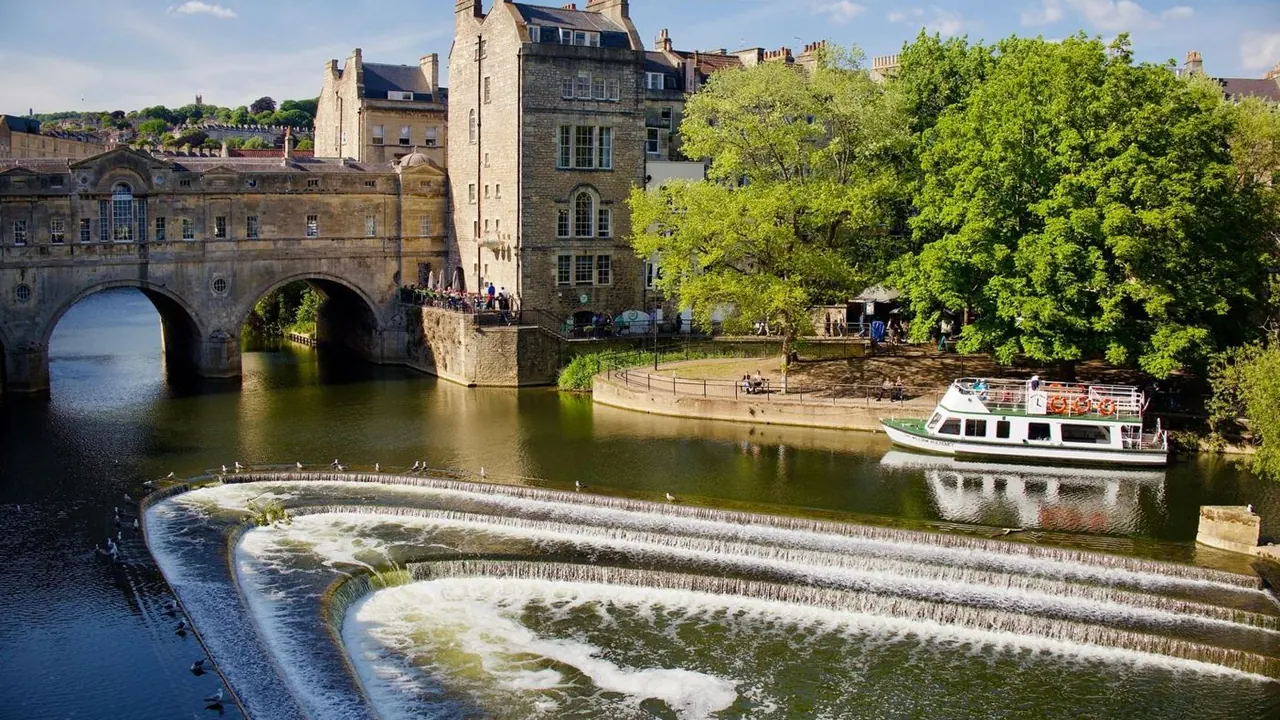
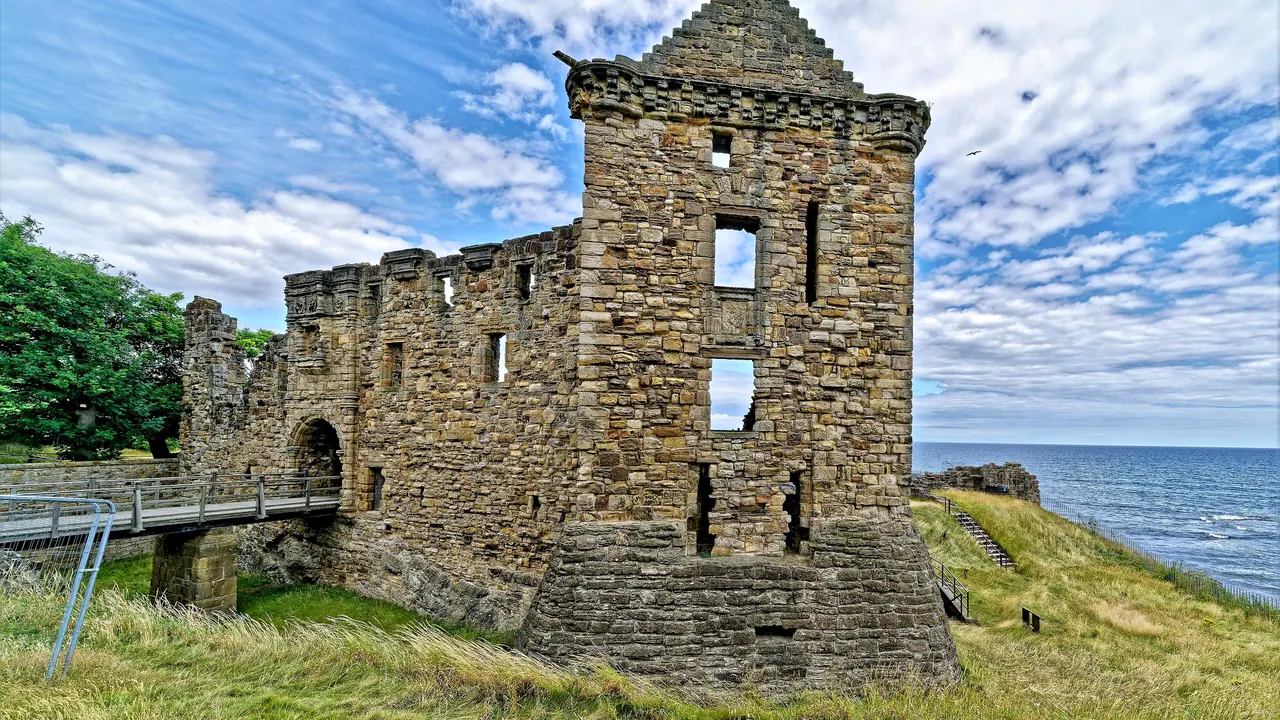
Photos: Bath by Lucas Carlini, Pexels License; St Andrews by Holger Uwe Schmitt, CC BY-SA 4.0, cropped.
Bath or St Andrews?
Our verdict in twelve categories, each scored against the same fixed benchmark cities, and the climate month by month, so you can choose for your trip.
Choose Bath for
- wellness
- culture and sights
- shopping
Bath suits the traveller who wants a complete historic city to explore on foot, with more to fill the days and evenings. Its Georgian streets, the Roman Baths and the Abbey give it the deeper sightseeing of the two, and the hot springs make it the only place in Britain where you can soak in natural thermal water. Add a better theatre, more shops and an easy train to Bristol, and it rewards a culture-led short break or a slow, pampering weekend.
Choose St Andrews for
- beaches
- prices
- nature and the outdoors
St Andrews is the choice for golfers, walkers and anyone who wants sea air more than streets. The Old Course and the links around it are the main reason many people come. Long sandy beaches, the Fife Coastal Path and the medieval ruins on the headland make a quieter, more windswept stay. Evenings and indoor diversions are thin, but for a few calm days by the North Sea with the East Neuk villages close by, it gives you something Bath cannot.
Scoreboard
Twelve categories on one fixed scale from 0 to 100. The shaded stretch is the gap between the two.
Your match
Pick a travel style or drag the sliders, and both match scores follow your weighting.
Wins on wellness and culture and sights with your weighting.
Wins on beaches and prices with your weighting.
What matters to you?
Category by category
What the scores mean for a trip.
Beaches & swimming
St Andrews has real beaches and Bath has none. West Sands is a long pale strand backed by dunes, East Sands is sheltered by the harbour, and both are a walk from town. Bath sits in an inland valley, and its nearest sea is the muddy, tidal shore at Weston-super-Mare, about an hour away.
Neither is a place to swim in comfort. The North Sea off Fife stays cold even in late summer, so a swim there is a brisk dip. Bath's summer swimming happens in the River Avon, and clear water means a long day out to Dorset or Devon.
Food & drink
Bath has the slightly better table, with more independent restaurants and gastropubs around the Abbey and Walcot Street, a farmers' market in the old Green Park station and baked goods of its own like the Sally Lunn bun. Afternoon tea in a Georgian tearoom is the signature experience.
St Andrews leans on the sea: East Neuk crab and lobster, fish and chips eaten at a harbour down the coast, and ice cream queues on summer evenings. Both are limited in range and quiet after dinner, so neither is a destination for food alone.
Culture & sights
Bath offers far more to see. The whole city is a World Heritage Site, a complete Georgian townscape with the Circus, the Royal Crescent and Pulteney Bridge, built over Roman Baths where the spring water still steams. The Abbey and several small museums such as the Holburne and No. 1 Royal Crescent fill two or three days.
St Andrews has a more atmospheric, ruined medieval past: the cathedral on the headland, the climb up St Rule's Tower and the castle's siege tunnels, along with old university quadrangles and the golf heritage. It is lovely, but a day or two takes it in.
Nightlife
Both towns go to bed early, and evenings in each centre on the pub. Bath has more of them, from old coaching inns to the real-ale houses of Walcot Street, plus a few cocktail bars and weekend crowds from nearby towns. Bristol is a short train ride away for a bigger night.
St Andrews is quieter still, especially in summer when the students have gone, and its bars lean towards golf lounges full of visiting players. A real night out means going to Dundee or Edinburgh.
Nature & outdoors
The outdoors is equally good in both, but the landscapes differ. Bath lies among green hills, where you can walk the Skyline loop, follow the Kennet and Avon Canal towpath or cycle through old railway tunnels, with the Cotswolds and the Mendips close by.
St Andrews is open and coastal, with cliffs, dunes, the Fife Coastal Path and seals at Tentsmuir, and golf links all around. Choose Bath for wooded valleys and canals, and St Andrews for big skies and sea wind.
Day trips
Fifteen minutes on the train puts you in Bristol, with its harbourside and Brunel's ship and bridge, and Cardiff is a little over an hour, so some of Bath's best days out need no planning at all. By road, Stonehenge, Avebury, Wells with its moated bishop's palace, Glastonbury Tor, Lacock and Castle Combe are all within an hour or so, and Salisbury, Stourhead and Longleat are within reach too. That is more variety, closer together, than St Andrews can offer.
From St Andrews, the East Neuk fishing villages of Crail, Anstruther and Elie are a short run down the coast, Falkland Palace is just inland and Dundee, with the V&A and Scott's ship Discovery, is half an hour away. Edinburgh makes an easy full day via Leuchars, while Glamis, Scone and Stirling Castle are longer trips best done by car.
Good for families
Both are safe and small, with modest appeal for children, but in different ways. Bath has the Roman Baths, which children tend to love, a big playground in Royal Victoria Park and a children's theatre. Bristol's science centre and aquarium are a short train ride away, though steep streets make pushchairs hard work.
St Andrews gives children beaches, rock pools, the castle tunnels, a small aquarium and a putting green beside the Old Course. When the weather turns, there is little indoors to fall back on.
Getting around
Bath is the easier place to arrive in and leave from. Its compact, largely pedestrianised centre is a twenty-minute walk end to end, and the station in town has direct trains to Bristol and London.
St Andrews is just as easy on foot, but it has no railway station, so every rail journey begins with a bus or taxi to Leuchars, about 8km away. In both places, driving into the centre is pointless, but you need a car for the countryside.
Shopping & style
Bath is much the better place to shop. Milsom Street carries British fashion brands in Georgian buildings and SouthGate has the chains, while the lanes around the Abbey, the antiques on Bartlett Street, the Walcot Street makers and the old Guildhall Market give it character.
St Andrews makes an afternoon's browse of golf gear, knitwear, cashmere and tartan along its three main streets. Serious shoppers go on to Edinburgh.
Affordability
Both are expensive and need booking ahead at busy times. In Bath, summer weekends and Christmas push room prices up, and the Roman Baths and the spa cost a fair amount. In St Andrews, golf tournaments and graduation weeks fill the limited rooms, and playing the famous courses is costly.
The ways to save are similar but local. Pub lunches, a midweek stay or sleeping in Bristol help in Bath. Student cafés, takeaway fish and chips and a room in the East Neuk help in St Andrews.
Live music & performing arts
Bath has the fuller stage of the two, though neither is a performing arts city. Its Georgian playhouse takes touring drama, plays bound for the West End, and visiting opera and dance through the year, and its long-running festivals add busier weeks. On an ordinary night, though, the choice is a play or a small amount of live music, and Bath has no resident orchestra or opera company of its own.
St Andrews offers less, and what it has depends on the university calendar. In term, the Byre and the student choirs and chamber groups keep a modest programme going. In the summer break, when most visitors come, it shrinks to little more than a pub folk session, so anyone wanting opera or an orchestra makes the trip to Edinburgh or Dundee.
Wellness & relaxation
This is where the two differ most. Bath was built on its hot springs. You can soak in naturally warm water in the rooftop pool at Thermae Bath Spa, looking over the Abbey, or in the intimate Cross Bath, and then take tea in the Pump Room.
St Andrews offers calm of another kind: long walks on West Sands, quiet evenings and hotel spas at the golf resorts. Its local ritual is a cold sea dip off East Sands rather than a warm soak.
When should you go?
Pick your month. The climate figures are measured averages, not a forecast.
Bath in July
St Andrews in July
Daytime high, °C
Rainfall in the month, mm
Where the figures come from
Bath's temperatures are measured 29 km from the centre, at Lyneham.
Bath has no rain gauge within 25 km of the centre, so its rainfall comes from a gridded climate dataset read at the city rather than from a gauge further away.
Temperature and rainfall are climate normals, averaged over the years shown. Bath: 1991-2020 normals, Lyneham (29.2 km from centre). St Andrews: 1991-2020 normals, Leuchars (6.5 km from centre).
Neither town is ever hot, so both are pleasant for walking the streets all year round, and summer is mild rather than warm. Bath peaks at about 21°C in July and August and gets noticeably more sunshine through the summer. St Andrews tops out around 19°C, and its sunniest month is May rather than high summer. Late spring to early autumn is the best time for both, especially for the countryside paths and coast walks.
The rain builds in autumn in both places, but Bath is the wetter of the two, reaching about 90mm in late autumn and winter, while St Andrews stays drier and is cool and windy all year. The sea is cold either way. The Bristol Channel near Bath warms to about 18°C at best in late summer, and the North Sea off St Andrews reaches only about 14°C, so swimming there is a bracing dip in any month. Winter in both is grey and short of daylight, and Bath's rooftop thermal pool is the nicer way to spend a cold evening.
Which traveller are you?
On a culture and arts trip, Bath is the clear pick. The Roman Baths, the Royal Crescent, the Abbey and a row of good small museums sit within a short walk, and the Theatre Royal gives you a proper night at the theatre afterwards.
For a relaxing and wellness trip, Bath wins easily. Its natural hot springs feed an open-air rooftop pool and the small Georgian Cross Bath. St Andrews offers calm walks and sea air, but its spas are hotel facilities with no thermal water.
For golfers, St Andrews is the pilgrimage. The Old Course, the Swilcan Bridge, the British Golf Museum and a ring of links courses make it the home of the game, something Bath has no answer to, though playing the famous courses is costly.
Before you go
| Measure | Bath | St Andrews |
|---|---|---|
| Official language | English | English |
| Currency | Pound Sterling (GBP) | Pound Sterling (GBP) |
| Sockets | G230 V, 50 Hz | G230 V, 50 Hz |
| Driving side | Left | Left |
| Time zone | UTC, UTC+1 in summer | UTC, UTC+1 in summer |
| Emergency number | 112 or 999 | 112 or 999 |
| Elevation | 132 m | 24 m |
| Main airport | Bristol Airport (BRS)25 km from centre117 non-stop destinations | Edinburgh Airport (EDI)56 km from centre163 non-stop destinations |
| Public holidays this year | 8 days | 10 days |
By the numbers
| Measure | Bath | St Andrews |
|---|---|---|
| City population | 94,092 | 16,460 |
| People per km² | 3,245 | - |
| Museums within 10 km | 17 | 5 |
| UNESCO World Heritage sites within 50 km | 3 | 0 |
| Swim season, months above 21 °C | None | None |
Where else could you go?
Every comparison below shares a destination with this one, so you can follow Bath or St Andrews somewhere new.
- Bristolvs Bath
- Edinburghvs St Andrews
- Cardiffvs Bath
- Oxfordvs Bath
- Aberdeenvs St Andrews
- Glasgowvs St Andrews