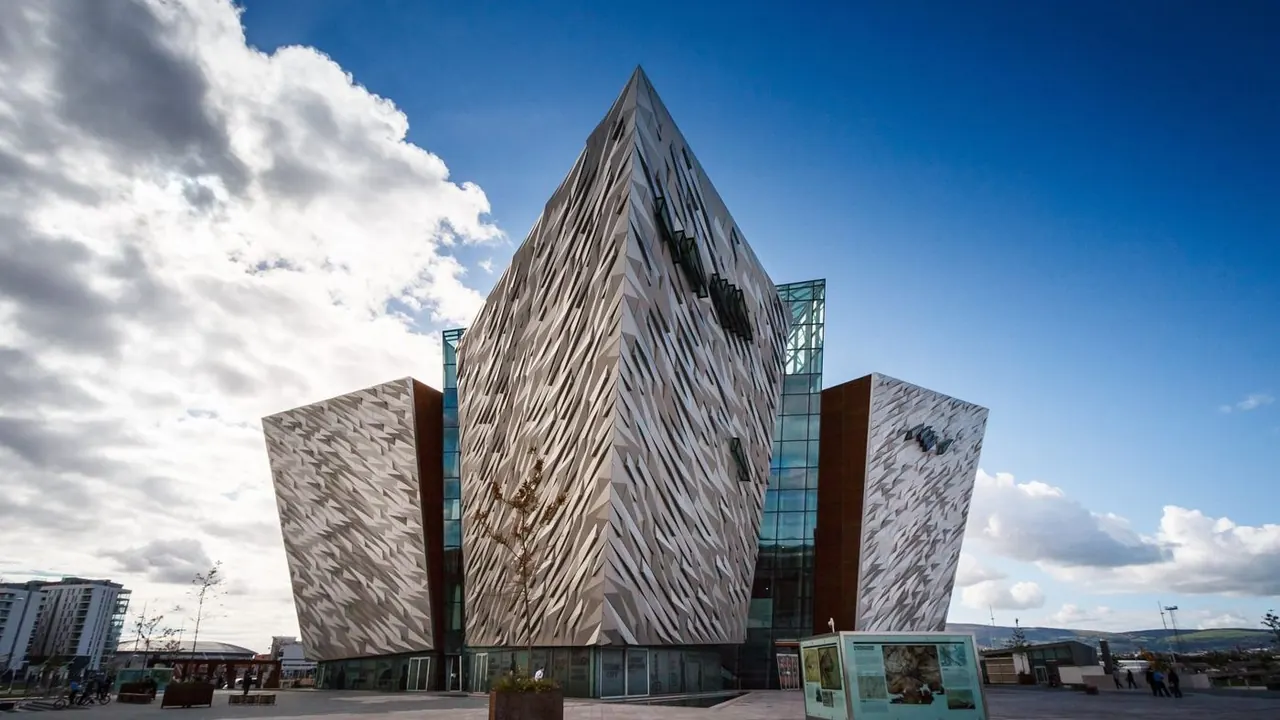
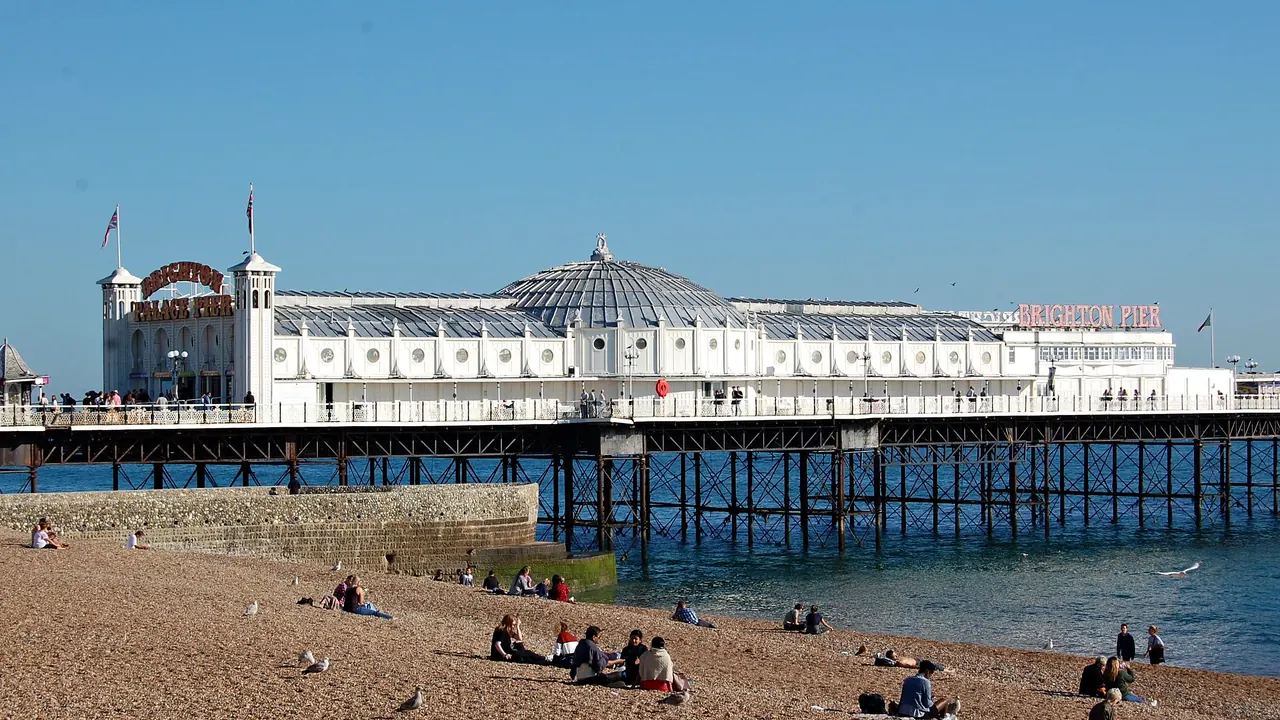
Photos: Belfast by Nico Kaiser, CC BY 2.0, cropped; Brighton by Hassocks5489, CC0.
Belfast or Brighton?
Our verdict in twelve categories, each scored against the same fixed benchmark cities, and the climate month by month, so you can choose for your trip.
Choose Belfast for
- prices
- nature and the outdoors
- culture and sights
Belfast suits travellers who want wild country close at hand and a stay that costs a little less. The Causeway Coast, the Mournes and the Glens of Antrim are all within a day's reach. In town the evenings are built around pubs, traditional sessions and a recent, gripping history told through the shipyards, the murals and the peace walls. Come for walking boots and conversation, not for sunbathing or late clubs.
Choose Brighton for
- beaches
- nightlife
- day trips
Brighton is the better pick for a lively, easy-going seaside break where everything is a short walk from the station. Its nights out run later and wider, and its streets of independent shops are more fun to browse. London and a ring of Sussex castles, cathedrals and market towns are close by train, so it also works as a base for varied day trips. It costs more to stay, though, and the beach is shingle.
Scoreboard
Twelve categories on one fixed scale from 0 to 100. The shaded stretch is the gap between the two.
Your match
Pick a travel style or drag the sliders, and both match scores follow your weighting.
Wins on prices and nature and the outdoors with your weighting.
Wins on beaches and nightlife with your weighting.
What matters to you?
Category by category
What the scores mean for a trip.
Beaches & swimming
Neither city is a beach destination, but Brighton at least has a seafront that comes alive on a warm day. Its shingle runs from the Marina to Hove, lifeguards patrol the central stretches, and the Channel gets warm enough for a proper swim on a calm late-summer day.
Belfast's lough shore is for walking. Getting to sand means a train out to Helen's Bay or Crawfordsburn, or a long drive to the north coast strands, and the colder water keeps it to a quick dip.
Food & drink
The two eat about equally well, in different ways. Belfast cooks from its farmland and loughs, with Strangford oysters, Mourne lamb and dry-aged beef, along with the Ulster fry and weekend grazing at St George's Market. Pub culture centres on stout and Irish whiskey.
Brighton is lighter and more casual: small independent kitchens, a long vegetarian and vegan tradition, serious coffee in the North Laine and Sussex sparkling wine on the lists. Neither has a large top end.
Culture & sights
Both have a handful of strong sights rather than a dense historic core, and the stories they tell are very different. Belfast's is industrial and political: Titanic Belfast on the old slipways, Crumlin Road Gaol, and the murals and peace walls of the Falls and Shankill, best seen with a guide.
Brighton's is ornamental and Regency. The Royal Pavilion, with its Indian domes and chinoiserie rooms, is the single most memorable building of the two cities, and the rest of a visit is wandering the Lanes and the white crescents of Kemptown and Hove.
Nightlife
Brighton has the bigger and later night out. Students and weekend visitors from London keep the bars full every night, Kemptown's LGBTQ+ scene is one of Britain's oldest, and the West Street and seafront arch clubs run into the small hours, though Fridays and Saturdays can get rowdy.
Belfast's evenings are friendlier and earlier. They mean pub rounds through the cobbled entries of the Cathedral Quarter, a drink in a snug at the Crown Liquor Saloon, and a small club scene that closes before Brighton's gets going.
Nature & outdoors
Belfast has the more dramatic landscapes within reach. Basalt cliffs on Cave Hill rise right above the city, the granite Mournes drop to the sea about an hour south, and the Causeway Coast and Glens of Antrim are among the finest coastal scenery in these islands.
Brighton's countryside is gentler. The South Downs start at the city edge with chalk grassland and long views, and the Seven Sisters cliffs are the high point. The trade-off is watersports off the seafront, from kitesurfing to paddleboarding.
Day trips
Brighton is the richer base for day trips. London is about an hour away by fast train, and Lewes, Arundel, Chichester, Rye and Battle cover castles, cathedrals and the Norman Conquest within easy reach. Vineyard tastings and Weald country houses fill any spare days.
Belfast has good outings of its own, including Carrickfergus Castle, Armagh, the walled city of Derry and Dublin about two hours by train. They are more spread out, though, and the Antrim coast works best by car or on a tour.
Good for families
Both work well with children, in different ways. Belfast leans on indoor attractions for rainy days: the hands-on W5 science centre, Titanic Belfast for older children, the zoo on Cave Hill and the steam engines at the Ulster Folk and Transport Museum.
Brighton offers the traditional seaside day out, with pier rides, a Victorian aquarium, Volk's Electric Railway and paddling at Hove Lagoon. Its shingle beach is poor for sandcastles, and the centre is best avoided with children late on weekend nights.
Getting around
Brighton is the easier city to get about without a car. The station, the Lanes, the Pavilion and the sea are all a short walk apart, a dense bus network covers the rest, and direct trains reach London and the Sussex towns. The only drawback is the climb back up from the seafront.
Belfast's centre is small and flat. The Glider buses cross the city, but there is no metro, evening services are thin, and the coast and mountains really call for a hire car or a coach tour.
Shopping & style
Shopping in Belfast mostly means the high street: chains around Donegall Place and Royal Avenue, the glass-domed mall at Victoria Square and a few independents on the Lisburn Road. The things worth taking home are Irish linen, whiskey, and the crafts, prints and vintage finds from the weekend stalls at St George's Market.
For browsing, Brighton gives you far more to do. The narrow streets of the North Laine are lined with vintage clothing, record shops, retro furniture and comics, and the old alleys of the Lanes hold jewellers and antique dealers. Neither city has luxury streets, but only in Brighton is an afternoon of shopping worth planning for.
Affordability
Belfast is the cheaper stay. Hotel rooms are easier to find at a fair price outside big event weekends, and several of its main sights are free, although restaurants, drinks and coast tours still carry UK prices.
Brighton's rooms are dearer, especially on summer weekends when Londoners and party groups fill the town. Once you have a bed, the beach, the piers and the Downs cost nothing, but train fares mount up if you plan many day trips.
Live music & performing arts
The two are broadly level, and the difference is in scale and style. Belfast's strength is everyday live music: traditional sessions in pubs most nights, the Ulster Orchestra at the Ulster Hall, and Irish drama at the Lyric. Its festivals fall in spring and autumn.
Brighton's year centres on May, when the Brighton Festival and England's largest fringe take over the town. It also has a deep comedy and indie circuit, and Glyndebourne's summer opera is just outside the city.
Wellness & relaxation
Neither is a spa destination, and both offer little beyond hotel spas and hardy dawn sea swimmers. Brighton adds seafront saunas and quiet midweek walks past Hove's beach huts. Belfast's calm comes from a slow stroll in the Botanic Gardens or along the Lagan, and the real escape lies in the hills and coast beyond.
When should you go?
Pick your month. The climate figures are measured averages, not a forecast.
Belfast in July
Brighton in July
Daytime high, °C
Rainfall in the month, mm
Where the figures come from
Brighton has no rain gauge within 25 km of the centre, so its rainfall comes from a gridded climate dataset read at the city rather than from a gauge further away.
Brighton's sunshine is measured 37 km from the centre, at London Gatwick Airport.
Temperature and rainfall are climate normals, averaged over the years shown. Belfast: 1991-2020 normals, Belfast / Aldergrove Airport (19.4 km from centre). Brighton: 1999-2020 (sunshine 1981-2010, rainfall 1991-2020) normals, Shoreham Airport (10.3 km from centre).
Neither city is ever hot, so the streets are pleasant to walk from late spring to early autumn. Both peak in July and August, Belfast at about 19°C and Brighton a degree warmer. Brighton is clearly the sunnier of the two all summer. It is also drier from spring to September, while Belfast's wettest spell begins in August and carries on through the autumn. Belfast's sunniest month is May, which makes late spring a good time for the Causeway Coast and the hills.
For a swim, only Brighton really works. The Channel reaches about 17°C in August and September, while the Irish Sea off Belfast barely gets past 14°C. Winters are cool and grey in both. Brighton turns the wetter of the two from October to December, with over 100mm in some months, but in either city that part of the year is for museums, pubs and theatre rather than the seafront.
Which traveller are you?
On an outdoors trip, Belfast is the stronger base. Cave Hill and Divis are a bus ride away, the Mourne Mountains offer proper hill walking, and the Giant's Causeway and its cliff paths are wilder than anything on Brighton's gentle chalk Downs.
For a trip on a tight budget, Belfast stretches money further. Rooms are easier to find at a fair price, and the Ulster Museum, the Botanic Gardens and City Hall tours are free. In Brighton, summer weekend rooms and seafront nights out quickly push the costs up.
On a food and nightlife trip, Brighton has more going on. Independent kitchens and cafés fill the North Laine and Kemptown, and the evening runs from craft-beer rooms to arch clubs and a long-established LGBTQ+ scene, well past the hour Belfast's pubs wind down.
Before you go
| Measure | Belfast | Brighton |
|---|---|---|
| Official language | English | English |
| Currency | Pound Sterling (GBP) | Pound Sterling (GBP) |
| Sockets | G230 V, 50 Hz | G230 V, 50 Hz |
| Driving side | Left | Left |
| Time zone | UTC, UTC+1 in summer | UTC, UTC+1 in summer |
| Emergency number | 112 or 999 | 112 or 999 |
| Elevation | 3 m | 22 m |
| Main airport | George Best Belfast City Airport (BHD)4 km from centre25 non-stop destinations | London Gatwick Airport (LGW)37 km from centre224 non-stop destinations |
| Public holidays this year | 10 days | 8 days |
By the numbers
| Measure | Belfast | Brighton |
|---|---|---|
| City population | 345,006 | 134,293 |
| People per km² | 3,000 | 1,624 |
| Museums within 10 km | 8 | 11 |
| UNESCO World Heritage sites within 50 km | 1 | 0 |
| Swim season, months above 21 °C | None | None |
Where else could you go?
Every comparison below shares a destination with this one, so you can follow Belfast or Brighton somewhere new.
- Londonvs Brighton
- Oxfordvs Brighton
- Dublinvs Belfast
- Cambridgevs Brighton
- Bathvs Brighton
- Glasgowvs Belfast