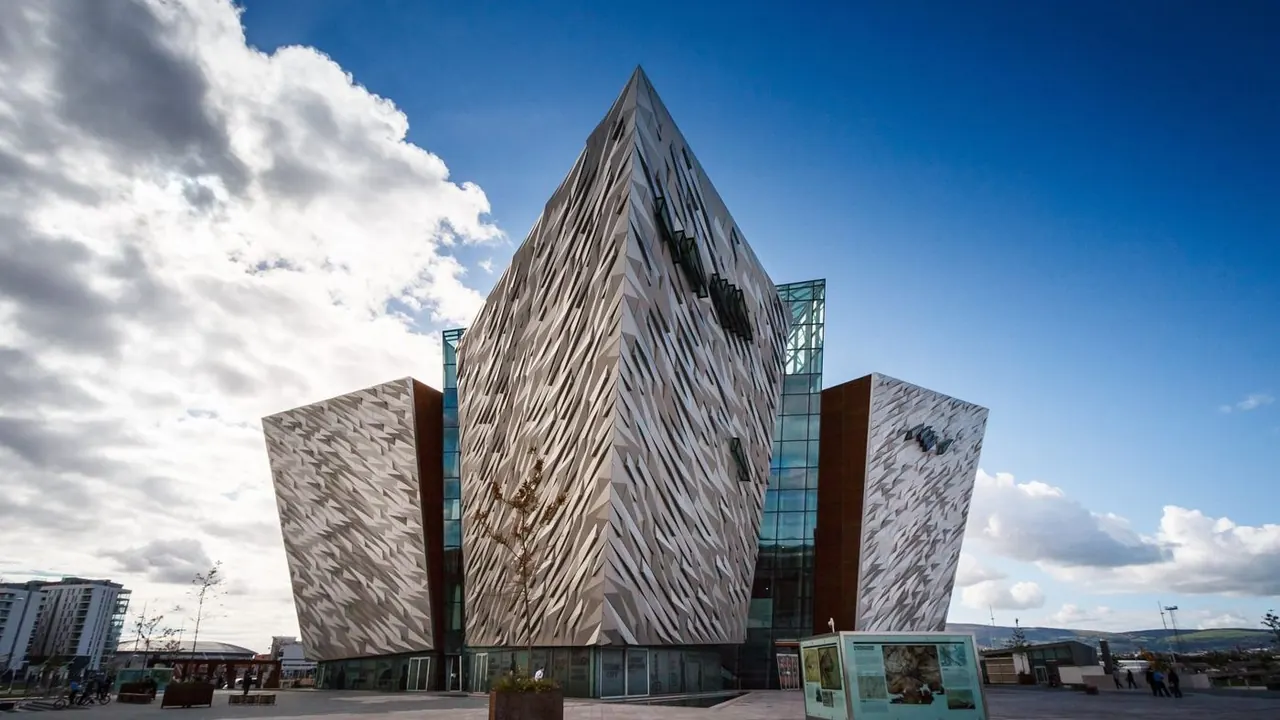
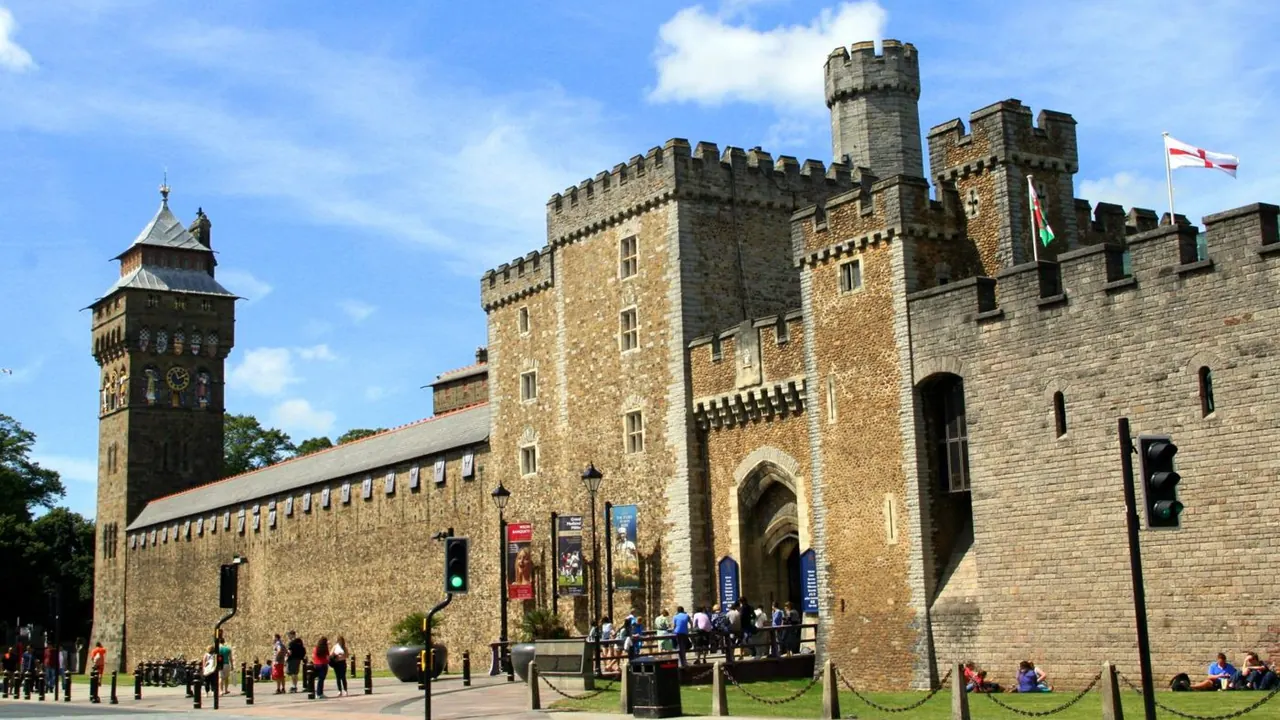
Photos: Belfast by Nico Kaiser, CC BY 2.0, cropped; Cardiff by Tevfik Teker, CC BY 3.0, cropped.
Belfast or Cardiff?
Our verdict in twelve categories, each scored against the same fixed benchmark cities, and the climate month by month, so you can choose for your trip.
Choose Belfast for
- food and drink
- nature and the outdoors
- prices
Belfast suits travellers who want a city with a strong recent story and wild coast close by. The Titanic slipways, the murals of the Falls and Shankill roads and the Ulster Museum explain a place that is still thinking about its past. The Causeway Coast and the Mournes make it a fine base for walkers, and evenings are long pub rounds with Irish sessions and good shellfish and whiskey.
Choose Cardiff for
- beaches
- day trips
- shopping
Cardiff is the better pick if you want history that goes back further, and plenty to do within a short train ride. A castle with Roman walls stands in the middle of town, and Caerphilly, Castell Coch, Bath and Bristol are all easy day trips. It is also a little sunnier and has a real seaside bay nearby, so it works better for a summer trip that mixes sights with an afternoon on the sand.
Scoreboard
Twelve categories on one fixed scale from 0 to 100. The shaded stretch is the gap between the two.
Your match
Pick a travel style or drag the sliders, and both match scores follow your weighting.
Too close to call, 1 point apart
Wins on food and drink and nature and the outdoors with your weighting.
Wins on beaches and day trips with your weighting.
What matters to you?
Category by category
What the scores mean for a trip.
Beaches & swimming
Neither city is a beach destination, but Cardiff gets you closer to a real day on the sand. Barry Island is a proper seaside bay with a promenade and funfair, half an hour away by train. Penarth adds a pebble shore and a Victorian pier, and the surf at Porthcawl and the wide sands of the Gower reward a longer drive. The water warms enough in August for a paddle or a short swim.
Belfast's lough shore is for walking. The small sandy coves at Helen's Bay and Crawfordsburn are a short train ride away, and Whiterocks and Portstewart on the north coast are a real expedition. The Irish Sea there stays cold all summer, so swimming is left to a handful of hardy regulars.
Food & drink
The two eat about equally well, but in different ways. Belfast cooks around what comes from its farmland and loughs, from the Ulster fry with soda farls to Strangford oysters and dry-aged beef on tasting menus in the Cathedral Quarter and along the Lisburn Road. St George's Market is its weekend grazing ground, and stout and Irish whiskey anchor the drinking.
Cardiff's Welsh dishes are more of a side note: Welsh cakes off the griddle in Cardiff Market, cawl, and laverbread with cockles. Its best eating is in the bistros of Pontcanna and Canton, and the Middle Eastern and South Asian cooking along City Road gives it a range Belfast lacks. Local ales take the place of whiskey.
Culture & sights
Both have a handful of strong sights rather than a dense old centre, but they tell very different stories. Belfast's is industrial and recent: Titanic Belfast on the shipyard slipways, the domed City Hall, Crumlin Road Gaol, and the murals and peace walls of the Falls and Shankill roads, which are best seen with a local guide.
Cardiff reaches further back. Its castle wraps lavish Victorian Gothic rooms inside Roman and Norman walls, the National Museum has a surprising collection of French Impressionists, and St Fagans gathers farmhouses and a miners' institute from across Wales. Come to Belfast for modern political history and to Cardiff for a broader sweep of Welsh heritage.
Nightlife
A Belfast night is a long round of pubs and conversation, while Cardiff's weekends are louder and run later. In Belfast the evening winds through the cobbled entries of the Cathedral Quarter and the carved snugs of the Crown Liquor Saloon, with students filling Botanic Avenue in term. Most places close fairly early, and there are only a few clubs.
Cardiff goes out in big groups along St Mary Street on Saturdays, and on rugby international days the whole centre turns red. Womanby Street, facing the castle, has the alternative bars and late venues, and the wine bars of Pontcanna suit a quieter evening. Its clubs are mostly mainstream, and midweek is quiet.
Nature & outdoors
Belfast's landscapes run down to the sea. Cave Hill's basalt cliffs and the Black Mountain rise right behind the city, the granite Mournes drop to the shore about an hour south, and the Causeway Coast, with its hexagonal columns, rope bridge and the Glens of Antrim, is one of the great coastlines of these islands. Strangford Lough adds birdlife and kayaking.
Cardiff's best country is upland. The Taff Trail climbs from Bute Park up the valley, and Pen y Fan in the Brecon Beacons, the highest peak in southern Britain, makes a classic moorland half-day about an hour's drive away. The cliffs at Penarth and the Gower's limestone headlands give it a gentler stretch of coast.
Day trips
This is where Cardiff pulls ahead, because so much is close and easy to reach by train. Caerphilly's huge medieval fortress is twenty minutes away, and Castell Coch stands in the woods just north of town. Chepstow and Tintern Abbey make a pair in the Wye Valley, and Bath and Bristol are both about an hour across the Severn. Blaenavon's ironworks and Big Pit add the mining story.
Belfast's best outings take more time. Dublin is two hours away by train, the Antrim coast run past Dunluce Castle and Bushmills fills a day, and walled Derry takes most of one. Carrickfergus Castle and the Ulster Folk Museum are the nearer, quicker options.
Good for families
Both are easy, compact cities with children, and each has a hands-on science centre at its heart: W5 in Belfast's Titanic Quarter and Techniquest at Cardiff Bay. Belfast adds a zoo on the slopes of Cave Hill and the steam engines and trams of the Ulster Folk and Transport Museum. Its frequent rain means planning a few indoor days.
Cardiff has no zoo, but St Fagans has farm animals and craft demonstrations, Roath Park lake has rowing boats, and in summer Barry Island's sands and funfair are a short train ride away. Belfast simply has nothing to match that seaside option.
Getting around
Neither has a metro or tram, and both centres are small and flat enough to walk. Cardiff's is the tighter of the two. Much of it is pedestrianised, with the castle, market and arcades a few minutes from Cardiff Central. The Bay is reached by shuttle train, bus or water taxi along the Taff, and local trains run to Barry, Penarth and Caerphilly.
Belfast's walk stretches from City Hall across the river to the Titanic Quarter, with Glider buses running east to west and suburban trains along the lough. Its main draw, the Causeway Coast, really needs a hire car or a coach tour, while Cardiff's castles are mostly reachable by rail.
Shopping & style
Neither city is worth the trip for shopping, and both rely on high-street chains around a central covered mall. Cardiff has the more enjoyable afternoon thanks to its glass-roofed Victorian and Edwardian arcades, lined with record shops, bookshops and vintage clothing, with lovespoons and Welsh woollen blankets as souvenirs.
Belfast's draws are Victoria Square's glass dome, a few independents on the Lisburn Road, and the weekend craft and vintage stalls at St George's Market. Irish linen is the souvenir to look for.
Affordability
Both cost about the same, middling by British standards, with UK prices in restaurants and pubs. Belfast's rooms are easier to find at a fair price outside big event weekends, and the Ulster Museum, Botanic Gardens and City Hall tours are free. Paid attractions and coast tours add up, though.
In Cardiff, rugby internationals and stadium concerts push hotel prices up sharply, so check the fixtures before you book. The free national museums, St Fagans included, and the short, cheap train rides to castles and the coast help balance it out.
Live music & performing arts
Belfast's music happens mostly in its pubs. Traditional Irish sessions run most nights, and singer-songwriters play the small rooms of the Cathedral Quarter. The Ulster Orchestra plays at the Ulster Hall, the Grand Opera House and the Lyric's Irish drama cover the stage, and arts festivals fill the calendar in spring and autumn.
Cardiff has the larger national institutions. The bronze-domed Wales Millennium Centre is home to Welsh National Opera, the BBC National Orchestra of Wales is based in the city, and the Royal Welsh College of Music and Drama stages frequent student concerts and plays. The small grassroots venues around Womanby Street have bands on most nights, and the national stadium hosts major touring concerts.
Wellness & relaxation
Neither city has a bathing tradition, so relaxing in either means a hotel spa. The quiet moments differ a little. In Belfast you might stroll the Botanic Gardens, sit through a long afternoon in a pub snug, or head out to a country-house hotel. The hardiest join the cold-water swimmers along the lough.
Cardiff's calm is in slow mornings at Pontcanna cafés, a walk by the Taff through Bute Park, or a swim in the leisure pools of the hotels at Cardiff Bay.
When should you go?
Pick your month. The climate figures are measured averages, not a forecast.
Belfast in July
Cardiff in July
Daytime high, °C
Rainfall in the month, mm
Where the figures come from
Cardiff has no rain gauge within 25 km of the centre, so its rainfall comes from a gridded climate dataset read at the city rather than from a gauge further away.
Cardiff's sunshine is measured 83 km from the centre, at Lyneham.
Temperature and rainfall are climate normals, averaged over the years shown. Belfast: 1991-2020 normals, Belfast / Aldergrove Airport (19.4 km from centre). Cardiff: 1991-2020 normals, Cardiff-Wales Airport (14.9 km from centre).
Neither city gets truly warm. Both peak in July and August, Belfast at about 19°C and Cardiff at about 20°C, which is good walking weather rather than beach heat. Cardiff gets clearly more sunshine through the whole summer, and its sea warms to around 18°C in August, enough for a paddle or a quick swim at Barry Island. Belfast's water stays colder and is at its warmest in September and October, around 14°C, so only hardy swimmers go in.
Rain is where the summers differ most. Cardiff gets wetter just when you would want to be outdoors, with about 100mm in August, while Belfast's summers are drier and steadier. In both cities late spring and early autumn are dependable for sightseeing. From October to January the two are much alike, cool, grey and at their wettest, with short days that suit museums and pubs more than coast paths.
Which traveller are you?
On a beach and sun trip, Cardiff is the clear choice. It gets more summer sunshine, its sea is warmer, and Barry Island's sandy bay and funfair are half an hour away by train. Belfast's coves at Helen's Bay are for a bracing walk rather than a swim.
For an outdoors trip, Belfast has the more dramatic landscapes. You can walk Cave Hill straight from the city, the Mourne Mountains run down to the sea, and the Giant's Causeway and its cliff paths are an easy drive. Cardiff's Pen y Fan offers open moorland instead.
On a food and nightlife trip, Belfast is the better match. You get Strangford oysters and Mourne lamb, deep whiskey shelves, careful pints of stout and traditional sessions in the pubs of the Cathedral Quarter. Cardiff's Saturday nights are louder but more mainstream.
Before you go
| Measure | Belfast | Cardiff |
|---|---|---|
| Official language | English | English |
| Currency | Pound Sterling (GBP) | Pound Sterling (GBP) |
| Sockets | G230 V, 50 Hz | G230 V, 50 Hz |
| Driving side | Left | Left |
| Time zone | UTC, UTC+1 in summer | UTC, UTC+1 in summer |
| Emergency number | 112 or 999 | 112 or 999 |
| Elevation | 3 m | 41 m |
| Main airport | George Best Belfast City Airport (BHD)4 km from centre25 non-stop destinations | Cardiff International Airport (CWL)15 km from centre30 non-stop destinations |
| Public holidays this year | 10 days | 8 days |
By the numbers
| Measure | Belfast | Cardiff |
|---|---|---|
| City population | 345,006 | 383,536 |
| People per km² | 3,000 | 2,734 |
| Museums within 10 km | 8 | 9 |
| UNESCO World Heritage sites within 50 km | 1 | 1 |
| Swim season, months above 21 °C | None | None |
Where else could you go?
Every comparison below shares a destination with this one, so you can follow Belfast or Cardiff somewhere new.