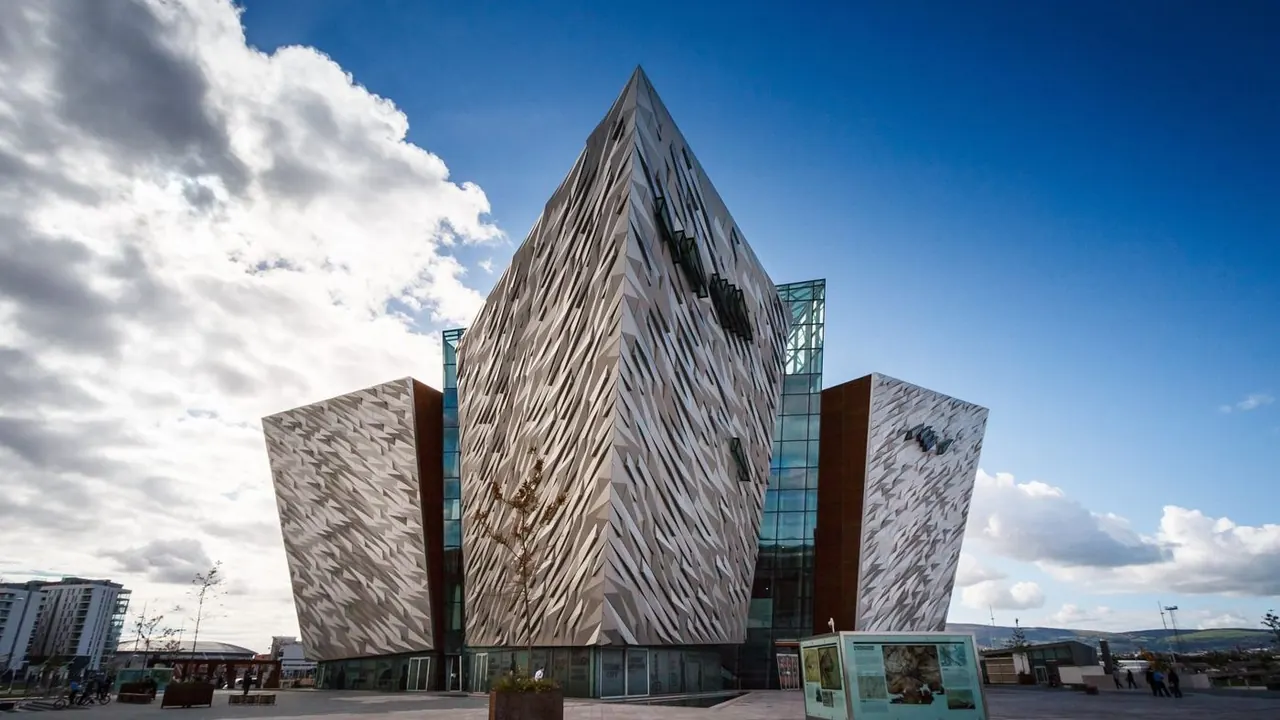
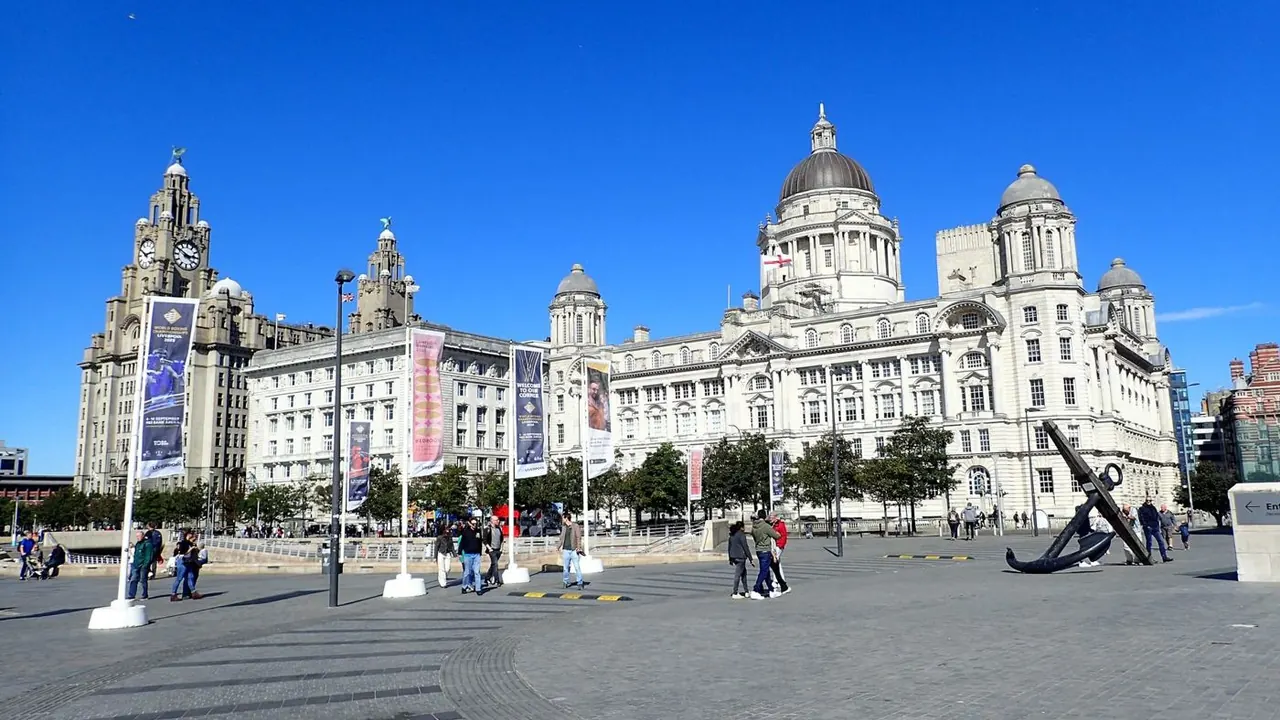
Photos: Belfast by Nico Kaiser, CC BY 2.0, cropped; Liverpool by Marathon, CC BY-SA 2.0, cropped.
Belfast or Liverpool?
Our verdict in twelve categories, each scored against the same fixed benchmark cities, and the climate month by month, so you can choose for your trip.
Choose Belfast for
- nature and the outdoors
- families
- wellness
Belfast is the better choice if the countryside matters as much as the city. Cave Hill and Divis rise straight behind the rooftops, the Mournes are an hour south, and the Causeway Coast makes one of the finest days out in these islands. The city itself has a handful of strong sights, Titanic Belfast and the murals of the Falls and Shankill above all. Its evenings centre on pubs and traditional sessions rather than clubs.
Choose Liverpool for
- nightlife
- live music and the arts
- culture and sights
Liverpool suits a trip spent mostly inside the city. The waterfront museums, the Walker's paintings and the two cathedrals fill more days, and many of them cost nothing to enter. Live music runs from the Cavern cellar to the Philharmonic, and weekend nights go on well past the hour when Belfast's pubs close. Beyond the Victorian parks and the Formby dunes the land is flat, and real hills are a long drive away.
Scoreboard
Twelve categories on one fixed scale from 0 to 100. The shaded stretch is the gap between the two.
Your match
Pick a travel style or drag the sliders, and both match scores follow your weighting.
Too close to call, 1 point apart
Wins on nature and the outdoors and families with your weighting.
Wins on nightlife and live music and the arts with your weighting.
What matters to you?
Category by category
What the scores mean for a trip.
Beaches & swimming
Both cities have cold water and beaches for walking rather than swimming. In Belfast the nearest sandy coves, Helen's Bay and Crawfordsburn, are a short train ride away, while the long strands at Whiterocks and Portstewart mean a drive to the north coast.
Liverpool's sand is easier to reach and more varied. Merseyrail runs straight to Gormley's iron figures at Crosby and the pine-backed dunes of Formby, and West Kirby's marine lake holds water at low tide. Its shore has its own hazard, though: the tide goes out a very long way over soft mud.
Food & drink
Neither city is a place people visit mainly to eat, but they are good at different things. Belfast's strength is produce. Strangford oysters, Mourne lamb and dry-aged beef appear on short seasonal menus, St George's Market is good for grazing at weekends, and pubs carry a deep range of Irish whiskey.
Liverpool offers more variety but less ambitious cooking. You can eat scouse in a pub, visit the old Chinatown, try the small international kitchens on Bold Street or the street-food halls of the Baltic Triangle. Fine dining is thinner than in Belfast's better kitchens.
Culture & sights
Liverpool has more to see and enough grand buildings to fill two or three days. The Three Graces and the Grade I warehouses of the Royal Albert Dock hold the Maritime and International Slavery museums, the Walker Art Gallery has a fine Pre-Raphaelite collection, and the Anglican and Catholic cathedrals face each other along Hope Street.
Belfast's heritage is more recent and more raw. Titanic Belfast stands on the shipyard slipways, and the guided walks past the murals and peace walls of the Falls and Shankill stay with most visitors longer than any gallery. Still, it is a city of a few strong sights and can be covered faster.
Nightlife
Liverpool is the place for a big night out. Concert Square, Seel Street and Wood Street fill with bars and clubs at weekends, and the Baltic Triangle adds late electronic nights. Many evenings run past 2am, and stag and hen groups are part of the scene, so it can get rowdy.
Belfast is better for talk than for dancing. The cobbled entries of the Cathedral Quarter and the carved snugs of the Crown Liquor Saloon set the tone, the club scene is small, and most places close earlier.
Nature & outdoors
Belfast wins easily here. Basalt cliffs on Cave Hill and the slopes of Divis and the Black Mountain are a bus ride from the centre, the granite Mournes are about an hour south, and the Giant's Causeway, Carrick-a-Rede and the Glens of Antrim lie to the north. Strangford Lough adds birdlife and kayaking.
Liverpool's outdoors is gentler and flatter. Sefton Park's palm house, the red squirrels in the Formby pinewoods and the Wirral Way to the Dee estuary make pleasant outings. Proper mountains in North Wales or the Lake District are about two hours away.
Day trips
Belfast's outings range further, up a wild coast and over the border. The Antrim coast road runs past the ruins of Dunluce Castle to Bushmills and Ballycastle, walled Derry takes most of a day, and the cross-border train reaches Dublin in about two hours. Closer in, the Norman castle at Carrickfergus and the two cathedrals of Armagh make easier days out.
Liverpool's best trips are shorter and easy by train. Chester's Roman walls and timbered Rows are about 45 minutes away, Manchester is under an hour, and Port Sunlight's model village and Southport's pier are closer still. After Conwy and Llandudno, which make a longer day by car, there is much less to choose from.
Good for families
Both are friendly, manageable cities for children, with a different mix of attractions. Belfast's are hands-on and compact: W5 for younger children, the zoo on Cave Hill and the steam engines at the Ulster Folk and Transport Museum. The frequent rain means planning some indoor days.
Liverpool's museums are mostly free, with dinosaurs and a planetarium at the World Museum. Its bigger animal attractions, Chester Zoo and Knowsley Safari Park, are within an hour. In return, families need to steer clear of the centre on loud weekend nights.
Getting around
Liverpool is a little easier to get around. Its docks, Ropewalks and cathedrals lie within about 2km of each other, and Merseyrail's frequent trains go out to Crosby, Formby, Southport and the Wirral, so the coast needs no car.
Belfast's flat centre is just as walkable, and the Glider buses cross the city from east to west. The difference shows once you head out: buses thin out in the evening, and the Causeway Coast or the Mournes are far easier with a hire car or a tour.
Shopping & style
Liverpool is the better shopping city, though neither is worth the journey for shopping alone. Liverpool ONE's open-air streets hold the big chains and department stores, and Bold Street adds vintage clothes, records and independent boutiques.
Belfast's high street around Donegall Place and the glass dome of Victoria Square is smaller. It does have something Liverpool lacks, though: Irish linen as a souvenir worth buying, and the weekend craft and vintage stalls of St George's Market.
Affordability
Both are middling by UK standards, and both have free museums. In Belfast that means the Ulster Museum, the Botanic Gardens and City Hall tours, but a paid coast tour or the big headline attractions push the cost up quickly.
In Liverpool the free list is longer and covers most of the main sightseeing, and the compact centre means little spent on transport. Hotel rooms jump on match weekends and around the Grand National, so check the calendar before booking.
Live music & performing arts
Liverpool has the larger music and stage scene. Bands play most nights around Mathew Street and the Baltic Triangle, the Cavern draws visitors from all over the world, the Royal Liverpool Philharmonic plays a full season in its art deco hall, and the Everyman and Playhouse make their own theatre.
Belfast's scene is smaller and more local, but it has the traditional Irish sessions that run in city-centre pubs on most nights. It also has Irish drama at the Lyric, the ornate Grand Opera House and two arts festivals, one in spring and one in autumn.
Wellness & relaxation
Neither city has a bathing tradition, and in both, wellness means hotel spas. Belfast offers more ways to slow down: an afternoon in a pub snug, a walk in the Botanic Gardens, or a night at a country-house hotel near the hills or the coast.
Liverpool's quiet moments are a slow ferry crossing, Sefton Park or an afternoon in a free gallery. For real rest, though, it is better to stay out on the Wirral, away from the noise of a city-centre weekend.
When should you go?
Pick your month. The climate figures are measured averages, not a forecast.
Belfast in July
Liverpool in July
Daytime high, °C
Rainfall in the month, mm
Where the figures come from
Liverpool's temperatures are measured 47 km from the centre, at Manchester Airport.
Liverpool has no rain gauge within 25 km of the centre, so its rainfall comes from a gridded climate dataset read at the city rather than from a gauge further away.
Temperature and rainfall are climate normals, averaged over the years shown. Belfast: 1991-2020 normals, Belfast / Aldergrove Airport (19.4 km from centre). Liverpool: 1991-2020 normals, Manchester Airport (47.4 km from centre).
Neither city is warm enough for a beach vacation in any month. The Irish Sea reaches only about 14°C off Belfast in early autumn and about 17°C off Liverpool in August, so a swim is a quick cold dip. Both are at their best for walking from May to September. Liverpool is a little warmer in high summer, reaching about 21°C in July against 19°C in Belfast. It also stays sunny from June to August, while Belfast's sunniest month is May and its summers turn greyer and wetter by August.
From October the two are much alike. Rain is heaviest from October to December, with Liverpool's October the wettest month in either city. Winter highs sit around 7°C and the days are short, which is still fine for museums and pubs but bleak for long walks along the coast.
Which traveller are you?
On an outdoors trip, Belfast is the clear pick. Cave Hill and Divis are a short bus ride from the centre, the Mourne Mountains offer serious hill walking an hour away, and the cliff paths of the Causeway Coast have nothing comparable within a day of Liverpool.
For a food and nightlife trip, Liverpool comes out ahead. Eating is broadly as good in both, but Concert Square, Seel Street and the Baltic Triangle's warehouse club nights keep going far later than Belfast's pub rounds, and students keep weeknights busy as well.
On a culture and arts trip, Liverpool offers more. The Albert Dock museums, the Walker's Pre-Raphaelites, two great cathedrals and a theatre and orchestra scene on Hope Street outweigh Belfast's smaller set of sights, which are powerful but quicker to see.
Before you go
| Measure | Belfast | Liverpool |
|---|---|---|
| Official language | English | English |
| Currency | Pound Sterling (GBP) | Pound Sterling (GBP) |
| Sockets | G230 V, 50 Hz | G230 V, 50 Hz |
| Driving side | Left | Left |
| Time zone | UTC, UTC+1 in summer | UTC, UTC+1 in summer |
| Emergency number | 112 or 999 | 112 or 999 |
| Elevation | 3 m | 70 m |
| Main airport | George Best Belfast City Airport (BHD)4 km from centre25 non-stop destinations | Liverpool John Lennon Airport (LPL)12 km from centre75 non-stop destinations |
| Public holidays this year | 10 days | 8 days |
By the numbers
| Measure | Belfast | Liverpool |
|---|---|---|
| City population | 345,006 | 513,441 |
| People per km² | 3,000 | 4,592 |
| Museums within 10 km | 8 | 31 |
| UNESCO World Heritage sites within 50 km | 1 | 2 |
| Swim season, months above 21 °C | None | None |
Where else could you go?
Every comparison below shares a destination with this one, so you can follow Belfast or Liverpool somewhere new.