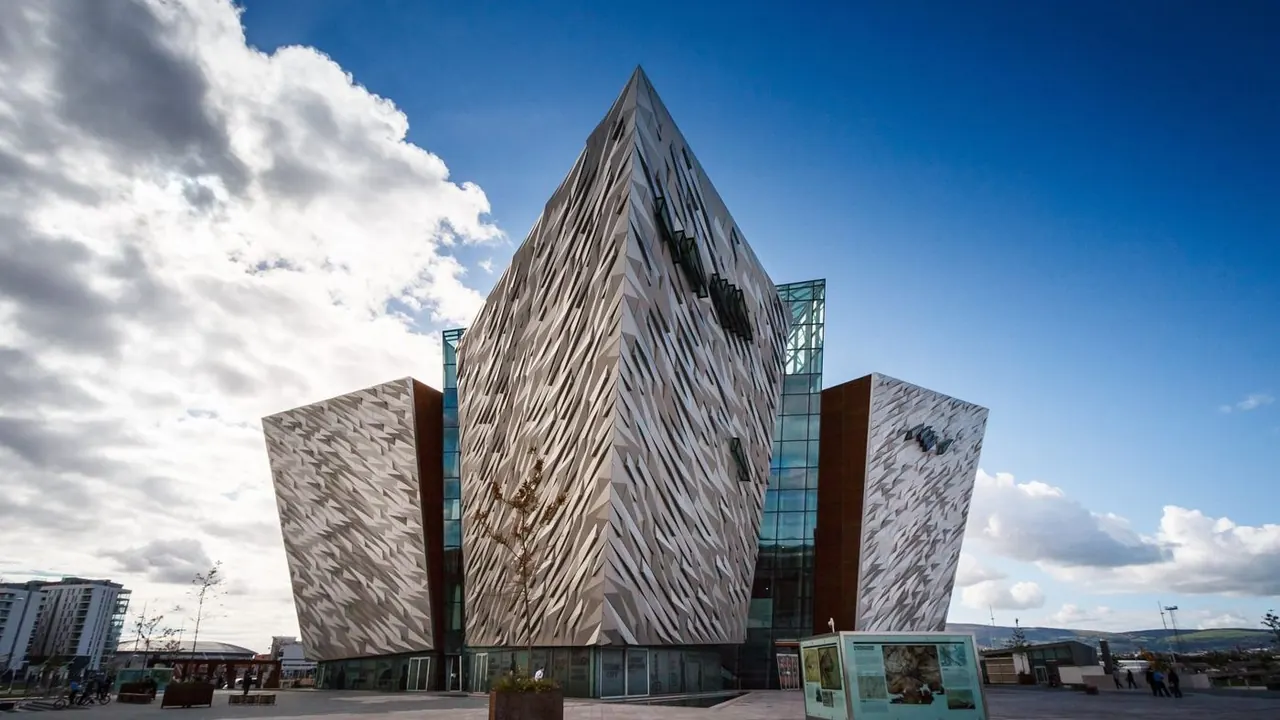
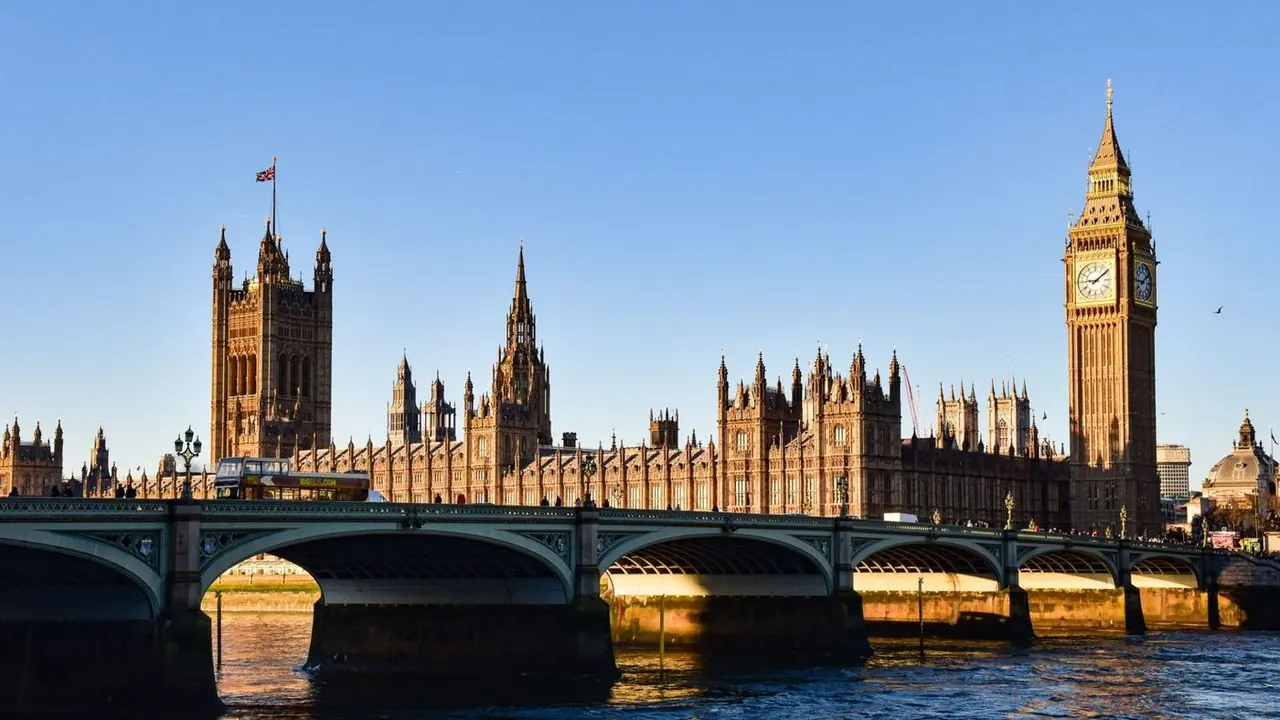
Photos: Belfast by Nico Kaiser, CC BY 2.0, cropped; London by AXP Photography, Pexels License.
Belfast or London?
Our verdict in twelve categories, each scored against the same fixed benchmark cities, and the climate month by month, so you can choose for your trip.
Choose Belfast for
- prices
- nature and the outdoors
Belfast suits travellers who want a compact, friendly city as a base for wild country. The basalt cliffs of Cave Hill rise behind the streets, the Mournes and the Causeway Coast are within a day's reach, and the city tells its own story of shipyards, linen and the Troubles through Titanic Belfast and the murals of the Falls and Shankill. It also goes easier on the budget, and evenings revolve around pub sessions rather than big nights out.
Choose London for
- shopping
- live music and the arts
- culture and sights
Choose London when the city itself is the point of the trip. Its museums, theatres, orchestras, restaurants and shops go deeper than almost anywhere else, and the rail network makes Oxford, Bath and Windsor easy outings. It costs a good deal more, and its green spaces are parks and downs rather than mountains. But for a first visit, a family with children or anyone who wants a different evening every night, it gives far more to do.
Scoreboard
Twelve categories on one fixed scale from 0 to 100. The shaded stretch is the gap between the two.
Your match
Pick a travel style or drag the sliders, and both match scores follow your weighting.
Wins on prices and nature and the outdoors with your weighting.
Wins on shopping and live music and the arts with your weighting.
What matters to you?
Category by category
What the scores mean for a trip.
Beaches & swimming
Neither city is a place for a beach vacation, and what they offer is different in kind. From Belfast, a short train ride along County Down reaches the sandy coves of Helen's Bay and Crawfordsburn, and the long strands of Whiterocks and Portstewart lie further north. The Irish Sea stays cold, so a swim there is a quick dip.
London has no coast of its own. Brighton's pebble beach is about an hour away by train, and Margate and Whitstable have more sand. The city's real swimming is in fresh water, at the lidos of Brockwell Park and Parliament Hill and in the Hampstead Heath ponds.
Food & drink
Belfast cooks well from what lies around it: an Ulster fry with soda farls, Strangford oysters, Mourne lamb and dry-aged beef, plus weekend grazing at St George's Market and a deep shelf of Irish whiskey. Beyond that produce, though, the choice is narrow.
London offers far more. A single trip can take in Bangladeshi cooking on Brick Lane, Punjabi food in Southall, Turkish grills in Green Lanes and Caribbean kitchens south of the river, along with Borough Market and a large fine-dining scene. Eating out can easily be the main reason to go.
Culture & sights
Belfast's heritage is recent and industrial, and it is told with care. Titanic Belfast stands on the old slipways, the domed City Hall recalls the linen boom, and Crumlin Road Gaol and the murals of the Falls and Shankill bring the Troubles close. It is a short list of strong sights rather than a historic core.
London is on another scale altogether. The British Museum, the V&A, the National Gallery and the Tates each deserve a full day, and landmarks such as the Tower, Westminster Abbey and St Paul's span a thousand years of history. A week there barely makes a start.
Nightlife
A Belfast night out is a round of pubs: the cobbled entries of the Cathedral Quarter, the carved snugs of the Crown Liquor Saloon and talkative crowds. Clubs are few and most places close fairly early.
London has a district for every kind of night. Soho has late cocktail bars and its long-established gay scene, Shoreditch and Dalston have clubs and warehouse parties, and Brixton and Peckham have big venues. Many London pubs still empty around eleven, but at the weekend the choice is huge.
Nature & outdoors
Belfast is the stronger choice for the outdoors. The cliffs of Cave Hill and the slopes of Divis start a bus ride from the centre, the Mournes give real hill walking an hour south, and the hexagonal columns of the Giant's Causeway and the Glens of Antrim lie to the north. Strangford Lough adds birdlife and kayaking.
London's nature is parkland: deer under the old oaks of Richmond Park, the skyline view from Hampstead Heath, and the Thames Path out past Kew. The Chilterns and the South Downs offer pleasant footpaths, but the country is gentle rather than dramatic.
Day trips
London has the wider range of outings, because it sits at the hub of a rail network. Oxford, Cambridge and Windsor are each about an hour away, and Bath, Canterbury, Stonehenge and the Cotswolds make a week of very different days easy to plan without a car.
Belfast's best outings have more character than convenience. The cross-border train reaches Dublin in about two hours, and Carrickfergus Castle and Armagh's cathedrals are close. Dunluce Castle, Bushmills and the walls of Derry, though, are easier with a hire car or a coach tour.
Good for families
Belfast works with children because it is small and easy to manage. W5 and Titanic Belfast fill a rainy day, the zoo sits on Cave Hill above the lough, and the Ulster Folk and Transport Museum has steam engines and old farmhouses. It has no big-ticket attraction, though.
London gives families much more to fill the days: free dinosaur halls at the Natural History Museum, the Science Museum's hands-on galleries, the pirate ship playground in Kensington Gardens, and Legoland or the Harry Potter studio tour outside the city. The cost is long distances, stairs at many Tube stations and crowded sights in the school breaks.
Getting around
Belfast is a walking city. Its flat centre links City Hall, the Cathedral Quarter and the Titanic Quarter on foot, and the Glider buses cover the rest. There is no metro, and buses thin out in the evening.
London is far too big to walk, but its transport is much fuller. The Underground, the Elizabeth line, buses and Thames riverboats all take one contactless card, and nobody needs a car. Expect long station corridors and a packed Tube at rush hour.
Shopping & style
In Belfast, shopping means the chains around Donegall Place, the glass-domed Victoria Square, and a few independents on the Lisburn Road. Irish linen and whiskey are the souvenirs worth looking for.
London is a reason to travel in its own right. There are luxury houses on Bond Street, bespoke tailoring on Savile Row, and Liberty and Harrods as sights in themselves. Portobello Road antiques, Columbia Road's flower market and the vintage shops of Spitalfields add weekend browsing.
Affordability
Belfast leaves more of the budget for the trip itself. The centre is walkable, so little goes on getting around, and the bill grows mainly with what gets booked: a ticket for Titanic Belfast, a coach tour up the Causeway Coast, or a stay that falls on a big concert weekend. A dinner out or a round of drinks costs about what it would anywhere else in the UK.
In London the room takes the biggest share, and a central one is among the dearest in Europe. Theatre seats and evenings out then add up quickly. The daily cap on contactless fares limits what the Tube costs, and a market lunch or a meal at a Turkish or South Asian café keeps eating within reason. Even so, the same few nights cost noticeably more than in Belfast.
Live music & performing arts
In Belfast, music is part of an ordinary evening: traditional sessions in city-centre pubs most nights, the Ulster Orchestra at the Victorian Ulster Hall, Irish drama at the Lyric and touring musicals at the Grand Opera House. The scene is warm but small.
London is one of the world's great stages. It has the West End playhouses, the National Theatre and Shakespeare's Globe, opera and ballet at Covent Garden, and five major orchestras, with the Proms at the Royal Albert Hall each summer. There is a serious choice every night.
Wellness & relaxation
Neither city is built for rest, but London has more to offer. Victorian Turkish baths survive in Bayswater and at Ironmonger Row, the grand hotels of Mayfair have full spas, and the thermal waters of Bath are an easy train ride away. The pace of the city itself is anything but restful.
Belfast's wellness is limited to hotel spas and cold dips along the lough shore. Its calm comes from slow walks in the Botanic Gardens or along the Lagan, and from how quickly the coast and hills can be reached.
When should you go?
Pick your month. The climate figures are measured averages, not a forecast.
Belfast in July
London in July
Daytime high, °C
Rainfall in the month, mm
Temperature and rainfall are climate normals, averaged over the years shown. Belfast: 1991-2020 normals, Belfast / Aldergrove Airport (19.4 km from centre). London: 1992-2020 (sunshine 1991-2020, rainfall 1991-2020) normals, London Weather Centre (1.3 km from centre).
Neither city ever gets warm enough for a beach vacation. Belfast's summer tops out around 19°C in July and August, and the sea is warmest in September and October, when it reaches only about 14°C. May is its sunniest month and one of its driest, so late spring is the best time for the coast and the hills. From August the rain builds, peaking at about 89mm in October, and the short, dark winter days at 7°C suit indoor sights more than long walks.
London is a few degrees warmer all year, reaching around 23°C in July, and it is noticeably sunnier through the summer. June to September is the most comfortable time for walking between parks and sights, and spring and early autumn are mild too. Winters are grey and cool in both cities, but London has less rain than Belfast in every month, so a damp day is less likely to spoil a plan there.
Which traveller are you?
On a culture and arts trip, London is the clear choice. The British Museum, the National Gallery and the two Tates are mostly free, and evenings can go to the National Theatre, the Royal Opera House or a Proms concert. Belfast's list of sights is much shorter.
For an outdoors trip, Belfast comes out ahead. Cave Hill and Divis are a bus ride from the centre, the granite Mournes are about an hour south and the Causeway Coast cliff paths lie to the north. London has fine parks and gentle downs, but no mountains.
On a trip on a tight budget, Belfast is easier to manage. Hotel rooms come at fairer prices, the Ulster Museum and the Botanic Gardens are free, and pub food is moderate. London's free museums help, but its rooms and fares strain any budget.
Before you go
| Measure | Belfast | London |
|---|---|---|
| Official language | English | English |
| Currency | Pound Sterling (GBP) | Pound Sterling (GBP) |
| Sockets | G230 V, 50 Hz | G230 V, 50 Hz |
| Driving side | Left | Left |
| Time zone | UTC, UTC+1 in summer | UTC, UTC+1 in summer |
| Emergency number | 112 or 999 | 112 or 999 |
| Elevation | 3 m | 4 m |
| Main airport | George Best Belfast City Airport (BHD)4 km from centre25 non-stop destinations | London Heathrow Airport (LHR)23 km from centre224 non-stop destinations |
| Public holidays this year | 10 days | 8 days |
By the numbers
| Measure | Belfast | London |
|---|---|---|
| City population | 345,006 | 8,799,728 |
| People per km² | 3,000 | 5,598 |
| Museums within 10 km | 8 | 216 |
| UNESCO World Heritage sites within 50 km | 1 | 4 |
| Swim season, months above 21 °C | None | - |
Where else could you go?
Every comparison below shares a destination with this one, so you can follow Belfast or London somewhere new.