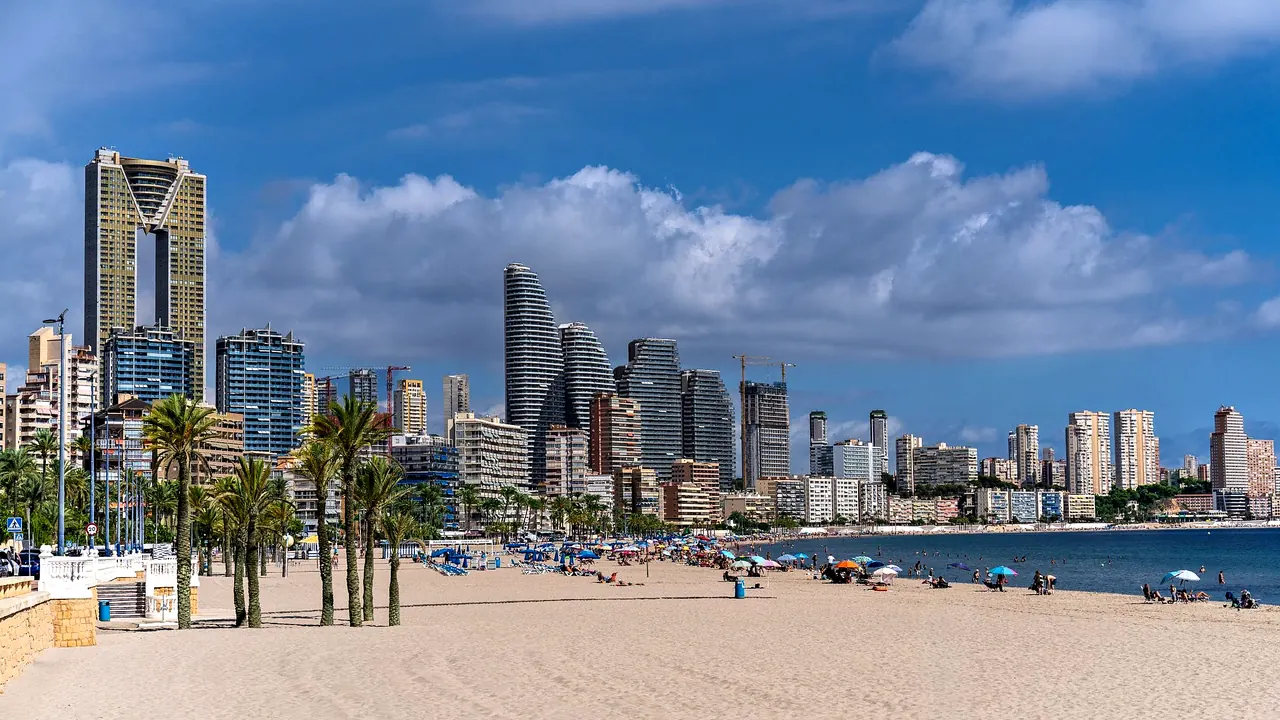
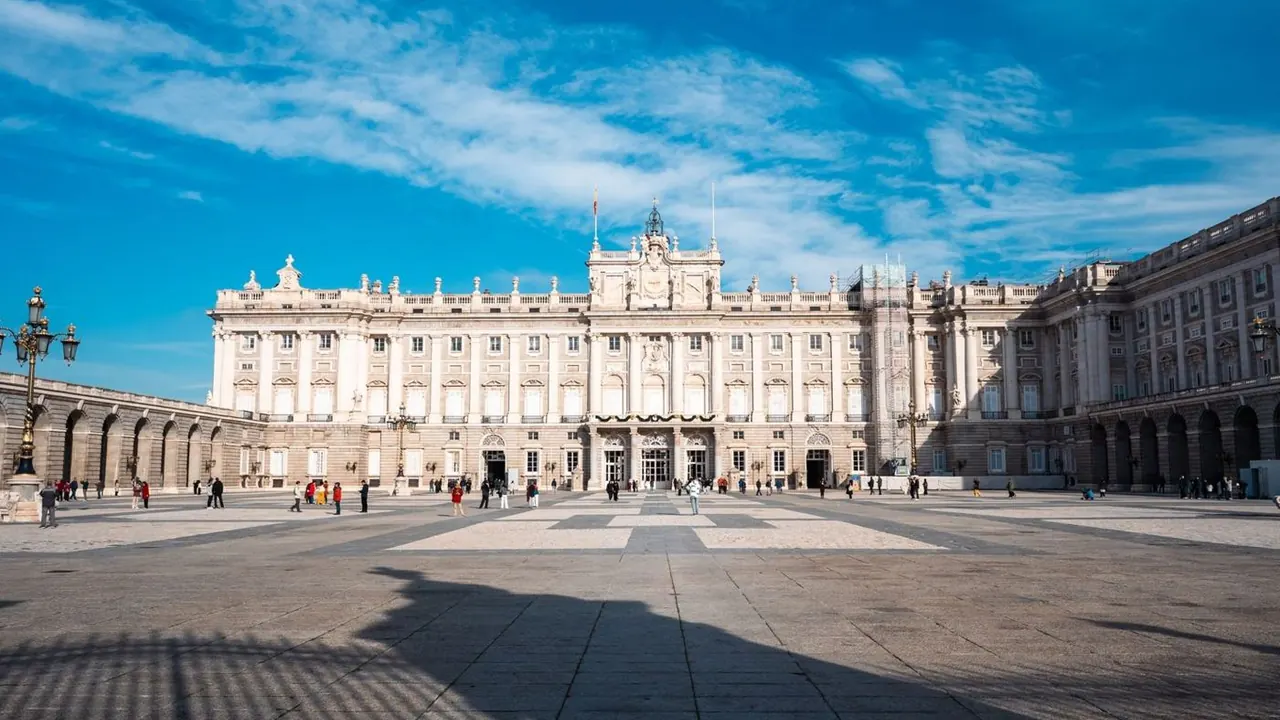
Photos: Benidorm by Emilio Sánchez Hernández, Pexels License; Madrid by Mert Ocak, Pexels License.
Benidorm or Madrid?
Our verdict in twelve categories, each scored against the same fixed benchmark cities, and the climate month by month, so you can choose for your trip.
Choose Benidorm for
- beaches
- prices
- families
Benidorm suits a sun-and-sand week. It has two long sandy beaches with calm, shallow water, a ring of theme and water parks for the children, and eating and drinking that stay cheap from one day to the next. Its mild, sunny winter also makes it a sensible escape between November and March. It asks little of you beyond a towel and a stroll along the promenade.
Choose Madrid for
- culture and sights
- shopping
- live music and the arts
Choose Madrid if the city itself is the point of the trip. The great painting collections on the Paseo del Prado, a late night out that changes from one neighbourhood to the next, serious tapas, and opera, flamenco and theatre give it a depth Benidorm doesn't try to match. Fast trains also put Toledo and Segovia within easy reach. What it can't give you is the sea.
Scoreboard
Twelve categories on one fixed scale from 0 to 100. The shaded stretch is the gap between the two.
Your match
Pick a travel style or drag the sliders, and both match scores follow your weighting.
Wins on beaches and prices with your weighting.
Wins on culture and sights and shopping with your weighting.
What matters to you?
Category by category
What the scores mean for a trip.
Beaches & swimming
Benidorm was built around its beaches. Levante is the livelier crescent, close to the bars, and Poniente is the broader, calmer one where Spanish families settle. Both have fine sand and gently shelving water. The little Mal Pas cove sits below the old town, and the rocky coves under the Serra Gelada cliffs and the pebbles at Albir are close by.
Madrid sits on the central plateau, far from any coast. On hot days, locals use the municipal open-air pools or drive to the reservoirs below the Sierra de Guadarrama. If you want the sea, you'll need to add a separate stay on the coast.
Food & drink
Madrid is the far better place to eat. You can work your way along the zinc counters of Cava Baja and Plaza de Santa Ana, eat cocido and callos, try Galician seafood and Basque grills, and book high-end tasting menus. Market halls like San Miguel and Antón Martín add more choice, and the menú del día makes lunch a real meal.
Benidorm needs more searching. Along the seafront and in the Rincón de Loix, most menus serve fry-ups and pizza for package visitors. The good eating is in the tapas lane of the old town and in the restaurants that cook arroz a banda and arroz negro in the Alicante way.
Culture & sights
The gap is very wide here. Madrid holds Velázquez, Goya and El Greco at the Prado and Guernica at the Reina Sofía, all on the same avenue. Around them are the Royal Palace, the arcaded Plaza Mayor and smaller treasures such as the Sorolla house. An art lover could fill a week without leaving the centre.
Benidorm offers an hour or two. You can walk the whitewashed lanes of the headland, visit the blue-domed church and look out from the Balcón del Mediterráneo. After that, the main sight is the tower skyline at sunset.
Nightlife
Both towns stay up late, but Madrid's night has more range. Malasaña has rock and indie bars, Chueca is the centre of the gay scene, and La Latina has terraces for bar-hopping. The clubs around Gran Vía play everything from mainstream to techno, and there's a full night out every weekend of the year.
Benidorm's night is one thing done loudly. Think themed pubs, karaoke and drag cabaret in the British quarter, with stag and hen groups out until dawn and big clubs on the edge of town. The pace falls away once high season ends.
Nature & outdoors
Benidorm has the edge, mainly because sea and mountains sit side by side. The Serra Gelada cliff path starts just beyond Levante beach. Puig Campana, the Bernia ridge and the Algar waterfalls are within half an hour, and you can snorkel or dive around the island just offshore.
Madrid has good city parks in the Retiro, Casa de Campo and Madrid Río. For wilder country you have to go about an hour north to the granite boulders of La Pedriza, the glacial lakes below Peñalara and some modest winter skiing. The farmland around the city itself is flat.
Day trips
Madrid is one of the best bases in Spain for day trips. Fast trains reach Toledo above its gorge and Segovia with its Roman aqueduct in about half an hour. Walled Ávila, golden Salamanca and the hanging houses of Cuenca are not much further, and El Escorial and Aranjuez are close by.
Benidorm's outings are shorter and gentler. White Altea, the painted houses of Villajoyosa and the castle village of Guadalest all make easy afternoons. The tram runs to Alicante, and Elche's palm grove is about an hour by car. Valencia is a long day out.
Good for families
Benidorm is easier with children. The water is calm and shallow and the promenades are flat. A theme park, a water park, a marine park and a zoo stand together on the edge of town. Staying near Poniente keeps you away from the adult nightlife behind Levante.
Madrid welcomes families too, and children out in the plazas late at night are part of normal life there. The Retiro's rowing boats and puppet shows and the zoo and funfair at Casa de Campo make good outings. However, the great museums are aimed at adults, and July and August are hard work with small children.
Getting around
Madrid is the simpler city to get around without a car. The centre, from the Royal Palace to the Prado, is easy to walk. The large, air-conditioned metro runs straight to the airport, and Atocha and Chamartín link you to the high-speed trains for day trips.
In Benidorm, you mostly walk along the flat promenades, with buses to the parks and the coastal tram towards Alicante and Altea. The inland villages and mountains really need a car or an organised excursion, yet parking in town is hard to find.
Shopping & style
Madrid is a real shopping city, and each district does something different. Calle Serrano in Salamanca has the luxury labels, and Gran Vía and Preciados have the flagship stores. Malasaña and Conde Duque are the places for vintage and independent design, and the older shops near Plaza Mayor sell guitars, fans and espadrilles.
Benidorm sells what a beach stay needs: sunglasses, swimwear, souvenirs and the stalls of the weekly markets. The old town has some ceramics and turrón, but there's nothing for serious shoppers.
Affordability
Benidorm is the cheaper place to stay. A huge supply of rooms and all-inclusive packages keeps rates down, and winter is especially good value, which is why many retirees stay for weeks. The exceptions are July, August and the theme-park days.
Madrid costs what you would expect of a capital, especially for hotels. It makes up some ground with the menú del día, tapas that come with a drink, a cheap metro and free museum entry at set times.
Live music & performing arts
Madrid has a full stage calendar. There's opera at the Teatro Real, the national orchestra at the Auditorio Nacional and zarzuela at its own theatre. Musicals run along Gran Vía, and the best tablaos in the old centre put on serious flamenco, with jazz clubs and indie venues adding more.
Benidorm's entertainment is lighter and nightly: song-and-dance dinner shows, tribute acts, comedians and drag cabaret in the bars. Anyone wanting drama or classical music has to travel to Alicante or Valencia.
Wellness & relaxation
Neither is a spa destination, so the difference is in the kind of rest each offers. Madrid has a few Arab-style bathhouses under brick vaults in the old centre, and you can find quiet in the Retiro or the Botanical Garden, though the city's late rhythm doesn't encourage slowing down. In Benidorm it comes down to hotel spas and the season. From November to March the town settles into mild promenade walks and long lunches, and Poniente is always the quieter side.
When should you go?
Pick your month. The climate figures are measured averages, not a forecast.
Benidorm in July
Madrid in July
Daytime high, °C
Rainfall in the month, mm
Where the figures come from
Benidorm's temperatures are measured 38 km from the centre, at Alicante.
Benidorm has no rain gauge within 25 km of the centre, so its rainfall comes from a gridded climate dataset read at the city rather than from a gauge further away.
Temperature and rainfall are climate normals, averaged over the years shown. Benidorm: 1991-2020 normals, Alicante (38.1 km from centre). Madrid: 1991-2020 normals, Madrid (1.7 km from centre).
Benidorm is a warm-water town for half the year. The sea is good for swimming from June to October and is warmest in August at around 26°C. High summer is hot, dry and very sunny, and autumn brings the most rain of the year, though even then it stays fairly light. Winter is the surprise: daytime highs near 17°C in January and plenty of sunshine make it fine for walking the promenades, but too cool for most people to swim.
Madrid has a sharper inland climate. July reaches about 33°C, which makes long afternoon walks between museums hard going, and winter highs drop to around 10°C, so it is crisp rather than mild. The best months for walking the streets are April and May, then late September and early October. October is also the city's wettest month, at about 64mm. For winter sun, Benidorm is clearly the warmer choice. In spring and autumn, Madrid is the more comfortable city to explore on foot.
Which traveller are you?
On a beach and sun trip, choose Benidorm without hesitation. Every day can follow the same easy pattern of sand, swim and long lunch, with the sea warm enough from June to October. Madrid would mean adding a separate stay on the coast.
For a culture and arts trip, Benidorm fills a morning at most, so go to Madrid. There you can spend several unhurried days on painting, keep your evenings for the stage, and still have time for a fast train to a historic city.
On a trip on a tight budget, Benidorm makes the money go further. Outside July and August a week's room costs little and everyday eating and drinking stay cheap. Madrid is possible if you plan carefully, but a bed there costs what you'd expect in a capital.
Before you go
| Measure | Benidorm | Madrid |
|---|---|---|
| Official language | Spanish | Spanish |
| Currency | Euro (EUR) | Euro (EUR) |
| Sockets | CF230 V, 50 Hz | CF230 V, 50 Hz |
| Driving side | Right | Right |
| Time zone | UTC+1, UTC+2 in summer | UTC+1, UTC+2 in summer |
| Emergency number | 112 | 112 |
| Elevation | 15 m | 663 m |
| Main airport | Alicante-Elche Miguel Hernández Airport (ALC)48 km from centre126 non-stop destinations | Adolfo Suárez Madrid–Barajas Airport (MAD)14 km from centre241 non-stop destinations |
| Public holidays this year | 13 days | 12 days |
By the numbers
| Measure | Benidorm | Madrid |
|---|---|---|
| City population | 77,327 | 3,506,730 |
| People per km² | 2,008 | 5,801 |
| Museums within 10 km | 5 | 88 |
| UNESCO World Heritage sites within 50 km | 1 | 4 |
| Swim season, months above 21 °C | 5 months | - |
Where else could you go?
Every comparison below shares a destination with this one, so you can follow Benidorm or Madrid somewhere new.
- Alicantevs Benidorm
- Toledovs Madrid
- Segoviavs Madrid
- Valenciavs Benidorm
- Salamancavs Madrid
- Zaragozavs Madrid