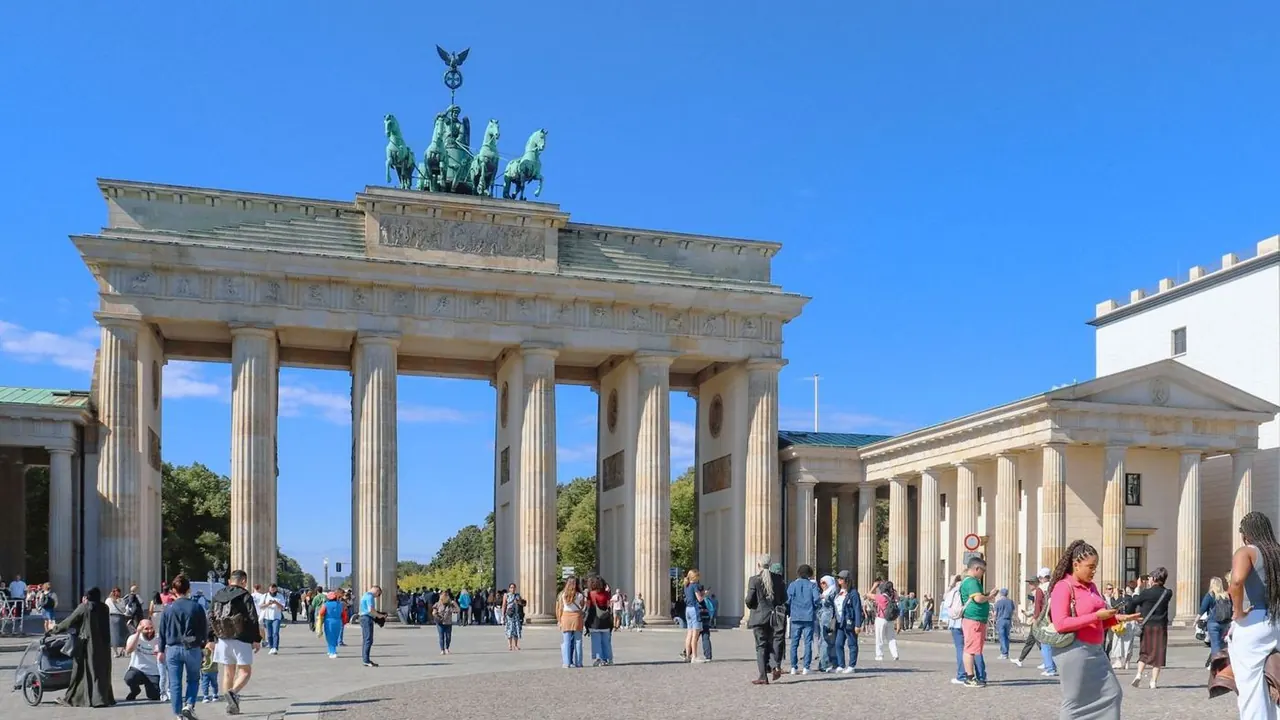
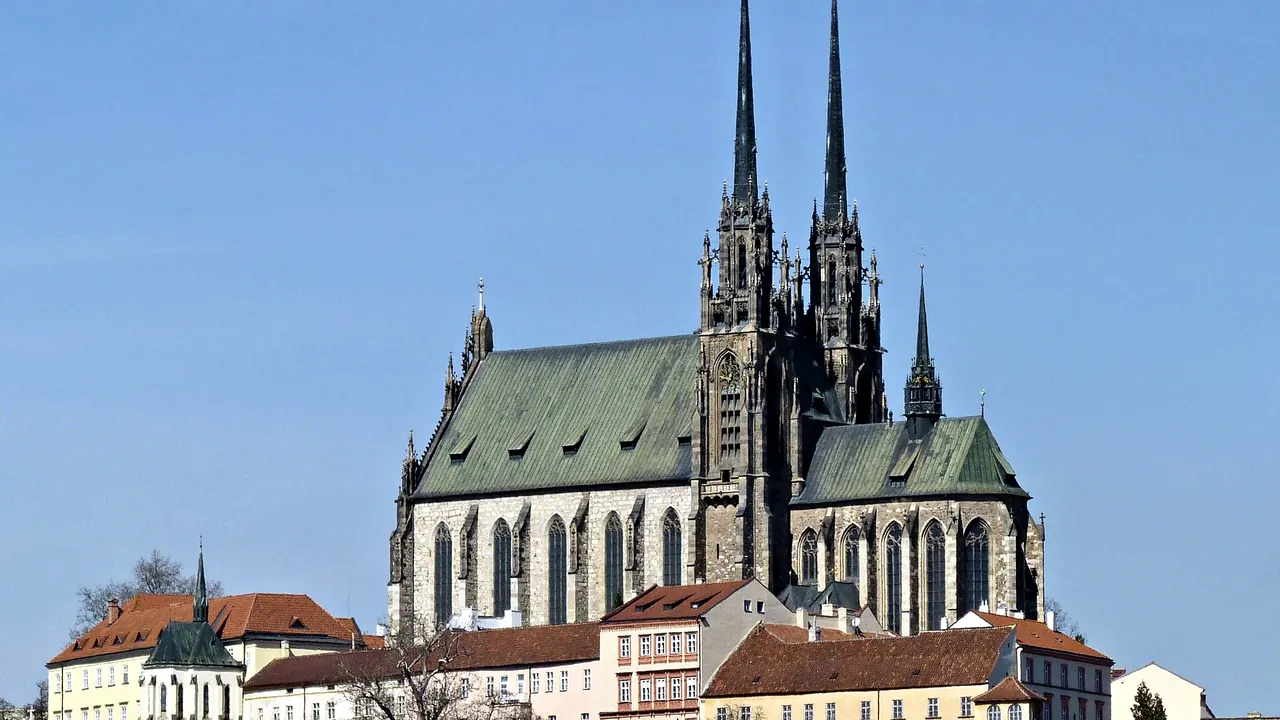
Photos: Berlin by Claudia Solano, Pexels License; Brno by Michal Klajban, CC BY-SA 3.0, cropped.
Berlin or Brno?
Our verdict in twelve categories, each scored against the same fixed benchmark cities, and the climate month by month, so you can choose for your trip.
Choose Berlin for
- nightlife
- shopping
- live music and the arts
Berlin is the choice for a trip built around big-city evenings and world-class collections. Museum Island, the Wall memorials, three opera houses and the Philharmonic sit alongside a club scene that runs from Saturday into Monday, and the food, shopping and family sights are deeper too. Come for the history by day and the stages or the techno halls by night.
Choose Brno for
- prices
- day trips
- nature and the outdoors
Travellers who would rather spend less and see more of a region should look at Brno. The city itself is compact, easy to cover in a few days, built around Villa Tugendhat and the functionalist streets around it. Its real draw is what lies beyond: the Lednice-Valtice estate, the Moravian Karst caves, a string of UNESCO towns and the wine country, all easy to reach on one regional ticket and at noticeably lower cost.
Scoreboard
Twelve categories on one fixed scale from 0 to 100. The shaded stretch is the gap between the two.
Your match
Pick a travel style or drag the sliders, and both match scores follow your weighting.
Wins on nightlife and shopping with your weighting.
Wins on prices and day trips with your weighting.
What matters to you?
Category by category
What the scores mean for a trip.
Beaches & swimming
Neither city has a coast, but Berlin makes far more of its water. Strandbad Wannsee with its sandy shore and wicker chairs, the Müggelsee and the forest lakes at Schlachtensee and Krumme Lanke give a real summer bathing culture on S-Bahn lines.
Brno has the reservoir on the Svratka, reached by tram and river boat, and the Nove Mlyny lakes an hour south. Both suit a hot afternoon, but algae can spoil the reservoir in heatwaves.
Food & drink
Berlin wins on range. Turkish grill houses and bakeries in Kreuzberg and Neukölln, good Vietnamese, Levantine and Korean cooking, street-food evenings at Markthalle Neun and a serious fine-dining tier mean every meal can be different.
Brno is mostly svickova, goulash and dumplings in beer halls, with few good modern bistros. Where it holds its own is drink: Starobrno lager, careful cocktail bars and Moravian whites and Frankovka from vineyards less than an hour south.
Culture & sights
Berlin is the heavier cultural destination by a wide margin. The Pergamon collections, Nefertiti and the old masters of the Gemäldegalerie stand beside the places where the twentieth century happened: the Reichstag, the Holocaust memorial and the Wall on Bernauer Strasse.
Brno's strength is narrower and more architectural. Villa Tugendhat and the interwar functionalist districts are outstanding, and the Capuchin Crypt, Spilberk and the Mendel Museum add character, but two or three days covers it.
Nightlife
This is the widest gap between the two. Berlin's clubs in former factories and warehouses have no closing hours and run through the weekend, and the bars of Friedrichshain and Kreuzberg keep going almost round the clock.
Brno is a city for a long night of drinks rather than dancing. Its small hidden cocktail bars and wine cellars around Jakubske namesti are good, but clubbing is modest and the city goes quiet in July and August when the students leave.
Nature & outdoors
Brno has the slightly better outdoors, mostly because of what is close by. The Moravian Karst, half an hour north, has caves, an underground boat ride and the Macocha Abyss. To the south, the Palava limestone ridge and the Dyje valley in Podyji National Park break up the vineyards.
Berlin's green is flatter and gentler but right inside the city: the Tiergarten, the runways of Tempelhof, the Grunewald forest and sailing on the Havel lakes, with the Wall Trail for easy cycling.
Day trips
Brno is the better base for days out. Lednice-Valtice, the Austerlitz battlefield, Kromeriz, Trebic, Telc and Zelena Hora are all within about two hours, Olomouc and the wine towns of Mikulov and Znojmo are easy, and even Vienna and Bratislava fit in a day.
Berlin has Potsdam's Sanssouci palaces half an hour away, plus Wittenberg, Leipzig, Dessau and Dresden, but after those the options thin out.
Good for families
Berlin offers children much more. Two large zoos, the dinosaur skeleton at the Natural History Museum, the hands-on German Museum of Technology and playgrounds everywhere fill several days, and the flat streets suit prams.
Brno is safe and easy but has fewer things made for children: the VIDA science centre, the hillside zoo and the Anthropos mammoths. The Punkva Caves boat ride is the outing they will remember, and cobbles and hills call for a sturdy pushchair.
Getting around
Both are easy, in different ways. Berlin has a full metro-style network of U-Bahn, S-Bahn and trams running all night at weekends, plus flat, bike-friendly streets, but its separate centres mean you ride rather than walk between districts.
Brno is a walking city, with a small, largely pedestrianised centre crossed in a quarter of an hour and trams for the rest. Its single ticket also covers regional trains, which makes the day trips simple, though some streets up to Spilberk are steep.
Shopping & style
Berlin is clearly the place to shop. The Kurfürstendamm and KaDeWe's food hall cover the big names, Mitte has concept stores and young designers, and the Sunday flea markets at Mauerpark and Boxhagener Platz turn up vinyl, East German curios and old furniture.
Brno offers high-street chains, malls and a few independent shops. The best things to take home are bottles of Moravian wine from the cellars and produce from Zelny trh.
Affordability
Brno is the cheaper trip. Hotels, pub lunch menus, beer, local wine, transport and museum entry all cost little, and only the cocktail and coffee bars push the bill up.
Berlin is mid-priced for a capital. Döner, Vietnamese canteens and Kneipe beer keep daily costs down, but museums, opera and fine dining add up quickly on a culture-heavy visit.
Live music & performing arts
Berlin is one of the great stage cities. It has the Staatsoper, Deutsche Oper and Komische Oper, the Berlin Philharmonic in Scharoun's Philharmonie, the Berliner Ensemble and Schaubühne, and jazz cellars and experimental spaces besides, so something is on every night.
Brno punches above its size thanks to Janacek, whose operas anchor the Janacek Theatre, and the Reduta, where the young Mozart played. In both cities the theatre is in the local language, so opera, ballet and concerts are the visitor's best bet.
Wellness & relaxation
Berlin offers more ways to unwind. Its large sauna complexes follow the German ritual of infusions and quiet rooms, the columned halls of Stadtbad Neukölln are a memorable place to swim, and Brandenburg's thermal resorts are about an hour out.
Brno has public pools with saunas and a few hotel spas. Its calm comes from café afternoons and the slopes of Luzanky park and Spilberk rather than from any bathing tradition.
When should you go?
Pick your month. The climate figures are measured averages, not a forecast.
Berlin in July
Brno in July
Daytime high, °C
Rainfall in the month, mm
Temperature and rainfall are climate normals, averaged over the years shown. Berlin: 1991-2020 normals, Berlin / Alexanderplatz (0.9 km from centre). Brno: 1991-2020 normals, Brno / Turany (8.4 km from centre).
Both cities have a continental year of warm summers and cold, grey winters, and May to September is the season for walking the streets and eating outside. In Berlin, daytime air temperatures reach about 25°C in July and August, the only months when the lakes are warm enough for a comfortable swim. July is also its wettest month, at around 76mm, so expect some summer downpours. From November to February the days are short and dim, and sightseeing moves indoors.
Brno is a degree warmer and noticeably sunnier through the summer, which suits a hot afternoon by the reservoir. Its rain comes earlier, though, spread across June and July as showers. Winter is harder there, with daytime highs of only about 2°C in December and January, but it is much drier than Berlin's. In either city, May and September give the most comfortable weather for long days on foot.
Which traveller are you?
On a food and nightlife trip, Berlin is far ahead. Its techno clubs in old power stations and its late Kneipen across Kreuzberg and Neukölln draw people from everywhere, and the Turkish, Vietnamese and fine-dining range goes well beyond Brno's pub cooking.
On a trip on a tight budget, Brno goes further. Rooms cost little, weekday lunch menus in pubs are very good value, beer and Moravian wine are cheap, and one regional ticket covers the day trips to castles, caves and wine towns.
For a culture and arts trip, Berlin is the stronger pick. Museum Island, the Gemäldegalerie and the Wall sites carry real weight, and three opera houses plus the Philharmonic fill every evening, while Brno's modernist villas and Janacek stages make a rewarding but shorter visit.
Before you go
| Measure | Berlin | Brno |
|---|---|---|
| Official language | German | Czech |
| Currency | Euro (EUR) | Czech Koruna (CZK) |
| Sockets | CF230 V, 50 Hz | CE230 V, 50 Hz |
| Driving side | Right | Right |
| Time zone | UTC+1, UTC+2 in summer | UTC+1, UTC+2 in summer |
| Emergency number | 112 | 112 |
| Elevation | 34 m | 237 m |
| Main airport | Berlin Brandenburg Airport (BER)19 km from centre161 non-stop destinations | Brno-Tuřany Airport (BRQ)8 km from centre40 non-stop destinations |
| Public holidays this year | 10 days | 13 days |
By the numbers
| Measure | Berlin | Brno |
|---|---|---|
| City population | 3,700,577 | 402,739 |
| People per km² | 4,153 | 1,750 |
| Museums within 10 km | 157 | 25 |
| UNESCO World Heritage sites within 50 km | 4 | 2 |
Where else could you go?
Every comparison below shares a destination with this one, so you can follow Berlin or Brno somewhere new.