Photos: Bern by Beat Bieri, Pexels License; Innsbruck by Wolfgang Weiser, Pexels License.
Bern or Innsbruck?
Our verdict in twelve categories, each scored against the same fixed benchmark cities, and the climate month by month, so you can choose for your trip.
Choose Bern for
- beaches
- day trips
- getting around
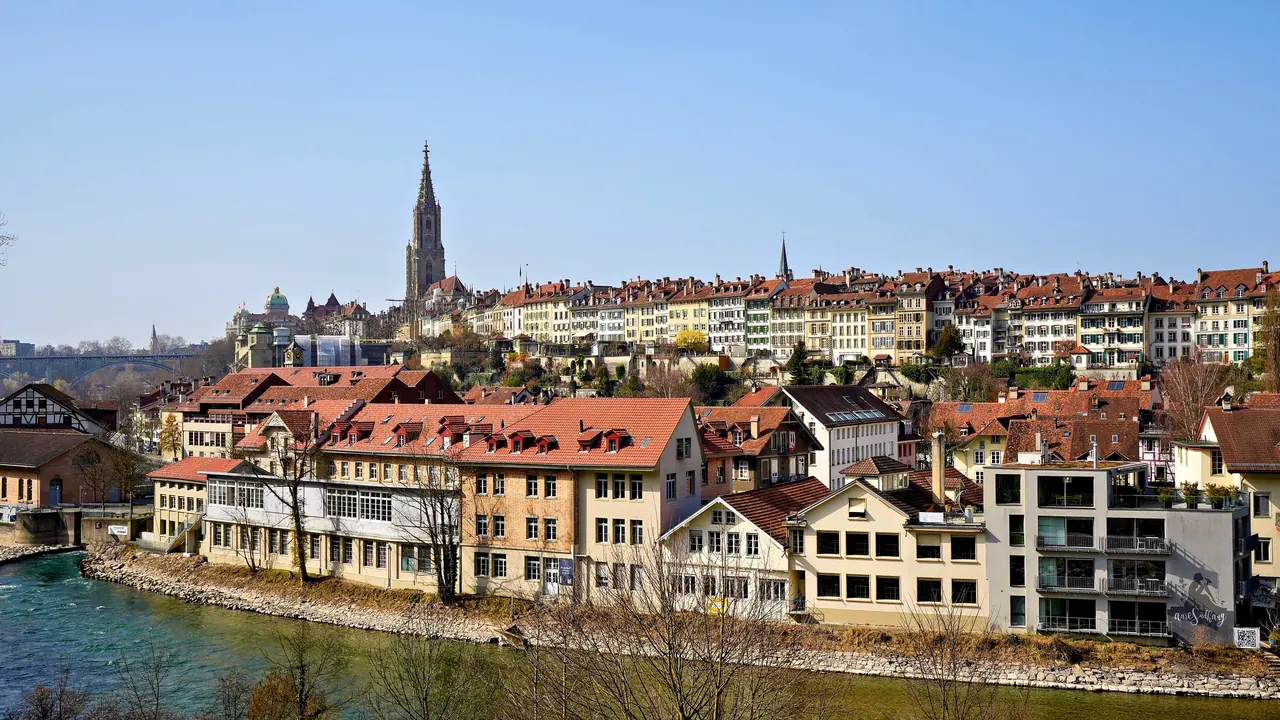
Bern suits a traveller who wants a handsome, easy base rather than one big draw. The UNESCO-listed old town, its arcades and its museums sit close together and are quick to cover on foot, and the station at the top of town puts Lucerne, Basel, Fribourg and Lake Thun within easy reach. A week there can mean a different Swiss town every day. In summer, floating down the Aare adds something Innsbruck cannot match. The catch is cost, which is steep even by Alpine standards.
Choose Innsbruck for
- prices
- nature and the outdoors
- nightlife
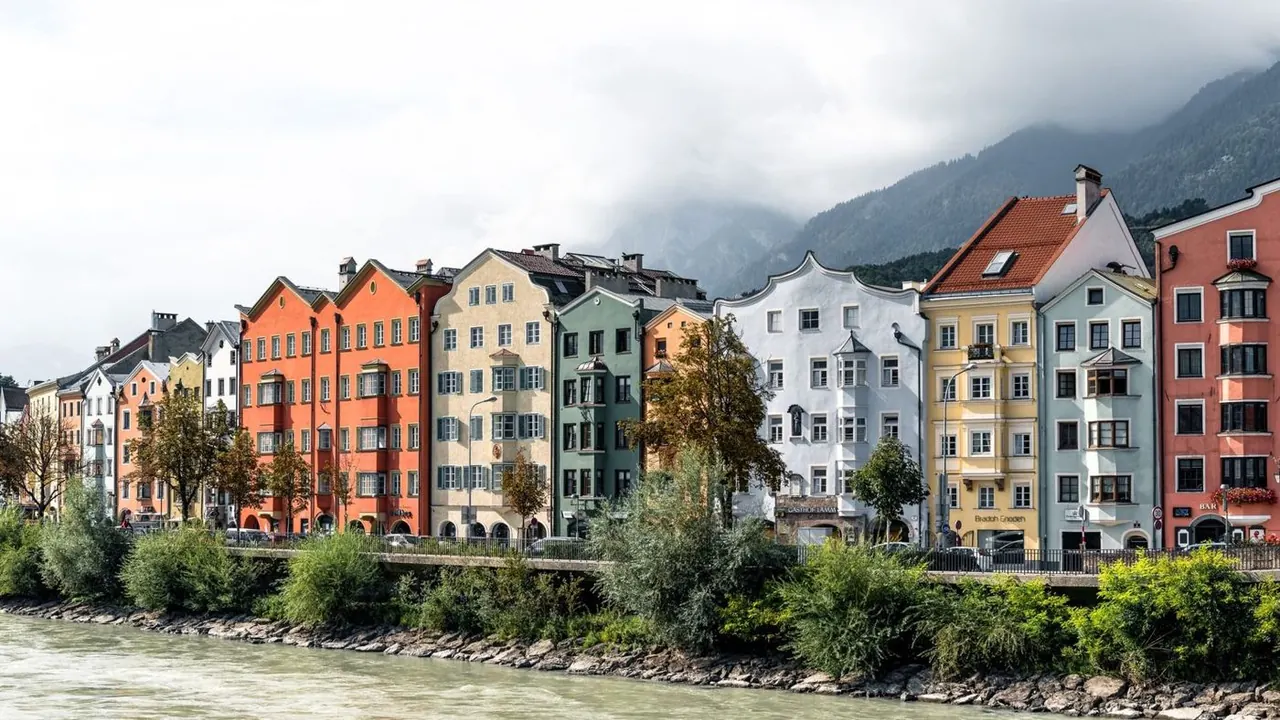
If the mountains are the point, Innsbruck is the place. The Nordkette ridge is under half an hour from the old town, and the Karwendel starts right behind it. The same slopes give you skiing in winter and hut-to-hut hiking, via ferratas and paragliding in summer. It is not cheap, but it costs noticeably less than Bern, and its winters are brighter. The town itself offers less, with the Habsburg tomb, the Golden Roof and Ambras Castle filling two or three days.
Scoreboard
Twelve categories on one fixed scale from 0 to 100. The shaded stretch is the gap between the two.
Your match
Pick a travel style or drag the sliders, and both match scores follow your weighting.
Too close to call, 2 points apart
Wins on beaches and day trips with your weighting.
Wins on prices and nature and the outdoors with your weighting.
What matters to you?
Category by category
What the scores mean for a trip.
Beaches & swimming
Neither city has a beach, but Bern's river gives it the better swimming. Locals walk upstream from the Marzili and float down the Aare past the Federal Palace, and the riverside lidos have lawns, pools and showers. The current is cold and fast, though, and Lake Thun's calmer shores are twenty minutes away.
Innsbruck relies on small plateau lakes such as the Lanser See and the Natterer See, which are fine for a warm afternoon. The beautiful Achensee stays cool. In Innsbruck, swimming is a side trip in high summer rather than part of everyday city life.
Food & drink
Both cities cook heavily and traditionally, and neither offers much range. In Bern that means the Berner Platte, fondue and rösti in guildhall dining rooms and arcade cellars. It also has proper weekly markets selling Emmental cheese, and very good chocolate.
Innsbruck's best meals tend to be up the mountain: Gröstl or Kaspressknödel at a hut after a walk, then coffee and strudel in an old-town coffee house. Bern has the market life Innsbruck lacks. Innsbruck has the hut terrace, which no table in Bern can match.
Culture & sights
Both have compact arcaded old towns, but Bern's is the fuller sight. It is a UNESCO-listed loop of sandstone houses, painted fountains, the Zytglogge and the Minster. Behind it stand the Zentrum Paul Klee, the Kunstmuseum and the Einstein Museum.
Innsbruck's Habsburg heritage is concentrated in a few strong pieces: Maximilian's tomb with its bronze figures in the Hofkirche, the Golden Roof, the Hofburg, and the cabinet of curiosities at Ambras Castle. Those are memorable, but Bern rewards a day of wandering more and has the better art museums.
Nightlife
Neither city is made for big nights out, so the difference is in character. Bern drinks in vaulted cellar bars under the arcades and, in summer, on the Aare terraces. The Reitschule is there for late, rough-edged parties, but the city goes quiet early during the week.
Innsbruck's university makes its scene a little younger. It centres on the bars and small clubs in the brick arches under the railway viaduct, and in winter much of the partying moves out to après-ski in the resorts.
Nature & outdoors
Both cities are within sight of the Alps, but Innsbruck sits inside them. A funicular from the edge of the old town connects with cable cars that reach about 2,300m in under half an hour. The Karwendel, the Stubai Glacier and several ski areas on one pass surround the city.
From Bern, the Eiger, Mönch and Jungfrau line the horizon, about an hour away by train. The Gurten, the Aare paths, Lake Thun and the gentler Emmental and Jura are closer. That is excellent walking and cycling country, but in Bern the high mountains are a day out, while in Innsbruck they are part of every day.
Day trips
Bern is the stronger base. It sits at the hub of the Swiss rail network: Lucerne, Basel and Zurich are about an hour away and Fribourg twenty minutes. Murten, Thun, Solothurn and Neuchâtel are nearer still, so you rarely have to plan around connections.
Innsbruck offers variety across three countries rather than many places close together. Hall in Tirol and Rattenberg are quick to reach. Munich, Salzburg, and Bolzano and Merano over the Brenner each take nearly two hours, and the Bavarian castles are easiest by car.
Good for families
Bern keeps its children's attractions in town, while Innsbruck takes families uphill. In Bern that means the bear park below the old town, the Dählhölzli zoo along the Aare, the animal dioramas at the Natural History Museum and the playground on the Gurten. The Marzili has shallow pools, but the river itself is for strong swimmers only.
Innsbruck's funicular leads to ibex and lynx at the Alpenzoo, and beyond it come hut playgrounds, adventure trails, gentle ski slopes and the plateau lakes for a calm swim. Its town sights are aimed more at adults, so a wet day takes more planning there than in Bern.
Getting around
Bern is the smoother of the two. The station sits at the top of a centre you can cross on foot under the arcades. Trams and buses share one fare, and funiculars and a public lift handle the climb from the river, though some streets are steep.
Innsbruck's centre is compact and flat, and its funicular to the Nordkette makes the mountains unusually easy to reach. Beyond the trams, regional trains and ski buses, though, a car helps for the remoter valleys and lakes, which Bern never needs.
Shopping & style
Bern's covered arcades make for the longer and more varied browse. Spitalgasse, Marktgasse and Kramgasse run in one dry line with watch and chocolate shops and a long-established department store. Further down, on Gerechtigkeitsgasse, cellar shops reached by steep steps sell antiques, design and books.
Innsbruck's Maria-Theresien-Strasse is mostly chains, so the reasons to buy there are Tyrolean: loden jackets and dirndls, woodcarvings, Speck and schnapps, and excellent outdoor and ski shops. It fills an afternoon rather than a day.
Affordability
Bern is by far the more expensive of the two, and the money goes on the basics. Rooms and evening meals are costly even at the modest end, and a dinner with wine is an occasion rather than a routine. Sightseeing costs very little, though. The bear park, the Aare paths, the arcades and guided tours of the Federal Palace are free, and hotels usually give guests a pass for the trams and buses.
Innsbruck turns this round. Rooms and filling meals in the traditional inns cost Western European prices but stay well below Bern's, and local transport is fairly priced. The bill grows with what you do: cable car tickets add up quickly on an active trip, and stays in ski season or over the Christmas markets carry a resort premium.
Live music & performing arts
Bern leans contemporary and popular, Innsbruck towards older music. In Bern that means dance and new music at the Dampfzentrale, a spring jazz festival, the Gurtenfestival's rock and pop in July, and opera and drama at the Stadttheater.
Innsbruck's highlight is its summer Festival of Early Music, held in settings such as the Spanish Hall at Ambras Castle, alongside the Landestheater and folk evenings of yodelling and brass. In both, the programme is worth checking around your dates rather than planning a trip around.
Wellness & relaxation
Spa time in Bern is urban, in Innsbruck it is Alpine. Bern has a large thermal bath complex on the western edge and a hammam-style spa in the old town, with quiet Sundays and long riverside lunches doing the rest.
Innsbruck relies on hotel spas with mountain views in Igls and the plateau villages, and on evenings in mountain huts. The large thermal complexes of the Ötztal and Zillertal are about an hour away.
When should you go?
Pick your month. The climate figures are measured averages, not a forecast.
Bern in July
Innsbruck in July
Daytime high, °C
Rainfall in the month, mm
Where the figures come from
Bern has no rain gauge within 25 km of the centre, so its rainfall comes from a gridded climate dataset read at the city rather than from a gauge further away.
Bern's sunshine is measured 71 km from the centre, at Herten.
Temperature and rainfall are climate normals, averaged over the years shown. Bern: 2010-2020 (sunshine 1991-2020, rainfall 1991-2020) normals, Bern / Bern - Belp Airport (5.5 km from centre). Innsbruck: 1991-2020 normals, Innsbruck-Flughafen (3.3 km from centre).
The two cities follow almost the same temperature curve. Winter highs sit only a few degrees above freezing, spring and autumn are mild, and July and August reach about 26°C. Neither gets uncomfortably hot for walking the streets, and May to early October is the pleasant stretch in both. Swimming belongs to June through early September, in the Aare at Bern and in the plateau lakes above Innsbruck.
Rain and light are where they differ. Bern's wet season comes early, with more than 100mm a month from May to August and May the wettest at 118mm. Innsbruck's rain builds through the summer and peaks in August at 144mm, so early summer there tends to be drier than in Bern. From October to February Innsbruck gets clearly more sunshine, roughly half as much again in midwinter. That suits a winter trip to the snow, while Bern's grey winters make late spring to early autumn its better time.
Which traveller are you?
On an outdoors trip, Innsbruck is the clear choice. The Nordkette cable cars start beside the old town and the Karwendel lies just beyond. The Stubai Glacier, the shared ski areas, the via ferratas and rafting on the Inn are all close. From Bern, the high Alps are an hour away by train.
On a trip on a tight budget, Innsbruck is the easier of two expensive cities. Its hotels are cheaper in spring and autumn, student cafés and bakeries keep meals down, and guest cards combine transport with lifts and sights. In Bern, even plain guesthouses and a beer on a terrace strain a budget.
For a short city break, Bern packs more into less time. The arcaded old town, the Minster, the Zentrum Paul Klee and Einstein's flat are all within a short walk or tram ride of the station. The arcades keep you dry, and nothing needs a car.
Before you go
| Measure | Bern | Innsbruck |
|---|---|---|
| Official language | French, German, Italian, Romansh | German, Austrian Sign Language |
| Currency | Swiss Franc (CHF) | Euro (EUR) |
| Sockets | CJ230 V, 50 Hz | CF230 V, 50 Hz |
| Driving side | Right | Right |
| Time zone | UTC+1, UTC+2 in summer | UTC+1, UTC+2 in summer |
| Emergency number | 112 | 112 |
| Elevation | 542 m | 574 m |
| Main airport | Zürich Airport (ZRH)101 km from centre226 non-stop destinations | Innsbruck Airport (INN)4 km from centre40 non-stop destinations |
| Public holidays this year | 10 days | 16 days |
By the numbers
| Measure | Bern | Innsbruck |
|---|---|---|
| City population | 136,988 | 132,499 |
| People per km² | 2,655 | 1,263 |
| Museums within 10 km | 30 | 28 |
| UNESCO World Heritage sites within 50 km | 2 | 1 |
Where else could you go?
Every comparison below shares a destination with this one, so you can follow Bern or Innsbruck somewhere new.