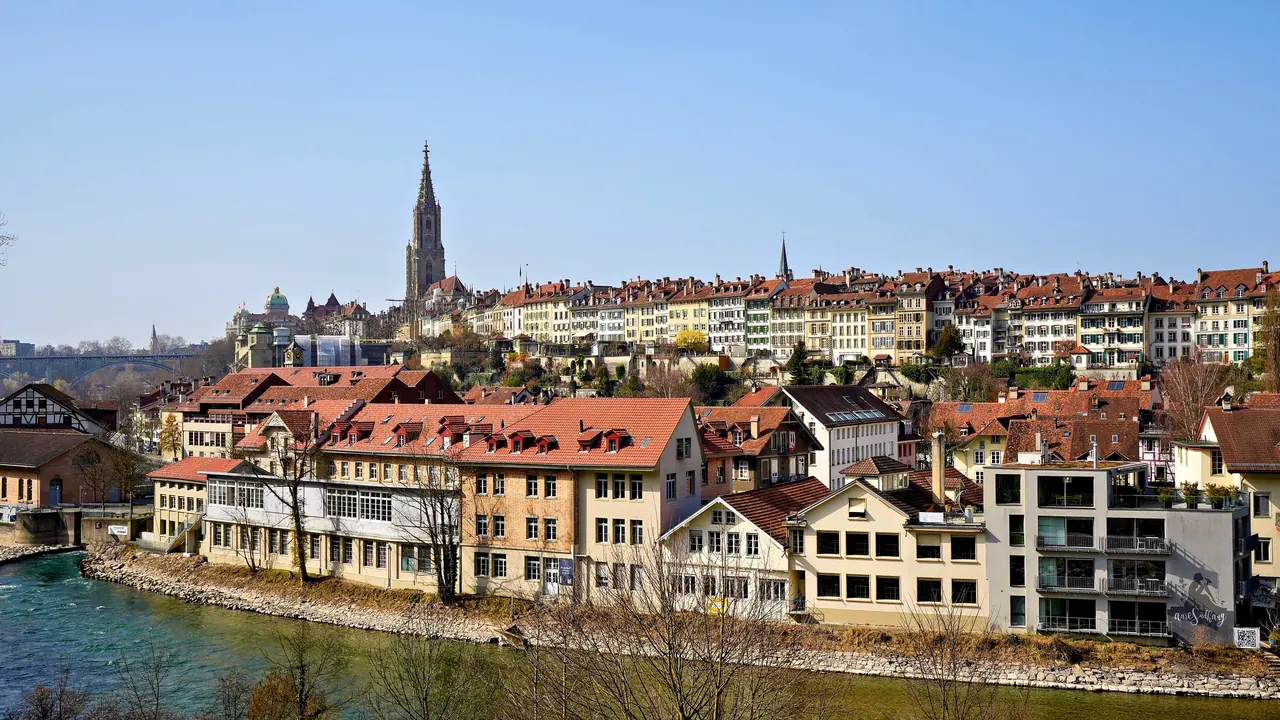
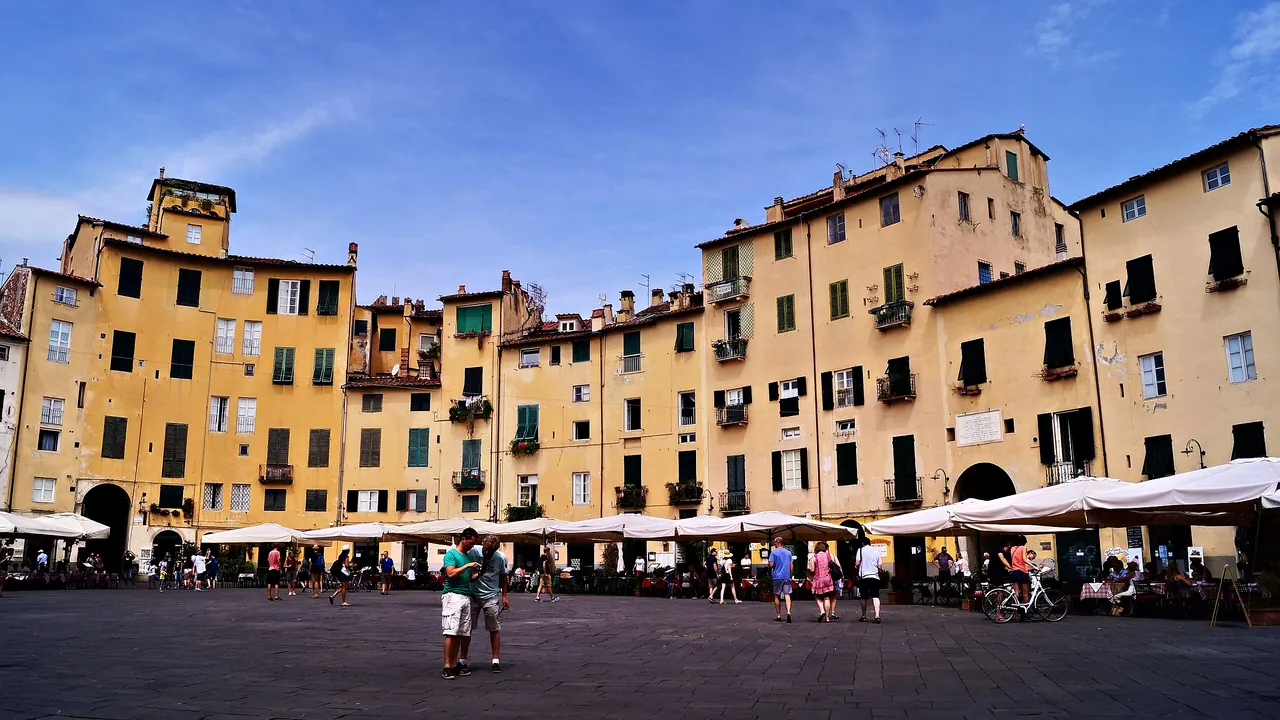
Photos: Bern by Beat Bieri, Pexels License; Lucca by Stefano Sansavini, CC BY-SA 4.0, cropped.
Bern or Lucca?
Our verdict in twelve categories, each scored against the same fixed benchmark cities, and the climate month by month, so you can choose for your trip.
Choose Bern for
- getting around
- nature and the outdoors
- nightlife
Bern is the choice if mountains matter more than meals. The Jungfrau peaks are an hour away by train, Swiss rail makes every outing easy, and the arcaded old town is calm and simple to get around with children. Travellers who want lake and Alpine days from a tidy, well-run base will be happiest here, as long as they can live with some of the highest prices in Europe.
Choose Lucca for
- prices
- food and drink
- beaches
Lucca rewards the traveller who wants Tuscany at a gentler cost. You get Romanesque churches and intact walls in the morning, sandy Versilia beaches or Pisa and Florence in the afternoon, and trattoria dinners with local oil and wine in the evening. It is warmer, sunnier and much cheaper, and it suits couples and food lovers better than anyone looking for big landscapes or late nights.
Scoreboard
Twelve categories on one fixed scale from 0 to 100. The shaded stretch is the gap between the two.
Your match
Pick a travel style or drag the sliders, and both match scores follow your weighting.
Too close to call, 2 points apart
Wins on getting around and nature and the outdoors with your weighting.
Wins on prices and food and drink with your weighting.
What matters to you?
Category by category
What the scores mean for a trip.
Beaches & swimming
Bern has no sand. Swimming means drifting down the fast, glacier-green Aare from the Marzili baths, which is a thrill for strong swimmers in July and August but too cold and powerful for children. Lake Thun gives calmer water under the Alps.
Lucca has the real thing within easy reach. The long sandy Versilia shore begins at Viareggio, about 25 minutes by train, with gentle shelving, warmer water and a choice between tidy rows of umbrellas at the beach clubs and the wilder pine-backed dunes of the Lecciona. It works best as a half-day trip, but it is proper seaside.
Food & drink
Lucca eats better. Its rustic provincial cooking has real character: spelt soup from the Garfagnana, meat-filled tordelli in ragù, chestnut dishes in the cooler months, cecina by the slice and buccellato from the bakeries, with mild hill olive oil and Montecarlo wines to go with it. Prices in the family trattorias are fair.
Bern's table is heavier and pricier: the Berner Platte, rösti, fondue and veal in cream, often in guildhall dining rooms and vaulted cellars, with excellent chocolate and Emmental cheese at the markets. Neither city offers much range beyond its own tradition.
Culture & sights
The two are well matched, and in both the townscape is the main sight. Bern's UNESCO old town is all sandstone arcades, painted fountains, the Zytglogge and the Minster tower. Its museums are the stronger pair of the two, with the Zentrum Paul Klee and the Einstein Museum close to the flat on Kramgasse where he worked out special relativity.
Lucca's strength is its churches rather than its galleries. There are the stacked Romanesque arcades of San Michele, the gold mosaic of San Frediano, and the cathedral with the Ilaria del Carretto tomb, all inside Renaissance walls that survive complete. Add the oval amphitheatre piazza and the tree-topped Torre Guinigi. Two days covers either city.
Nightlife
Neither is a party town, but Bern has more life after dark. Weekends fill the vaulted cellar bars under the arcades and the streets around Aarbergergasse. The Reitschule hosts late, rough-edged parties, and in summer the riverside terraces draw a crowd.
Lucca's evening is an aperitivo in Piazza San Michele, a long dinner and a stroll on the walls, and the centre is quiet by midnight. Anyone wanting to dance in summer has to go out to the Versilia beach discos and arrange a late ride back.
Nature & outdoors
Bern has the grander outdoors. The Eiger, Mönch and Jungfrau are visible from the old town and about an hour away by train, with cable cars, high trails and skiing in winter. Closer in, there is the Gurten funicular, the wooded Aare paths and the softer Emmental and Jura for cycling.
Lucca's landscape is gentler: the 4km ring of the walls, olive groves and villa gardens. The marble-scarred Apuan Alps and the chestnut woods of the Garfagnana offer serious hiking within an hour, and Massaciuccoli is good for birdwatching. Summer heat on the plain pushes walkers towards spring and autumn.
Day trips
Both are outstanding bases, and the difference lies in what you see. From Bern, the Swiss rail hub, you can reach Lucerne, Basel and Zurich in about an hour, as well as lakeside Murten, Thun, Fribourg and Gruyères' cheese dairies, all without having to plan around connections.
From Lucca it is Pisa in half an hour, Florence in a little over an hour, Pistoia and Montecatini on the same line, and the marble towns of Pietrasanta and Carrara up the coast. The Cinque Terre and San Gimignano are possible with an early start. The villa gardens and hill villages are easier with a car.
Good for families
Bern does more for children. There is the bear park below the old town, the Dählhölzli zoo along the river, the dioramas at the Natural History Museum and the big playground at the top of the Gurten funicular, and Marzili has shallow pools for little ones. The one caution is the fast Aare itself.
Lucca is flat and largely free of traffic, and riding the walls on a family quadricycle is a lovely outing. The Pinocchio Park at Collodi and the beaches fill other days, and Lucca Comics & Games delights teenagers in autumn. Beyond that, the sights are mostly churches and palaces.
Getting around
Bern is the easier place to get around. You can walk the old town end to end in about twenty minutes under cover of the arcades, and punctual trams, buses, funiculars and a public lift share one fare system. The station sits right at the top of the centre, so you will never need a car.
Lucca is a joy inside the walls, flat and closed to most traffic, with bikes for hire at every gate and the station just outside the southern walls. Once you head for the villas, hill villages or the Garfagnana, though, buses are sparse and a car becomes almost essential.
Shopping & style
Shopping is modest in both, with Bern slightly broader. Its long arcaded line of Spitalgasse, Marktgasse and Kramgasse has watch and chocolate shops and a department store, and cellar shops down steep steps sell antiques, design and crafts. A shopping centre on the edge of town covers mainstream brands.
Lucca's Via Fillungo has fashion and jewellery shops behind old Liberty shopfronts, and its lanes sell oil, farro and buccellato to take home. The best reason to shop is the monthly antiques market around the cathedral. Neither city has much luxury.
Affordability
There is a wide gap here. Bern is very expensive: plain hotels, sit-down dinners and even a terrace beer cost far more than visitors expect. The free bear park, river paths and Federal Palace tours help, as does the transport pass most hotels give guests, and budget travellers lean on supermarket lunches.
Lucca costs what central Italy usually costs, and less than Florence. Trattoria meals, regional trains and the paid sights are fairly priced, and the walls and many churches are free. Rooms inside the walls are the main expense, so staying just outside often saves money.
Live music & performing arts
Lucca has the edge, because Puccini gives it a thread that runs through the year. Short recitals of his arias in a central church mean even a brief stay can include opera. There is also the Teatro del Giglio season, open-air opera beside the lake at Torre del Lago, and the Lucca Summer Festival's star concerts in Piazza Napoleone.
Bern's offer is that of a small capital. It has German-language opera, ballet and drama at the Stadttheater, the symphony orchestra at the Casino, contemporary dance at the Dampfzentrale, and the jazz festival in spring and the Gurtenfestival in July.
Wellness & relaxation
Both relax you through their pace rather than through a bathing culture. Bern has quiet Sundays and riverside lunches, and it is the one with spa facilities in town: a thermal and sauna complex on the western edge, a hammam-style spa and hotel spas, with mountain spa hotels further afield.
Lucca has almost nothing of that inside its traffic-free walls, but the spa day trips are richer. You can try the belle époque baths of Montecatini, the warm cave pools at Monsummano or the steam grottoes of Bagni di Lucca.
When should you go?
Pick your month. The climate figures are measured averages, not a forecast.
Bern in July
Lucca in July
Daytime high, °C
Rainfall in the month, mm
Where the figures come from
Bern has no rain gauge within 25 km of the centre, so its rainfall comes from a gridded climate dataset read at the city rather than from a gauge further away.
Bern's sunshine is measured 41 km from the centre, at Payerne.
Temperature and rainfall are climate normals, averaged over the years shown. Bern: 2010-2020 (sunshine 1961-1990, rainfall 1991-2020) normals, Bern / Bern - Belp Airport (5.5 km from centre). Lucca: 1991-2020 normals, Pisa / S. Giusto (21.4 km from centre).
Bern is a summer city. From June to early September daytime highs reach about 26°C and the Aare is warm enough to swim in, though May to August is also the wettest stretch, with showers peaking at around 118mm in May. Winter is cold and grey, close to freezing at street level and short on sunshine, so it is worth coming then only for the skiing in the mountains.
Lucca runs hotter, drier and sunnier. July and August reach about 30°C, too hot for long afternoons of walking, but that is when the sea is at its best at around 25°C and rain is scarce. Rain arrives in September and peaks in November at about 132mm. For walking the walls and the countryside, May, June and late September are the sweet spot. Winter is mild compared with Bern, but damp.
Which traveller are you?
On a beach and sun trip, Lucca is the clear pick. Wide, gently shelving sand at Viareggio and Forte dei Marmi is under half an hour by train, the sea is warm through summer, and Bern can only offer a cold river float.
For an outdoors trip, Bern wins. High-mountain hiking, cable cars and winter skiing in the Jungfrau region are an hour away, Lake Thun is nearer still, and Lucca's Apuan Alps and Garfagnana trails are good but less dramatic.
On a trip with a tight budget, choose Lucca. Rooms, meals and drinks in Bern cost far more than almost anywhere in Europe, while Lucca's trattorias, regional trains and free walls and churches keep a Tuscan stay within reasonable reach.
Before you go
| Measure | Bern | Lucca |
|---|---|---|
| Official language | French, German, Italian, Romansh | Italian |
| Currency | Swiss Franc (CHF) | Euro (EUR) |
| Sockets | CJ230 V, 50 Hz | CFL230 V, 50 Hz |
| Driving side | Right | Right |
| Time zone | UTC+1, UTC+2 in summer | UTC+1, UTC+2 in summer |
| Emergency number | 112 | 112 |
| Elevation | 542 m | 19 m |
| Main airport | Zürich Airport (ZRH)101 km from centre226 non-stop destinations | Pisa International Airport (PSA)21 km from centre82 non-stop destinations |
| Public holidays this year | 10 days | 13 days |
By the numbers
| Measure | Bern | Lucca |
|---|---|---|
| City population | 136,988 | 88,798 |
| People per km² | 2,655 | 478 |
| Museums within 10 km | 30 | 20 |
| UNESCO World Heritage sites within 50 km | 2 | 4 |
| Swim season, months above 21 °C | - | 4 months |
Where else could you go?
Every comparison below shares a destination with this one, so you can follow Bern or Lucca somewhere new.