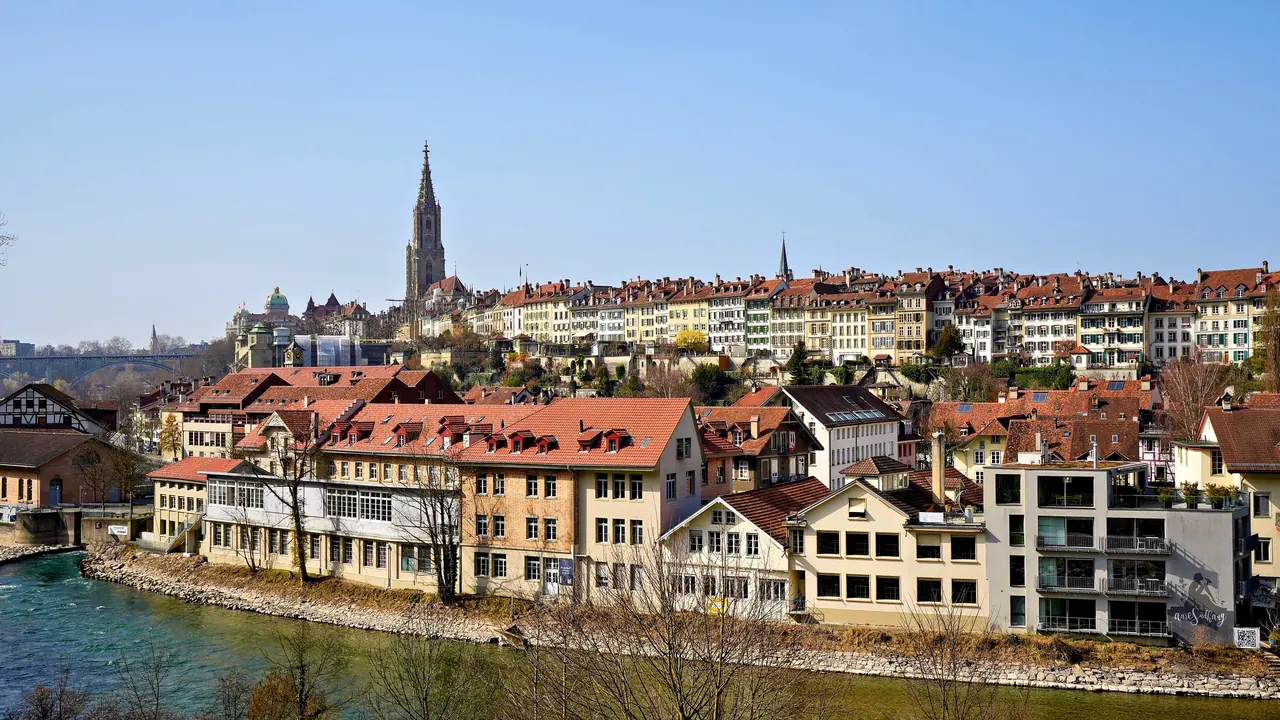
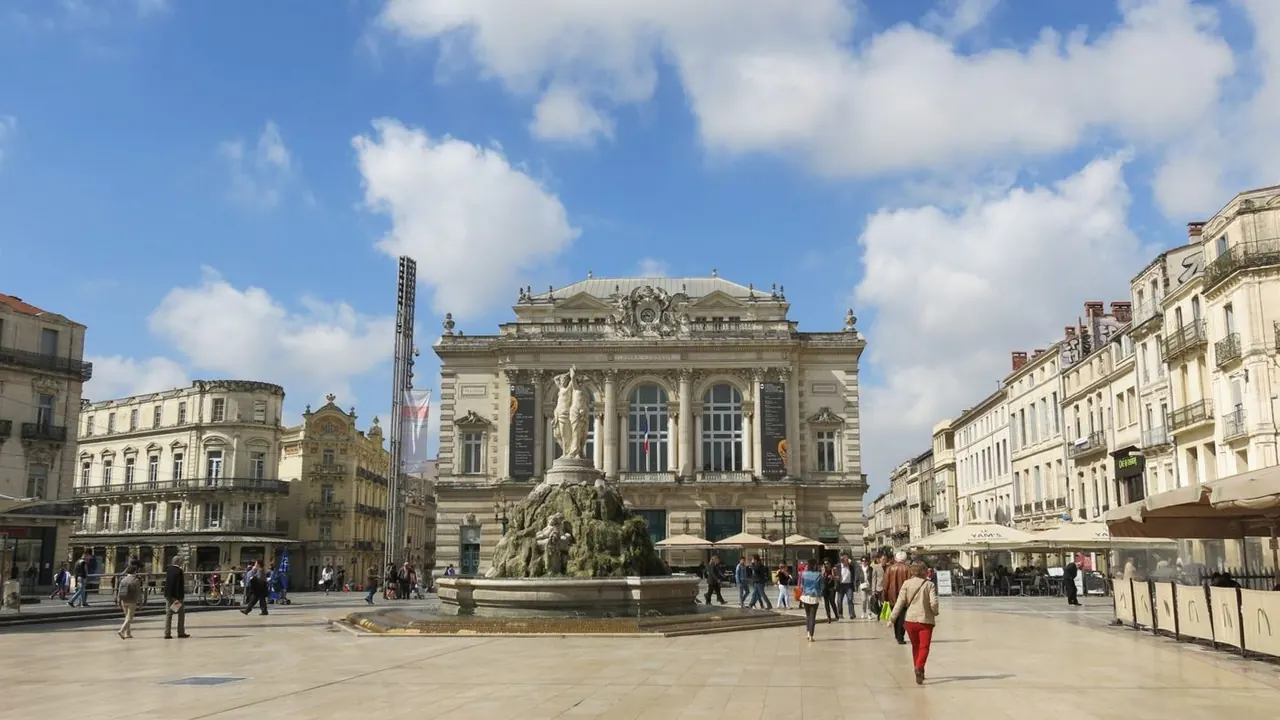
Photos: Bern by Beat Bieri, Pexels License; Montpellier by Peter, CC BY 2.0, cropped.
Bern or Montpellier?
Our verdict in twelve categories, each scored against the same fixed benchmark cities, and the climate month by month, so you can choose for your trip.
Choose Bern for
- getting around
- nature and the outdoors
- wellness
Bern suits travellers who want the mountains close at hand and a compact, orderly base. The Eiger, Mönch and Jungfrau are about an hour away by train, the whole old town can be walked in a morning, and the Swiss rail network makes a different lake or castle town easy every day. It is calm, safe and quiet in the evenings, and it is very expensive, so it works best for walkers, rail travellers and anyone who values ease over a lively scene.
Choose Montpellier for
- prices
- food and drink
- beaches
Choose Montpellier for warmth, a sandy coast, wine and a livelier evening. It is a southern French student city where the terraces fill on weeknights, Languedoc wine and Thau lagoon oysters are part of everyday eating, and gently shelving beaches are a short trip away. The dance and summer festival programme is strong and the cost is moderate, so it rewards food lovers, couples and budget travellers who want a city break with some beach days in it.
Scoreboard
Twelve categories on one fixed scale from 0 to 100. The shaded stretch is the gap between the two.
Your match
Pick a travel style or drag the sliders, and both match scores follow your weighting.
Wins on getting around and nature and the outdoors with your weighting.
Wins on prices and food and drink with your weighting.
What matters to you?
Category by category
What the scores mean for a trip.
Beaches & swimming
Bern has no beach in the usual sense, but it has a memorable swim. In summer you can drift down the cold, fast Aare past the Federal Palace and climb out at the Marzili lido, which is thrilling for strong swimmers and unsuitable for small children. Lake Thun offers calmer bathing under the Alps.
Montpellier gives you real sand and warm, shallow sea. Palavas and Carnon are about 11km away, and the coast runs east to the wild dunes of l'Espiguette, with water that shelves gently and warms through summer. It is still a trip out of town rather than a beach on the doorstep, and the nearer stretches get crowded in high summer.
Food & drink
Bern feeds you well in a hearty, Alpine way: the Berner Platte of smoked meats, rösti and fondue in vaulted cellar dining rooms, Emmental cheese at the markets and very good chocolate. The range is that of a small city and every meal out is a real expense.
Montpellier offers more to explore at the table. The Languedoc vineyards start at the city's edge, oysters and mussels come from the Thau lagoon, and specialities such as Sète's octopus tielle turn up in the markets. Student demand keeps plenty of cheap, casual places open, so eating well here costs far less and feels more varied.
Culture & sights
The two are broadly level, but they reward different kinds of sightseeing. Bern's old town is a single, unusually intact townscape on its loop of the Aare, with arcades, painted fountains and the Zytglogge, plus focused museums: the largest Klee collection anywhere and Einstein's flat on Kramgasse.
Montpellier spreads its interest across more periods. The Écusson's medieval lanes and courtyard mansions lead to the grand Peyrou terrace and its aqueduct, the Musée Fabre covers European painting broadly, and Bofill's Antigone adds bold twentieth-century architecture.
Nightlife
Montpellier is the better place for a night out. Its huge student population fills the bars and squares of the Écusson on weeknights too, and the crowd moves on to clubs towards Lattes and the coast late, though that usually means a taxi and the centre quietens outside term.
Bern's evenings are a cellar bar under the arcades, a drink on an Aare terrace in summer, or a rough-edged party at the Reitschule. Midweek it goes to bed early.
Nature & outdoors
Bern has the grander landscape. The snow peaks of the Bernese Oberland are visible from the old town and reachable in about an hour for serious hiking, cable cars and skiing, while the Gurten, the Aare woods, the Emmental and the Jura give gentler walking close by.
Montpellier's nature is softer and southern: flamingo lagoons, the Camargue marshes, the climb up Pic Saint-Loup and the Hérault gorges for canoeing. Its hot, dry summers push walking into spring and autumn, whereas Bern's mountain season peaks in summer.
Day trips
Both are excellent bases, and the difference lies in what you go to see and how. From Bern the trains do everything: Lucerne, Basel and Zurich in about an hour, Fribourg and Gruyères, and lakeside towns such as Murten and Thun, with no car needed.
From Montpellier the trips run through Roman and medieval southern France: the arena at Nîmes, the Pont du Gard, Arles, Avignon and the walls of Carcassonne. The big names are easy by train, but villages such as Saint-Guilhem-le-Désert and Uzès are far simpler with a car.
Good for families
Both are calm and easy with children. Bern's draws are the bear park, the wooded Dählhölzli zoo and the playground on top of the Gurten, with days in the mountains for a longer stay, though the river itself is only for strong swimmers.
Montpellier offers what Bern cannot: warm, gently shelving sea where small children can paddle safely. The Odysseum aquarium and planetarium cover rainy or hot afternoons, but the stone centre gets very hot in July and August.
Getting around
Bern is easier to get around. The old town takes about twenty minutes to walk end to end under arcades that keep the rain off, and the main station stands right at its top. Punctual trams and buses, plus a funicular and a lift down to the river, handle the rest.
Montpellier's walkable Écusson and its tram network serve the city well, but the coast means a tram followed by a slow bus in summer, and the hills, gorges and Camargue really call for a car.
Shopping & style
Neither is a shopping destination, and both are pleasant for an afternoon. Bern's long arcaded streets suit Swiss souvenirs such as watches and chocolate, and the cellar shops down steep steps hold antiques, design and books.
In Montpellier the best buys are things to eat and drink: Languedoc wine, olive oil and honey from the covered markets. Small boutiques fill the Écusson lanes and the Polygone mall covers the big brands.
Affordability
This is the widest gap between the two. Bern is very expensive for rooms, dinners and even a beer on a terrace, and budget visitors rely on supermarket lunches, the free hotel transport pass and free pleasures such as the river paths and the bear park.
Montpellier is mid-range for Western Europe, and its students keep cheap counters and modest bars plentiful. Lunch menus and the market halls stretch the money further, with only sit-down dinners with wine and summer room rates pushing costs up.
Live music & performing arts
Montpellier has the stronger stage, and contemporary dance is its speciality: the Montpellier Danse festival each summer draws international attention, two opera houses share a season with a national orchestra, and the Radio France festival brings many free summer concerts.
Bern offers a reliable small-capital programme instead: opera and ballet at the Stadttheater, the symphony orchestra in the Casino, new dance at the Dampfzentrale, a spring jazz festival and the Gurtenfestival on the hill in July. It is enough for an evening, though not a reason to time a visit.
Wellness & relaxation
Bern is slightly better for unwinding. It has a large thermal bath complex with saunas within the city, a hammam-style spa in the old town, quiet Sundays and an unhurried pace, and mountain spa hotels in the Oberland are within reach.
Montpellier's spa offer inside town is mostly hotel spas, with real thermal water at Balaruc-les-Bains half an hour away. Its long lunches and shaded squares are relaxing, but the student-filled centre is lively rather than quiet.
When should you go?
Pick your month. The climate figures are measured averages, not a forecast.
Bern in July
Montpellier in July
Daytime high, °C
Rainfall in the month, mm
Where the figures come from
Bern has no rain gauge within 25 km of the centre, so its rainfall comes from a gridded climate dataset read at the city rather than from a gauge further away.
Bern's sunshine is measured 71 km from the centre, at Herten.
Temperature and rainfall are climate normals, averaged over the years shown. Bern: 2010-2020 (sunshine 1991-2020, rainfall 1991-2020) normals, Bern / Bern - Belp Airport (5.5 km from centre). Montpellier: 1991-2020 normals, Montpellier (7.8 km from centre).
Bern has a short warm season. From June to August days reach about 26°C, which is the only time the Aare and Lake Thun are warm enough to swim, but these are also the wettest months, with May the peak at 118mm, so expect showers between sunny spells. Spring and September are pleasant for walking the arcades and the hills, while from November to February the city is cold, grey and short of sunshine, though often brighter up in the mountains.
Montpellier is far warmer and sunnier all year. July is hot at about 30°C and very dry, which makes the stone streets of the centre heavy in the afternoon but the beach at its best, with the sea reaching 22°C in August. September and October bring the heaviest rain, up to 93mm, though they stay warm. Winters are mild, so the city works for sightseeing year round, while Bern is really a summer and early autumn destination.
Which traveller are you?
For an outdoors trip, Bern is the stronger choice. High-mountain hiking, cable cars and winter skiing in the Jungfrau region are about an hour away by train, and riverside paths along the Aare and the Gurten hill start almost in the centre.
On a food and nightlife trip, Montpellier wins clearly. Languedoc wines, lagoon oysters and market counters in the Halles Laissac feed the day, and a large student population keeps bars around Place Jean-Jaurès busy on weeknights, while Bern eats heavily and goes quiet early.
On a tight budget, Montpellier is much easier. Student cafés, good-value lunch menus and moderately priced rooms stretch the money, whereas Bern is costly for every bed, meal and drink, leaving supermarket lunches and the free river paths as the main savings.
Before you go
| Measure | Bern | Montpellier |
|---|---|---|
| Official language | French, German, Italian, Romansh | French |
| Currency | Swiss Franc (CHF) | Euro (EUR) |
| Sockets | CJ230 V, 50 Hz | CE230 V, 50 Hz |
| Driving side | Right | Right |
| Time zone | UTC+1, UTC+2 in summer | UTC+1, UTC+2 in summer |
| Emergency number | 112 | 112 |
| Elevation | 542 m | 7 m |
| Main airport | Zürich Airport (ZRH)101 km from centre226 non-stop destinations | Montpellier-Méditerranée Airport (MPL)8 km from centre41 non-stop destinations |
| Public holidays this year | 10 days | 11 days |
By the numbers
| Measure | Bern | Montpellier |
|---|---|---|
| City population | 136,988 | 310,240 |
| People per km² | 2,655 | 5,452 |
| Museums within 10 km | 30 | 14 |
| UNESCO World Heritage sites within 50 km | 2 | 2 |
| Swim season, months above 21 °C | - | 2 months |
Where else could you go?
Every comparison below shares a destination with this one, so you can follow Bern or Montpellier somewhere new.